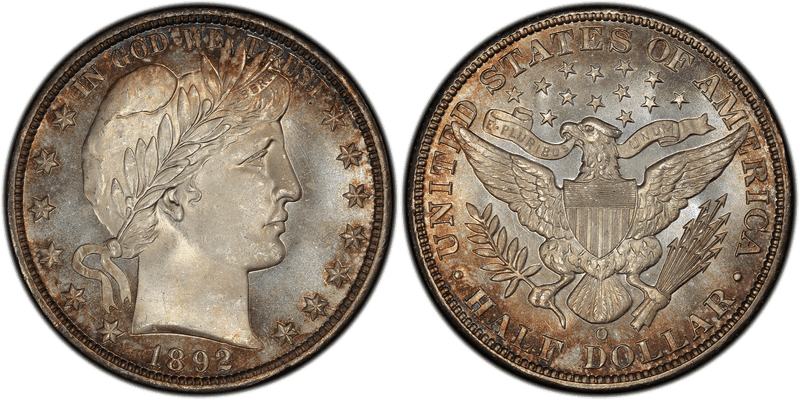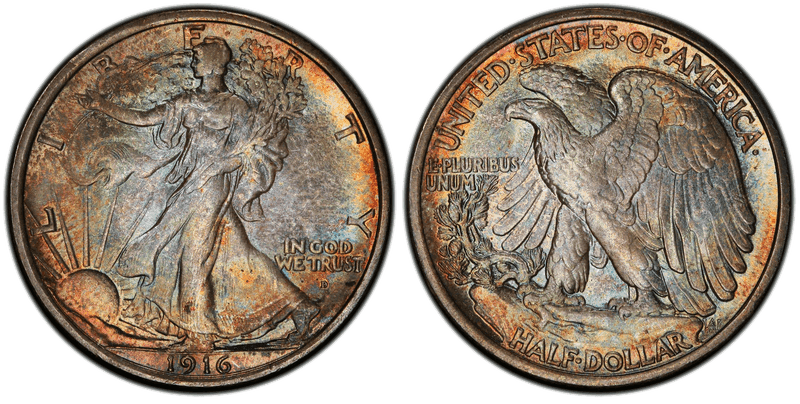
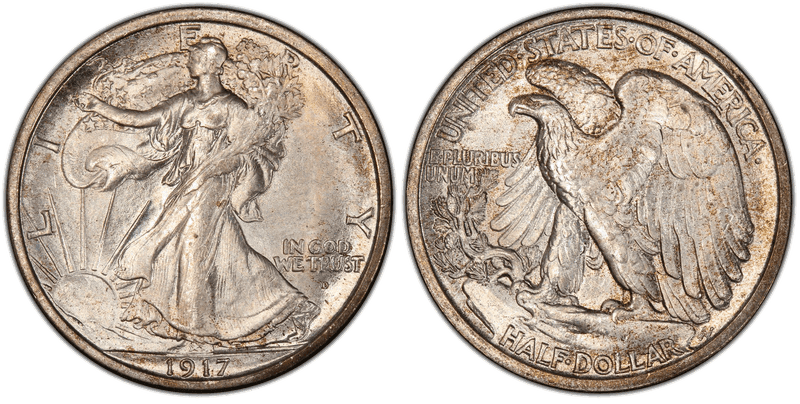
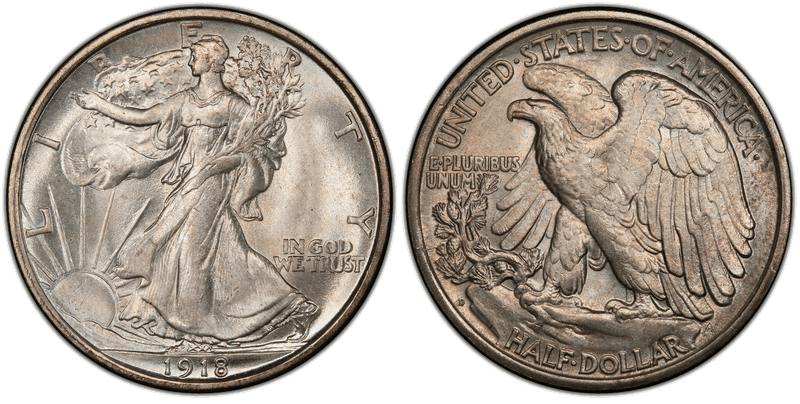
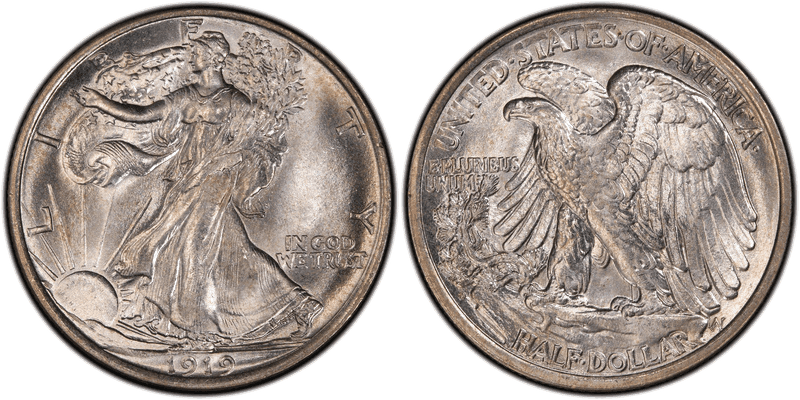
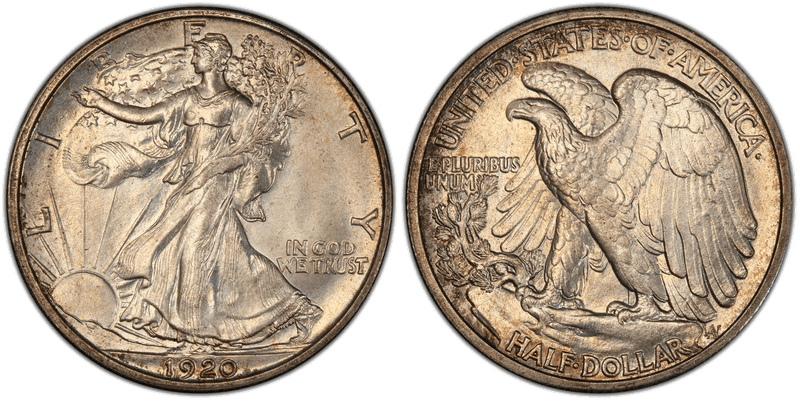
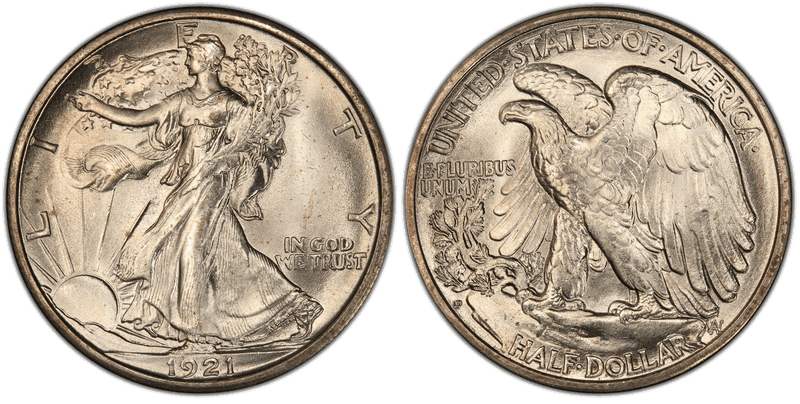
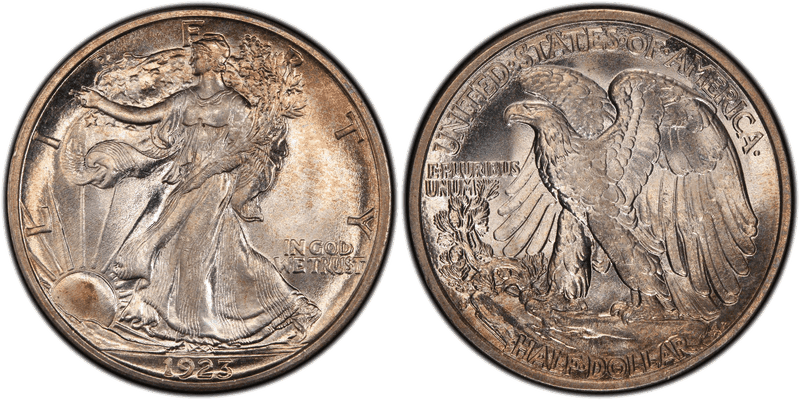
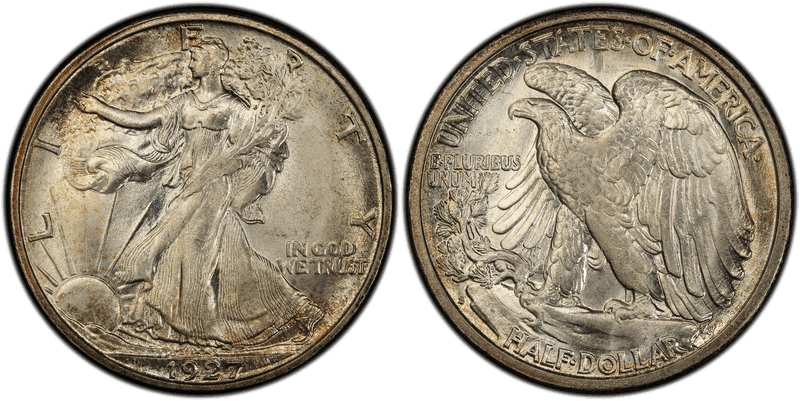
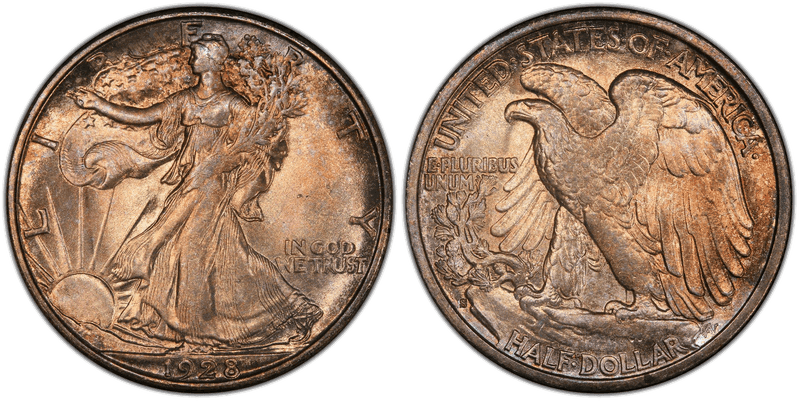
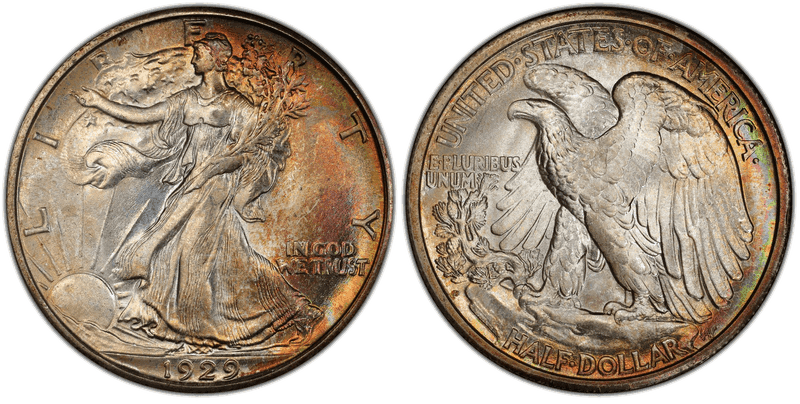
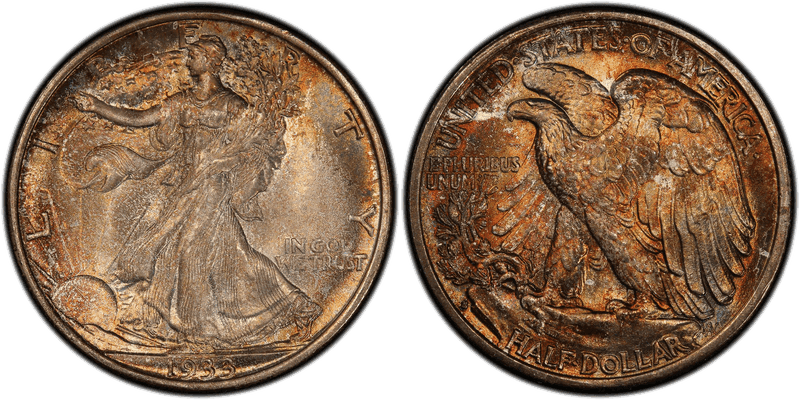
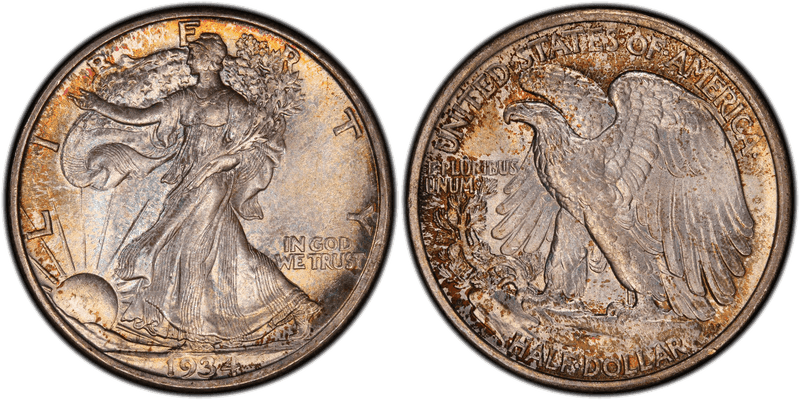
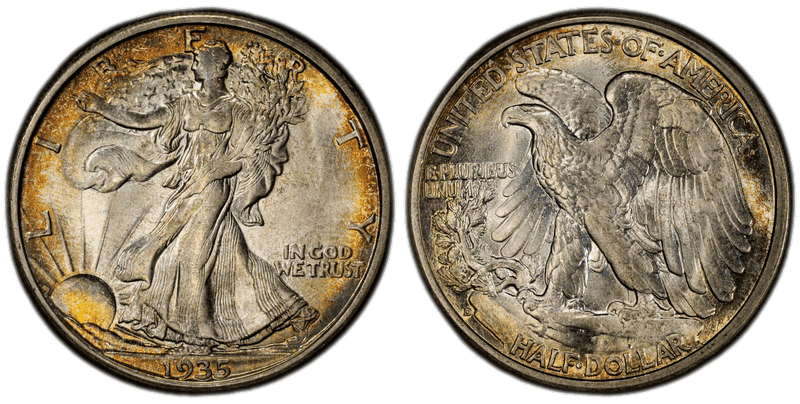
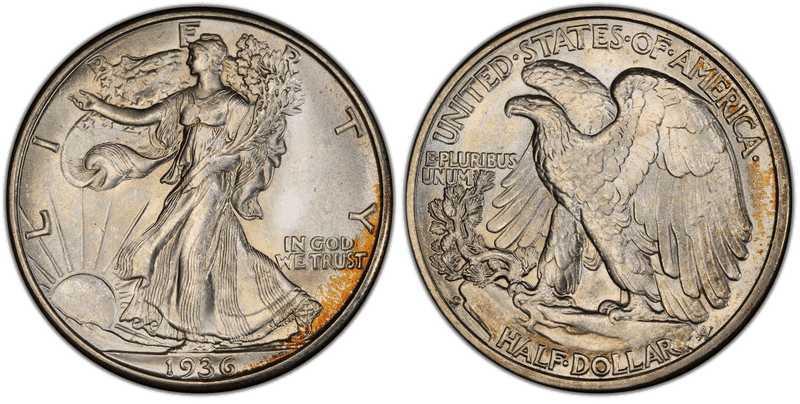
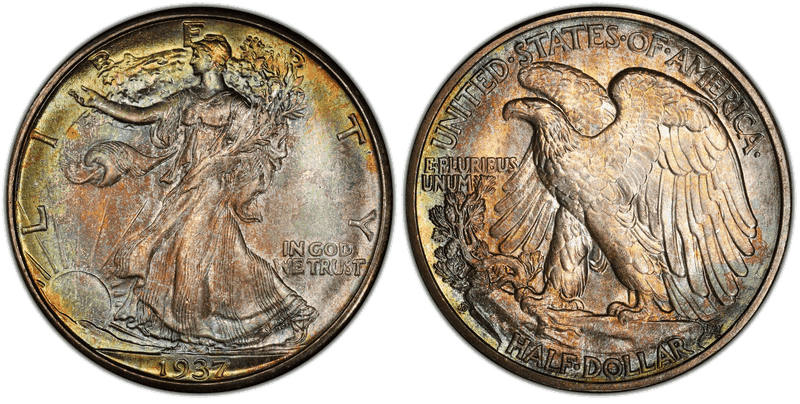
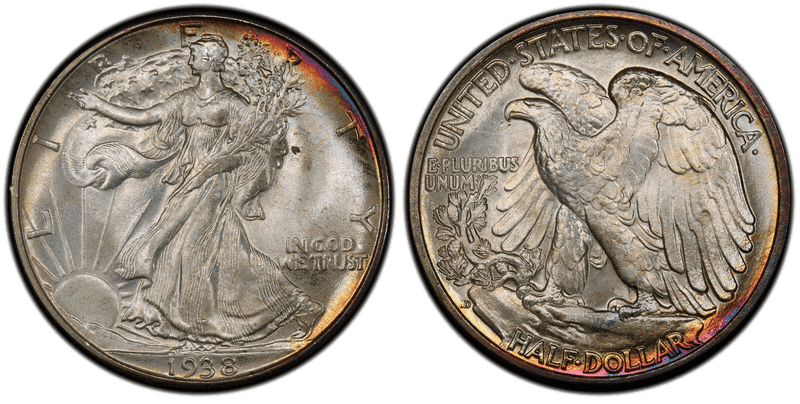
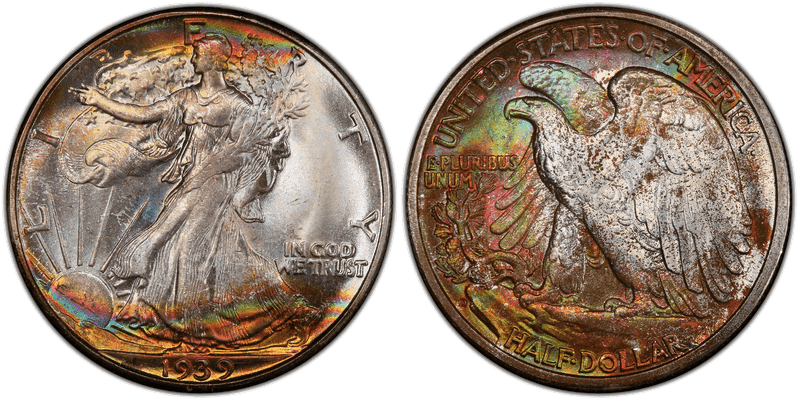
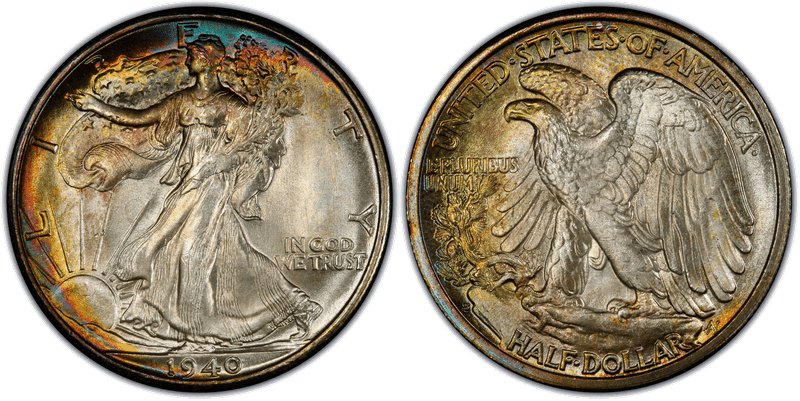
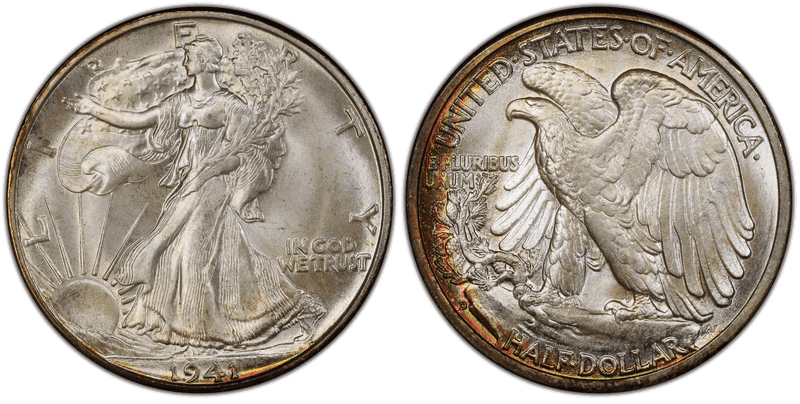
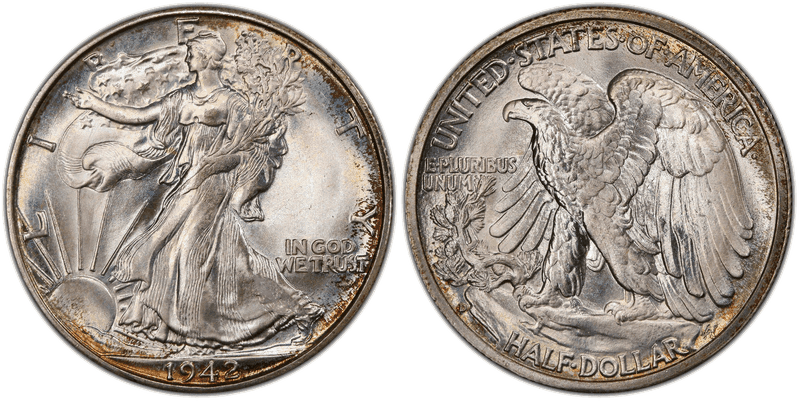
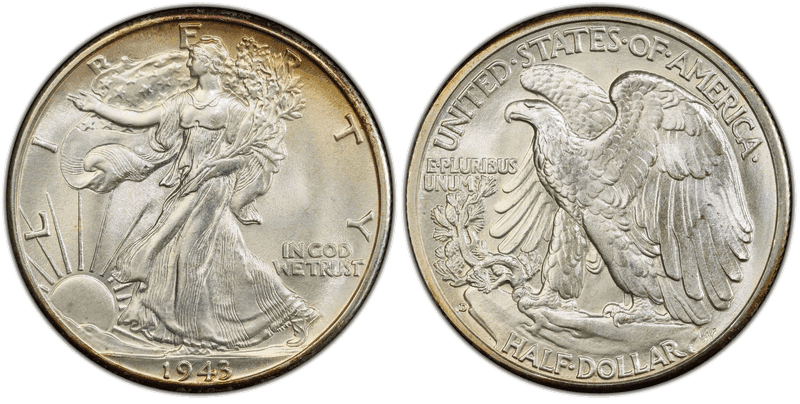
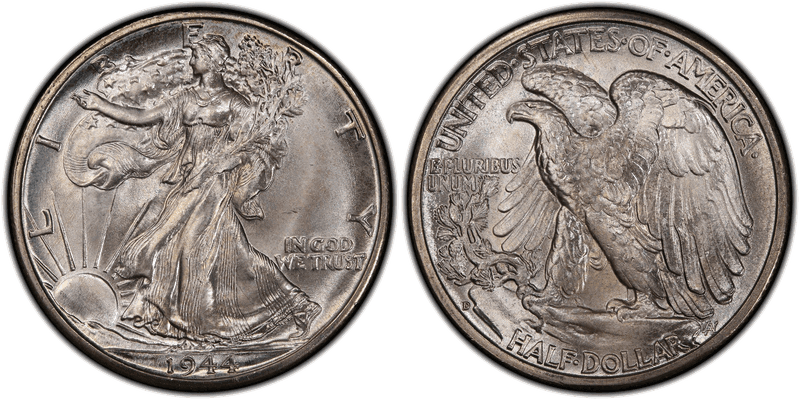
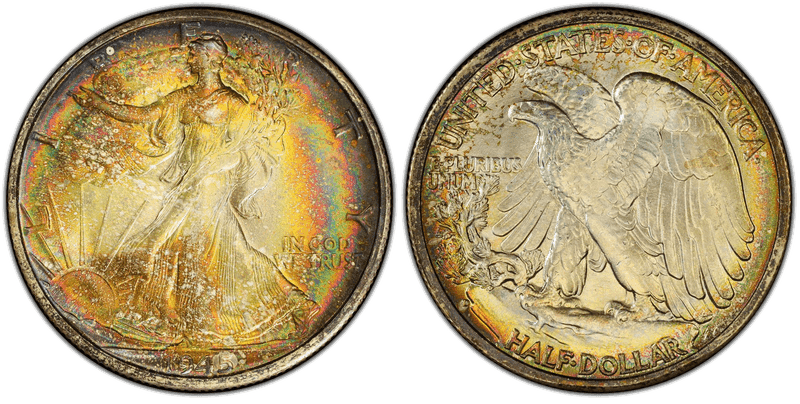
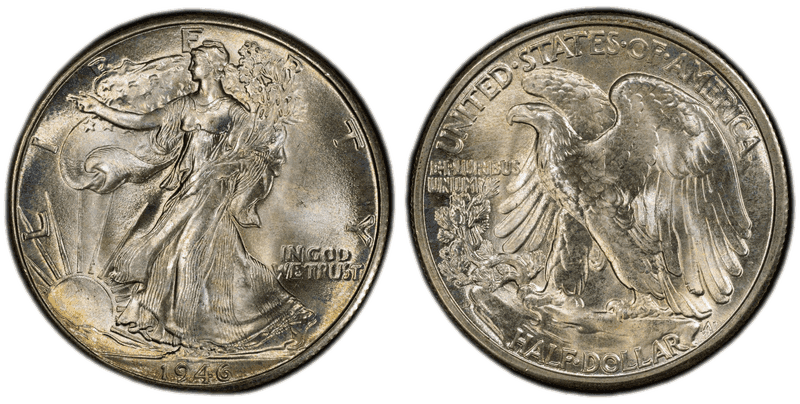
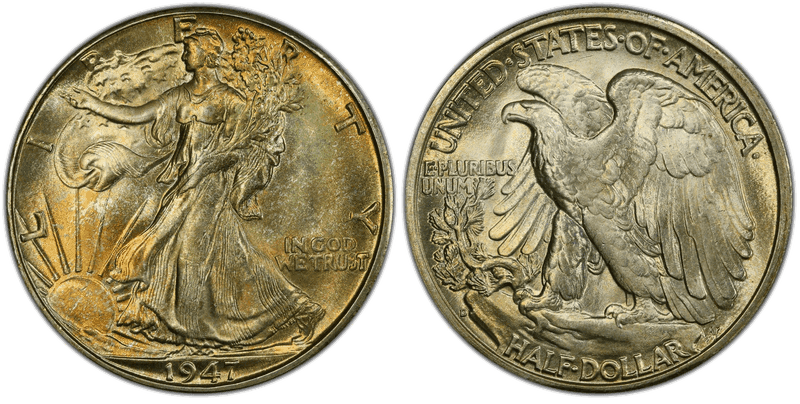
The Mint Act of 1890 let a coin design be replaced once it had been in use for 25 years, and Charles Barber's dime, quarter and half dollar had been struck since 1892. NGC reports that Mint Director Robert W. Woolley read the law as requiring a change once the 25 years were up, not merely allowing one. He invited outside sculptors to submit designs, among them Adolph A. Weinman, Hermon A. MacNeil and Albin Polasek. Weinman won two of the three commissions, the dime (the "Mercury" dime) and the half dollar, while MacNeil's design went on the quarter.
The half went through rejected patterns before its final form was approved late in 1916. The order for production dies did not come until November 11, and the Denver and San Francisco Mints received theirs on November 27. The 1916 halves that resulted were not released until early 1917, mixed in with coins dated 1917.
Two changes came in 1917. Mint Director F. J. H. von Engelken thought the obverse mint mark looked like a flaw in the die, and on February 14 he ordered it moved to the reverse; his successor, Raymond T. Baker, confirmed the order in April. During the year the Mint also smoothed away the textured fields of Weinman's models, partly to make the dies last longer.
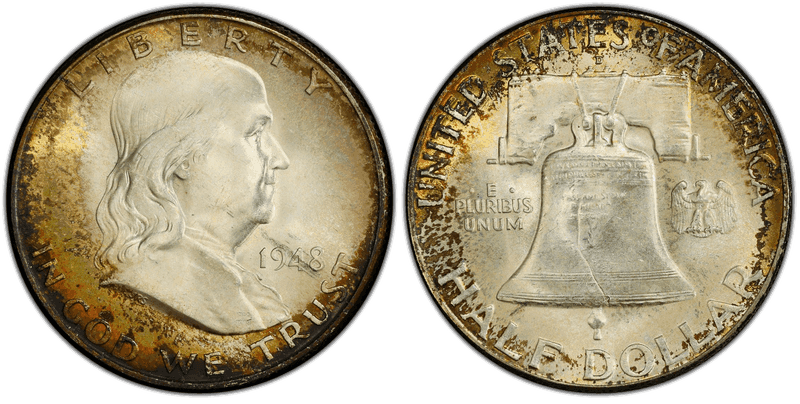
Production followed the economy. No halves were struck in 1922, 1924 through 1926, or 1930 through 1932, and for much of the 1920s San Francisco was the only mint making them. Philadelphia struck 53,190,000 halves in 1943, the largest figure CoinWeek lists for the design. Proofs were struck from 1936 through 1942. The design ended in 1947, and John R. Sinnock's Franklin half replaced it in 1948.
The design outlived the coin. In 1986 a modified version of Weinman's Liberty became the obverse of the American Silver Eagle bullion coin, and in 2016 the Mint reissued the half dollar in one-half ounce of 24-karat gold, struck at West Point, as one of three centennial gold coins honoring the 1916 designs.