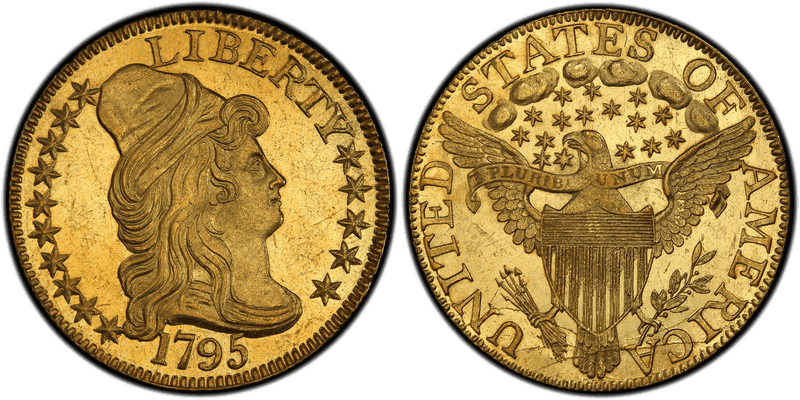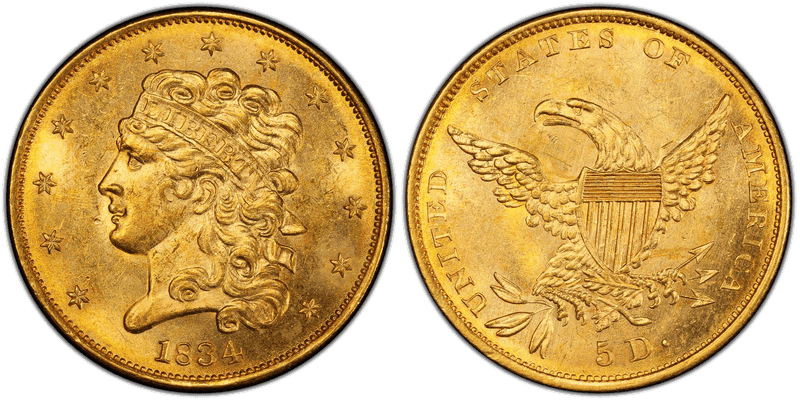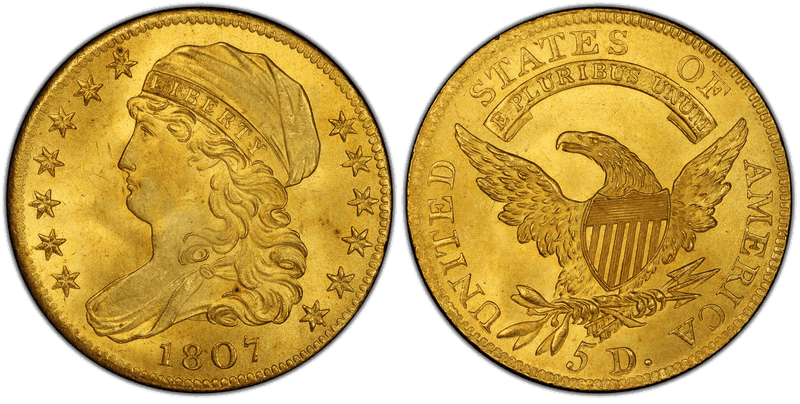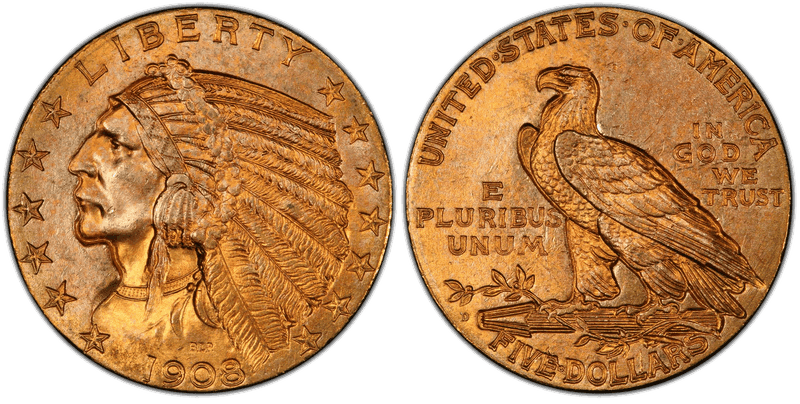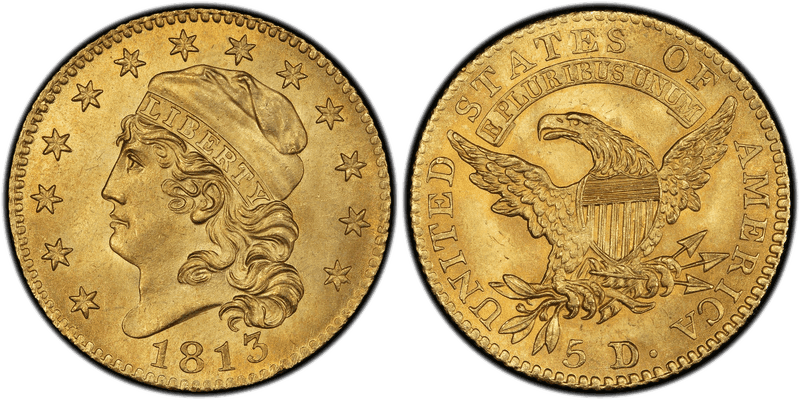
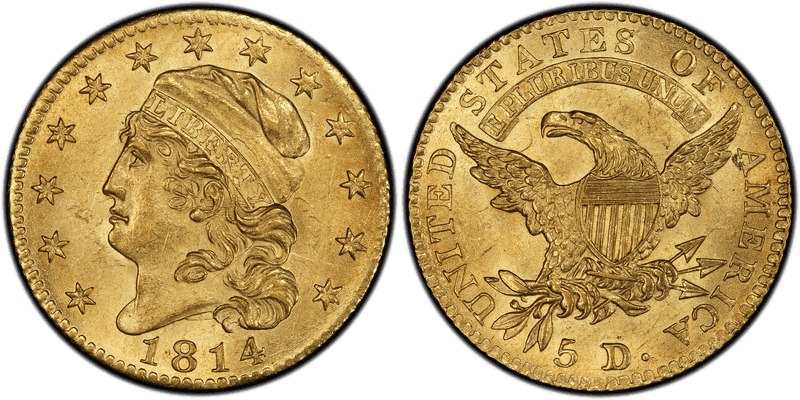
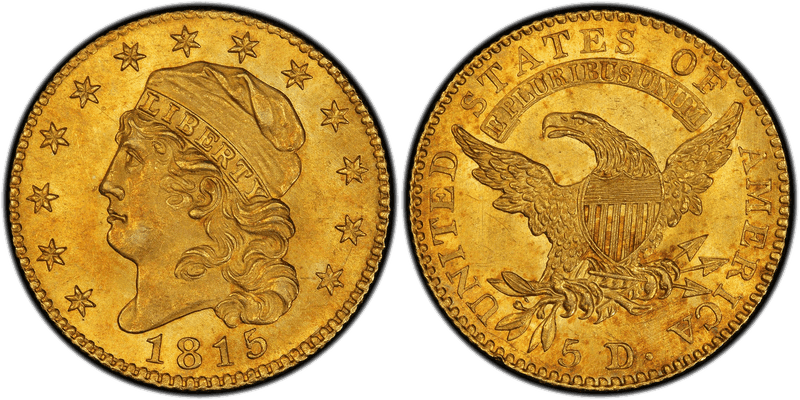
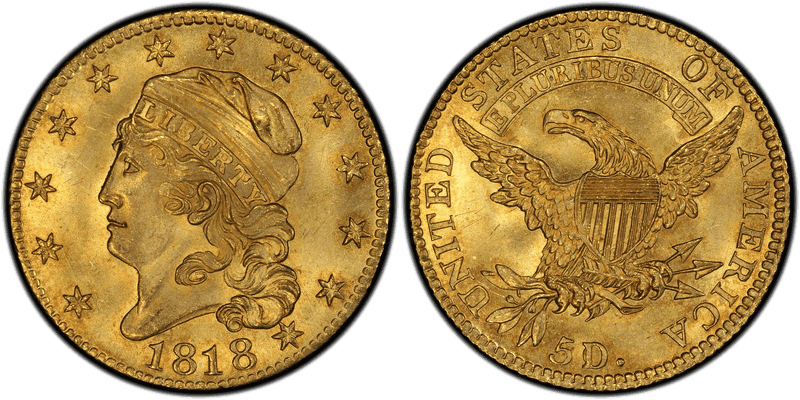
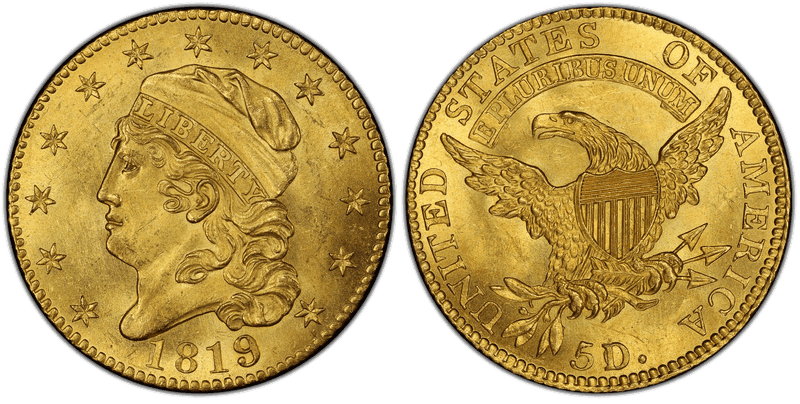
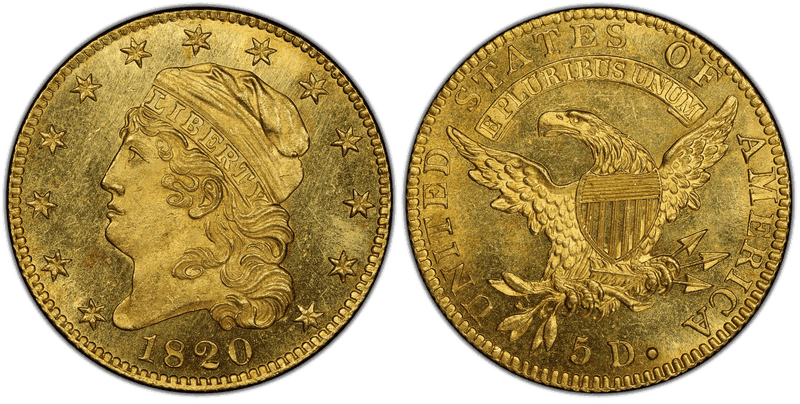

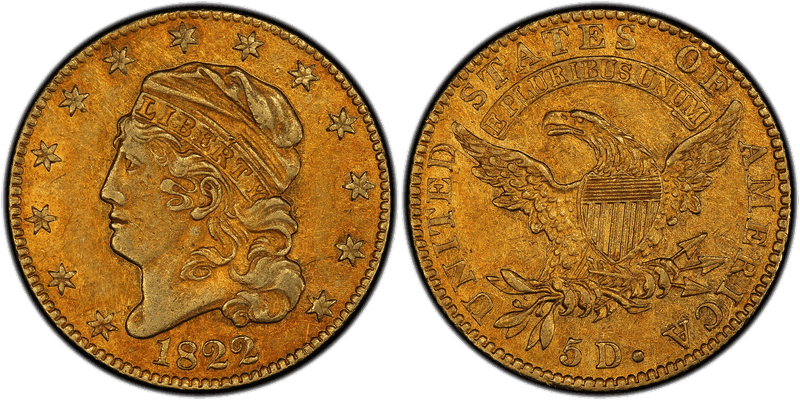
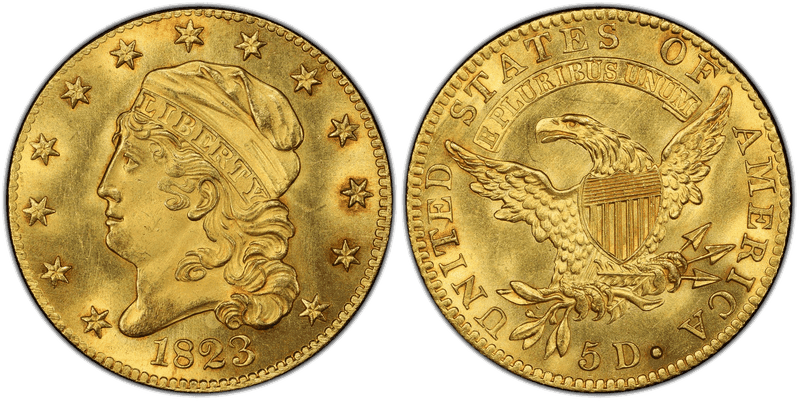
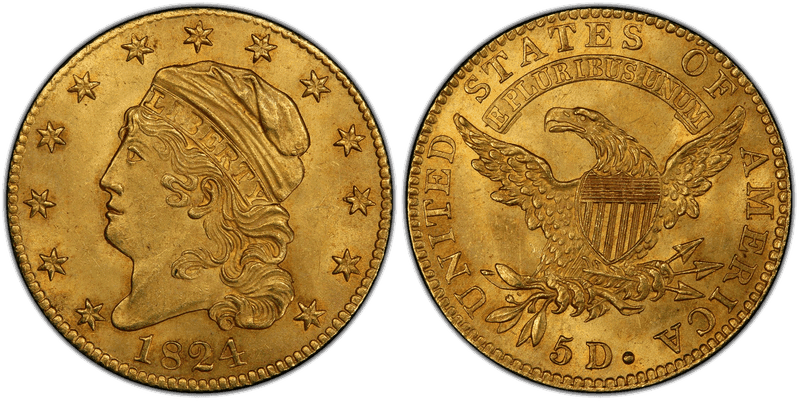
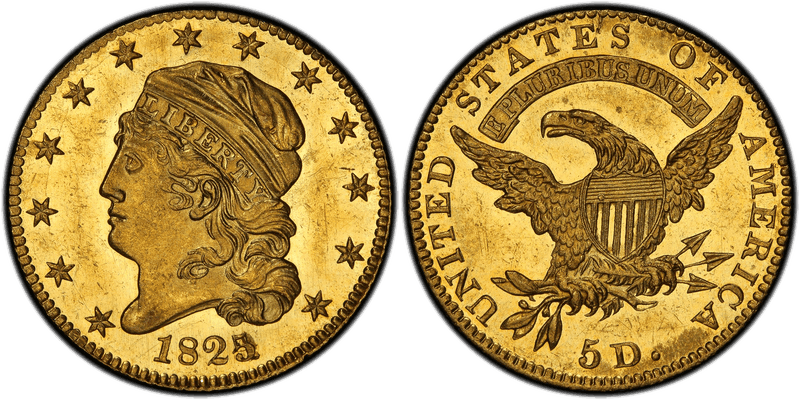
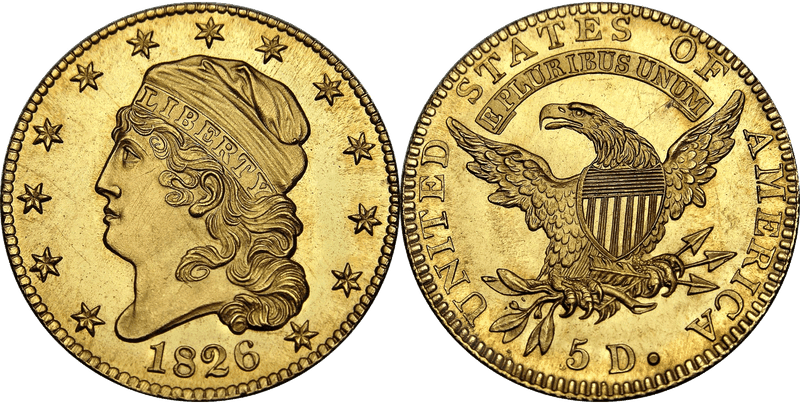
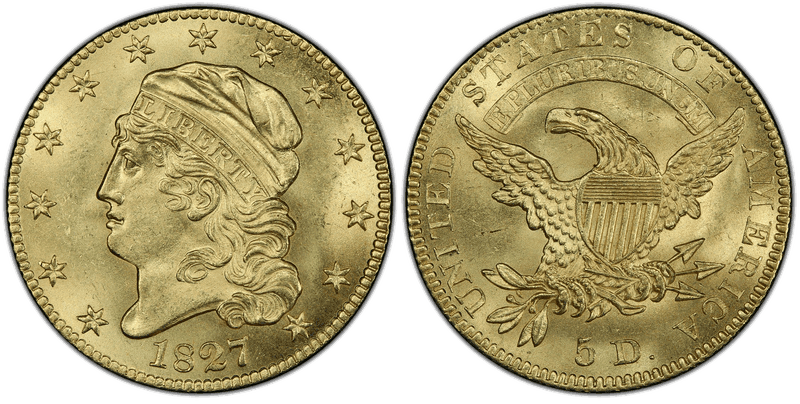
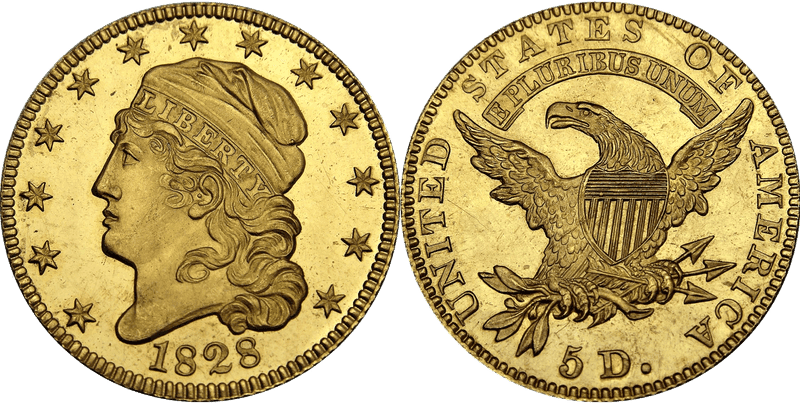
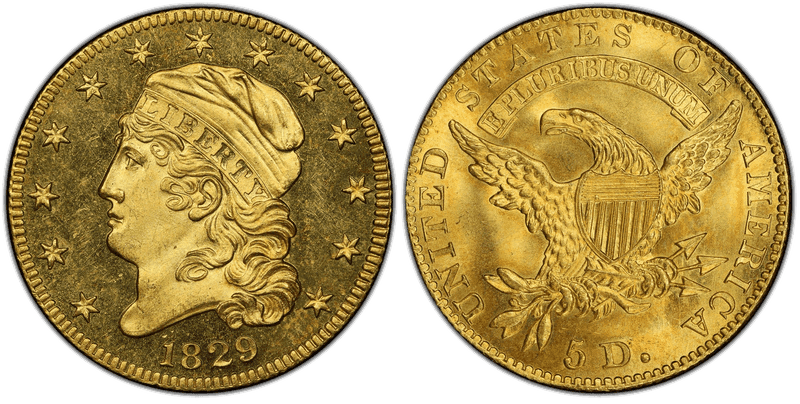


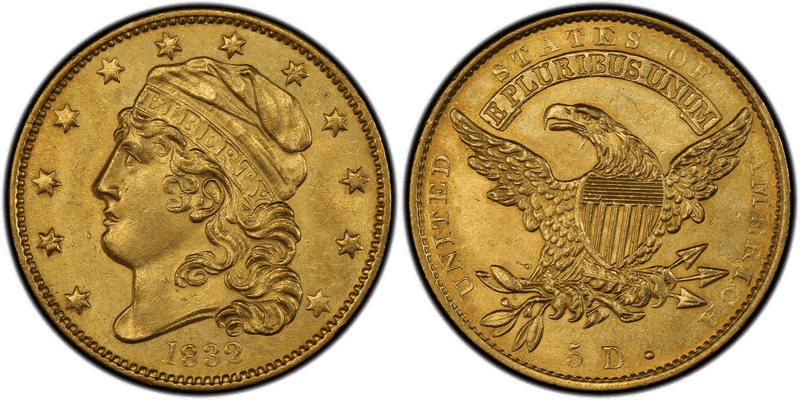
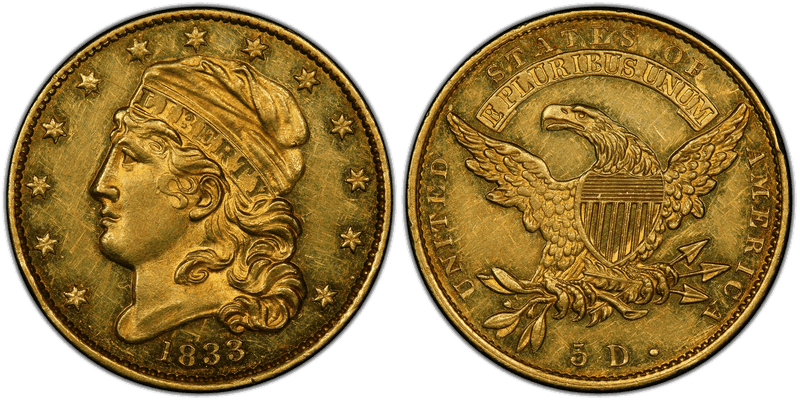
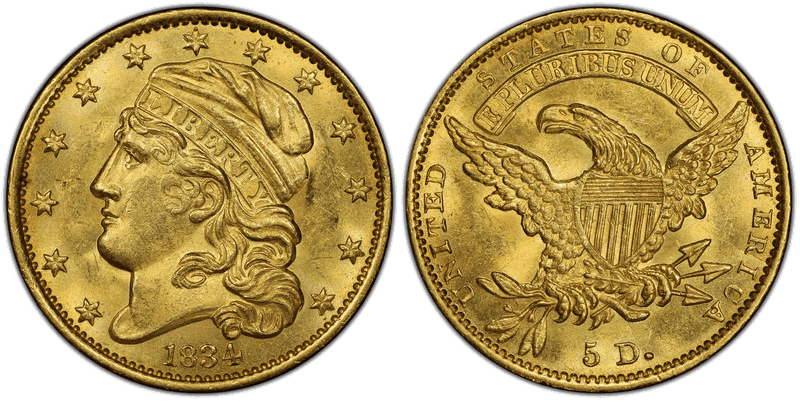
In 1813 John Reich enlarged the head on his half eagle and cut the bust back to the neck, giving the Capped Head design that lasted, with one change in size, until 1834. It was struck in a lean period for American gold. The eagle had not been coined since 1804 and the quarter eagle was not struck between 1808 and 1821, so for several years the Mint coined no gold except half eagles, made mostly for banks that wanted it for reserves and foreign trade.
Few of these coins stayed in the country. The Coinage Act of 1792 had valued gold at fifteen times its weight in silver, but in Europe gold brought sixteen times or more, so a half eagle was worth more as metal abroad than as money at home. Bullion dealers bought new coins at a premium, exported them and melted them; Walter Breen cites some 40,000 half eagles of recent mintage melted in a single Paris melt in 1831. That is why the reported mintages say little about how many coins exist today, and why some issues of tens of thousands survive as a handful of coins.
On January 11, 1816 fire damaged the Mint's machinery for making strips and planchets, and no half eagles are dated 1816 or 1817. In 1829 the Mint began striking half eagles in a close collar, a steel ring that held each blank to a fixed diameter and impressed the reeding at the same blow. Chief Engraver William Kneass adapted the design to it: the coin shrank from about 25 mm to about 23.8 mm, the stars, date and lettering became smaller, and a beaded border inside a raised rim replaced the toothed border. The Act of June 28, 1834 finally reduced the gold in the half eagle, and later that year the Capped Head gave way to Kneass's lighter Classic Head.