
1852 Braided Hair Large Cent Newcomb-6 Obverse Rim Cud
Error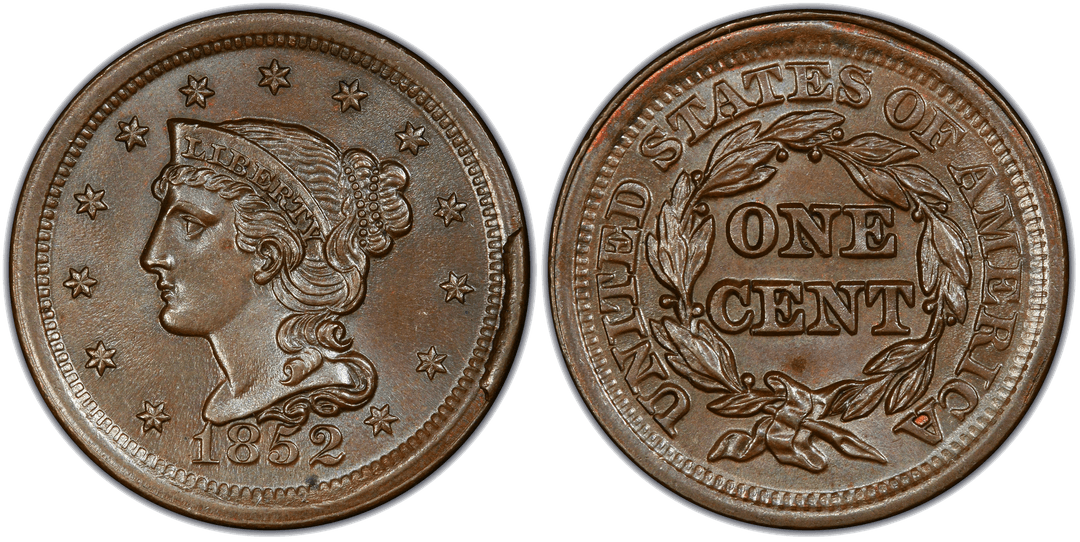
Community Voting
This listing needs 10.0 weighted votes to advance to community review.
Description
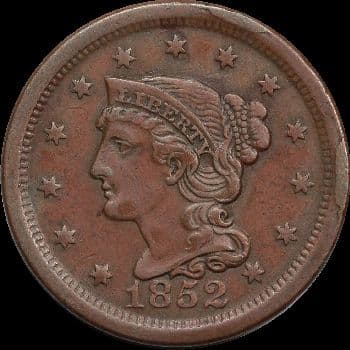
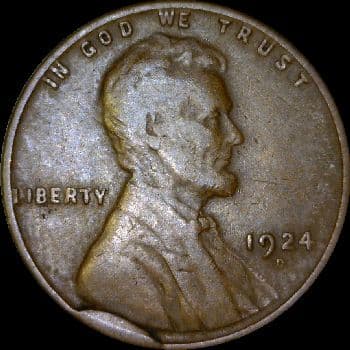
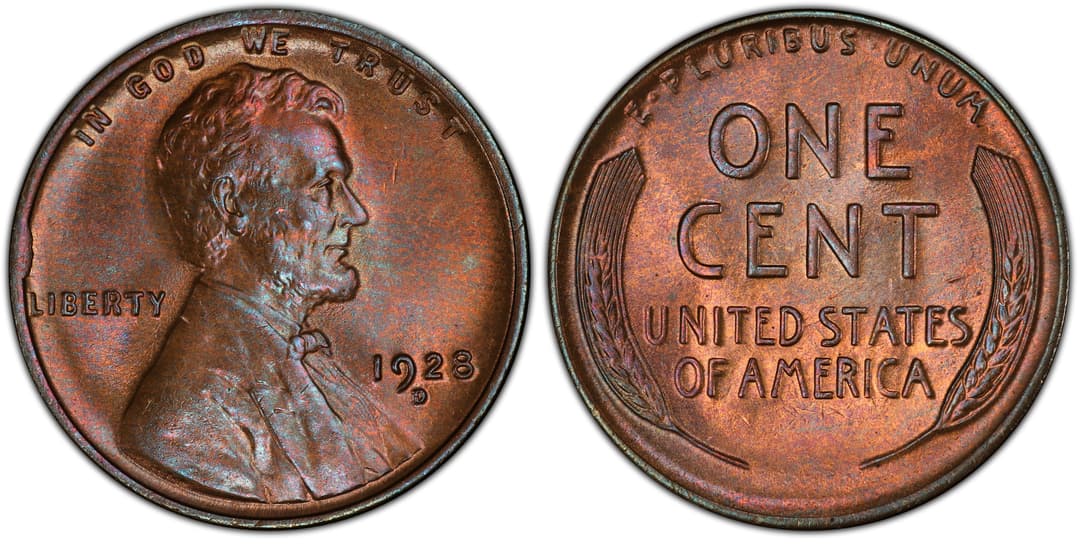
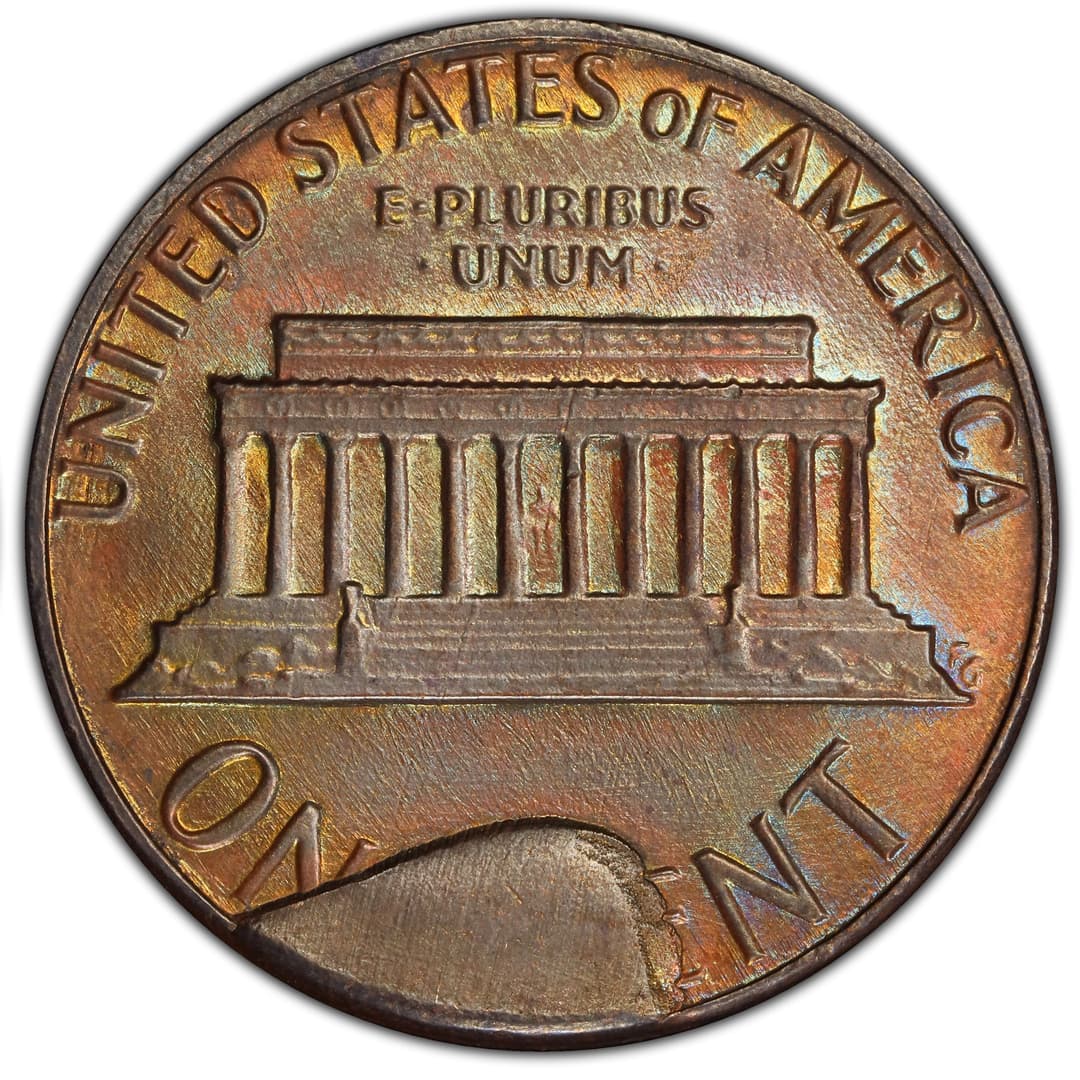
An obverse rim cud on the 1852 Braided Hair large cent die marriage Newcomb-6 documents a catastrophic die failure where a section of the obverse die fractured and separated along the rim between the 3 o'clock and 4 o'clock positions. When a piece of die steel breaks free from the rim area, the resulting void in the die fills with planchet metal during striking, producing a raised, featureless lump on the finished coin that obliterates whatever design elements occupied that zone. Christian Gobrecht's Braided Hair design — featuring Liberty with her hair gathered in a braid and bound with a coronet inscribed LIBERTY — served as the final iteration of the large cent obverse from 1839 through the denomination's end in 1857. The Newcomb reference system, developed by Howard R. Newcomb in his 1944 work "United States Copper Cents 1816-1857," assigned die marriage numbers to each documented combination of obverse and reverse dies, with N-6 identifying a specific pairing for the 1852 date. Philadelphia struck approximately 5.06 million large cents in 1852, producing them on the large 27.5mm copper planchets that had defined the denomination since 1793. Cuds on large cents hold particular significance in early American numismatics because the soft copper planchets recorded die failures with exceptional fidelity, and the relatively small number of surviving die pairs for each date makes each documented die marriage a meaningful entry in the census. The 3-to-4 o'clock position places the cud in the right quadrant of the obverse, potentially affecting stars in that region or the adjacent field area. Collectors can identify this variety by the distinctive raised mass at the described clock position, requiring no magnification for the cud itself though a loupe helps confirm the N-6 die marriage through other die characteristics.
Attribution History
- Discovered by NumisDexDealer
- Newcomb N-6
Community & Reference
Learn About Cud
How this error occurs, identification tips, and collecting guide
Discuss in Forum
Join the community conversation about Cent
Catalog Status
Related Errors


More Cud Errors
Collector Essentials
Tools for examining and preserving error coins and die varieties.
10x-20x Jeweler's Loupe
Essential for examining die varieties, doubled dies, and RPMs
Cherry Picker's Guide
The definitive reference for U.S. error coins and die varieties
2x2 Coin Flips & Holders
Protect and organize your finds with archival-quality holders
USB Digital Microscope
Capture detailed images for documentation and community submissions
As an Amazon Associate, NumisDex earns from qualifying purchases.