
1840 Braided Hair Large Cent N-9 Obverse Split Die
Error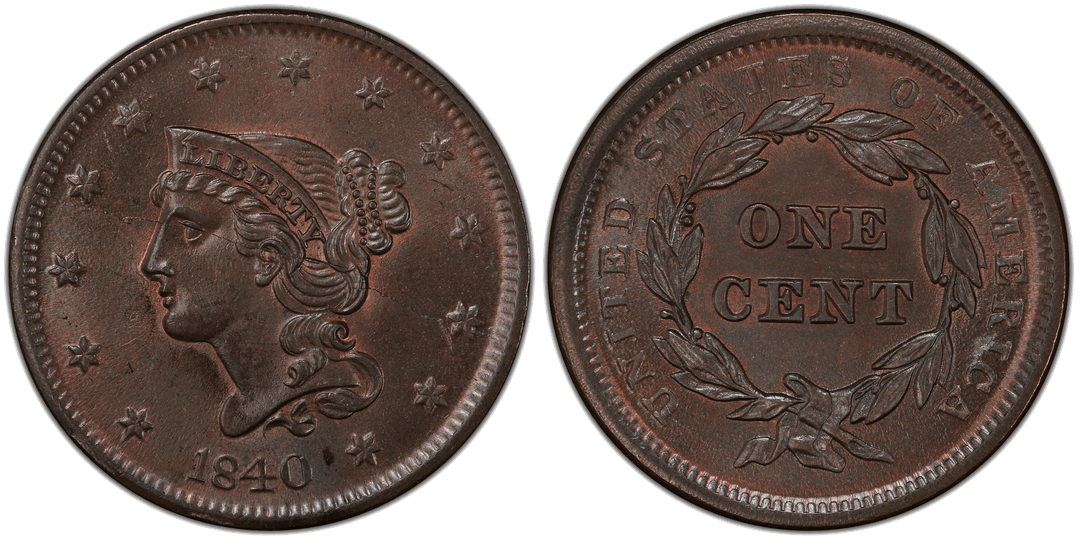
Description
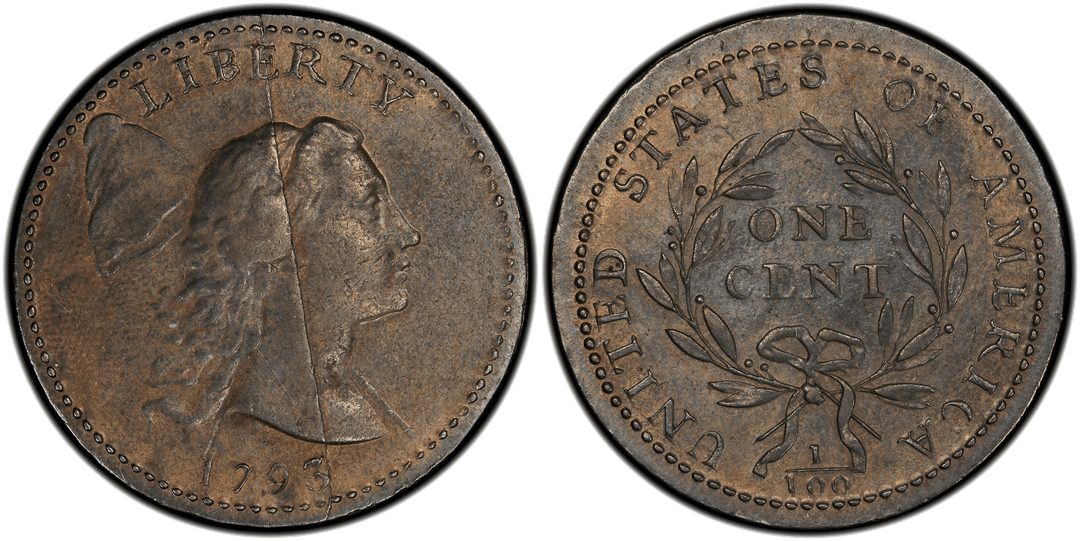
Cataloged as Newcomb N-9 under Howard R. Newcomb's reference — the standard attribution system for Braided Hair large cents, comparable to the Sheldon numbers used for earlier designs — this 1840 large cent displays a split die on the obverse. A split die forms when a die crack propagates completely from rim to rim, leaving a raised line spanning the full diameter of every subsequent struck coin. On this example, the crack runs from the rim below the star at approximately 10 o'clock, through Liberty's eye and head, and to the star at approximately 4 o'clock. The Braided Hair design, introduced by Christian Gobrecht in 1839, employed improved die steel relative to earlier types, making split dies somewhat less common than on Draped Bust or Matron Head issues. Still, the hand-operated presses and extended die use of the early US Mint produced die failures at meaningful rates. Braided Hair variety specialists catalog split die examples as distinct die states within the Newcomb system, and N-9 split die specimens occupy a specific place in that sequence, representing the die after the crack reached its full rim-to-rim extent. A die crack extends completely across the obverse die from rim to rim, leaving a raised line spanning the full diameter of the struck coin.
Attribution History
- Discovered by NumisDexDealer
- Newcomb N-9
Community & Reference
Related Errors
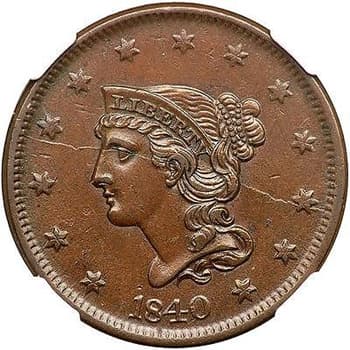
More Split Die Errors
Collector Essentials
Tools for examining and preserving error coins and die varieties.
10x-20x Jeweler's Loupe
Essential for examining die varieties, doubled dies, and RPMs
Cherry Picker's Guide
The definitive reference for U.S. error coins and die varieties
2x2 Coin Flips & Holders
Protect and organize your finds with archival-quality holders
USB Digital Microscope
Capture detailed images for documentation and community submissions
As an Amazon Associate, NumisDex earns from qualifying purchases.