Split Die (SPD)
A split die occurs when a die cracks horizontally — parallel to the die face — and the top layer of the die begins to separate from the body beneath it. This is fundamentally different from a vertical die crack that fractures the die face from top to bottom. In a split die, the die is delaminating: the striking surface peels away from the underlying die steel like a cap lifting off. Coins struck by a splitting die show distinctive characteristics — distorted, spread, or unusually textured design from the die face physically separating during use.
How Does It Happen?
Split dies result from a different failure mechanism than the vertical cracks that produce standard die cracks and cuds:
- Subsurface stress accumulation: During the die hardening process (heat treatment), the surface layer of the die steel develops different mechanical properties than the interior. The surface is harder (to resist wear during striking) while the interior is tougher (to resist fracture). This differential creates a subsurface stress zone at the boundary between the hard surface layer and the softer interior.
- Horizontal crack initiation: The repeated striking stress, combined with the inherent stress at the hardness transition zone, nucleates a crack that runs parallel to the die face rather than perpendicular to it. This horizontal orientation is the defining characteristic of a split die.
- Crack propagation: The horizontal crack extends outward between the surface layer and the die body. As it spreads, an increasing area of the die's striking surface becomes disconnected from the underlying support.
- Surface deformation: With the surface layer partially detached from the die body, it loses structural support. Under striking pressure, the unsupported surface layer flexes, distorts, and eventually begins to peel upward at its edges. This deformation affects the coins struck by the die.
- Progressive failure: The split worsens with continued use. The die face layer spreads outward as it lifts, causing the struck coin's design to progressively expand, distort, and lose sharpness. Eventually, the surface layer fractures or detaches completely, ending the die's useful life.
Split dies are relatively uncommon because the horizontal crack requires specific metallurgical conditions in the die steel — typically related to the heat treatment process. If the hardening process creates too sharp a transition between surface hardness and interior toughness, the die is more susceptible to splitting. Modern die manufacturing techniques and quality control have reduced the incidence of split dies compared to earlier eras.
How to Identify a Split Die
Split die coins have a set of characteristics distinct from other die errors:
- Design spread: The most noticeable feature on many split die coins is that design elements appear slightly expanded or spread outward from their normal positions. As the die face lifts and spreads, the design it impresses on coins spreads with it.
- Edge lifting: The periphery of the die face often lifts first, creating a raised ring or ridge near the rim of struck coins. The center of the design remains closer to normal while the edges show the most distortion.
- Unusual texture: The coin's surface in the split area shows an unusual, slightly rough or granular texture. The separating die face no longer presents a smooth, uniform striking surface.
- Design distortion: Letters, numerals, and design elements show progressive distortion — stretching, blurring, or losing definition — as the die split worsens across successive die states.
- Rim anomalies: The rim of split die coins is often irregular — thickened, distorted, or showing evidence of the die face peeling beyond the normal die boundary.
Split Die vs. Die Deterioration vs. Mechanical Doubling
| Feature | Split Die | Die Deterioration | Mechanical Doubling |
|---|---|---|---|
| Design spread | Outward expansion from center | No spread, just softening | Shelf-like doubling in one direction |
| Texture | Rough, granular | Progressively mushy | Normal |
| Rim | Distorted, irregular | Normal | Normal |
| Pattern | Radial expansion | Even weakening | Directional offset |
Notable Examples
Early Copper Coinage (1793-1857)
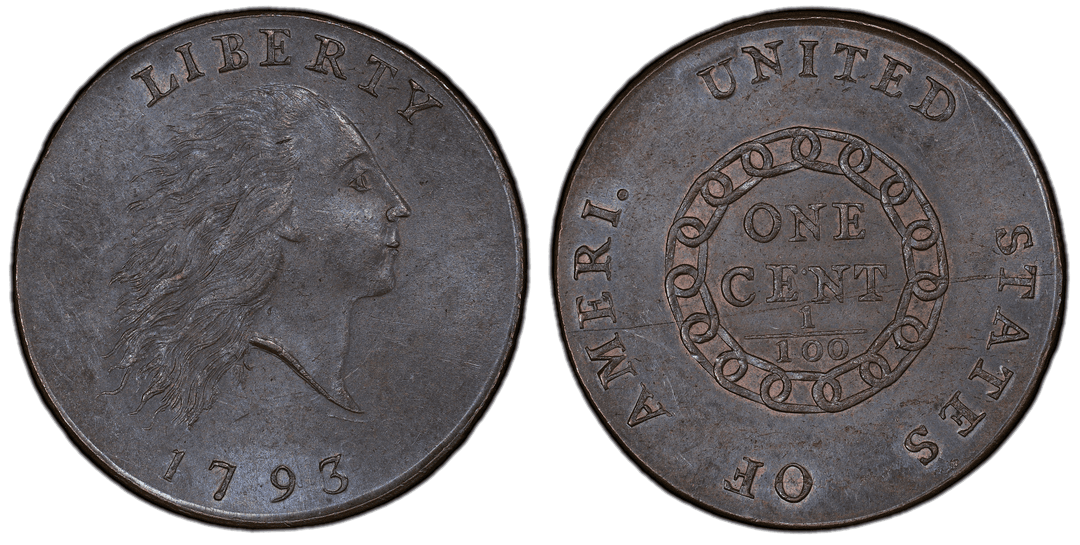
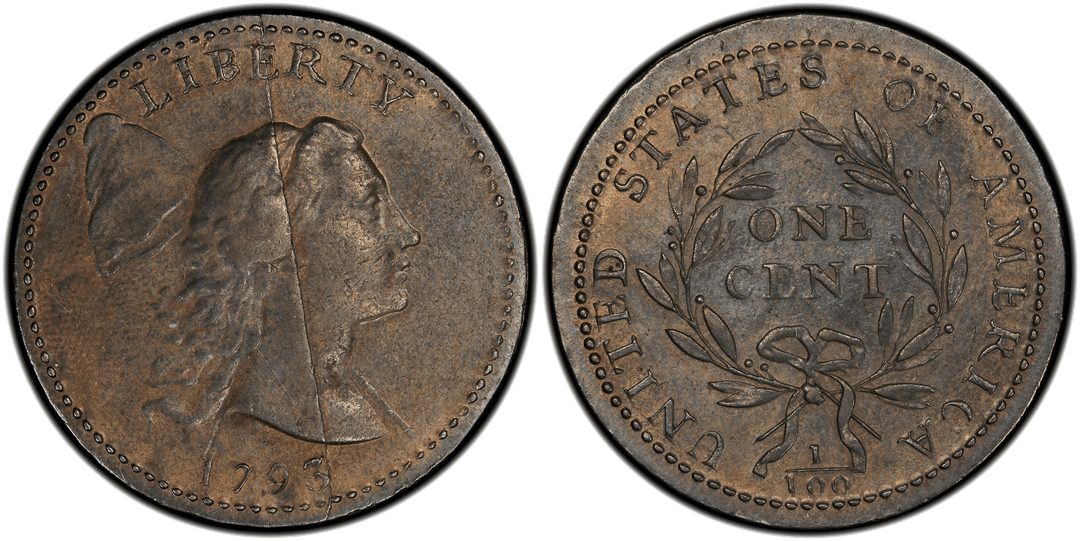
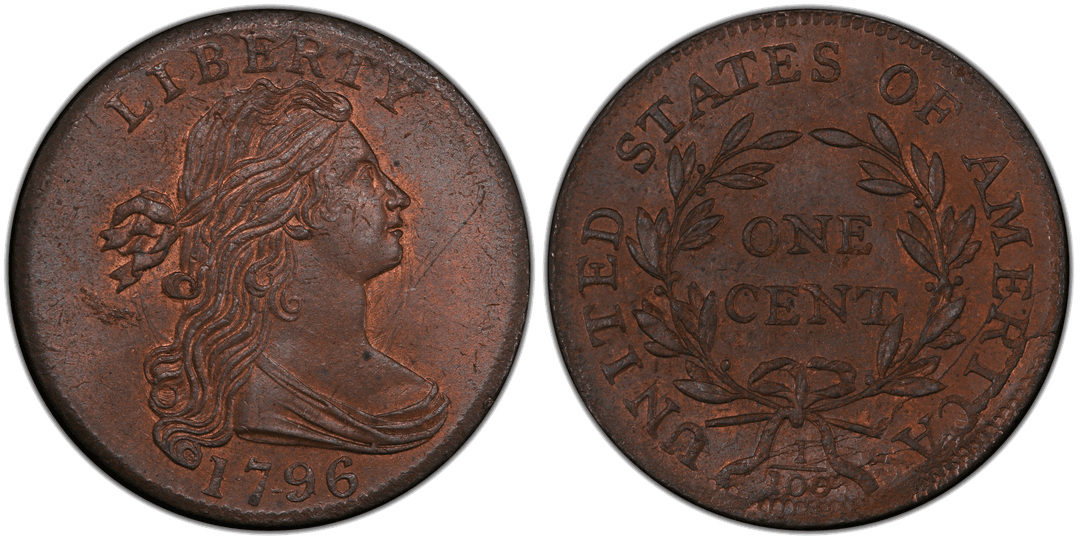
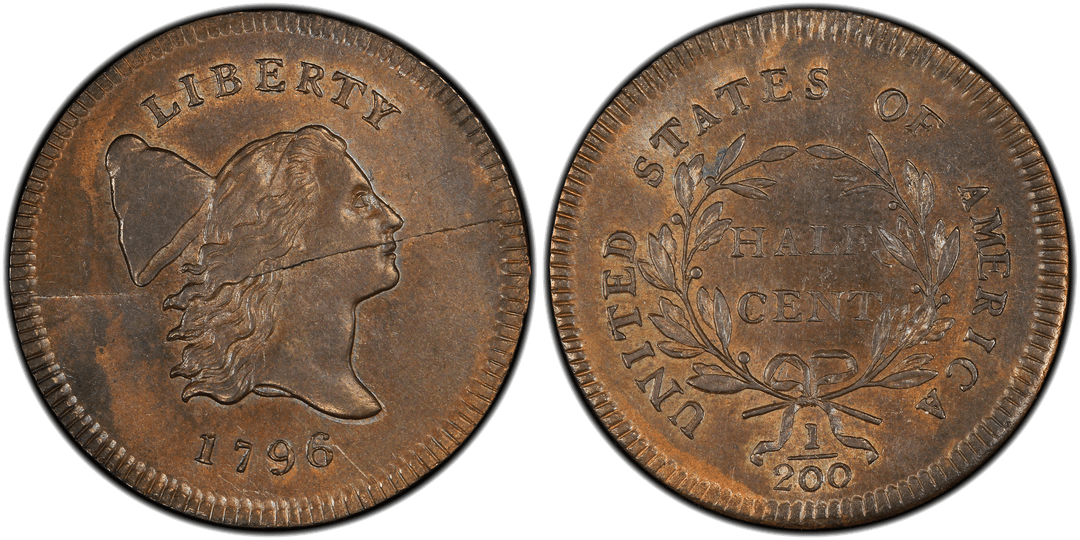
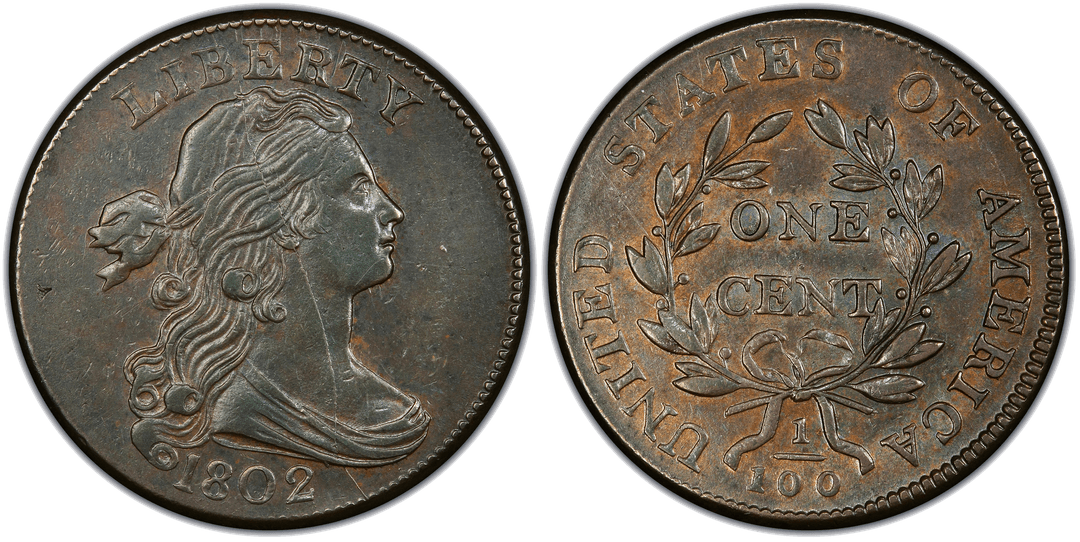
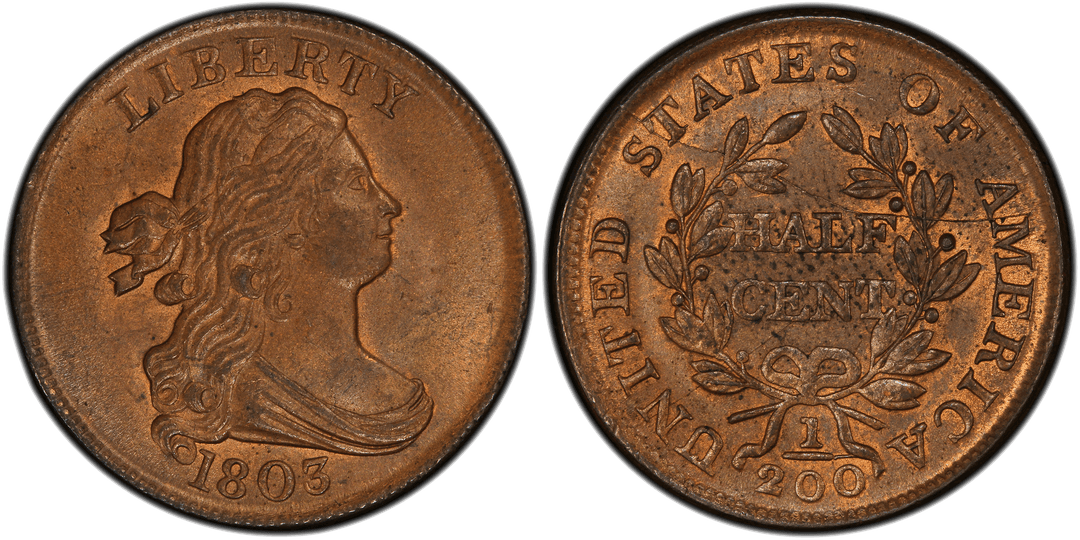
Large cents and half cents from the earliest U.S. Mint production include split die examples. The die steel and heat treatment methods of the late 18th century were less controlled than modern processes, making subsurface cracking more common. Some early date large cents show dramatic design spread consistent with a splitting die face.
Indian Head Cents (1859-1909)
The Indian Head cent series includes documented split die varieties. The transition from copper-nickel (1859-1864) to bronze (1864-1909) composition changed the striking characteristics, and some die failures during this period are attributed to splitting rather than standard vertical cracking.
Lincoln Wheat Cents
Split die examples from the Wheat cent era (1909-1958) are documented in error coin references. The high production volumes during the 1940s and 1950s, combined with wartime and postwar die steel quality variations, produced split die failures. Examples from the 1940s are particularly noted.
Modern Clad Coinage
Post-1965 clad coinage has produced split die examples across multiple denominations. The introduction of clad planchets changed the stress dynamics on dies (copper-nickel clad is harder than the previous 90% silver composition), and split dies occur periodically in modern production. Roosevelt dimes and Washington quarters from the 1970s-1990s include documented split die varieties.
Proof Die Splits
Split dies occur in proof production as well as business strike production. Proof dies receive different heat treatment than business strike dies, and the polishing process can introduce surface stresses that promote horizontal cracking. Split die proofs are rare and carry significant premiums due to the combination of the split die error and proof format.
Collecting Tips
- Rarity: Split dies are genuinely rare compared to standard die cracks. The specific metallurgical conditions required for horizontal cracking make this a low-frequency event. Any confirmed split die coin is a noteworthy piece.
- Progressive sets: Like other die failure varieties, split die coins are most compelling when collected as progression sets showing the split developing across sequential die states. Early split states show subtle design spread; late states show dramatic distortion.
- Identification skill: Recognizing a split die requires familiarity with normal die deterioration. The key is the characteristic outward spread of design elements combined with the unusual surface texture. A coin that simply looks "mushy" from normal die wear is not a split die — the spread and texture must be present.
- Denomination effect: Split dies on larger coins (quarters, half dollars, dollars) show the design spread more dramatically than on small coins. A few tenths of a millimeter of spread is nearly invisible on a dime but clearly detectable on a dollar.
- Expert attribution: Split dies are among the more challenging die errors to attribute correctly. Third-party grading services with error specialists (PCGS, NGC, ANACS) provide professional confirmation that adds value and confidence.
- Market value: Confirmed split die coins command solid premiums in the error market — typically $25 to several hundred dollars depending on denomination, date, and severity. Dramatic late-state split dies with obvious design spread are the most valuable.
- Literature: Split dies receive less coverage in popular error references than cuds or die cracks. Specialized error coin publications by Fred Weinberg, Mike Diamond, and the error division of the American Numismatic Association provide the most detailed information.
Related Error Types
- Die Crack (DCK) — Vertical fracture through the die face, different orientation
- Shattered Die (SHD) — Multiple interconnected surface cracks, not horizontal splitting
- Die Break (DBK) — Die material separating from the surface, but vertically
- Cud (CUD) — Rim die break from vertical cracking
- Die Polishing (DPL) — Surface maintenance that can affect die stress patterns
- Bisecting Rim-to-Rim Die Crack (RDC) — Full-face vertical crack, different from horizontal split