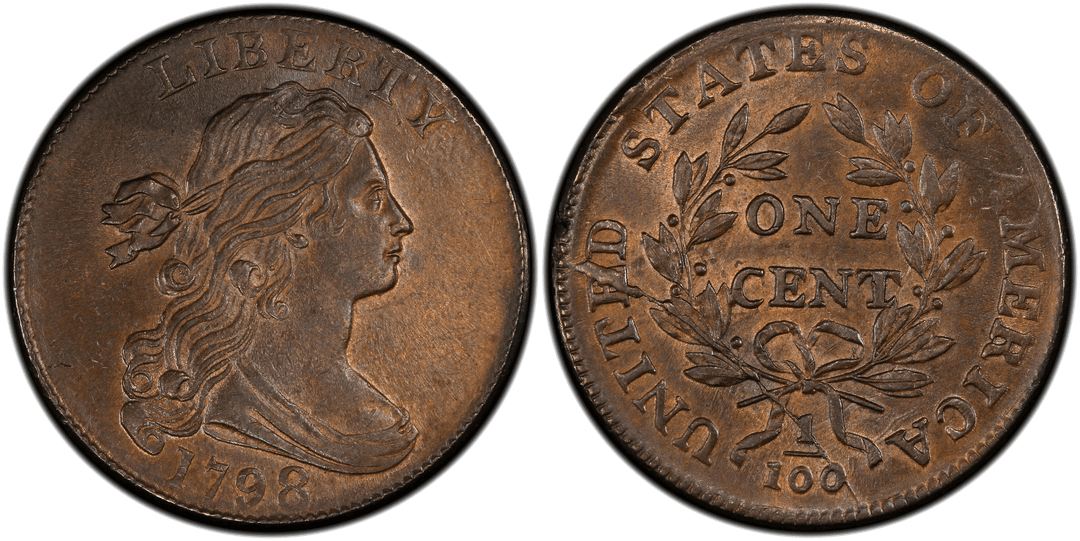
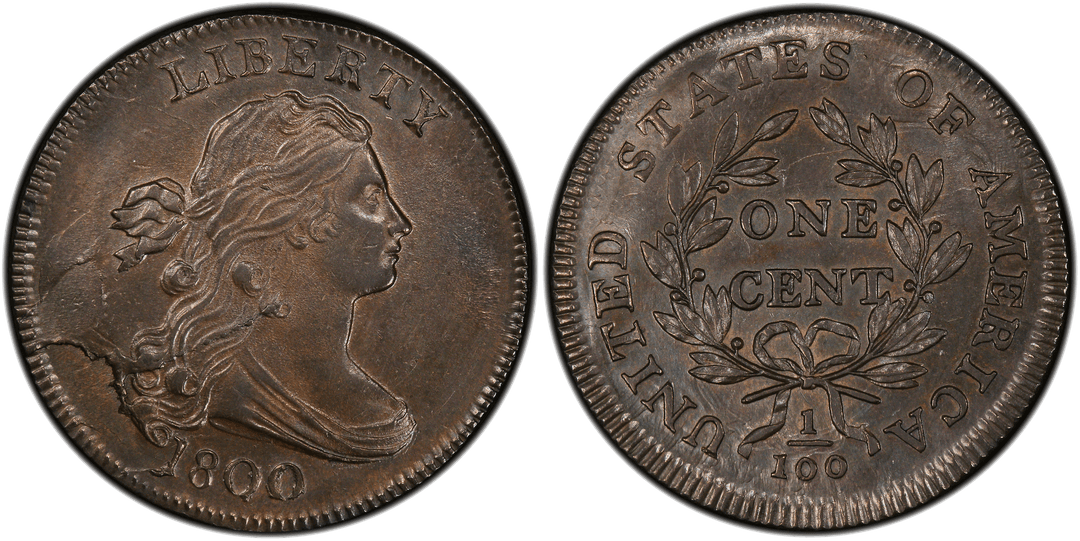
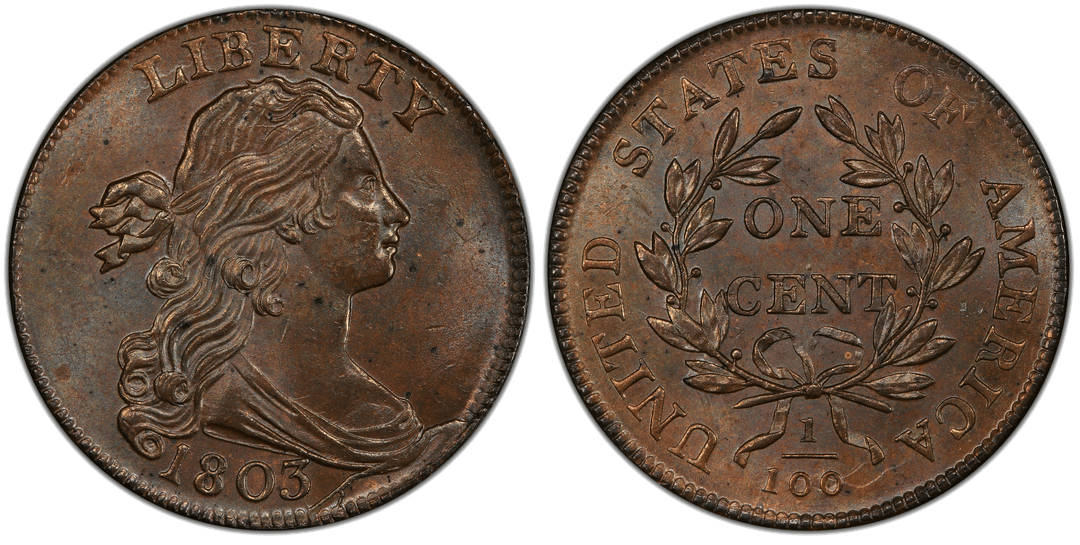
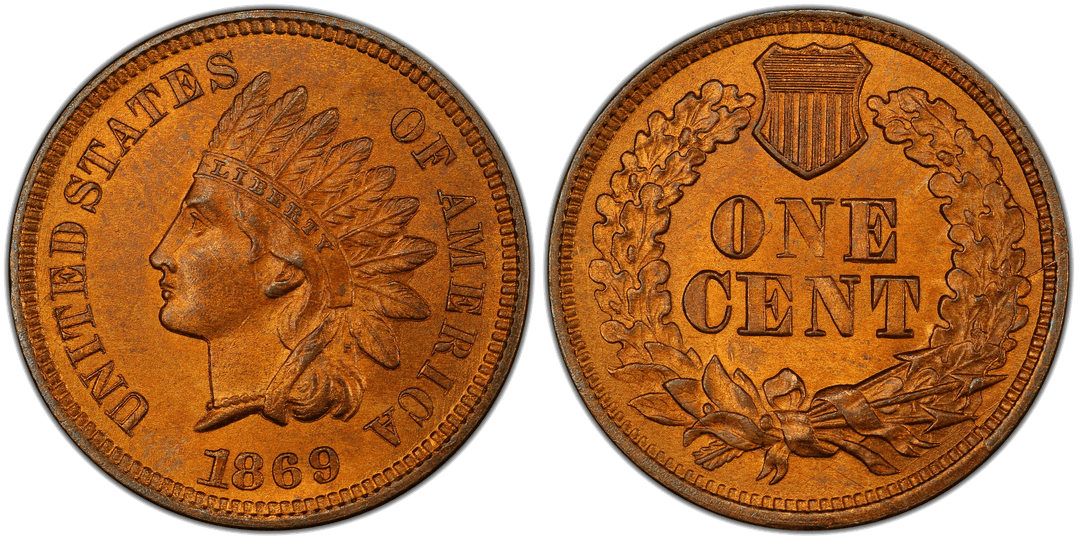
Retained Cud (RCD)
A retained cud occurs when a piece of the die breaks away at the rim but is held in place by the surrounding die structure, the collar, or mechanical pressure within the press. The broken fragment has fully separated from the die body — the fracture is complete — but instead of falling away, it remains in its original position or shifts only slightly. Coins struck by a die in this condition show a raised area at the rim with partial, displaced, or weakly impressed design elements rather than the completely blank surface of a full cud.
How Does It Happen?
The retained cud represents a specific outcome in the die failure sequence where the final step — fragment ejection — does not occur:
- Die crack propagation: A die crack develops and extends to the rim, defining a section of die face between the crack and the rim's edge. This is identical to the process that leads to a standard cud.
- Complete fracture: The crack deepens and fully severs the die fragment from the die body. At this point, the fragment is mechanically disconnected — there is no remaining metal bridge holding it in place.
- Fragment retention: Instead of falling away, the fragment stays in position. Several mechanisms can retain the fragment:
- Collar constraint: The collar that surrounds the die to form the coin's rim presses against the fragment and holds it in place.
- Press pressure: The mechanical force of the press keeps the fragment seated in its socket during the striking cycle.
- Friction fit: The fragment's irregular fracture surface interlocks with the corresponding surface on the die body, creating a friction fit that resists displacement.
- Adjacent die material: Surrounding intact die steel constrains the fragment from shifting.
- Partial displacement: Although retained, the fragment is rarely perfectly aligned with the intact die face. It shifts slightly — rotating, tilting, or sinking — because it is no longer rigidly connected. This displacement produces the characteristic retained cud signature on struck coins.
- Coin production continues: Each strike drives planchet metal against the retained fragment, which impresses design detail from its slightly shifted position. The resulting coins show design elements that are displaced, weakened, or partially present — a hybrid between a normally struck area and a full cud.
How to Identify a Retained Cud
Retained cuds exhibit a distinctive combination of features:
- Rim location: Like all cuds, retained cuds occur at the rim. The affected area extends from a die crack inward to the coin's edge.
- Partial design: The key distinguishing feature. Unlike a full cud (featureless blob), a retained cud shows some design detail — but the detail is displaced, weakened, shallow, or incomplete. Lettering leans, design elements are offset from their correct positions, or details appear partially impressed.
- Raised surface: The retained cud area is raised above the normal coin surface, reflecting the fragment's displacement from its original position.
- Defining crack line: A prominent die crack marks the inner boundary of the retained cud, separating the fragment's zone from the intact die's zone.
- Inconsistent strike depth: Within the retained cud area, the strike depth varies. Some portions show relatively strong design; others are weak or absent. This variation results from the fragment's uneven positioning.
Retained Cud vs. Pre-Cud vs. Full Cud
| Feature | Pre-Cud | Retained Cud | Full Cud |
|---|---|---|---|
| Fragment status | Partially cracked, still connected | Fully broken, held in place | Fully broken, fallen away |
| Design in area | Distorted but present | Partial/displaced | Absent (featureless) |
| Fragment movement | Slight bulging | Noticeable shifting | N/A (fragment gone) |
| Strike consistency | Some variation | High variation | Uniform (blank) |
Notable Examples
Half Cent Retained Cuds
The half cent series (1793-1857) includes documented retained cuds that illustrate how early dies deteriorated. The small size of the half cent makes retained cud displacement particularly visible, and several examples are cataloged in Cohen's half cent reference.
Seated Liberty Retained Cuds
Seated Liberty coins across multiple denominations show retained cuds. Branch mint production in the mid-19th century, particularly at New Orleans and San Francisco, operated with limited die supplies, and dies were used through stages of failure that produced retained cuds. The detailed design elements of the Seated Liberty motif make displaced design especially apparent.
Lincoln Cent Retained Cuds
Lincoln cents provide the most accessible examples of retained cuds for modern collectors. The enormous annual mintages create many die failures, and retained cuds appear across the full span of Lincoln cent production. Some well-known Lincoln cent retained cuds show Lincoln's profile partially impressed at a slight offset — creating a distinctive "shifted portrait" effect in the cud zone.
State Quarter Retained Cuds
The State Quarters program (1999-2008) produced retained cuds on several state designs. The complex reverse designs with state-specific imagery make displaced design elements particularly interesting — a shifted state outline or an offset landmark design creates a visually compelling error.
Silver Dollar Retained Cuds
Morgan and Peace dollar retained cuds are rare and highly valued. The large planchet size provides a dramatic canvas for the retained cud effect, and the depth of the design elements on silver dollars makes displacement readily visible. An example with Liberty's cap area showing partially shifted stars or rays is a significant find.
Collecting Tips
- Rarity factor: Retained cuds are scarcer than full cuds from the same die because the retention condition is inherently temporary. Eventually, most retained fragments dislodge, and the die begins producing full cuds. The window during which retained cuds are produced is limited.
- Visual appeal: Many collectors find retained cuds more interesting than full cuds because the partial, displaced design adds complexity. A full cud is a blank blob; a retained cud tells a more nuanced story about the die's condition.
- Progression sets: Retained cuds are the missing middle piece in the most complete die failure progression sets: die crack, pre-cud, retained cud, full cud. Assembling all four stages from the same die pair is rare and highly rewarding.
- Authentication importance: Because retained cuds are valuable and visually unusual, third-party authentication is important for significant examples. PCGS and NGC recognize retained cuds as attributable errors.
- Price positioning: Retained cuds typically command premiums between pre-cuds and major full cuds. The rarity and visual interest justify prices above common die cracks, but the incomplete "blank" effect makes them slightly less visually dramatic than a large full cud to some collectors.
- Examination technique: When examining a coin that shows a raised rim area with partial design, compare the displaced elements to their correct positions. Measure the offset direction and distance to confirm the design displacement is consistent with a retained fragment rather than a weak strike or grease fill.
Related Error Types
- Cud (CUD) — Full cud where the fragment has fallen away
- Pre-Cud (PCD) — The stage before the cud where the fragment has not yet fully separated
- Retained Interior Die Break (RDB) — Same retention concept but in the die's interior
- Die Break (DBK) — General category for die material separation
- Die Crack (DCK) — The fracture that precedes all cud types
- Interior Die Break (IDB) — Die break not connected to the rim