Pre-Cud (PCD)
A pre-cud is an advanced die crack that has nearly — but not yet — separated a piece of the die at the rim. The crack is so severe and deep that the die fragment bounded by the crack and the rim has begun to shift, bulge, or deform, but the fragment remains partially attached to the die body. Coins struck by a die in this pre-cud state show a raised, partially deformed area near the rim with distorted or displaced design elements. The pre-cud represents the intermediate stage between a die crack and a full cud — the moment captured between structural integrity and complete failure.
How Does It Happen?
The pre-cud is a snapshot of a die in the process of failing. Its formation is the middle chapter of the cud formation sequence:
- Crack formation: A die crack develops and propagates toward the rim, or from the rim inward, or both. This is the initial stage — the same process that produces ordinary die cracks.
- Crack deepening: The crack extends not just across the die face but deeper into the die body. As the crack penetrates more deeply, the section of die steel between the crack and the rim becomes increasingly disconnected from the main die structure.
- Fragment distortion (pre-cud stage): The nearly separated fragment begins to move. Under the enormous striking pressure, the fragment bulges outward, shifts slightly, or tilts relative to the intact die face. It has not fallen away — it is still held by the remaining uncracked metal — but it is no longer flush with the rest of the die. This is the pre-cud.
- Coins show displacement: Coins struck at this stage display the telltale pre-cud signature: the area near the rim corresponding to the shifting fragment shows design elements that are displaced, distorted, or impressed at a slightly different depth or angle than the surrounding design.
- Full separation (cud): Eventually, the fragment breaks completely free and the die produces a full cud. The pre-cud stage ends.
The duration of the pre-cud stage varies. Some pre-cuds exist for only a few hundred strikes before full separation occurs. Others persist for thousands of strikes as the fragment gradually loosens. This variation means some pre-cud varieties are extremely scarce while others are more available.
How to Identify a Pre-Cud
Pre-cuds display a characteristic set of features that distinguish them from both die cracks and full cuds:
- Rim-adjacent location: The affected area is always at or near the rim, in the zone between a major die crack and the coin's edge. This is where the fragment is partially separating.
- Design displacement: Unlike a full cud (which is featureless), a pre-cud shows design detail that is shifted, tilted, or unevenly impressed. The die fragment is still striking the coin, but from a slightly different position or angle than the intact die.
- Raised area: The pre-cud zone is raised above the normal coin surface. The shifting fragment creates a step or bulge relative to the surrounding, properly struck area.
- Visible die crack boundary: The major die crack that defines the inner edge of the pre-cud is clearly visible as a raised line on the coin. This crack is the boundary between the stable die and the failing fragment.
- Uneven depth: Design elements within the pre-cud zone have inconsistent depth — some details are sharply struck, others are shallow or partially missing, depending on how the fragment has shifted.
Pre-Cud vs. Die Crack vs. Full Cud
| Feature | Die Crack | Pre-Cud | Full Cud |
|---|---|---|---|
| Die fragment | Intact, in place | Shifting, partially attached | Completely separated |
| Design in affected area | Normal, with raised crack line | Displaced or distorted design | No design (featureless blob) |
| Surface level | Flush with coin surface | Raised, uneven | Raised, smooth |
| Rim connection | Crack runs toward rim | Crack defines separating fragment at rim | Fragment missing at rim |
Notable Examples
Lincoln Cent Pre-Cuds
The Lincoln cent series, with its massive annual mintages and well-documented die varieties, has produced numerous pre-cud examples. Collectors have documented pre-cuds across dates spanning the Wheat, Memorial, and Shield reverse eras. The small size of the cent makes pre-cud displacement proportionally more dramatic — a small shift of the die fragment creates a noticeable visual effect on the compact coin surface.
Large Cent Pre-Cuds
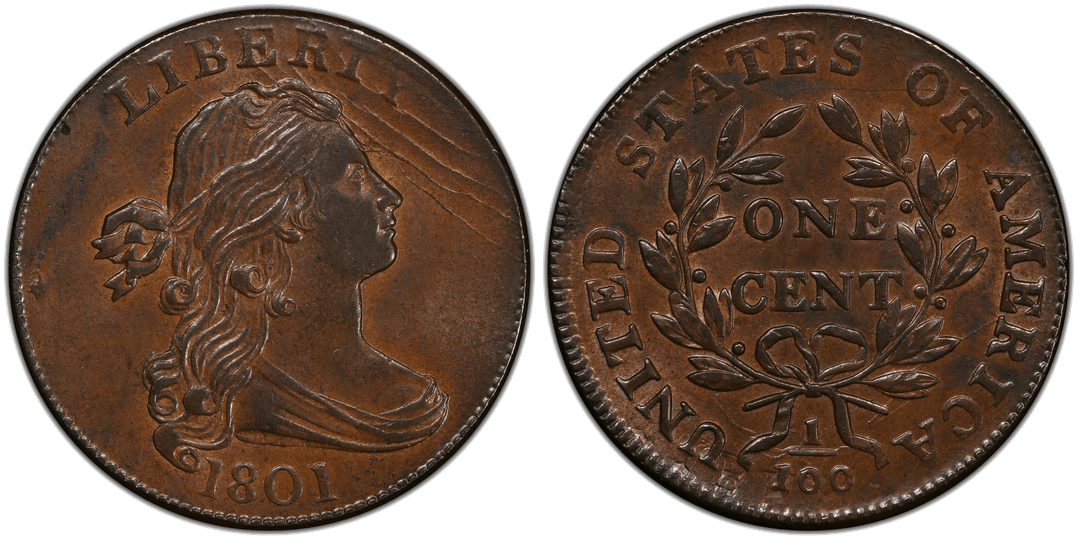
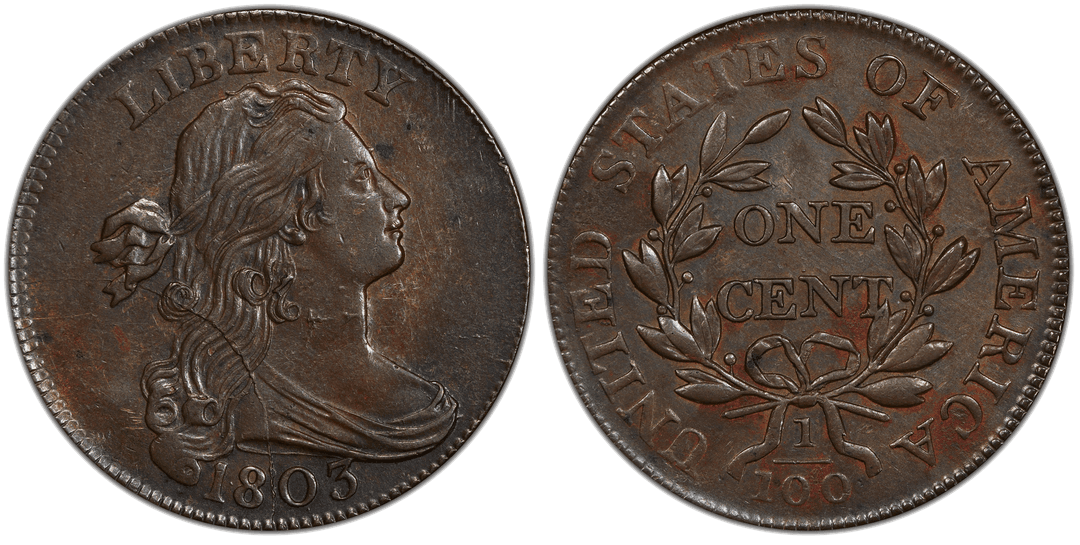
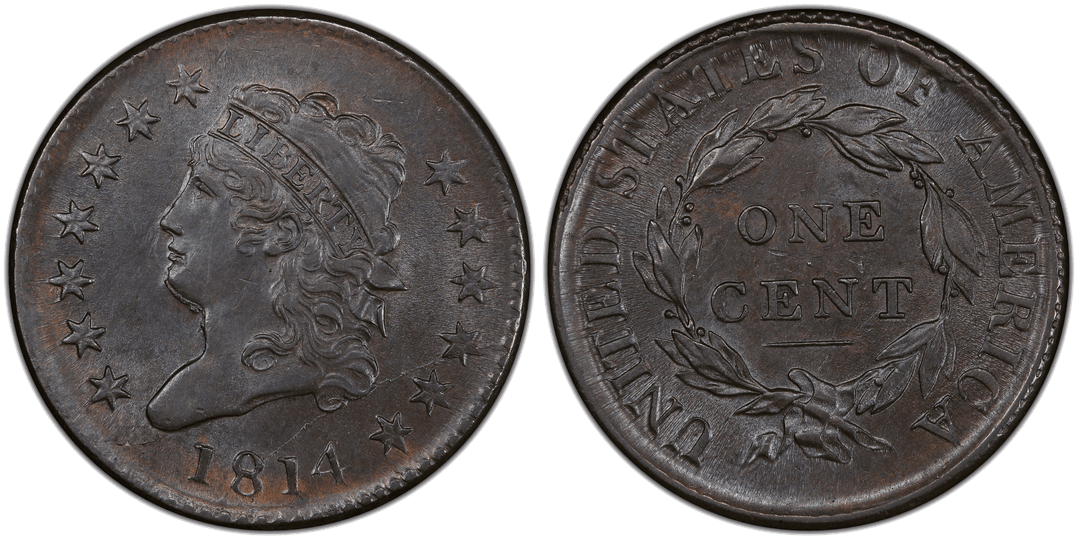
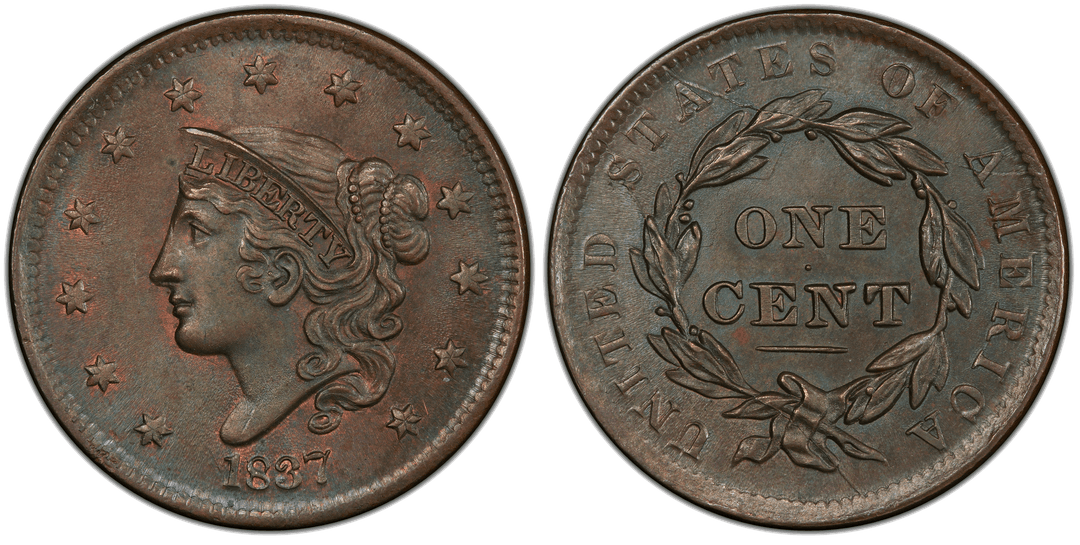
Early large cents (1793-1857) provide the best historical examples of pre-cuds because dies were used far beyond their optimal service life. The early American references by Sheldon, Noyes, and others describe die states that correspond to the pre-cud condition, documenting the progressive failure of specific dies across sequential die states.
Quarter Dollar Pre-Cuds
Washington quarters and State Quarters have yielded notable pre-cuds, particularly on the reverse. The flat fields of many quarter designs make the raised, displaced pre-cud area easy to identify. Some State Quarter pre-cuds are documented alongside their corresponding full cuds from the same die, creating compelling before-and-after pairs.
Half Dollar Pre-Cuds
The larger planchet of the half dollar (30.6mm) provides a broad surface where pre-cud displacement is clearly visible. Kennedy half dollar pre-cuds from the 1970s-1990s high-production era are the most commonly encountered half dollar pre-cuds.
Collecting Tips
- Progression sets: The greatest appeal of pre-cuds is their role in die failure progression sets. A set showing the same die as a die crack, then a pre-cud, then a full cud tells the complete story of a die's failure. These progression sets are the gold standard of die damage collecting and carry premiums well above the sum of the individual coins.
- Scarcity: Pre-cuds are genuinely scarcer than both die cracks and cuds from the same die. The die crack exists from formation through the end of the die's life. The cud exists from separation onward. The pre-cud exists only during the transitional window — which can be brief. Fewer coins are struck during this window, making pre-cuds scarcer.
- Identification challenge: Pre-cuds require more expertise to identify than either die cracks or cuds. The displacement is subtle compared to a full cud's dramatic blank area. Collectors need to recognize the combination of rim-adjacent raised area + displaced design + defining die crack.
- Price range: Pre-cuds on common dates typically command $10-50, depending on the denomination and the visibility of the displacement. Pre-cuds on better dates, or pre-cuds that are part of a documented progression, are worth more.
- Documentation value: Report pre-cud discoveries, especially when you can pair them with the corresponding cud from the same die. This information enriches the die variety record and helps other collectors understand the die's history.
- Magnification: A 10x loupe is essential for examining pre-cuds. The displaced design elements and the crack boundary are easier to assess under magnification than with the naked eye.
Related Error Types
- Cud (CUD) — The full cud that follows the pre-cud stage
- Die Crack (DCK) — The stage that precedes the pre-cud
- Retained Cud (RCD) — Similar concept but the fragment has fully broken while remaining held in position
- Die Break (DBK) — General category for die material separation
- Bisecting Rim-to-Rim Die Crack (RDC) — Major crack extending across the full die face