BIE Die Break Cent (BIE)
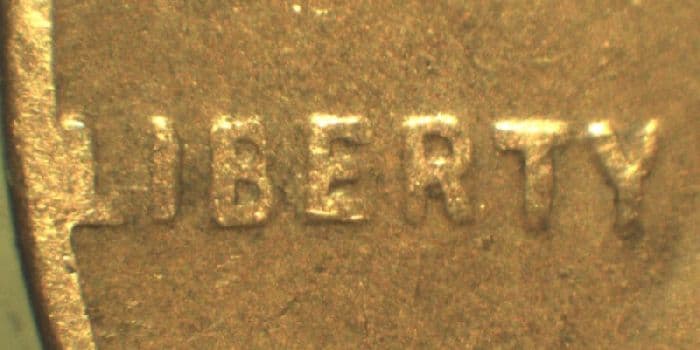
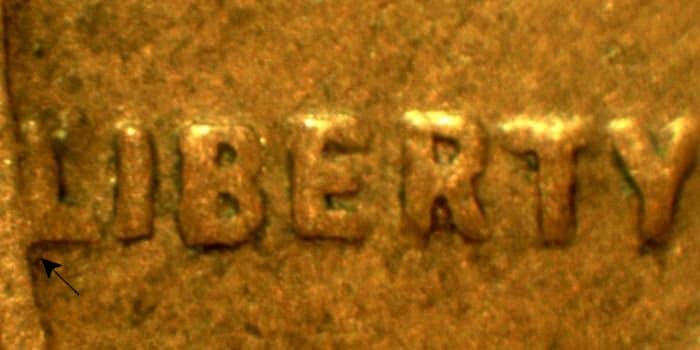
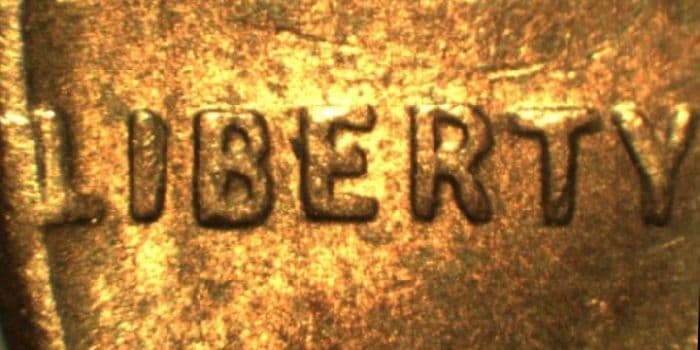
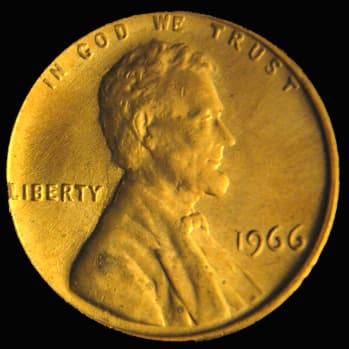
A BIE error is a specific type of die break found exclusively on Lincoln cents. It consists of a small die break or die chip between the letters B and E in the word LIBERTY on the coin's obverse, creating a raised vertical line that resembles the capital letter I. The resulting visual effect — B, then a raised "I," then E — gives the variety its name. BIE errors rank among the most popular and widely collected minor die errors in U.S. numismatics, with dedicated collectors assembling date sets spanning more than a century of Lincoln cent production.
How Does It Happen?
The BIE error forms through the same die deterioration process that produces all die breaks and die chips. The specific mechanics are:
- Stress concentration: The area between the incuse letters B and E on the die (which are raised on the die face, since they will appear incuse in the die and raised on the coin) creates a stress concentration point. The narrow bridge of die steel between two closely spaced design elements is thinner and more vulnerable to fracture than the surrounding die face.
- Die fatigue: After tens of thousands or hundreds of thousands of strikes, metal fatigue weakens the die steel in this stress-concentrated zone.
- Chip or crack forms: A small piece of die steel between the B and E breaks away, or a crack develops and a fragment separates. The void left in the die is a narrow, roughly vertical gap.
- Metal fills the void: When the next planchet is struck, coin metal flows into the void where the die steel broke away, creating a raised vertical mark on the coin — the "I" of the BIE.
The reason BIE errors occur specifically between B and E (rather than between other letter pairs in LIBERTY) relates to the letter spacing and the geometry of the die in this area. The gap between B and E is narrow, and the combined stress of the surrounding design elements — Lincoln's bust, the field, and the lettering — creates favorable conditions for fracture in this specific zone. Die breaks between other letter pairs in LIBERTY do occur (BL breaks, ER breaks, etc.), but the B-E gap produces the most visually distinctive and recognizable result.
How to Identify a BIE
A genuine BIE error has specific characteristics:
- Location: The raised mark must be between the B and the E in LIBERTY. Raised marks elsewhere in the legend or design are die breaks or die chips, not BIE errors.
- Vertical orientation: The raised mark is approximately vertical, running from the baseline of the letters upward. It does not need to be perfectly straight — many BIE errors are slightly curved, tapered, or irregular.
- Height: A strong BIE is roughly the same height as the surrounding letters. Partial BIEs that are shorter than the letters or barely visible are less desirable to collectors.
- Raised profile: Like all die break evidence, the BIE is raised above the coin's field. It is a blob or ridge of metal, not an incised mark.
- No serifs: Unlike the actual letter I in the word LIBERTY (which has serifs in most font styles used on Lincoln cents), a BIE is typically a plain vertical bar without decorative elements. It is a filled void, not an engraved letter.
Strength Classification
BIE collectors generally classify examples by the strength and clarity of the "I":
- Full BIE: The raised mark extends the full height of the surrounding letters and is clearly visible without magnification
- Partial BIE: The raised mark is shorter, thinner, or less defined — visible with a loupe but not immediately obvious to the naked eye
- Weak BIE: A barely perceptible raised mark that requires careful examination to confirm
Notable Examples
1950-D Lincoln Cent BIE
The 1950-D is one of the most well-known BIE dates. Multiple die pairs produced BIE varieties for this date and mint mark, and the raised "I" on the strongest examples is prominent and sharply defined. This date is a staple in BIE collections.
1952 and 1954 Lincoln Cents
Several Philadelphia Mint dies from the early 1950s produced strong BIE errors. The 1952 and 1954 dates each have multiple recognized BIE die varieties, with some showing exceptionally tall and well-formed raised marks.
1970-S Small Date Lincoln Cent BIE
BIE errors on the 1970-S Small Date cent combine two collected varieties — the scarce small date and the BIE break. This overlap drives higher prices than either variety alone would command.
Modern Shield Cents (2010-present)
The Shield reverse design introduced in 2010 has not changed the occurrence of BIE errors on the obverse. Collectors continue to find and catalog new BIE varieties on modern Lincoln cents, demonstrating that the phenomenon is inherent to the design's geometry regardless of die manufacturing technology.
Wheat Cent BIEs (1909-1958)
The Wheat cent era produced numerous BIE varieties. The design ran for nearly 50 years, and the consistency of the obverse design across that span means BIE errors appeared on dozens of dates. Some Wheat cent BIEs are among the most dramatically defined examples known.
Collecting Tips
- Date set collecting: The most common approach to BIE collecting is building a date set — one BIE example from as many different years as possible. Because BIE errors appear across the entire span of Lincoln cent production (1909 to present), this is a challenging long-term project with an achievable scope.
- Affordability: BIE errors are among the most affordable die varieties in numismatics. Common-date examples in circulated grades typically cost a few dollars each. Even strong BIEs on better dates rarely exceed modest prices unless combined with other desirable attributes (key dates, high grades, or full red designation).
- Cherrypicking opportunity: BIE errors are frequently overlooked in dealer inventories, bulk lots, and rolls. Careful examination of Lincoln cents with a loupe, particularly around the LIBERTY area, yields regular discoveries for patient searchers.
- Die pair documentation: Dedicated BIE researchers maintain die pair registries, documenting which specific obverse dies produced BIE breaks for each date and mint mark. Contributing new discoveries to these registries is part of the hobby's appeal.
- Condition considerations: For BIE varieties, the clarity and strength of the BIE matters more to most collectors than the overall grade of the coin. A VF coin with a strong, full-height BIE is generally more desirable than an AU coin with a weak, barely visible BIE.
- Not just cents: While the BIE designation is specific to Lincoln cents, similar die breaks between letters occur on other denominations. These are classified as die breaks or die chips rather than BIEs, since the BIE name refers specifically to the B-I-E appearance on Lincoln cents.
Related Error Types
- Die Break (DBK) — The general category that includes BIE errors
- Die Chip (DIC) — Small die material loss; some BIEs are technically die chips
- Die Crack (DCK) — Linear fractures that sometimes accompany BIE breaks
- Cud (CUD) — Larger die breaks at the rim, representing more severe die failure
- Spiked Head (SKH) — Another Lincoln cent-specific die crack variety