
By Brandon Norris
In the catalog: Buffalo Nickels 1913-1938, 1913 Buffalo Nickel, 1916 Buffalo Nickel, 1918 Buffalo Nickel and 1937 Buffalo Nickel
No Date on Your Buffalo Nickel? Read the Coin Before You Reach for Acid
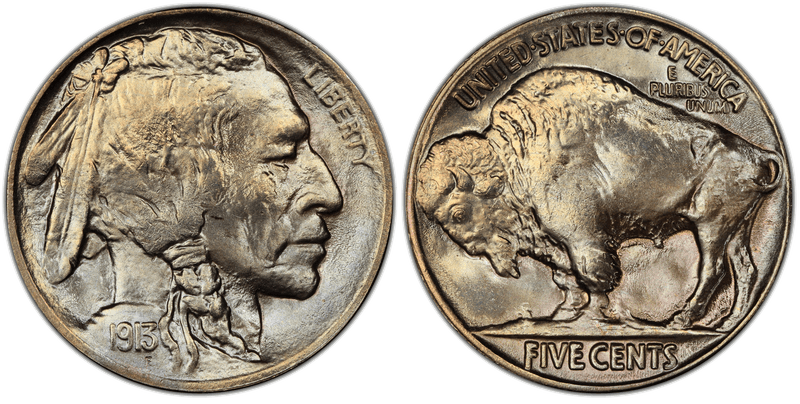
A Buffalo nickel with no date isn't an error, and it isn't rare. Millions of them lost their dates in circulation. The good news is that the year is often still there to be read, if you know where to look, and acid is only one way to find it.
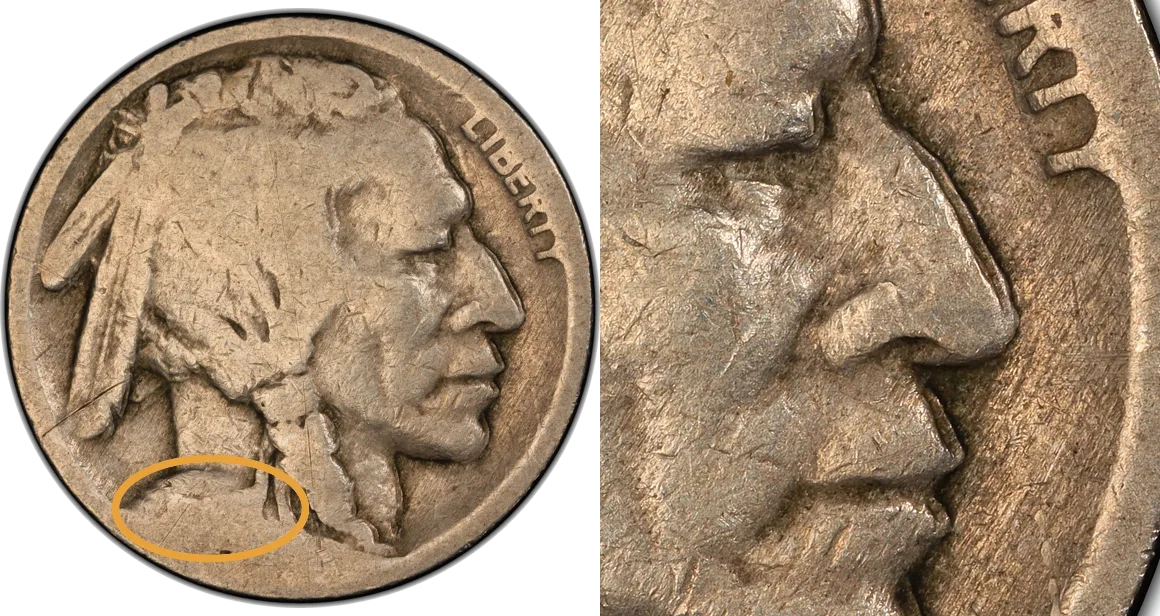
A 1916 Buffalo nickel with the date worn completely away. The doubling on the nose, lips and chin identifies it as the 1916 doubled die obverse.
Why the Dates Wore Off
The date sits on the Indian's shoulder, just above Fraser's small F, close to some of the highest relief on the coin. The date and the denomination were the parts of the design most exposed to wear, and as Wikipedia's sources note, even many later Buffalo nickels have the date worn away. The Mint gradually made the date's numerals thicker, but the problem was "never addressed with complete success." It's wear, not a mistake at the Mint.
Read the Coin First
Before reaching for anything chemical, look at the rest of the coin. Some designs and varieties date themselves:
A raised mound under the bison means 1913. That Type 1 reverse was replaced the same year by a flat-ground Type 2.
A bison with three legs is the 1937-D, from a die that had one of the legs polished away.
The die itself. The coin pictured above has no date left at all, but the doubling on its nose, lips and chin matches the 1916 doubled die obverse (FS-101). A well-known variety can identify a coin with no date showing.
The mint mark. It sits centered under FIVE CENTS on the reverse. A D or S tells you Denver or San Francisco; Philadelphia coins have none.
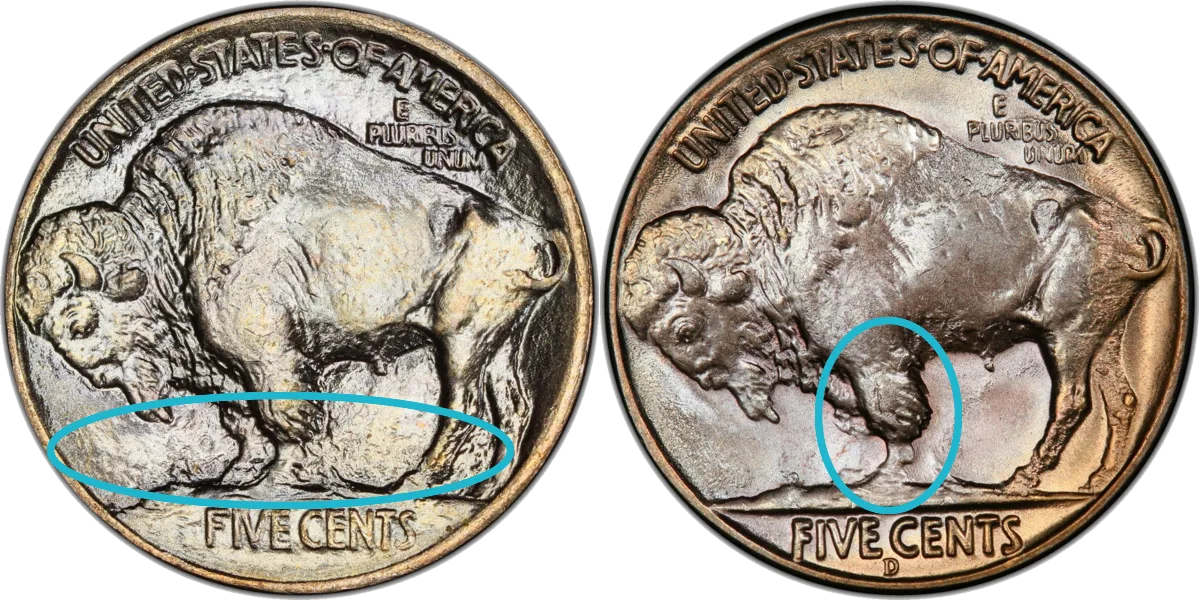
Two Buffalo nickels that date themselves: the raised mound of the 1913 Type 1 reverse, and the three-legged bison of the 1937-D.
What Acid Does
Products like Nic-A-Date, usually ferric chloride, are brushed onto the spot where the date was. The acid etches the surface and can create enough contrast to read the numbers again. It works often enough to stay popular, but it marks the coin permanently, and repeated applications leave the date area more and more discolored. Collectors treat an acid-dated coin as a damaged one.
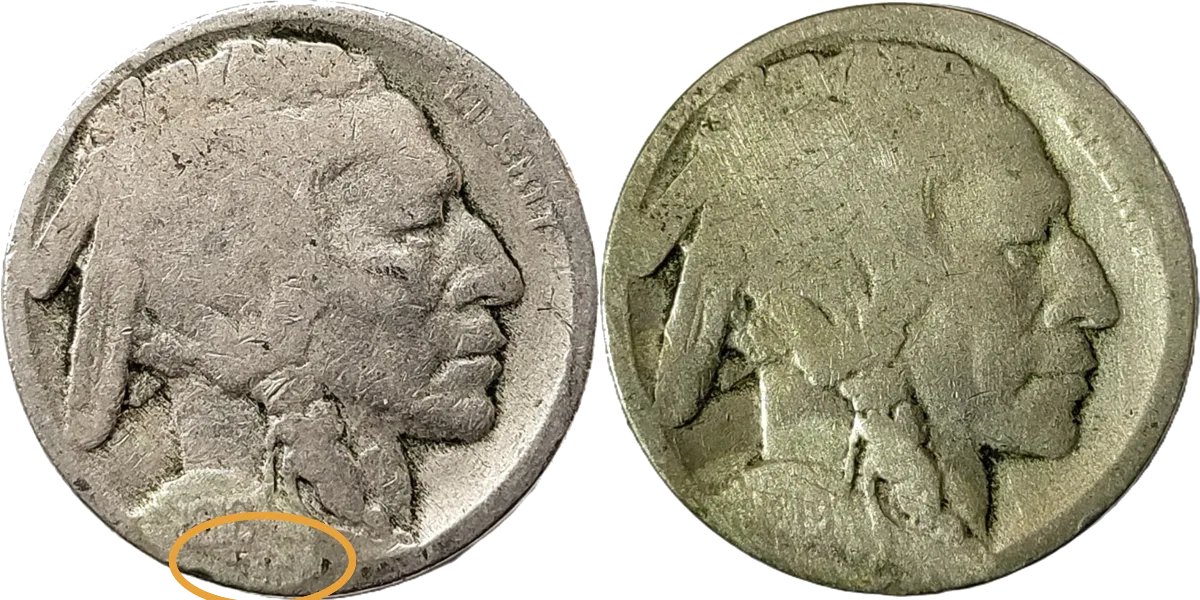
Two acid-treated Buffalo nickels, a 1916 and a 1919, with their dates brought back as faint etched numerals.
When It's Worth It
Because acid lowers a coin's value, it's usually only worth trying on a coin that might turn out to be a rarity. The classic case is the 1918/7-D overdate, where traces of a 7 show under the 8 of the date. Even acid-treated examples still sell, sometimes graded as details coins with the acid noted, though for far less than an untouched one. Most dateless Buffalos turn out to be common dates, which CoinWeek puts at 20 cents to a dollar or so, so read the coin first and keep the acid for the coins where the answer could matter.
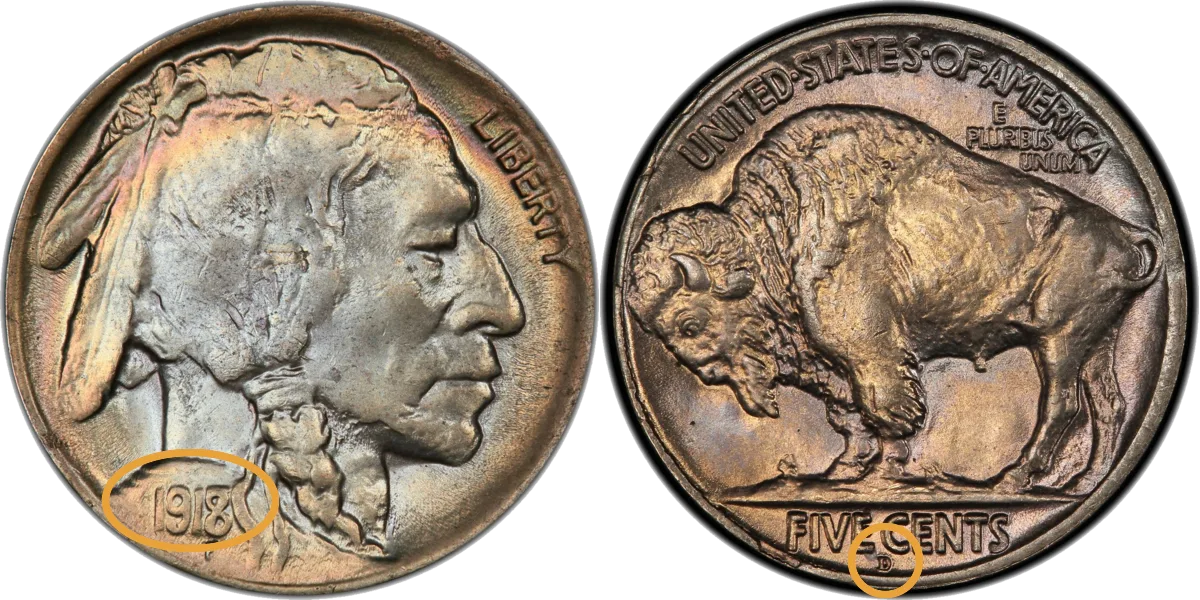
The 1918/7-D overdate with the date ringed, and the D mint mark under FIVE CENTS on a 1918-D.
See every date and variety in the catalog: Buffalo Nickels 1913-1938, including the 1913 Type 1, the 1916 doubled die obverse, the 1918-D 8/7 and the 1937-D three-legged.
Sources: Wikipedia, "Buffalo nickel" (citing Roger W. Burdette, David W. Lange and Walter Breen); Everett Millman, "No-Date Buffalo Nickels: How to Find Their Value" (CoinWeek / Gainesville Coins, 2022); NumisDex catalog listings for the 1916 doubled die (DDO-001 / WDDO-001).