VAM Variety (VAM)
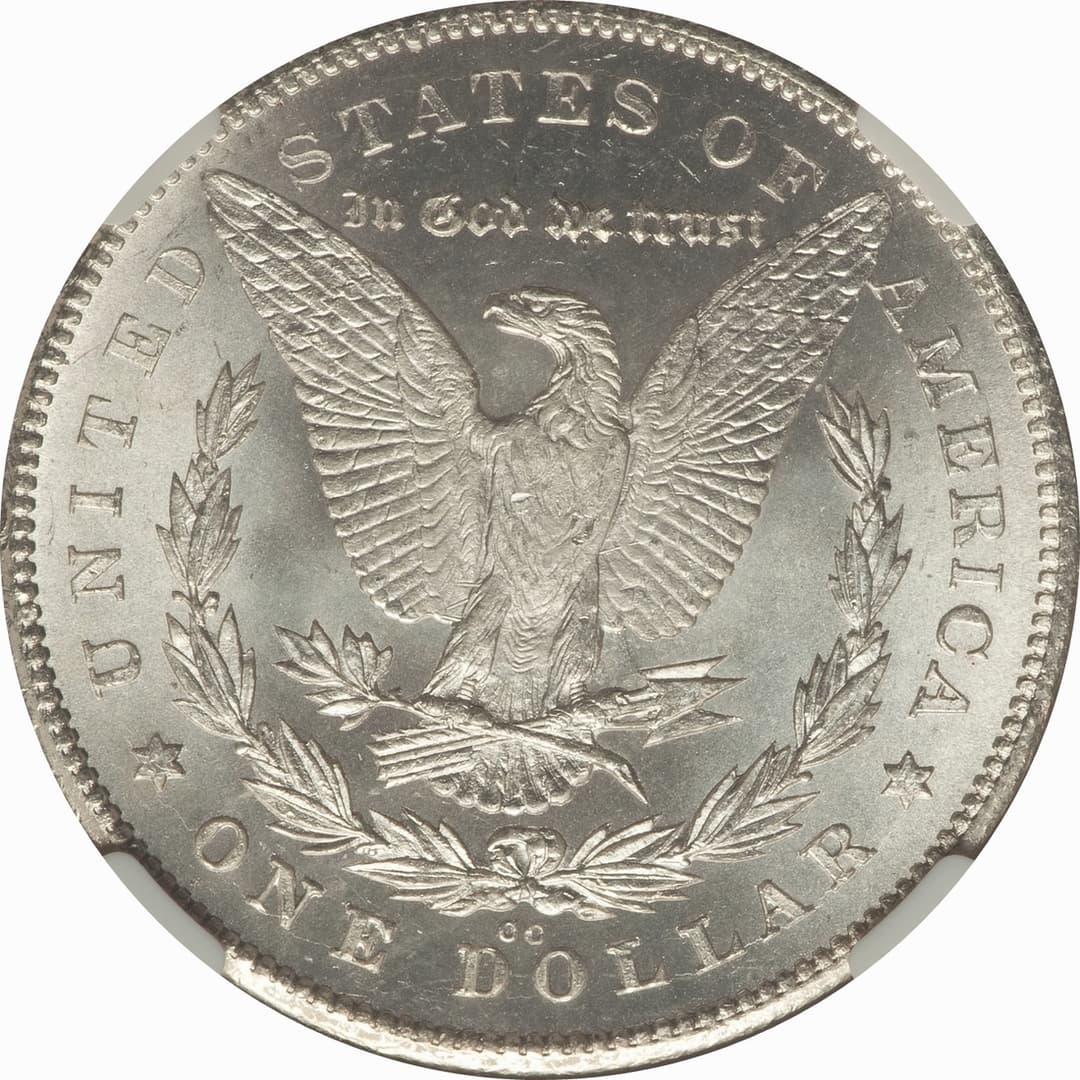
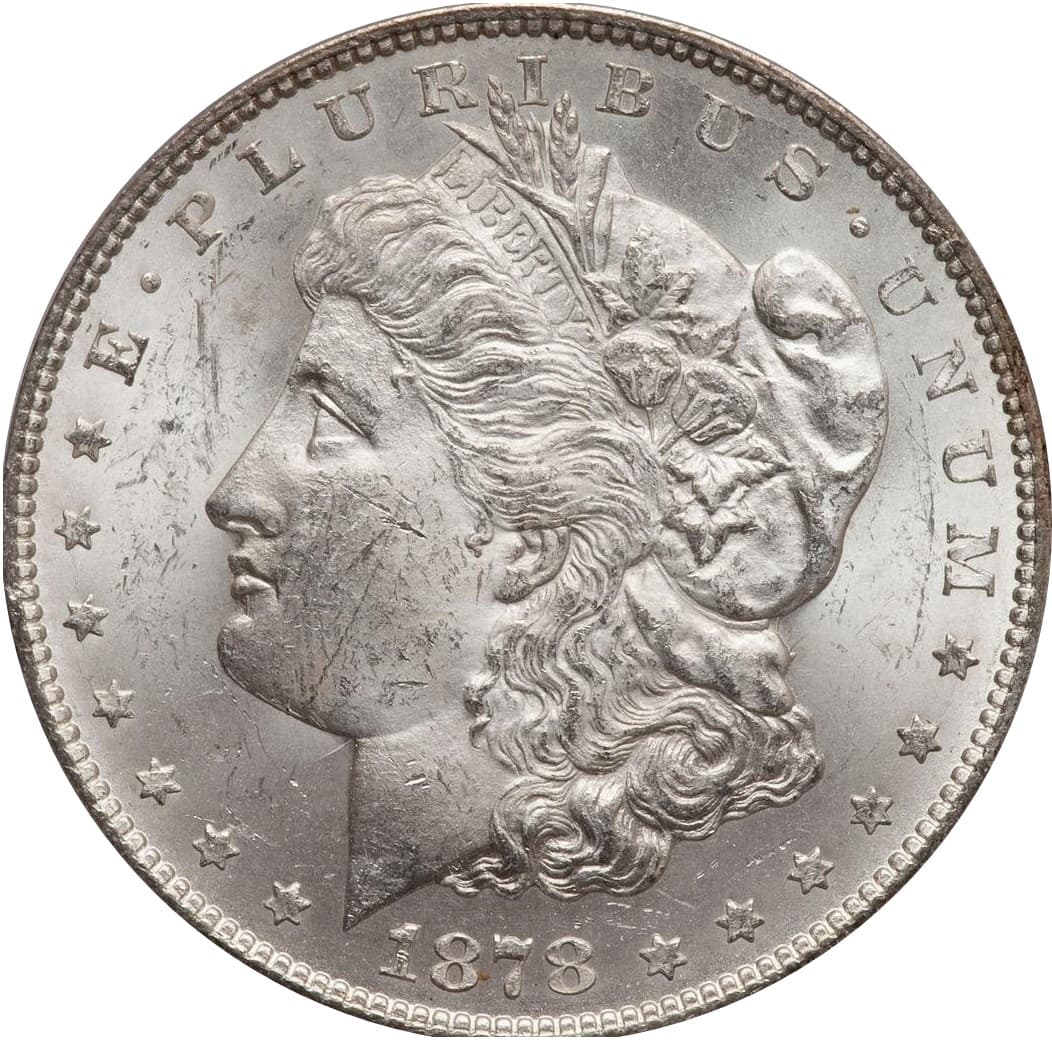
VAM stands for Van Allen-Mallis, the two researchers — Leroy C. Van Allen and A. George Mallis — who created the definitive cataloging system for die varieties on Morgan dollars (1878-1921) and Peace dollars (1921-1935). Each VAM number identifies a unique die pair based on specific diagnostic features: doubled dies, repunched dates and mint marks, die cracks, clash marks, die polishing, and other characteristics that distinguish one die pair from another. The VAM system assigns sequential numbers within each date and mint mark combination (e.g., 1881-S VAM-5), creating a comprehensive registry that now documents thousands of distinct die pairs. VAM collecting is one of the most active and organized specialties in American numismatics.
How Does It Happen?
VAM varieties are not a single error type. The VAM system catalogs all identifiable die varieties on Morgan and Peace dollars, regardless of the variety's origin. A VAM number can describe any of the following:
Die Manufacturing Varieties
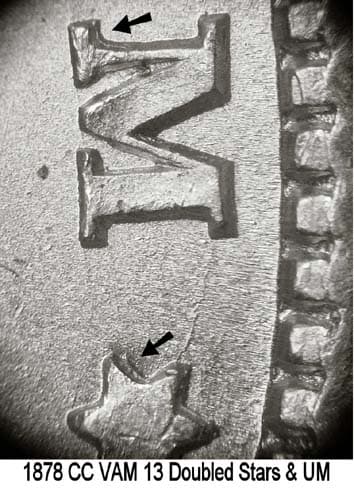
- Doubled dies: Hub misalignment during die making produces doubled design elements. Morgan dollars have numerous documented doubled die obverse and reverse VAMs, with doubling visible on lettering, stars, date, and Liberty's profile.
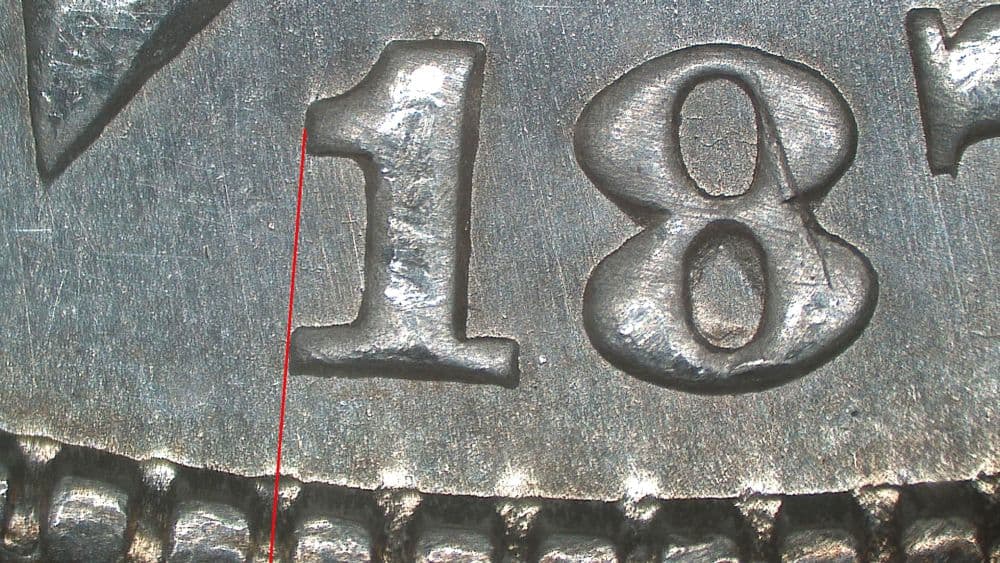
- Repunched dates: Before 1909, date numerals were individually punched into each working die. Misalignment of these punches produced repunched dates — visible traces of the first punch position beneath the final position. Repunched dates are among the most common VAM features on Morgan dollars.
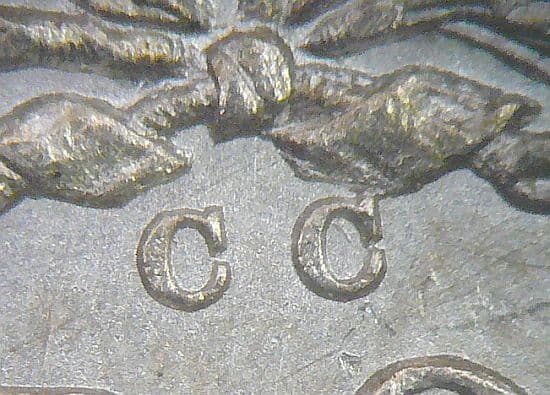
- Repunched mint marks: Mint marks on Morgan and Peace dollars were hand-punched into individual dies. The positioning varied from die to die, and repunching (a second strike of the mint mark punch) created doubled or shifted mint marks. Each distinct mint mark position constitutes a different VAM.
- Over mint marks: A die intended for one mint facility was repunched with a different mint mark. The original mint mark remains partially visible beneath the final one. The 1900-O/CC Morgan dollar (New Orleans mint mark over Carson City) is a celebrated example.
Die Service Life Varieties
- Die cracks: As a die fatigues through its production run, stress fractures develop in the die steel. These cracks transfer as raised lines on struck coins. Different die crack patterns at different stages of die life can produce multiple VAM designations from the same die pair.
- Die breaks and cuds: Advanced die cracking leads to pieces of the die face breaking away, producing die breaks and cuds. A die pair that develops a cud during its production run is cataloged as a distinct VAM or VAM sub-variety (die state).
- Die clash marks: When dies strike without a planchet between them, design elements transfer between dies. Clash marks on Morgan dollars are cataloged by VAM number, with some die pairs showing multiple clash events during their service life.
- Die polishing: The Mint polishes dies to remove clash marks, cracks, and surface imperfections. The extent and pattern of polishing varies between die maintenance events, and heavily polished dies that alter the coin's appearance constitute distinct VAM varieties. Some polished dies show dramatically reduced hair detail on Liberty or weakened eagle feathers.
Die State Progression
A single die pair can produce multiple VAM designations as it progresses through its service life. An early die state with crisp detail, no cracks, and no clashing is one VAM; the same die pair later, with a die crack through the date, is cataloged as a sub-variety of the original VAM. Collectors track these progressions as die states, and some VAMs are specifically identified by their die stage rather than their initial characteristics.
How to Identify a VAM Variety
VAM identification requires systematic comparison of a coin's die characteristics against the published VAM reference:
- Date and mint mark first: Determine the exact date and mint mark. This narrows the search to the specific VAM listing for that date/mint combination.
- Obverse diagnostics: Examine the date position (high, low, tilted), date numeral spacing, mint mark position and shape, star positions, and any doubling on LIBERTY, stars, or date. Each of these features is documented in the VAM reference with photographs and line drawings.
- Reverse diagnostics: Examine the eagle's tail feathers (number, position, and angle), wing tip positions, arrow feather details, wreath leaf positions, and lettering. The reverse provides as many diagnostic features as the obverse.
- Die markers: Beyond the primary VAM features, each die has unique minor characteristics — tiny die scratches, polish lines, or die chips — that confirm the specific die. These markers are documented in the VAM reference and serve as fingerprints for die identification.
- Die state: Once the VAM is identified, determine the die state by examining the progression of die cracks, polishing, and wear. Early die states (EDS) show the crispest detail; late die states (LDS) show advanced cracking and wear.
Essential Tools
| Tool | Purpose |
|---|---|
| 7x-10x loupe | Field examination and preliminary screening |
| Stereo microscope (10x-30x) | Detailed die marker analysis |
| VAM reference book | Primary identification guide (Van Allen & Mallis, multiple editions) |
| VAMWORLD.com | Online photo database with die-specific images |
| Directional lighting | Reveals subtle doubling, polishing, and die markers |
Notable Examples
1878 8 Tail Feather VAMs
The first year of Morgan dollar production used an initial reverse hub with 8 tail feathers on the eagle, quickly replaced by a 7-feather design. The 8-feather reverse exists in multiple VAM varieties, each with distinct die characteristics. These transitional 1878 VAMs are foundation pieces for any serious VAM collection.
1880-O VAM-48 "Hangnail"
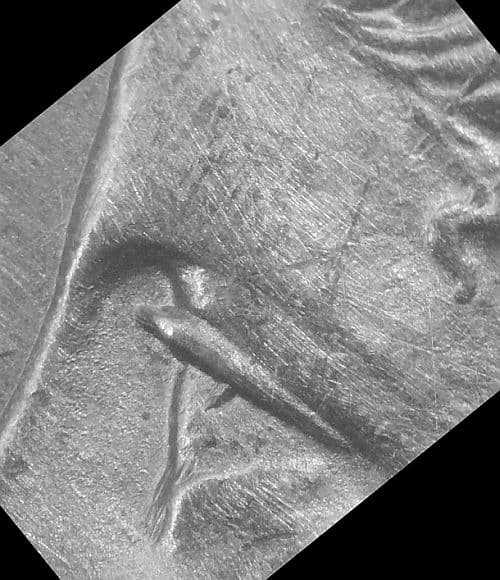
One of the most visually dramatic Morgan dollar VAMs, featuring a prominent die break that creates a raised spike extending from Liberty's eye — the "hangnail." This variety is popular with both VAM specialists and general Morgan dollar collectors because of its immediate visual impact without magnification.
1881-S VAM-5
A hot-lips doubled die obverse showing strong doubling on the profile of Liberty. The doubling is visible to the naked eye on sharp specimens, making this one of the most recognized and sought-after Morgan dollar VAMs. It commands a substantial premium in all grades.
1888-O VAM-4 "Hot Lips"
Another dramatic doubled die obverse, with the doubling producing a doubled profile that gives Liberty the appearance of two sets of lips — hence the "Hot Lips" nickname. This is one of the most valuable common-date Morgan dollar VAMs.
1900-O/CC VAM-7
A Morgan dollar struck at the New Orleans Mint using a die originally prepared for Carson City. The CC mint mark is visible beneath the O mint mark. This over mint mark variety provides direct physical evidence of die transfer between Mint facilities and is a key date in the VAM series.
1921 Morgan Dollar VAMs
The final year of Morgan dollar production generated numerous VAM varieties because the Mint manufactured entirely new hubs and dies for the 1921 resumption of coinage. The new hubs differed from the 1878-1904 originals, and the 1921-dated dies show characteristics unique to this final production run.
Peace Dollar VAMs
While fewer in number than Morgan dollar VAMs, Peace dollar varieties include notable doubled dies, repunched dates, and die break varieties. The 1922 "No D" (die pair with a heavily polished reverse that obliterated the D mint mark) is one of the most famous Peace dollar varieties, cataloged as multiple VAMs representing different die states of the polishing progression.
Collecting Tips
- Start with the reference: The Van Allen-Mallis reference book (commonly called "the VAM book") is the essential starting point. The current edition catalogs thousands of varieties with photographs, die diagnostics, and rarity ratings. VAMWORLD.com supplements the book with additional photography and community-contributed identification guides.
- Focus on a date/mint: The VAM catalog is enormous. Most collectors begin by specializing in a single date/mint combination — learning every cataloged VAM for that issue, acquiring examples, and building toward a complete set of varieties for that date.
- Top 100 and Hit List: The VAM community maintains curated lists of the most significant varieties. The "Top 100" Morgan dollar VAMs and the "Hit List 40" (later expanded) identify the varieties with the greatest visual impact, historical significance, and collector demand. These lists provide a structured collecting goal.
- Die state affects value: For many VAMs, early die state examples command premiums over late die state examples because the diagnostic features are sharper and more visible. However, certain VAMs are defined by late die state characteristics (die breaks, advanced cracks), where the later state is the desirable one.
- Certification and attribution: PCGS and NGC both attribute VAM varieties on their holder labels. Third-party attribution is standard practice in the VAM market and adds both confidence and liquidity to transactions. Submit significant finds for professional attribution.
- Raw coin hunting: VAM collecting has a strong tradition of "cherry-picking" — finding unattributed VAM varieties in raw (uncertified) dealer inventory and coin show bins. Developing attribution skills creates opportunities to acquire valuable varieties at common-date prices.
- Community engagement: VAMWORLD.com, the VAM discussion forums, and regional VAM study groups are active communities where collectors share discoveries, debate attributions, and advance the catalog. VAM collecting is as much a social and intellectual pursuit as a financial one.
Related Error Types
- Doubled Die Obverse (DDO) -- Many VAMs are cataloged specifically for their doubled die characteristics
- Doubled Die Reverse (DDR) -- Reverse doubling documented within the VAM system
- Repunched Mint Mark (RPM) -- One of the most common features that defines a VAM number
- Repunched Date (RPD) -- Date repunching is a primary VAM diagnostic
- Over Mint Mark (OMM) -- Over mint marks on Morgan dollars are cataloged as VAMs
- Overdate (OVD) -- Overdates within the Morgan/Peace series are part of the VAM catalog
- Die Clash (DCL) -- Clash marks are a common VAM diagnostic feature