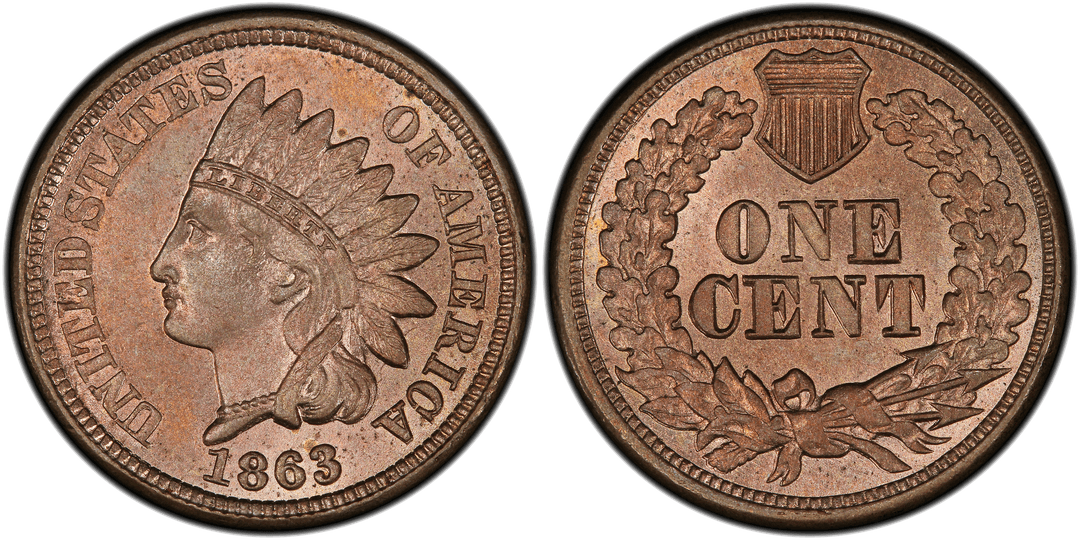
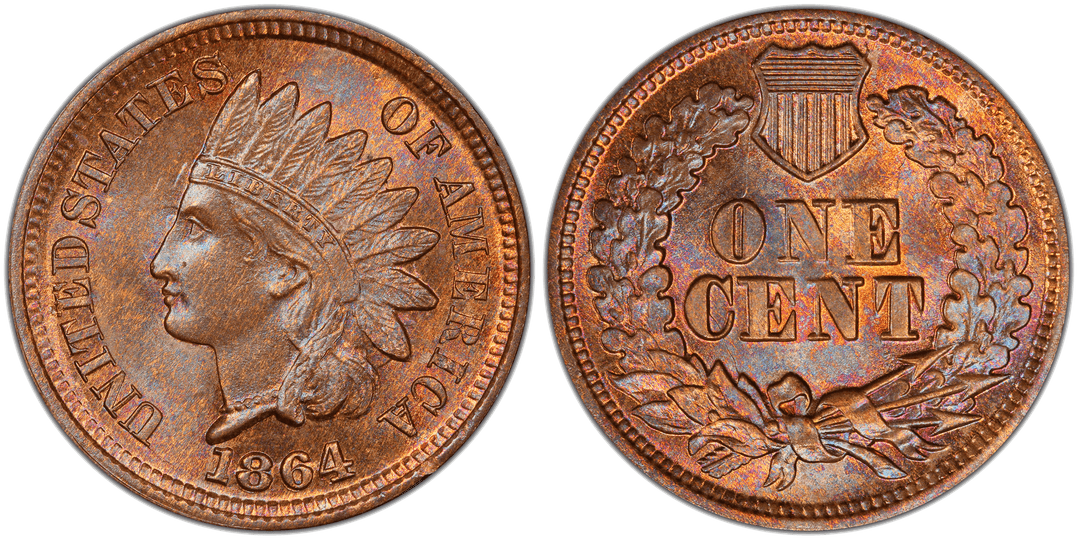
Repunched Date (RPD)
A Repunched Date occurs when one or more numerals in the date are punched into a coin die more than once with slight misalignment between impressions. The result is a date that shows traces of secondary positioning alongside the primary digits -- a doubled, shifted, or spread appearance to individual numerals caused by the die maker striking the date punch in a slightly different position on the second attempt. RPDs are the date equivalent of Repunched Mint Marks (RPMs) and were produced by the same hand-punching process.
What Is a Repunched Date?
Throughout most of U.S. Mint history, date digits were added to coin dies by hand. A Mint employee positioned a steel punch bearing the appropriate numeral over the designated date area on the die face and struck it with a mallet. Each digit in the date required its own punch strike (or, in later years, a multi-digit logotype was used). If any digit was not driven deep enough on the first strike, or if the positioning was not satisfactory, the worker struck the punch again. Any misalignment between the first and second impressions created a repunched date.
RPDs show traces of both the original and secondary punch positions. The secondary image appears as a partial or complete shadow of the primary digit, offset in a consistent direction. Some RPDs are dramatic, with the secondary impression clearly separated and visible under low magnification. Others are subtle, showing only slight thickening or notching on the edges of individual digits.
RPDs are distinct from Overdates (OVDs), where a different date is punched over a previous date. An RPD involves the same year punched more than once. They are also distinct from Misplaced Dates (MPDs), where a date digit is punched in a completely wrong location on the die.
How Does It Happen?
The production of RPDs was a natural consequence of the hand-punching process:
- Insufficient initial depth: The first punch strike did not drive the numeral deep enough into the die steel. The worker struck the punch again, but the punch had shifted fractionally between blows, creating a doubled impression.
- Positional correction: The die maker was not satisfied with the placement of a digit after the first punch. The digit was struck again in a slightly adjusted position, leaving traces of the original placement.
- Die movement: The die shifted in its holder between punch strikes. Even a movement of a fraction of a millimeter between blows produces visible doubling on the finished coins.
- Tilted punch: The punch was held at a slightly different angle for the second strike, creating a tilted secondary image.
- Multi-digit logotype misalignment: When the Mint used logotypes containing multiple digits (such as "19" or the full four-digit date), a second strike of the logotype could displace all digits simultaneously, creating uniform repunching across the entire date.
Historical Context
RPDs are found on U.S. coins from the 1790s through the 1980s, spanning nearly the entire history of the Mint. The earliest coins, with dates hand-punched digit by digit, produced the most diverse RPD varieties. As the Mint transitioned to date logotypes in the mid-19th century and eventually to fully hubbed dates (with the date included in the master hub), the incidence of RPDs decreased. Coins with fully hubbed dates do not produce RPDs because no separate date punching occurs.
The transition timeline varied by denomination. Some series continued to use individually punched dates or date logotypes well into the 20th century, producing RPDs on coins that are neither rare nor expensive. This makes RPD collecting accessible across a wide range of budgets.
How to Identify a Repunched Date
Detecting an RPD involves examining each digit in the date for evidence of secondary impressions:
- Look for doubled edges: The most visible RPD feature is a digit that appears to have two outlines. The inner or outer edge of a numeral shows a secondary line or shelf where the second punch impression begins.
- Check serifs and terminals: The serifs (finishing strokes) and terminals (endpoints) of date digits provide the clearest diagnostic evidence. A repunched "1" shows a widened or split serif at its base. A repunched "9" shows doubled curves at the top of its loop.
- Note the direction: The secondary image is displaced in a consistent direction relative to the primary for each affected digit. Common classifications include:
- North/South RPD: The secondary impression is above or below the primary
- East/West RPD: The secondary is to the left or right
- Tilted RPD: The secondary is at an angle to the primary
- Examine all four digits: On a coin with individual hand-punched digits, the repunching may affect only one digit, all four digits, or any combination. Each digit was punched separately and could have its own repunching characteristics.
- Use 10x to 20x magnification: While some RPDs are visible at lower magnification, most require at least 10x for reliable detection. A 20x lens reveals the fine details of secondary impressions that confirm a genuine RPD.
RPD vs. Machine Doubling
Machine doubling (strike doubling) produces flat, shelf-like displacement on the date digits. A genuine RPD shows secondary impressions with full depth and formed character, matching the quality of the primary punch impression. Machine doubling has no collector value; RPDs carry premiums.
Notable Examples
1909 V.D.B. Lincoln Cent RPDs
The first year of the Lincoln cent series produced multiple RPD varieties. Collectors have cataloged numerous examples with repunched digits, particularly affecting the "9" and "0" of the date. The historical significance of the 1909 V.D.B. issue amplifies collector interest in its die varieties.
1873 "Closed 3" / "Open 3" Varieties
The 1873 date on multiple denominations exists with two distinct forms of the "3" -- a "closed 3" where the knobs nearly touch, and an "open 3" with wider spacing. While these are technically different date logotypes rather than RPDs, the 1873 date also produced genuine RPD varieties where the date logotype was struck more than once with visible misalignment.
1844/81 Large Cent
An extreme example combining RPD and possible logotype error characteristics. Traces of additional digits appear near the date, creating one of the most debated and studied date varieties in the large cent series.
Indian Head Cent RPDs (1859-1909)
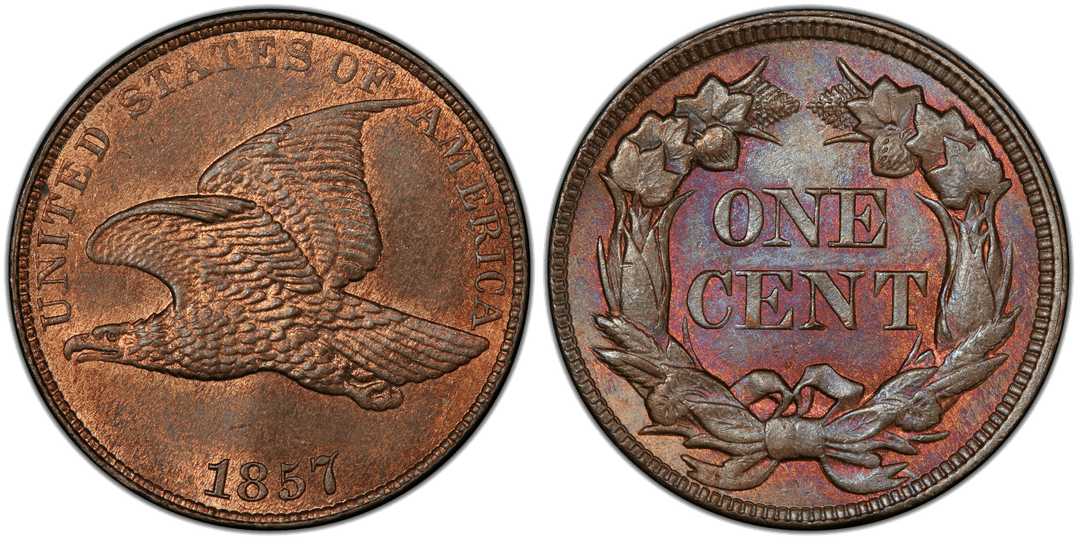
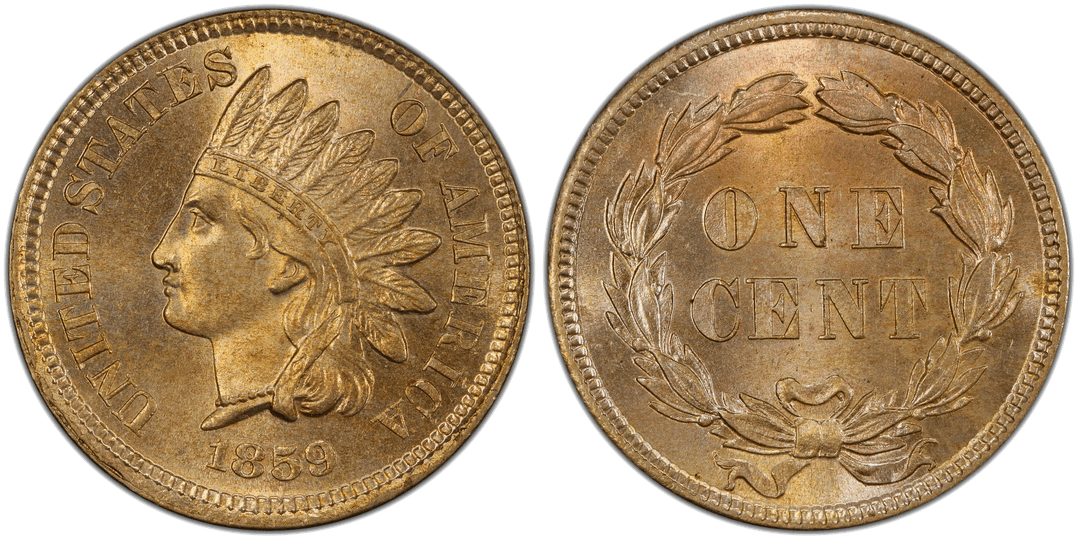
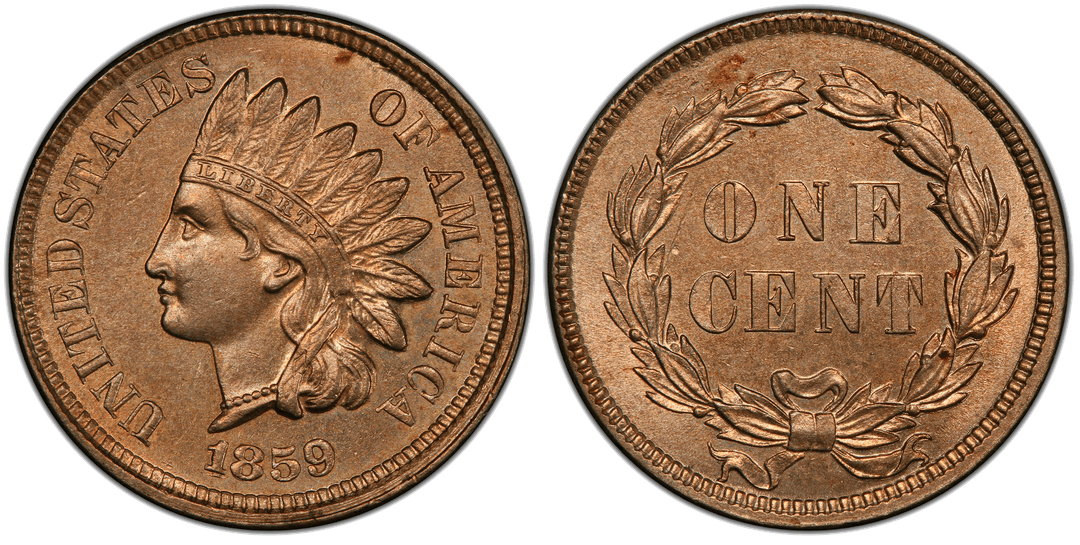
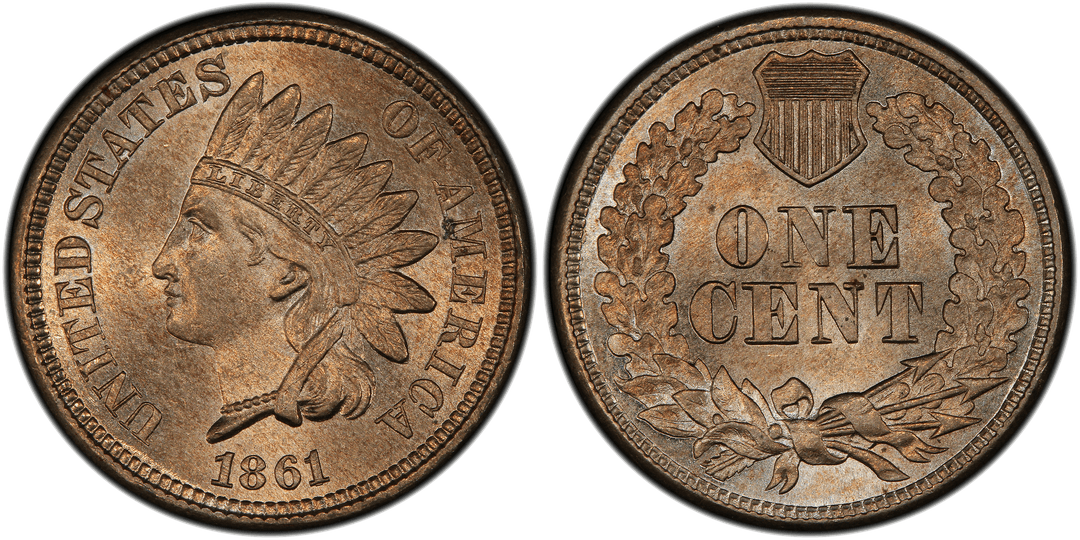
The Indian Head cent series is rich with RPD varieties across its 50-year production run. Individual date digits were hand-punched throughout the series, and the relatively small size of the numerals made precise alignment difficult. Dozens of RPD varieties have been cataloged, spanning from the earliest dates through the final 1909 issue.
Mercury Dime RPDs (1916-1945)
Mercury dimes from the 1920s and 1930s produced numerous RPD varieties. The date position on the obverse, near Liberty's neck, required precise placement to avoid crowding the design. Multiple examples show clear repunching of one or more date digits, with the secondary impressions visible to the south or east of the primary positions.
Collecting Tips
- Pre-1900 coins are the prime territory: The hand-punching era, when each digit was positioned and struck individually, produced the greatest variety and frequency of RPDs. Large cents, half cents, Seated Liberty coinage, and early type coins contain hundreds of cataloged RPD varieties.
- Lincoln cents offer the best value: With massive production numbers and an active collector community, Lincoln cents from 1909 through the 1950s provide affordable RPD examples backed by extensive published research. Wexler, CONECA, and other attributors have documented Lincoln cent RPDs comprehensively.
- Focus on one series: RPD collecting rewards specialization. Choosing one denomination or series and learning its normal date appearance, punch styles, and known varieties produces better results than casually searching across multiple series.
- Pair with RPMs for a variety set: RPDs and RPMs result from the same hand-punching process and often coexist on the same dies. A coin with both an RPD and an RPM represents a particularly desirable die combination.
- Die state affects clarity: Early die state coins show the strongest secondary impressions. As the die wears, subtle RPD features erode. When purchasing attributed RPD coins, examine the diagnostic area to confirm the variety features are clearly visible on your specific specimen.
- Cherry-picking is productive: Because RPDs require magnification to identify and are less famous than doubled dies, many examples remain undiscovered in dealer stocks, estate lots, and roll searches. A collector with a good loupe and knowledge of known varieties has excellent opportunities to find underpriced specimens.
- Professional attribution adds value: For scarcer RPDs, a PCGS or NGC attribution on the slab label increases the coin's market value and liquidity. Common RPDs may not justify the attribution fee.
Related Error Types
- Overdate (OVD) -- A different date punched over the original (different year, not same year)
- Misplaced Date (MPD) -- Date digits punched in a completely wrong location on the die
- Repunched Mint Mark (RPM) -- Same concept applied to the mint mark letter
- Dual Mint Mark (DMM) -- Two different, non-overlapping mint marks on the same die
- Repunched Lettering (RPL) -- Repunching of design inscriptions rather than the date
- Doubled Die Obverse (DDO) -- Doubling from hub misalignment, which affects the date along with all other design elements