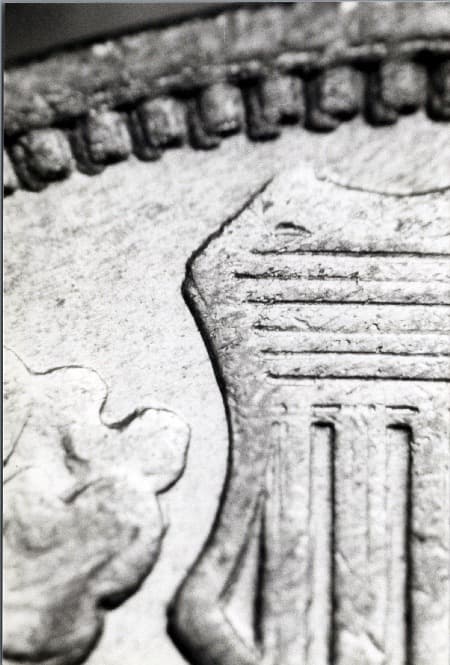
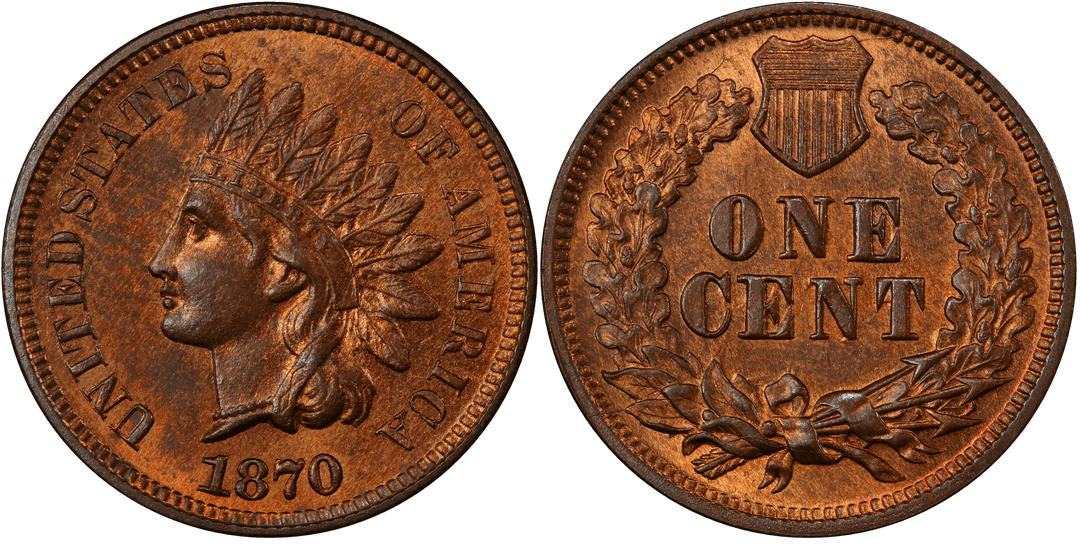
Doubled Die Reverse (DDR)
A Doubled Die Reverse occurs when the reverse (back) design of a coin is impressed onto a working die in two slightly different positions. Like its obverse counterpart, this creates a die that stamps every coin it strikes with the same consistent doubling pattern on the reverse elements.
How Does It Happen?
The mechanism is identical to a Doubled Die Obverse but affects the reverse die instead. During the die manufacturing process, a working hub impresses the reverse design into a working die. If the hub or die shifts between impression cycles, the design is transferred in two slightly offset positions.
Prior to 1997, the U.S. Mint used a multiple-hubbing process that required several impressions to fully sink the design into a die. Each re-entry of the hub created an opportunity for misalignment. In 1996-97, the Mint transitioned to single-squeeze hubbing technology, which dramatically reduced (but did not eliminate) doubled die production.
The eight recognized classes of hub doubling apply equally to both obverse and reverse doubled dies:
- Class I — Rotated Hub Doubling: The hub rotated between impressions
- Class II — Distorted Hub Doubling: The hub or die was distorted under pressure
- Class III — Design Hub Doubling: A design change between hub impressions
- Class IV — Offset Hub Doubling: The hub shifted laterally
- Class V — Pivoted Hub Doubling: The hub pivoted on a contact point
- Class VI — Distended Hub Doubling: Expansion of the die during hubbing
- Class VII — Modified Hub Doubling: Intentional design modification between impressions
- Class VIII — Tilted Hub Doubling: The hub was tilted at an angle
How to Identify a Doubled Die Reverse
Examination techniques mirror those for DDOs, adapted to the reverse design:
- Lettering: E PLURIBUS UNUM, UNITED STATES OF AMERICA, and the denomination are the most common areas to show doubling on post-1900 coinage.
- Design elements: Look at fine details like the columns on the Lincoln Memorial (1959-2008 cents), the eagle's feathers on various denominations, or the torch on Roosevelt dimes.
- Consistent direction: All doubled elements will show displacement in the same direction if it is a true doubled die.
- Full separation vs. notching: Strong DDRs show clear separation between the doubled images. Weaker examples may show "notching" — small splits at the tops or bottoms of letters where the two impressions partially overlap.
Common Misattributions
Many coins have design features that can be confused with DDRs:
- Die deterioration doubling (DDD): Worn dies produce fuzzy, spread-out lettering that may look like doubling but shows no consistent direction
- Strike doubling: Flat, shelf-like displacement from the striking process — not a die variety
- Flow lines: Metal flow during striking can create lines near design elements that mimic doubling
Notable Examples
1955 Lincoln Cent DDR (FS-801)
While overshadowed by the famous 1955 DDO, a significant reverse doubled die also exists for this date. It shows strong doubling on ONE CENT and E PLURIBUS UNUM. This variety is scarce and underappreciated relative to its obverse counterpart.
2005-P Minnesota State Quarter DDR
Extra tree lines are visible on the reverse, an error that gained national attention and prompted widespread searching of pocket change. Multiple die pairs produced this variety, with some showing stronger doubling than others.
2004-D Wisconsin State Quarter DDR
Two distinct varieties exist — the "Extra Leaf High" and "Extra Leaf Low" — showing an additional corn leaf on the reverse design. These generated massive public interest and debate about whether they were intentional sabotage or genuine doubled dies. Regardless of origin, both varieties are recognized and cataloged.
1960-D Lincoln Cent DDR (Large Date)
Shows strong doubling on UNITED STATES OF AMERICA and ONE CENT. This variety is relatively affordable and commonly available, making it a popular addition to error collections.
Collecting Tips
- Reverse doubling is often overlooked: Because collectors instinctively examine the obverse first, DDRs are frequently missed. This creates opportunities to find undervalued specimens.
- Die state is important: Early die state coins with crisp doubling are preferred. Late die state examples may show die polish lines or deterioration that obscures the doubled elements.
- Pair with the obverse: Some die marriages produce both DDO and DDR varieties. A coin showing both obverse and reverse doubling from the same die pair is a notable find.
- Price advantage: DDRs generally sell for less than comparable DDOs of the same denomination and era, offering better value for collectors building a doubled die type set.
- Variety attribution: Organizations like CONECA (Combined Organizations of Numismatic Error Collectors of America) maintain detailed listings of known DDR varieties with diagnostics for identification.
Related Error Types
- Doubled Die Obverse (DDO) — The same phenomenon on the coin's obverse
- Doubled Working Hub Reverse (WHR) — Doubling at the working hub stage affecting the reverse
- Master Die Doubling Reverse (MDR) — Doubling at the master die level affecting all subsequent reverse dies
- Repunched Lettering (RPL) — Similar visual effect but caused by repunching rather than hub doubling