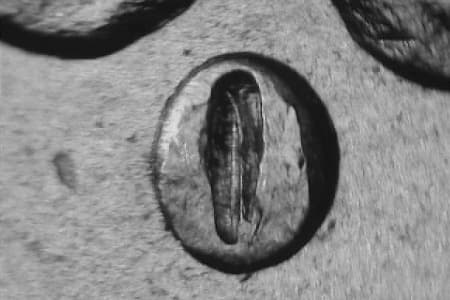
Repunched Mint Mark (RPM)
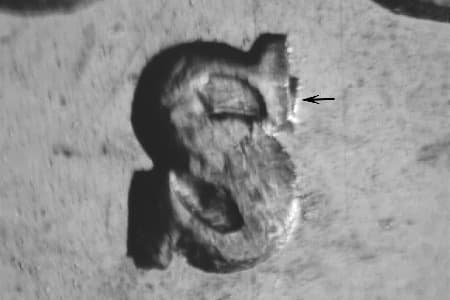
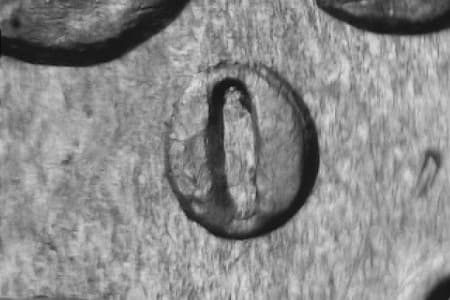
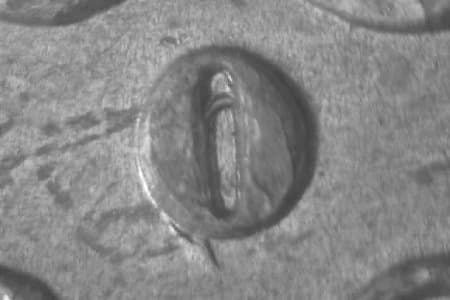
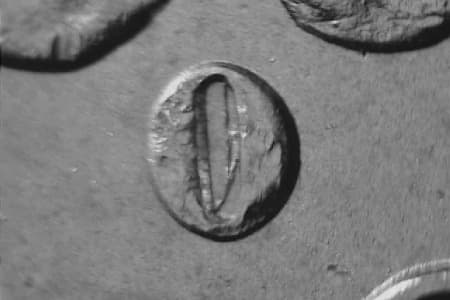
A Repunched Mint Mark occurs when a mint mark letter (D, S, W, O, CC, etc.) is punched into a working die more than once, with the second (or subsequent) punch landing in a slightly different position than the first. The result is a coin that shows traces of both the original and repositioned mint mark, creating visible doubling, tilting, or displacement of the mint mark.
How Does It Happen?
Prior to 1990, the U.S. Mint added mint marks to working dies by hand. A Mint employee would position a small steel punch bearing the appropriate letter over the designated spot on the die and strike it with a mallet. This manual process was inherently imprecise.
RPMs occurred when:
- First punch was off-position: The worker recognized the initial placement was incorrect and repunched the mint mark in the correct location, leaving traces of the first attempt
- Insufficient depth: The first punch did not sink deep enough into the die, prompting a second strike that did not align perfectly with the first
- Die rotation: The die shifted slightly between punches
- Tilted punch: The punch was held at a different angle for the second impression
In 1990, the Mint began adding mint marks to the master die rather than to individual working dies. This change meant that all working dies made from a given master die would have identical mint mark placement, effectively ending the production of new RPM varieties for most denominations. RPMs on coins dated 1990 and later are extremely rare.
How to Identify a Repunched Mint Mark
RPMs can range from dramatic to subtle. Here is what to look for:
- Secondary impression: Look for traces of an earlier mint mark position, usually appearing as a partial letter near the primary mint mark. The most common presentations are:
- North/South RPM: The secondary mint mark is above or below the primary
- East/West RPM: The secondary mint mark is to the left or right
- Tilted RPM: The secondary is at an angle to the primary
- Over Mint Mark (OMM): A different mint mark letter is punched over another (this is a distinct but related variety)
- Serifs and curves: The most diagnostic features are the serifs (the small finishing strokes on letters like D and S) and curves of the secondary impression protruding from behind the primary mint mark.
- Magnification: Most RPMs require 5x-20x magnification to identify. A 10x loupe is the standard field tool.
RPM vs. Machine Doubling
Machine doubling on a mint mark produces a flat, shelf-like displacement without the full-formed appearance of a true RPM. A genuine RPM shows two complete or nearly complete mint mark impressions, each with its own depth and serifs.
Notable Examples
1960-D Lincoln Cent RPM (D/D)
Multiple RPM varieties exist for this date, with some showing dramatic displacement of the D mint mark. These are popular with collectors because the date is common enough to be affordable but the varieties are distinct enough to be visually appealing.
1942-D Jefferson Nickel RPM
The early Jefferson nickel series (1938-1964) is rich with RPM varieties, as the small mint mark on the reverse was punched by hand into each die. The 1942-D shows several recognized RPM varieties, some with the secondary D clearly visible to the south.
1950-S Lincoln Cent RPM (S/S)
A popular variety showing clear repunching of the S mint mark. The S/S designation indicates that both the original and secondary impressions are S mint marks, distinguishing it from an Over Mint Mark variety.
1955-D Lincoln Cent RPM
Shows a D mint mark punched twice with visible separation. This date also has the added collector interest of being from the same year as the famous 1955 Doubled Die Obverse, making it a complementary piece in a 1955 Lincoln cent error set.
Pre-1909 Indian Head Cent RPMs
Indian Head cents from the San Francisco Mint (1908-S and 1909-S) occasionally show repunched S mint marks. Given the key-date status of these coins, RPM examples are particularly valuable.
Collecting Tips
- Date range: The prime era for RPM collecting is 1909 through 1989, the period when mint marks were hand-punched onto individual working dies. Focus your searching here.
- Jefferson nickels are prime territory: The Jefferson nickel series (1938-present) has hundreds of documented RPM varieties, many of which are affordable. The mint mark was on the reverse (1938-1964) and then moved to the obverse (1968-present), so RPMs appear in both locations.
- Use CONECA and Wexler references: John Wexler's doubleddie.com website and CONECA's Variety Vista website catalog known RPMs with diagnostic photos. These resources are invaluable for accurate attribution.
- Check recent Mint-mark-added-to-master-die issues: While RPMs on 1990+ coins are rare, they are not impossible. The Mint has occasionally introduced new mint mark positions or styles that can create RPM-like effects.
- Cherry-picking potential: Because RPMs require magnification to identify, many examples pass through circulation or roll searches unnoticed. Searching through bank rolls of pre-1990 nickels and cents remains a productive way to find RPMs.
- Grading service fees: For common RPMs, the grading fee may exceed the coin's premium. Reserve professional attribution for scarcer or more valuable varieties.
Related Error Types
- Over Mint Mark (OMM) — A different mint mark letter punched over the original (e.g., D/S)
- Dual Mint Mark (DMM) — Two different, non-overlapping mint marks on the same die
- Misplaced Mint Mark (MPM) — Mint mark punched in the wrong location entirely
- Repunched Date (RPD) — The same repunching phenomenon applied to date numerals
- Repunched Lettering (RPL) — Repunching of other design lettering
- Inverted Mint Mark (IMM) — Wrong-size or wrong-style mint mark punch used