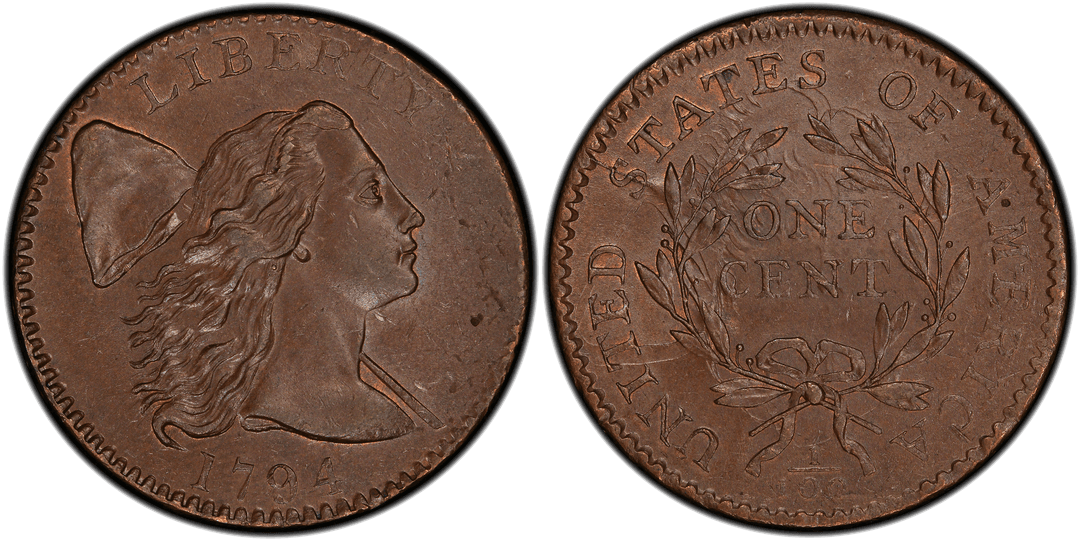
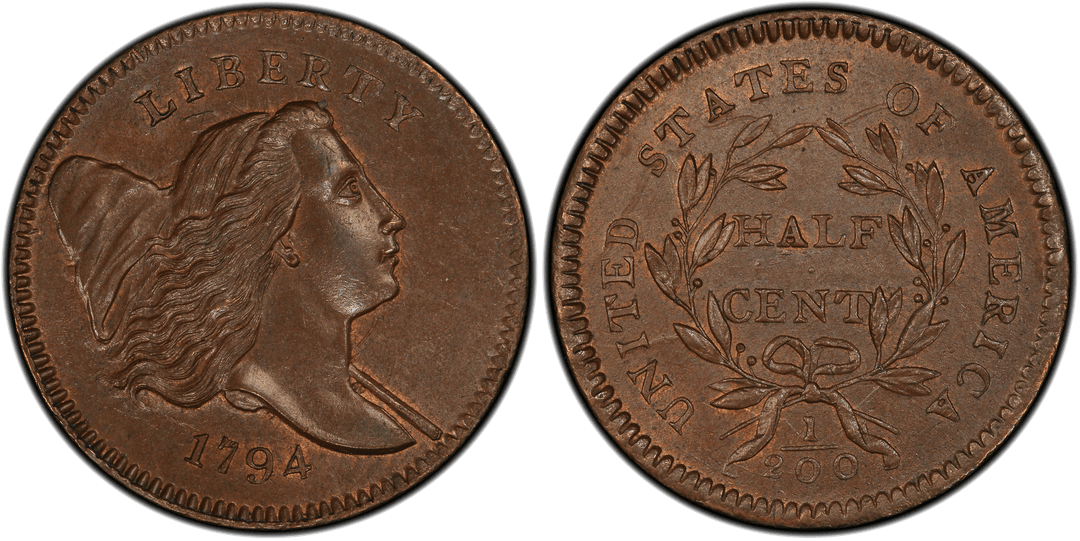
Die Clash (DCL)
A die clash is a minting error that occurs when the obverse and reverse dies strike each other without a planchet between them. The impact transfers incuse (recessed) design elements from each die into the face of the opposing die. Every coin subsequently struck by those dies carries faint, ghost-like impressions of the opposite side's design superimposed on its own surface.
Die clashes are among the most common die errors produced at the U.S. Mint. They have been documented on virtually every denomination from half cents to gold eagles, spanning from the earliest years of the Mint to modern production. The term "die clash" is an umbrella designation that encompasses all forms of this error, from routine typical clashes to the rarest atypical and radical varieties.
How Does It Happen?
Modern coin presses operate at extraordinary speeds, striking between 750 and 850 coins per minute. Planchets are fed between the dies by an automated feed system. Between each strike, the dies separate briefly to allow the struck coin to eject and a new planchet to enter.
A die clash occurs when the feeding mechanism fails to deliver a planchet between strikes, but the dies close and strike anyway. With no planchet to absorb the blow, the obverse die slams directly into the reverse die. The raised design elements on each die — which are in relief (positive image) on the die face — are driven into the opposing die, creating incuse impressions.
The mechanics work as follows:
- A planchet fails to feed: The feed finger misses, or a jam prevents the next blank from entering the collar
- The dies strike empty: The press cycle continues automatically, and the dies slam together at full force (35 to 150 tons depending on denomination)
- Design transfer occurs: The raised design on the obverse die presses into the reverse die face, and vice versa
- Subsequent coins show clash marks: Every coin struck by those dies afterward carries faint impressions of the transferred design
The Mint inspects dies and removes clash marks by polishing the die face with abrasive compounds. This process removes the shallow clash impressions from the die surface. However, if the clash was deep enough, or if the die was not caught in inspection, clashed dies can produce hundreds or thousands of coins before being retired.
How to Identify a Die Clash
Die clash marks have consistent, recognizable characteristics:
- Ghost images: Faint outlines of the opposite side's design appear in the fields (flat areas) of the coin. On a Lincoln cent, you might see the faint outline of the Lincoln Memorial columns on the obverse, or traces of Lincoln's profile on the reverse.
- Location in fields: Clash marks appear in the open field areas of the coin, not on raised design elements. The transferred design only impresses into the lower-relief areas of the receiving die.
- Consistent across multiple coins: Because the clash marks are on the die itself, every coin struck from that die will show the same clash marks in the same positions. This distinguishes die clashes from incuse damage on individual coins.
- Mirror-reversed orientation: The clash marks appear as a mirror image of the source design, because the die itself carries a reversed (incuse) version of the design.
- Weakness after polishing: If the Mint polished the die after the clash, coins struck after polishing will show progressively weaker clash marks until they disappear entirely.
Clash Marks vs. Other Phenomena
| Feature | Die Clash | Strike Through | Die Deterioration |
|---|---|---|---|
| Pattern | Recognizable design from opposite side | Random impressions from foreign material | General loss of detail |
| Consistency | Same marks on every coin from that die | Unique to individual coin | Progressive across die life |
| Location | Fields of the coin | Anywhere on surface | Typically on fine details |
| Profile | Incuse (recessed into surface) | Varies | Mushy, indistinct |
Notable Examples
Lincoln Cent Clashes
Lincoln cents are the most prolific source of die clashes because of their enormous production volumes. The most commonly seen clash marks on Lincoln cents include the reverse columns of the Lincoln Memorial visible behind Lincoln's head on the obverse, and the outline of Lincoln's bust visible in the reverse fields. Wheat-ear reverses (1909-1958) and Memorial reverses (1959-2008) both produced abundant clash varieties.
Morgan Dollar Clashes
Morgan dollars (1878-1921) are prime territory for die clash collectors. The large coin surface and deep relief design produce bold, easily visible clash marks. The most frequently seen pattern is the eagle's wing tips and tail feathers from the reverse appearing in the obverse fields around Liberty's portrait. Clash varieties are cataloged by VAM number, and hundreds of distinct clash die pairs have been documented.
Kennedy Half Dollar Clashes
Kennedy half dollars regularly exhibit clash marks, with the heraldic eagle's features from the reverse appearing around Kennedy's portrait. The large format of the half dollar makes clash marks particularly visible and photogenic.
State and National Park Quarter Clashes
The extended quarter programs (1999-2021) generated numerous die clash varieties. With 56 different State Quarter reverses and 56 America the Beautiful reverses, clash collectors had new material to pursue every few months.
Collecting Tips
- Availability: Die clashes are common and affordable across most denominations. They make an excellent entry point for error collectors, particularly on Lincoln cents and Jefferson nickels.
- Strength of clash: The value of a die clash coin is directly proportional to the boldness of the clash marks. A strong, dramatic clash showing clear design transfer is worth significantly more than a faint, barely visible clash.
- Die polishing affects value: Coins struck immediately after the clash event — before the Mint polished the die — show the strongest clash marks and command the highest premiums. Later strikes from a polished die show progressively weaker marks.
- Series specialization: Many collectors focus on die clashes within a single series (Morgan dollars, Lincoln cents, etc.) and build sets showing different clash die pairs.
- Photography matters: Die clashes photograph best under strong directional lighting at a low angle. Proper imaging is important for documenting and selling clash varieties.
- Major grading services: PCGS and NGC both recognize and attribute die clashes on their holder labels. Third-party attribution adds value and marketability.
Related Error Types
- Typical Die Clash (TYC) -- The standard form where dies clash in normal alignment
- Atypical Die Clash (ADC) -- Clash with unusual die orientation or tilt
- Floating Die Clash (FDC) -- Clash marks displaced from their expected positions
- Radical MAD Die Clash (RMC) -- Clash with severe die misalignment
- Mule Die Clash (MDC) -- Clash between dies not intended to be paired
- Type I Counter Clash (CC1) -- Secondary clash from raised clash marks on a coin
- Type II Counter Clash (CC2) -- Multi-generation counter clash