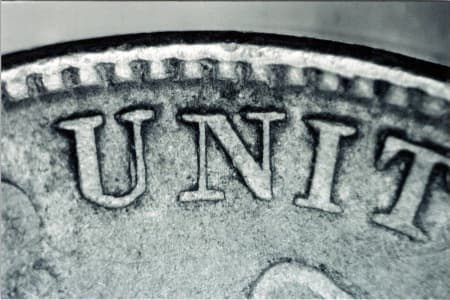
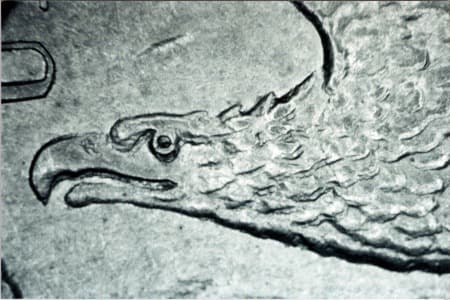
Doubled Die Obverse (DDO)
A Doubled Die Obverse is one of the most sought-after and recognizable coin errors in numismatics. It occurs when the obverse (front) side of a coin shows a clear doubling of design elements — letters, numbers, or imagery — caused by a misalignment during the die-making process.
How Does It Happen?
To understand doubled dies, it helps to know how coin dies are made. The U.S. Mint creates a master hub — a positive image of the coin design — that is pressed into a master die (a negative image). Working hubs are then made from the master die, and working dies are made from the working hubs. Each of these transfers involves immense pressure.
A doubled die occurs when the hub and die are not perfectly aligned during one of these impressions. If the hub shifts slightly between impressions, or if the die rotates during the hubbing process, the design elements get impressed in two slightly different positions on the die. Every coin struck by that die will then show the same doubling.
This is fundamentally different from machine doubling (also called strike doubling or shelf doubling), which occurs during the striking process itself and produces flat, shelf-like displacement rather than the rounded, fully formed doubling of a true doubled die.
How to Identify a Doubled Die Obverse
When examining a coin for DDO characteristics, look for these key features:
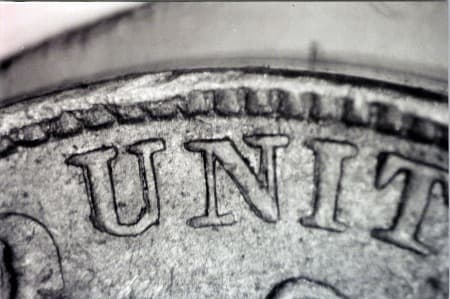
- Strong, separated doubling: True doubled dies show design elements that appear as two distinct, fully formed impressions. The doubling has depth and dimension, not the flat "shelf" appearance of machine doubling.
- Consistent direction: The doubling on a true doubled die will be in the same direction across all affected elements. If the motto shows doubling to the north, the date will also show doubling in that direction.
- Affected areas: DDOs most commonly show doubling on lettering (LIBERTY, IN GOD WE TRUST, E PLURIBUS UNUM), the date, and fine design details like hair curls or wheat stalks.
- Magnification: Use at least 5x to 10x magnification. Many DDOs are subtle and require careful examination under good lighting.
Machine Doubling vs. True Doubled Die
The most important diagnostic skill is distinguishing true doubled dies from worthless machine doubling:
| Feature | True Doubled Die | Machine Doubling |
|---|---|---|
| Appearance | Two distinct, rounded images | Flat, shelf-like displacement |
| Serifs on letters | Both images show full serifs | Displaced image has no serifs |
| Consistency | Same doubling direction throughout | May vary across the coin |
| Value | Significant premium | No added value |
Notable Examples
1955 Lincoln Wheat Cent DDO
The most famous doubled die in American numismatics. The doubling is so dramatic it is visible to the naked eye, with LIBERTY, IN GOD WE TRUST, and the date all showing extreme separation. An estimated 20,000 to 24,000 examples were released into circulation. In high grades, this coin sells for tens of thousands of dollars.
1972 Lincoln Cent DDO
The second most well-known Lincoln cent DDO. Strong doubling is visible on LIBERTY, IN GOD WE TRUST, and the date. This variety is much more affordable than the 1955, making it a popular entry point for error collectors.
1995 Lincoln Cent DDO
Notable for strong doubling on LIBERTY, particularly visible in the word's upper portions. This variety gained national attention when it was featured in mainstream news coverage, sparking widespread interest in error coin collecting.
1969-S Lincoln Cent DDO
One of the rarest and most valuable doubled dies, with prices reaching six figures for high-grade examples. The doubling is dramatic across all obverse elements. Counterfeits are prevalent, so authentication by a major grading service is essential.
Collecting Tips
- Grade matters enormously: A DDO in MS-65 can be worth many times more than the same variety in VF-30. Gem examples command significant premiums.
- Authentication is critical: For valuable DDOs (especially 1955, 1969-S, and 1958), always purchase coins certified by PCGS or NGC. Counterfeits and misattributed machine doubling are common.
- Die stage affects value: Early die state coins with sharp doubling are preferred. Later die states may show die deterioration that obscures the doubling.
- Class matters: Doubled dies are classified into several classes (I through VIII) based on the type of hub misalignment. Class I (rotated hub) and Class II (distorted hub) are generally the most dramatic and valuable.
- Check both sides: If you find a DDO, examine the reverse too. Some die pairs produce both obverse and reverse doubling, and a coin exhibiting both is particularly desirable.
Related Error Types
- Doubled Die Reverse (DDR) — The same phenomenon on the coin's reverse
- Doubled Working Hub Obverse (WHO) — Doubling introduced at the working hub stage
- Master Die Doubling Obverse (MDO) — Doubling at the master die level, affecting all working dies made from it
- Repunched Mint Mark (RPM) — Similar doubling concept but specific to the mint mark