Missing Mint Mark (MMM)
A missing mint mark is a coin struck without the mint mark it should carry. The coin is otherwise normal — right planchet, right design, right date — but the small letter that identifies where it was struck is absent. It is also one of the most frequently misunderstood errors, because most coins without a mint mark were never meant to have one.
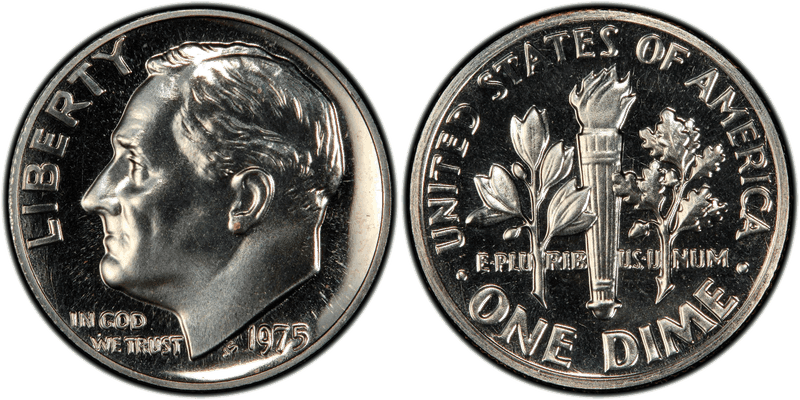
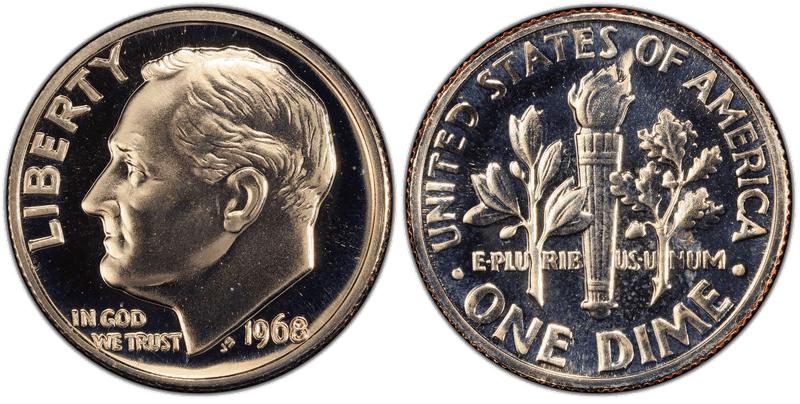
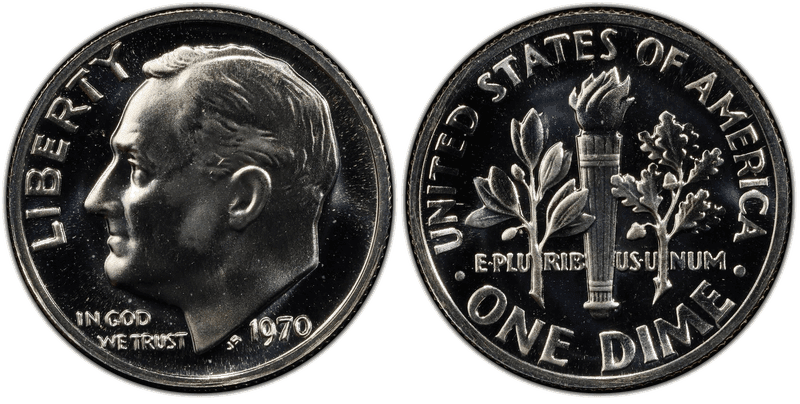
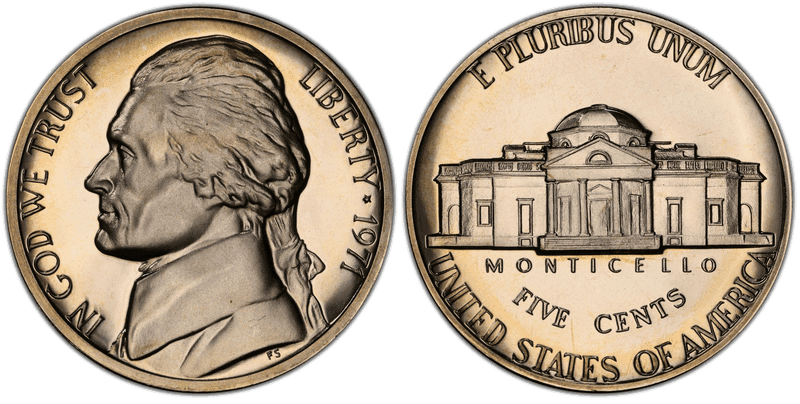
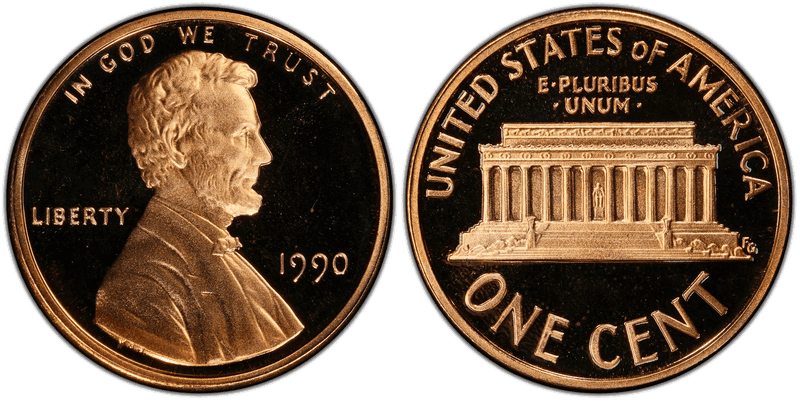
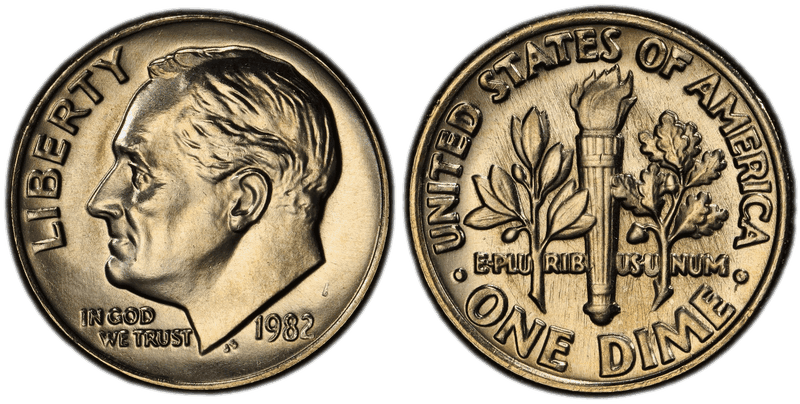
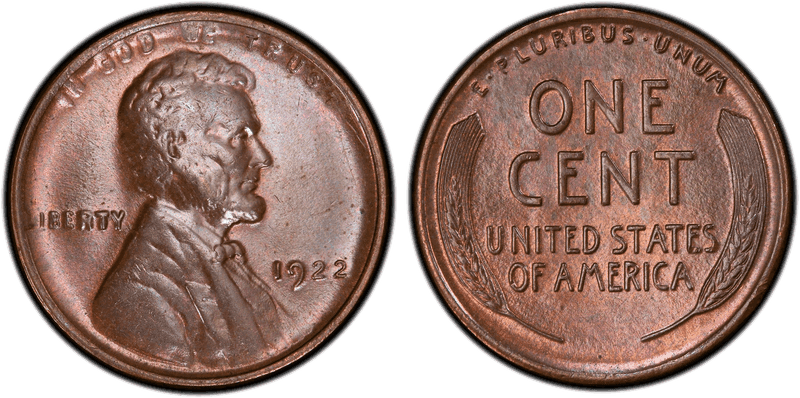
The famous examples are proofs: San Francisco proof dimes of 1968, 1970, 1975 and 1983, the 1971 proof nickel and the 1990 proof cent, all of which left the press with no S. The 1975 dime is known in two examples. Among circulating coins, Error-Ref records the 1982 Roosevelt dime struck at Philadelphia without its P, from a single die pair. The best-known circulating case is a Lincoln cent from 1922, a year when only Denver struck cents and some of them came out with no D, though that coin's mark was lost from the die rather than never punched.
How Does It Happen?
For most of the Mint's history, a mint mark was not part of the design. Every working die was made from the same master design at Philadelphia, and the mint mark was then punched into each working die by hand before the die was shipped to the branch mint that would use it. One die, one punch — and a die that missed its punch went out with no mark at all. The same hand step that occasionally missed altogether is what produced repunched, misplaced and over mint marks.
The Mint ended the hand step by moving the mint mark into the master die — for proof coinage from 1985, and for circulating coinage around 1990 (sources differ by a year either way). After that, a die could only lack its mark if it was made from the wrong master, which is the Mint's explanation for the 1990 proof cent: a Philadelphia working die, without a mint mark because Philadelphia cents carry none, mixed in with the proof dies and sent to San Francisco. Error-Ref reports an estimated 3,700 struck, of which the Mint found and destroyed 145.
A mint mark can also be lost after the die was punched, and these cases are different in kind:
- Abraded away. A die polished to remove clash marks or other damage can lose a shallow mint mark along with them. This is die abrasion, and it is the usual explanation offered for the strongest 1922 "No D" cents. Breen's account, as summarized on Wikipedia, puts more weight on worn dies and filled mint marks.
- Filled. Grease and debris collect in the small, deep recess of the mint mark and stop metal flowing into it. The result is a weak or ghostly mark, or occasionally none, on some coins from a die and not others — a strike through rather than a missing mint mark.
How to Identify a Missing Mint Mark
First, check that a mint mark is expected. Most coins without one are exactly as the Mint made them:
- Philadelphia coins before 1980 carry no mint mark, except the silver wartime nickels of 1942–1945 and the Susan B. Anthony dollars from 1979. Philadelphia cents still carry none, except in 2017.
- No coins dated 1965, 1966 or 1967 carry a mint mark, from any mint.
- Some branch-mint coins were deliberately struck without one. In the 1970s and 1980s, West Point and San Francisco struck cents for circulation without mint marks, and they cannot be told from Philadelphia's. Bullion coins such as the American Silver Eagle carry none wherever they were struck.
If a mint mark is expected, then:
- Look for a ghost. Under 10x magnification, a faint outline, a slight bump or a disturbance where the mark should be means the mark was there and was filled or worn. A genuine missing mint mark leaves an undisturbed field.
- Check the rest of the die. An abraded die shows its polishing: fine parallel lines in the field, and other shallow details thinned or missing. The 1922 No D that specialists treat as the main variety is attributed partly by its reverse, which is strong; weak-reverse coins come from other, worn die pairs.
- Examine the field where the mark was. A mint mark removed by hand to imitate this error leaves tool marks and a disturbed surface. On a proof, that damage is obvious against the mirror field — which is why the proof examples are hard to fake this way, and why the 1922 No D, struck on an ordinary cent, is faked often. See Altered Coin.
- Match a known variety. Missing mint marks are few and well recorded by date and denomination. A coin that matches no recorded example is almost always one that never needed a mark, or a filled die.
Missing, Filled, Abraded or Removed?
| Missing (omitted) | Filled die | Abraded die | Removed by hand | |
|---|---|---|---|---|
| Where it happened | Die never punched | Debris in the die | Die polished | On the coin, afterwards |
| Trace of the mark | None | Often a faint ghost | Sometimes a trace | Tool marks, disturbed field |
| Every coin from the die | Yes | No — varies coin to coin | Yes, from that state on | No — one coin |
| Collector standing | A recognized variety | A minor strike through | A recognized variety in famous cases | An altered coin |
Collecting Tips
- Know which dates are real. The recognized missing mint marks are a short list, and the examples named at the top of this page cover most of it. Learning that list is quicker and safer than evaluating every mark-less coin from scratch.
- Proofs are the easiest to judge. A missing S on a proof is easier to evaluate than a missing D on a circulated cent: the mirror field shows any ghost of the mark and any attempt to remove one.
- For the 1922 No D, attribute the die pair. The die pair with a strong reverse is the one the grading services single out. Weak-D coins and weak-reverse pairs are different coins, and removed-D alterations are common.
- Buy certified. A mint mark is easy to remove mechanically, and Error-Ref warns that the 1982 no-P dime is easy to fake for that reason; have any example examined by an expert before buying.