
1830 Templeton Reid Two-and-a-Half Dollar Gold Piece
Strike Type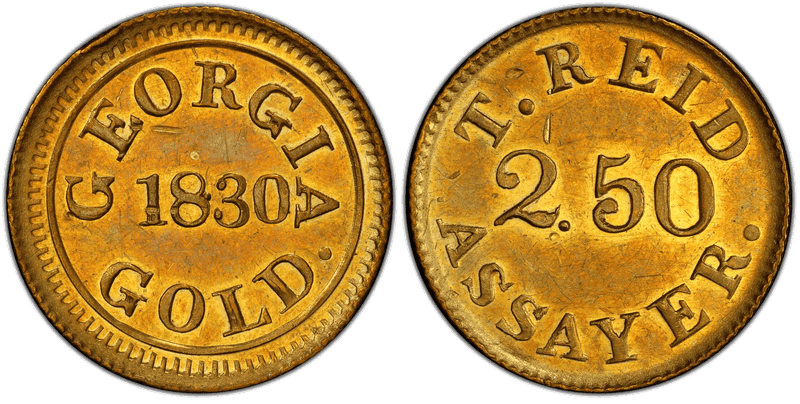
Coin Details
Auction Record
$480,000 • MS61 • 01-2020 • Kagin's FUN Auction
Description
The 1830 Templeton Reid Two-and-a-Half Dollar Gold Piece (Kagin K-1) is the smallest denomination struck by Templeton Reid at his private mint in Gainesville, Georgia during the summer of 1830. This quarter eagle features "GEORGIA GOLD" surrounded by stars on the obverse, with "TWO DOLLARS AND FIFTY" and "TEMPLETON REID / ASSAYER" on the reverse. Reid established what is considered the first private mint under the United States Constitution, operating from July through October 1830 during the Georgia Gold Rush that began after Benjamin Parks' gold discovery near Gainesville in the late 1820s. As a blacksmith, jeweler, watchmaker, gunsmith, and silversmith in Milledgeville, Georgia, Reid had the technical skills to produce dies and strike coins from native Georgia gold. The K-1 quarter eagles were struck from gold of approximately .942 fineness, significantly higher than the .917 federal standard, as confirmed by Philadelphia Mint testing in 1842. Despite this superior purity, Reid's mint ceased operations after an anonymous critic writing as "No Assayer" in the Georgia Journal publicly questioned his assaying abilities. Only an estimated 100 quarter eagles were produced, with approximately five to seven examples known to survive today, making this among the rarest issues in American territorial gold coinage.
Rarity Notes
Approximately 5-7 known specimens from an estimated original mintage of ~100 pieces. One of the rarest denominations in American territorial gold coinage.
Cross References
Kagin K-1; PCGS #10320; NGC #31002
External References
Error Varieties
No listings found
This category doesn't have any child listings yet.
Other Strike Types in This Series
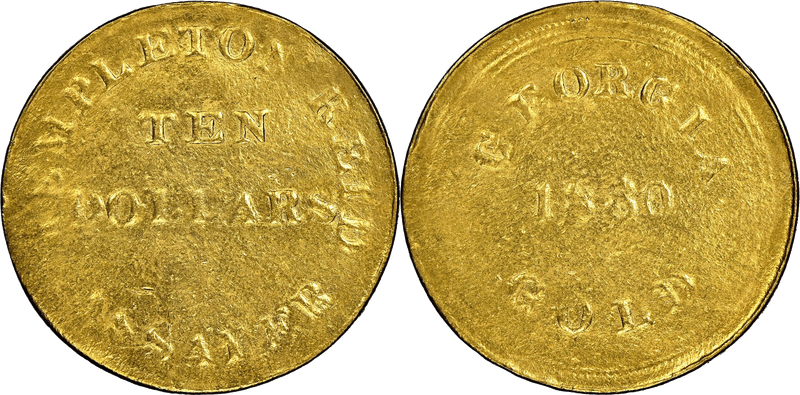
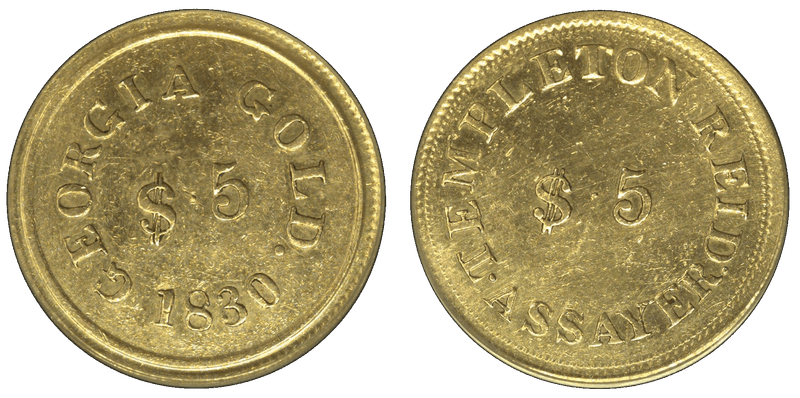
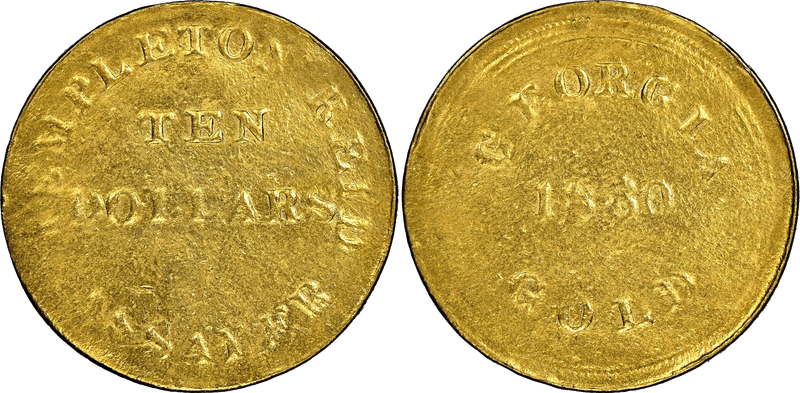
Collector Essentials
Tools and references for building and protecting your coin collection.
10x-20x Jeweler's Loupe
A must-have for examining coin details, mint marks, and surface quality
Red Book — Guide to U.S. Coins
The essential annual reference for U.S. coin values, history, and mintages
Coin Albums & Storage
Archival-quality albums and holders to protect and display your collection
USB Digital Microscope
Capture detailed images for documentation and community submissions
As an Amazon Associate, NumisDex earns from qualifying purchases.