Radical MAD Die Clash (RMC)
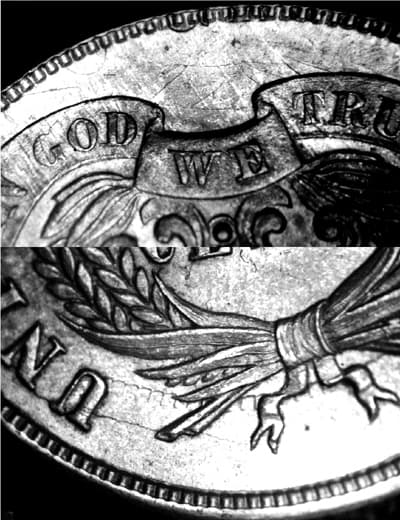
A Radical MAD (Misaligned Die) Clash occurs when the obverse and reverse dies clash while severely misaligned from each other. The resulting clash marks are dramatically shifted from their expected positions, producing bold, unmistakable transferred design elements in locations far removed from where a normal die clash would place them. The "radical" designation distinguishes these from minor or moderate misalignment clashes -- a radical MAD clash involves displacement so extreme that the marks are immediately eye-catching.
How Does It Happen?
A radical MAD clash requires two simultaneous press malfunctions: a misplaced planchet feed (or no planchet at all) combined with a severe die misalignment. The mechanics unfold as follows:
- Severe die displacement: The hammer die (typically the upper die) shifts dramatically in its mounting. This can result from a worn or broken die retaining mechanism, a failed die lock, or the die physically shifting under the forces of repeated striking. The displacement is not a subtle fraction of a millimeter -- it is a large-scale shift measuring multiple millimeters or more.
- Empty strike: No planchet is present between the dies when the press cycles.
- Off-center die clash: The dies slam together with the severe offset. Because the die faces are radically displaced, design elements from one die contact entirely different areas of the opposing die compared to a typical clash.
- Dramatic mark placement: The clash marks are driven into the die face in positions far from the coin's center. On subsequent coins, these marks appear near the rim, across design elements where clashes never normally register, or even partially off the planchet.
The distinction between a floating die clash and a radical MAD clash is one of degree. Floating clashes involve moderate lateral displacement -- the marks are noticeably shifted but still within the general field area of the coin. Radical MAD clashes involve extreme displacement -- the marks are pushed to the periphery or into areas that make the clash unmistakable even to a casual observer.
The severity of the misalignment also means that in a radical MAD clash, the opposing dies only make partial contact. One portion of the die face strikes the other die's rim or edge area, while the opposite side does not make contact at all. This produces clash marks that cover only a portion of the die face but with unusual boldness in the area where contact was made.
How to Identify a Radical MAD Die Clash
Radical MAD clashes are among the easiest die clashes to identify because of their dramatic visual impact:
- Extreme displacement: The clash marks are pushed to the outer portions of the coin, near or touching the rim. A typical clash places marks in the central fields; a radical MAD clash places them far from center.
- Partial coverage: Only a portion of the opposing design transfers, because the severe offset means only part of each die face contacts the other. One side of the coin shows bold clash marks while the other side has none.
- Bold impressions: The marks are often deeper and more pronounced than in a typical clash, because the contact force is concentrated on a smaller area of the die face.
- Asymmetric pattern: The clash marks appear on only one side or one area of the coin, creating a distinctly lopsided pattern that does not match the centered, symmetric appearance of a normal clash.
- Naked-eye visibility: Unlike subtle typical clashes that require magnification, radical MAD clashes are frequently visible to the naked eye because of their size and displacement.
Classification Scale
Die clash researchers use a descriptive scale for misalignment severity:
| Severity | Displacement | Description |
|---|---|---|
| Minor | 1-2 mm | Slight shift, marks near expected position |
| Moderate | 2-4 mm | Clear displacement, marks noticeably off-center |
| Major | 4-6 mm | Significant shift, marks approaching rim area |
| Radical | 6+ mm | Extreme displacement, marks at or near rim |
Notable Examples
Presidential Dollar Radical MAD Clashes
Presidential dollars (2007-2016) produced some of the most dramatic radical MAD clashes in modern numismatics. The combination of high-relief portraits, large planchet diameter, and the high-speed production requirements of the dollar coin program created conditions ripe for severe die misalignment events. Several die pairs clashed with displacements exceeding 5 mm, producing coins where the president's portrait from the obverse die appears as a bold ghost image near the rim of the reverse.
Sacagawea Dollar RMC Varieties
Sacagawea dollars have yielded notable radical MAD clashes where the eagle-in-flight reverse design transfers to extreme positions on the obverse. The eagle's distinctive wing silhouette, displaced dramatically toward the rim, creates coins that are immediately identifiable as major errors even without magnification.
Lincoln Cent Radical MAD Clashes
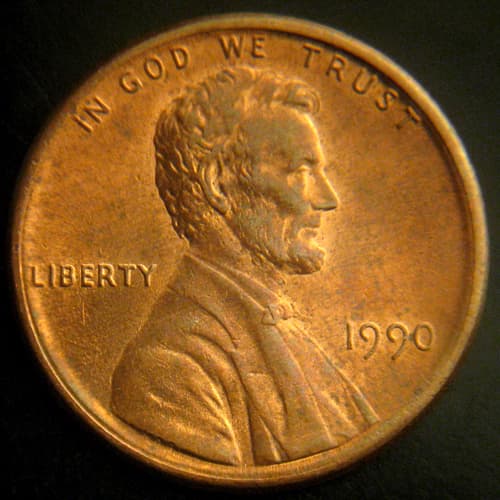
While less dramatic than dollar-coin examples due to the smaller planchet size, Lincoln cents with radical MAD clashes exist and are documented in the MadDieClashes.com reference. The Memorial columns or Shield design from the reverse, shifted to extreme positions on the obverse, produce coins that stand out sharply from the more common typical and moderate misalignment clashes.
State Quarter Radical MAD Clashes
State quarters occasionally produced radical MAD clashes with the displacement magnified by the quarter's medium-sized planchet. The unique reverse designs of each state make these particularly interesting to identify, as the displaced clash marks from a California or Texas reverse produce different patterns than those from a Virginia or Ohio reverse.
Collecting Tips
- Rarity and value: Radical MAD clashes are significantly rarer than typical or moderate clashes. They command substantial premiums, particularly on higher denominations. Budget accordingly for authenticated examples.
- Authentication is important: The dramatic appearance of radical MAD clashes can superficially resemble post-strike damage. Third-party grading by PCGS or NGC provides authentication and increases buyer confidence.
- Measurement matters: Document the approximate displacement distance when describing a radical MAD clash. Greater displacement correlates directly with greater collector interest and value.
- MadDieClashes.com: This is the authoritative reference for cataloged MAD clash varieties. Die clash researcher Jason Cuvelier maintains detailed photographic documentation and die pair attribution for hundreds of radical MAD clash coins.
- Dollar coins are prime territory: The dollar denomination is the most productive source for radical MAD clashes. Roll searching Sacagawea and Presidential dollars from Mint-sealed rolls offers the best probability of discovery.
- Die pair tracking: Like all die errors, radical MAD clashes affect every coin struck from the affected die after the clash event. Finding additional examples from the same die pair strengthens the attribution and documents the error's extent.
Related Error Types
- Die Clash (DCL) -- The general die clash category
- Floating Die Clash (FDC) -- Moderate lateral displacement clash (less extreme than radical)
- Atypical Die Clash (ADC) -- Clash with angular or rotational misalignment
- Typical Die Clash (TYC) -- Standard centered clash for comparison
- Misaligned Dies (MAD) -- General die misalignment during striking, the same mechanical failure but with a planchet present