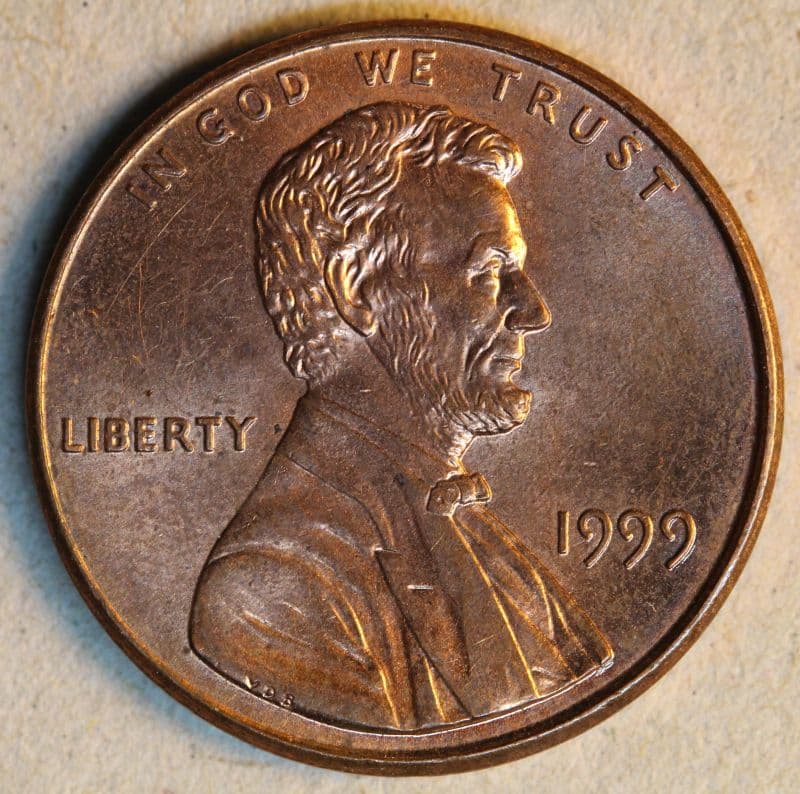
Mule Die Clash (MDC)
A mule die clash occurs when two dies that were never intended to be paired together clash against each other without a planchet between them. The resulting clash marks are distinctive because they do not match the normal obverse-to-reverse design relationship for the coin type. Instead, the ghost impressions come from a completely different design -- a die from another denomination, a different year, or an entirely unrelated coin type. Mule die clashes rank among the rarest and most intriguing varieties in the die clash family.
How Does It Happen?
To understand mule die clashes, it is important to know how dies are managed at the Mint. Working dies are manufactured in a centralized facility and shipped to individual Mint branches. At each branch, dies are stored, inventoried, and installed in coining presses as needed. A press operator selects an obverse and reverse die pair, installs them, and begins production.
A mule die clash requires two conditions to converge:
- Mismatched die installation: A die from one denomination or design type is accidentally paired with a die from a different type. For example, a Washington quarter obverse die is paired with a Sacagawea dollar reverse die, or a Lincoln cent obverse is installed opposite a Roosevelt dime reverse.
- Empty strike: A planchet fails to feed, and the mismatched dies clash against each other.
The die mismatch itself is an extraordinarily rare Mint error. The U.S. Mint uses procedural controls -- die storage systems, size coding, die collar specifications, and operator verification -- to prevent mismatched pairings. When these safeguards fail simultaneously, the result is a mule. If those mismatched dies also happen to clash, the result is a mule die clash.
There is a critical distinction between a mule die clash and a mule coin. A mule coin is actually struck with the wrong die pair and retains the full design from both mismatched dies. A mule die clash, by contrast, occurs when the mismatched dies contact each other empty, and the clash marks from the wrong die are then impressed on subsequent coins struck from the affected die after it is returned to its correct pairing. The coins themselves have the correct obverse and reverse designs, but they carry ghost impressions from a die that should never have been paired with theirs.
How to Identify a Mule Die Clash
Identifying a mule die clash requires recognizing that the clash marks do not belong to the coin's own design:
- Wrong design elements: The ghost impressions visible in the fields are from a different coin type entirely. On a Lincoln cent, you would expect Memorial columns or Shield lines as clash marks. If instead you see the outline of Monticello (from a nickel reverse die), that is a mule die clash.
- Size mismatch indicators: If the clash came from a die of a different diameter, the scale of the clash marks is wrong. Design elements from a larger die appear broader and extend further than expected, while those from a smaller die appear compressed and centralized.
- Unfamiliar design geometry: The transferred elements do not match any feature from the coin's own reverse (or obverse). A collector familiar with the typical clash patterns for a given series will immediately recognize that the marks are foreign.
- Correct primary design: The coin's own obverse and reverse designs are normal and properly paired. The mule clash marks are superimposed on an otherwise correctly paired coin.
Required Expertise
Mule die clash identification demands thorough knowledge of U.S. coin designs across multiple denominations. The collector must:
- Recognize the clash marks as inconsistent with the coin's own reverse/obverse
- Positively identify which foreign die produced the marks
- Confirm the size and design geometry match a specific other denomination or type
- Rule out other explanations such as post-strike damage, environmental effects, or contact marks
Notable Examples
2000 Sacagawea Dollar / Washington Quarter Mule Die Clash
The most famous modern mule error is the 2000 Sacagawea dollar / Washington quarter mule coin. While the mule coins themselves (struck with the wrong die pair) are the headline pieces, evidence of mule die clashes from this same mispairing has been documented. Quarter-design clash marks appearing on Sacagawea dollar planchets represent one of the most compelling proofs that the Sacagawea obverse die was physically paired with a quarter reverse die.
Small Cent / Dime Mule Clashes
Because the Lincoln cent (19mm) and the Roosevelt dime (17.91mm) are the closest in diameter of any circulating U.S. coins, die mispairing between these two denominations is the most plausible accidental mule scenario. Documented instances of dime reverse clash marks on cent dies -- showing the torch, olive branch, or oak branch from the dime's reverse rather than the expected cent reverse elements -- confirm that such mispairings have occurred.
Historical Mule Evidence
In the 18th and 19th centuries, the U.S. Mint's die management was far less formalized than modern practice. Die pairs were sometimes deliberately mixed for special strikes, pattern coins, or when a die from one type was pressed into emergency service for another. Clash marks on early coins occasionally reveal evidence of unconventional die pairings that were standard practice during the Mint's first century of operation.
Collecting Tips
- Extreme rarity: Mule die clashes are among the rarest varieties in all of numismatics. Most die clash collectors will never encounter one. Expect to pay significant premiums for authenticated examples.
- Expert authentication is mandatory: Given the extraordinary rarity and the high risk of misattribution, mule die clashes must be authenticated by a recognized authority. Submit to PCGS or NGC, and consider additional verification by a die clash specialist.
- Know your designs: Building the expertise to identify mule die clashes requires intimate familiarity with the designs of all circulating U.S. denominations. Study the standard typical clash patterns for each series so that foreign design elements stand out immediately.
- Research first: Before concluding that a clash mark is from a foreign die, exhaust all possibilities that it could be an unusual feature of the coin's own opposing die. Some design elements clash in unexpected ways under atypical conditions.
- Documentation: If you discover what you suspect to be a mule die clash, photograph it extensively under multiple lighting angles. Provide comparison images showing the suspected source design from the foreign denomination. Thorough documentation is essential for expert evaluation.
- Study known examples: Review published mule die clash attributions in numismatic literature and specialized references. Understanding what confirmed examples look like is the best preparation for identifying new ones.
Related Error Types
- Die Clash (DCL) -- The general die clash category
- Atypical Die Clash (ADC) -- Unusual clash that can superficially resemble a mule clash
- Typical Die Clash (TYC) -- Normal clash pattern to use as a baseline comparison
- Wrong Planchet (WPL) -- A different denomination-mixing error at the planchet level
- Type I Counter Clash (CC1) -- Secondary clash marks that can complicate mule clash identification