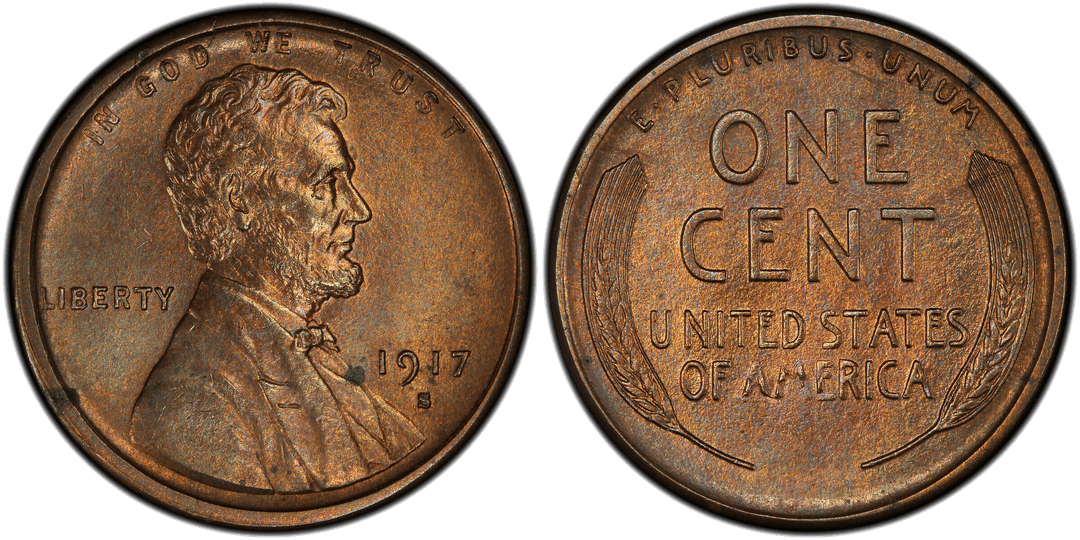
Misaligned Dies (MAD)
Misaligned Dies (MAD) is a striking error that occurs when the obverse and reverse dies are not properly aligned with each other during the strike. One die is shifted laterally so the two designs are offset — if the coin were transparent, the obverse and reverse design centers would not coincide. Both sides of the coin show a complete design, but the rim is wider on one side and correspondingly narrower on the opposite side, producing an asymmetric appearance.
Misaligned die errors are fundamentally different from off-center strikes. In an off-center strike, the planchet is mispositioned relative to both dies. In a misaligned die error, the planchet is properly seated in the collar, but the dies themselves are offset from each other. This distinction produces a coin where both sides show full design coverage — the hallmark of a MAD error.
How Does It Happen?
The obverse and reverse dies in a coin press must be precisely aligned along a common central axis. The lower (anvil) die sits fixed in the press base, while the upper (hammer) die is mounted on a ram that travels vertically. Both dies must be centered over the collar so that the design on each die aligns perfectly with the other and with the collar's centering ring.
Misalignment occurs through several mechanisms:
- Die installation error: When a die is replaced (dies wear out and are swapped regularly), the new die may not be perfectly centered in its mounting. Even a fraction of a millimeter offset produces a visible misalignment on the finished coin.
- Press vibration: The repeated force of striking — 35 to 150 tons per cycle at 750+ cycles per minute — generates significant vibration. Over time, this vibration can shift a die slightly in its mounting, introducing progressive misalignment.
- Worn mounting hardware: The components that hold the die in position (die locks, retaining rings, mounting bolts) wear over time. As these components loosen, the die develops play in its mounting and can shift between strikes.
- Thermal expansion: Dies heat up during extended production runs. Differential thermal expansion between the die and its mounting can alter alignment as the press warms up.
A critical distinction exists between obverse MAD and reverse MAD. The obverse die is typically the hammer (upper) die in modern presses. If the obverse die is shifted, the obverse design is offset relative to both the reverse design and the collar. The obverse will show an uneven rim, while the reverse (seated in the fixed anvil position) remains centered in the collar. If the reverse die is shifted, the opposite pattern appears.
How to Identify Misaligned Dies
MAD errors are identified by a specific set of characteristics:
- Uneven rim width on one side: The most visible diagnostic is a rim that is wide on one side and narrow (or absent) on the opposite side. This asymmetry occurs because the shifted die creates more space between the design and the collar on one side and less on the other.
- Complete design on both sides: Unlike off-center strikes, MAD errors show the full design on both sides. No portion of the design is missing — it is simply shifted relative to the opposing side.
- Obverse and reverse are offset: If you hold the coin so the obverse is centered, the reverse design is visibly shifted to one side (or vice versa). This offset is the defining characteristic.
- Consistent across multiple coins: Because the misalignment is in the die mounting (not the planchet position), every coin struck from the misaligned die pair shows the same directional offset. This consistency helps confirm the error is die-based.
Measuring Misalignment
Misalignment is typically expressed as a percentage, representing how far the offset is relative to the coin's diameter. A 5% MAD on a quarter (24.26 mm diameter) represents roughly 1.2 mm of offset. Measurements are taken by comparing the narrowest rim to the widest rim on the affected side.
| Percentage | Visual Impact | Market Response |
|---|---|---|
| 1-5% | Subtle — visible only with careful examination | Minimal premium |
| 5-15% | Moderate — clearly uneven rim visible to the naked eye | Modest premium |
| 15-30% | Dramatic — design significantly offset, rim absent on one side | Strong premium |
| 30%+ | Extreme — very scarce, major visual impact | Significant value |
MAD vs. Off-Center vs. Tilted Die
| Feature | Misaligned Dies | Off-Center Strike | Tilted Die |
|---|---|---|---|
| Design completeness | Full on both sides | Partial — blank crescent on both sides | Full on both sides |
| Rim | Uneven but present on both sides | Missing on blank portion | One side normal, one side fishtailed |
| Cause | Die shifted laterally | Planchet mispositioned | Die tilted on its axis |
| Collar engaged? | Yes | No (usually) | Yes |
Notable Examples
Large-Offset Modern Quarters
Washington quarters with 15%+ misalignment are visually dramatic because the quarter's relatively large diameter amplifies the offset. State Quarter and America the Beautiful Quarter MAD errors are actively collected, with the most dramatic examples showing the reverse eagle or park design noticeably displaced from the obverse Washington portrait.
Jefferson Nickel MAD Errors
Jefferson nickels are a productive series for MAD errors. The nickel's thick planchet and relatively soft metal alloy (75% copper, 25% nickel) respond distinctly to die misalignment, often showing pronounced rim variations that are easy to spot in circulation.
Early Date MAD Errors
Misaligned die errors on 19th-century coins are documented but scarce. The slower, hand-fed presses of that era allowed operators to detect alignment issues more readily than modern high-speed automated presses. Examples on Seated Liberty, Barber, and early Lincoln cent issues carry substantial premiums for their age and rarity.
Proof Coin MAD Errors
Misaligned die errors on proof coins are exceptionally rare because proof production involves slower press speeds, individual hand feeding of planchets, and rigorous inspection. The few proof MAD errors that exist represent extraordinary quality-control lapses and are highly prized.
Collecting Tips
- Severity drives value: Minor misalignment (under 5%) is common and carries little premium. Focus on coins with 10%+ misalignment for meaningful error value. The most dramatic examples (20%+) are scarce across all denominations.
- Both sides tell the story: Examine both sides of the coin. The shifted side shows uneven rims; the centered side shows a normal, even rim. Comparing the two confirms the direction and magnitude of misalignment.
- Denomination affects scarcity: MAD errors are most common on cents and nickels, less common on dimes and quarters, and rare on half dollars and dollars. Higher denominations receive more quality-control scrutiny.
- Confirm die-based origin: A genuine MAD error is consistent across every coin from that die pair. If you find one MAD coin, look for others with the same offset direction and magnitude — finding die-matched examples strengthens the attribution.
- Grading service recognition: PCGS and NGC attribute MAD errors on their holder labels, typically noting the approximate percentage of misalignment. This standardized attribution aids in pricing and comparison.
- Combination errors: MAD errors occasionally occur alongside other errors, such as die clashes or die cracks. A misaligned die that also clashed produces a coin with both offset design and clash marks — a desirable multi-error specimen.
Related Error Types
- Off-Center Strike (OFC) -- Planchet mispositioned relative to the dies, producing partial design
- Rotated Die (RTD) -- Die installed at incorrect rotational orientation
- Broadstrike (BRD) -- Coin struck without the collar die in place
- Tilted Collar (TCL) -- Collar angled during striking, producing uneven edge containment
- Multi-Strike (MST) -- Coin struck multiple times, sometimes with die shift between strikes