Wrong Planchet (WPL)
A Wrong Planchet error occurs when a coin is struck on a planchet intended for a different denomination or a different country's coinage. The coin displays the correct die design -- the obverse and reverse are those of the intended denomination -- but the size, weight, and metal composition are those of the planchet it was actually struck on. Wrong planchet errors are among the most valuable and sought-after error types in numismatics because they combine two minting failures: a wrong planchet entered the production line, and quality control failed to catch it.
How Does It Happen?
The U.S. Mint operates multiple coining presses, often producing several denominations simultaneously within the same facility. Each denomination has its own planchet supply: bins or hoppers of blanks that are fed into the press by automated feed systems. Wrong planchet errors occur when a planchet from one denomination's supply ends up in another denomination's press.
The contamination pathways include:
-
Hopper contamination: Planchets are transported between the blanking room and the coining presses in bins. If a bin previously held cent planchets is reused for dime planchets without being completely emptied, residual cent blanks contaminate the dime supply. A single stray blank in a hopper of thousands can produce a wrong planchet error.
-
Shared equipment and floor space: Multiple denomination presses operate in close proximity. A planchet that bounces off one press, rolls across the floor, or is ejected from a jammed feed mechanism can end up in an adjacent press's feed system.
-
Size compatibility: Wrong planchet errors occur most frequently when the stray planchet is close in diameter to the intended planchet. A dime planchet (17.91mm) can slip into a cent press (19.05mm) because the size difference is small enough that the feed mechanism does not reject it. A half dollar planchet (30.61mm) is too large to enter a dime press -- the physical incompatibility prevents the error.
-
Foreign planchet contamination: The U.S. Mint has historically produced coins for foreign countries on contract. When foreign planchet production runs on the same equipment as domestic production, foreign blanks can contaminate domestic hoppers. This is the origin of the famous "wrong country" planchet errors.
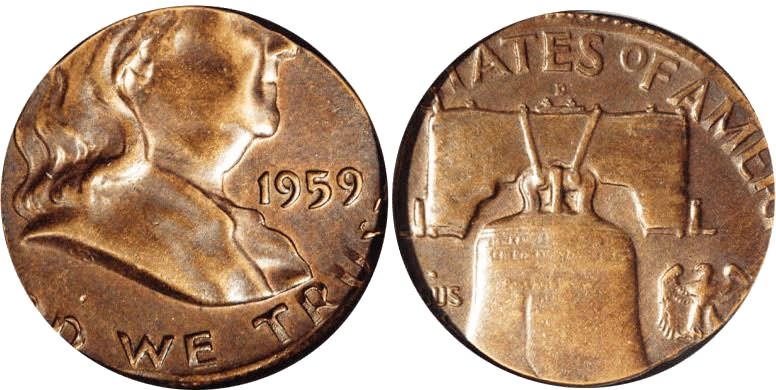
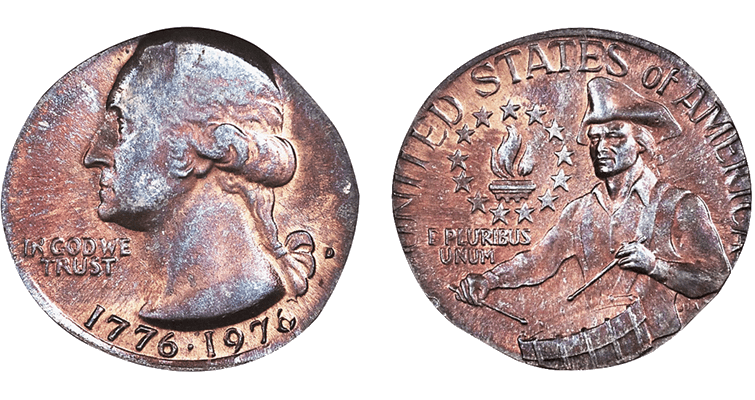
Once a wrong planchet enters the press, the dies close and strike with full force. The die design is impressed onto whatever metal is present. If the planchet is smaller than the dies, the design is incomplete -- only the portion of the die that contacts the smaller planchet leaves an impression. If the planchet is the same size or larger, the full design is impressed but on the wrong metal and at the wrong weight.
How to Identify a Wrong Planchet Error
Wrong planchet errors have definitive diagnostic characteristics:
-
Wrong weight: This is the primary authentication point. The coin's weight matches the planchet it was struck on, not the denomination shown in the design. A Lincoln cent design on a dime planchet weighs 2.268 grams (dime weight), not 2.5 grams (cent weight).
-
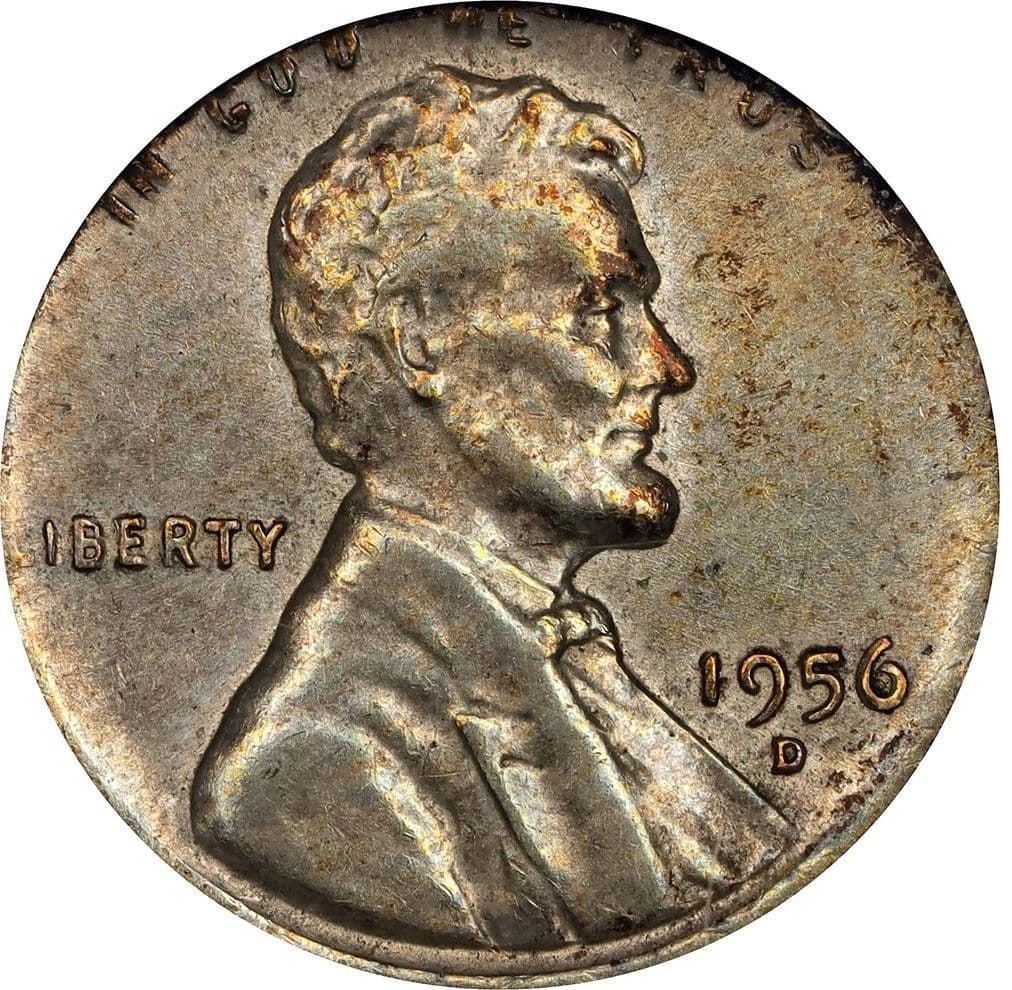
Wrong diameter: The coin's physical size matches the wrong planchet. If the planchet is smaller than the intended denomination, the design is cut off at the edges -- portions of the rim, lettering, or design elements are missing because the planchet did not extend to the full die area.
-
Wrong metal/color: The most visually obvious indicator. A cent design on a silver-colored clad dime planchet, or a quarter design on a copper cent planchet, shows the wrong metal for the denomination. The color mismatch is immediately apparent.
-
Correct die design: Despite the wrong planchet, the design elements that are present are correct for the intended denomination. The date, mint mark, portrait, and reverse design all match the expected die pair. This distinguishes wrong planchet errors from other error types.
-
Reeded vs. plain edge mismatch: Some wrong planchet errors show an edge inconsistency. A cent design on a dime planchet has a reeded edge (from the dime collar) when cents normally have a plain edge. Conversely, a dime design on a cent planchet has a plain edge when dimes are normally reeded.
Common Wrong Planchet Combinations
| Design Struck | Actual Planchet | Visual Result |
|---|---|---|
| Lincoln cent | Dime planchet | Smaller, silver-colored, reeded edge |
| Lincoln cent | Foreign planchet | Varies by source country |
| Roosevelt dime | Cent planchet | Larger, copper-colored, plain edge |
| Washington quarter | Nickel planchet | Same size but wrong weight, slight color difference |
| Sacagawea dollar | Quarter planchet | Smaller, silver vs. gold, reeded edge |
| State quarter | Cent planchet | Much smaller, copper-colored, design incomplete |
Notable Examples
1999 Sacagawea Dollar on South African 5-Rand Planchet
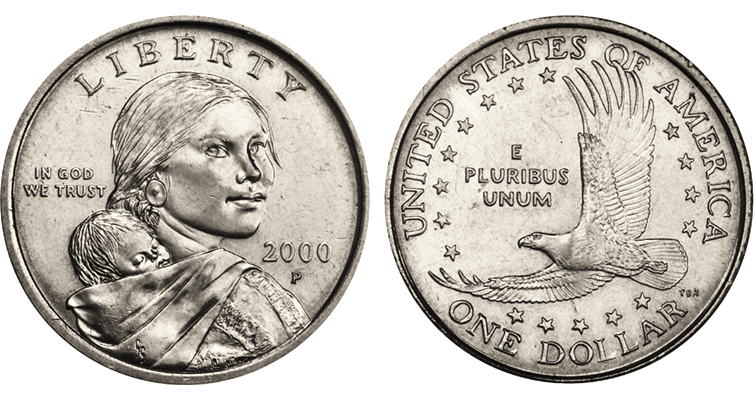
One of the most famous wrong planchet errors in modern numismatics. A Sacagawea dollar was struck on a South African 5-rand planchet, which is similar in size but different in composition. This error occurred because the South African Mint contracted the U.S. Mint (specifically the Philadelphia facility) to produce 5-rand coins, and planchets from the two production runs became mixed. Examples have sold for over $10,000.
Lincoln Cent on Dime Planchet
The classic U.S. wrong planchet error. Because cent and dime planchets are similar in size (19.05mm vs. 17.91mm), this combination occurs more frequently than most wrong planchet pairings. The result is a dramatically undersized Lincoln cent on a silver-colored clad planchet with a reeded edge. These are visually striking and accessible enough that many error collections include one.
Washington Quarter on Nickel Planchet
Quarters and nickels share the same diameter (21.21mm), making this contamination physically easy. The quarter design is fully struck, but the coin weighs 5.0 grams (nickel weight) instead of 5.67 grams (quarter weight). The copper-nickel composition is also different between the two denominations (quarters are clad; nickels are solid copper-nickel), so the edge reveals the error: no copper core stripe is visible.
Eisenhower Dollar on Cent Planchet
Among the most dramatic wrong planchet errors because of the extreme size mismatch. The massive Eisenhower dollar design (38.1mm dies) struck on a tiny cent planchet (19.05mm) produces a coin showing only the central portion of the Eisenhower portrait. The entire rim, most of the lettering, and the portrait's outer edges are absent. These are rare because the size difference is extreme -- the cent planchet had to be manually or accidentally placed between the dollar dies.
2000-P Sacagawea Dollar / Washington Quarter Mule
While technically a mule (wrong die combination) rather than a wrong planchet, this famous error is often discussed alongside wrong planchet coins. A Sacagawea dollar obverse was paired with a Washington quarter reverse and struck on a normal dollar planchet. Approximately 19 examples are known, with specimens selling for six figures.
Collecting Tips
-
Authentication is non-negotiable: Wrong planchet errors are among the most commonly counterfeited error types. Altered coins (plated cents passed off as "cents on dime planchets," filed-down coins, etc.) are prevalent. Purchase only PCGS or NGC certified examples, especially for higher-value pieces.
-
Weight is the definitive test: A precision scale accurate to 0.01 grams is the most important tool for evaluating wrong planchet coins. The weight must match the alleged wrong planchet, not the denomination shown in the design. If the weight does not correspond to any known planchet specification, the coin is altered.
-
Design completeness affects value: When a smaller planchet is struck by larger dies, the amount of visible design varies. Coins that show the full date and mint mark despite being on a wrong planchet are more valuable than those where the date is cut off, because the date allows precise attribution.
-
Denomination gap increases value: The more different the planchet is from the intended denomination, the more valuable the error. A cent on a dime planchet (slight size difference) is worth less than a cent on a half dollar planchet (dramatic size difference), all else being equal. The greater the mismatch, the rarer the error because larger planchets are harder to fit into the wrong press.
-
Foreign planchet errors carry premiums: Wrong country planchet errors are rarer than domestic wrong denomination errors because foreign planchet production at U.S. Mint facilities is intermittent. The historical context of international minting contracts adds numismatic interest.
-
Check for dual errors: Some wrong planchet coins also exhibit off-center strikes, broadstrikes, or other striking errors. A wrong planchet combined with another error type is a multi-error coin with premium value above either error individually.
-
Market is strong and stable: Wrong planchet errors have been among the most consistently valued error types for decades. They are well understood by collectors, easy to authenticate when certified, and visually compelling -- all factors that support stable market demand.
Related Error Types
- Off-Center Strike (OFC) -- Planchet mispositioned during striking; sometimes occurs simultaneously with wrong planchet errors
- Broadstrike (BRD) -- Coin struck without the restraining collar, which can also produce size anomalies
- Missing Cladding (MCL) -- Exposed copper core on clad coins; shows wrong metal color but from a bonding failure, not a wrong planchet
- Clipped Planchet (CLP) -- Incomplete planchet from blanking errors, another class of planchet defect
- Lamination (LAM) -- Metal separation within the planchet, a structural planchet flaw
- Improper Alloy Mix (IAM) -- Wrong metal proportions within the correct planchet type