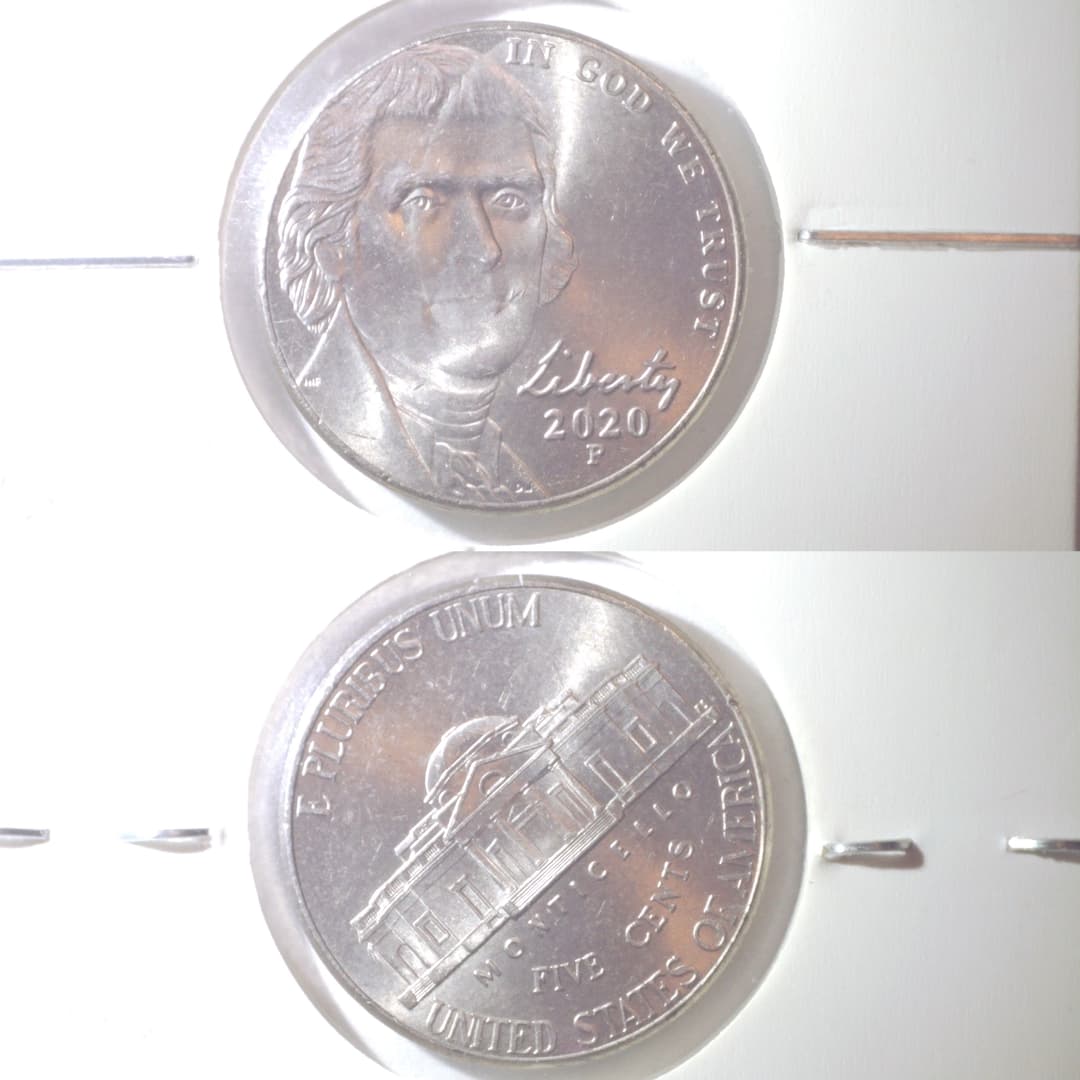
Rotated Die (RTD)
A rotated die error occurs when one of the dies — typically the reverse (anvil) die — is installed in the press at an incorrect rotational orientation. United States coins are struck with "coin turn" alignment: when a coin is flipped along its horizontal axis (top to bottom), the reverse appears upright. This requires the obverse and reverse dies to be oriented 180 degrees apart in the press. A rotated die deviates from this standard, producing coins where the reverse is tilted relative to the obverse by the amount of the rotation.
Rotation is measured in degrees of deviation from the correct 0-degree alignment. A 15-degree rotation produces a slight, noticeable tilt. A 90-degree rotation places the reverse sideways. A full 180-degree rotation produces "medal turn" alignment — the same orientation used by most world coins and by military medals (hence the name). Any degree of rotation between 0 and 180 is documented, making rotated die errors a continuous spectrum rather than a binary error.
How Does It Happen?
Dies are installed in the coin press by locking them into cylindrical die holders. The die has a shank (a cylindrical extension on the back) that fits into the holder, and a key or pin aligns the die to the correct rotational orientation. The alignment system ensures that every coin produced has the obverse and reverse properly oriented relative to each other.
Rotated die errors result from failures in this alignment system:
- Missing or worn alignment key: The alignment pin or keyway that locks the die into the correct orientation wears down over time or breaks. Without a functioning key, the die can be installed at any rotational position.
- Incorrect installation: A press operator changing dies may fail to seat the alignment key properly or may force the die into position without checking orientation. Production pressure to minimize downtime can contribute to hasty installations.
- Gradual rotation during production: Even a properly installed die can rotate slightly in its mounting over the course of a long production run. The repeated striking force — 35 to 150 tons per cycle — can gradually loosen the die in its holder, causing it to creep rotationally. This produces a gradual increase in rotation over time, which is why coins from the same die sometimes show progressively increasing rotation.
- Retrofitted presses: Older presses that have been refurbished or modified may have less precise die alignment systems than their original specifications.
An important detail: the rotated die is usually the reverse (anvil/lower) die because the obverse (hammer/upper) die is more firmly secured in its mounting by the press ram mechanism. However, obverse die rotation is documented, particularly on older presses with less sophisticated mounting hardware.
How to Identify a Rotated Die
The diagnostic procedure for identifying a rotated die is straightforward:
- The flip test: Hold the coin with the obverse facing you and the design oriented normally (portrait upright). Flip the coin on its horizontal axis (top to bottom). On a correctly struck coin, the reverse will appear upright. On a rotated die coin, the reverse will be tilted by the amount of the rotation.
- Consistent rotation: Every coin struck from the rotated die shows the same degree and direction of rotation. This consistency confirms a die-based error rather than post-strike damage.
- Normal design quality: Both the obverse and reverse show fully detailed, properly struck designs. The only anomaly is the rotational offset between the two sides.
- Normal rim and edge: The rim and edge detail (reeding or smooth) are unaffected by die rotation.
Measuring Rotation
Rotation is measured in degrees from the normal coin-turn alignment:
| Degrees | Description | Relative Scarcity |
|---|---|---|
| 1-10 | Slight rotation — requires careful observation to detect | Common, minimal premium |
| 10-45 | Moderate — clearly visible on the flip test | Uncommon, modest premium |
| 45-90 | Major — reverse noticeably tilted (quarter turn at 90) | Scarce, strong premium |
| 90-170 | Dramatic — approaching medal turn | Rare, significant premium |
| 170-180 | Near medal turn or full medal turn | Very rare, highest premium |
Some grading services specify the rotation in degrees on the holder label. Others note it qualitatively (e.g., "rotated reverse"). Precise measurement requires aligning the obverse design elements and measuring the angular offset of the reverse using a protractor overlay or calibrated rotation gauge.
Rotated Die vs. Misaligned Die
A rotated die and a misaligned die (MAD) are distinct errors, though they both involve improper die positioning:
| Feature | Rotated Die | Misaligned Die |
|---|---|---|
| Type of offset | Rotational (angular) | Lateral (translational) |
| Rim appearance | Even all around | Wider on one side, narrower on opposite |
| Both designs complete? | Yes | Yes |
| Flip test | Reverse tilted | Reverse centered but shifted |
| Cause | Die installed at wrong angle | Die shifted laterally in mounting |
Notable Examples
180-Degree Medal Turn Errors
Full 180-degree rotations are the most famous and valuable rotated die errors. These medal-turn coins look normal at first glance — both sides are fully struck and well-detailed. The error is only apparent when the coin is flipped, revealing the reverse oriented "upside down" relative to standard U.S. coin turn. Medal-turn errors have been documented across numerous denominations and eras.
State Quarter Rotated Dies
The 50 State Quarters program (1999-2008) produced a notable number of rotated die errors that entered circulation. Because millions of people were actively examining their change for new state designs during this period, rotated die quarters were discovered and reported more frequently than rotated dies on other denominations. Rotations of 45 degrees and greater on State Quarters command strong premiums.
Roosevelt Dime Rotations
Roosevelt dimes (1946-present) are one of the most consistent sources of rotated die errors. The dime's small size and high production volume contribute to the frequency of die rotation issues. Dime rotations spanning the full spectrum from minor tilts to near medal-turn have been documented.
Sacagawea and Presidential Dollar Rotations
Dollar coins have been a productive source for rotated die errors, particularly the Sacagawea dollar (2000-present) and Presidential dollar (2007-2016) series. The larger coin size makes even moderate rotations visually apparent, and the distinctive designs make rotated dies easy to identify.
Collecting Tips
- Severity is the primary value driver: Minor rotations under 10 degrees carry little premium. The value curve rises steeply for rotations above 45 degrees, with the most dramatic jump occurring at 90 degrees and above. Full 180-degree medal turns command the highest prices.
- Carry a known-good coin for comparison: When checking circulation coins for rotation, carry a known-correct coin of the same denomination for side-by-side flip comparison. This makes even moderate rotations easier to detect.
- Check both sides carefully: A rotated die produces a coin where both sides look individually normal. The error is only apparent when the relationship between obverse and reverse is tested. Many rotated die coins pass through circulation undetected for years.
- Series context matters: Rotated dies on denominations with lower mintages (half dollars, dollars) or from older eras (pre-1964 silver issues) are scarcer and more valuable than those on high-mintage modern cents or nickels.
- Third-party grading adds value: PCGS and NGC attribute rotated die errors and note the approximate rotation on the holder label. This standardized measurement helps collectors compare examples and establish fair market values.
- Look for progressive rotation: A die that gradually rotates during a production run produces coins with varying degrees of rotation. A set of coins from the same die showing progressively increasing rotation tells the story of the die's movement and is an appealing collecting challenge.
Related Error Types
- Misaligned Dies (MAD) -- Dies offset laterally rather than rotationally
- Multi-Strike (MST) -- Coin struck multiple times, often with rotation between strikes
- Off-Center Strike (OFC) -- Planchet mispositioned relative to the dies during striking
- Broadstrike (BRD) -- Coin struck without the collar die in place
- Die Clash (DCL) -- Dies strike each other without a planchet, sometimes with rotational misalignment