Off-Center Strike (OFC)
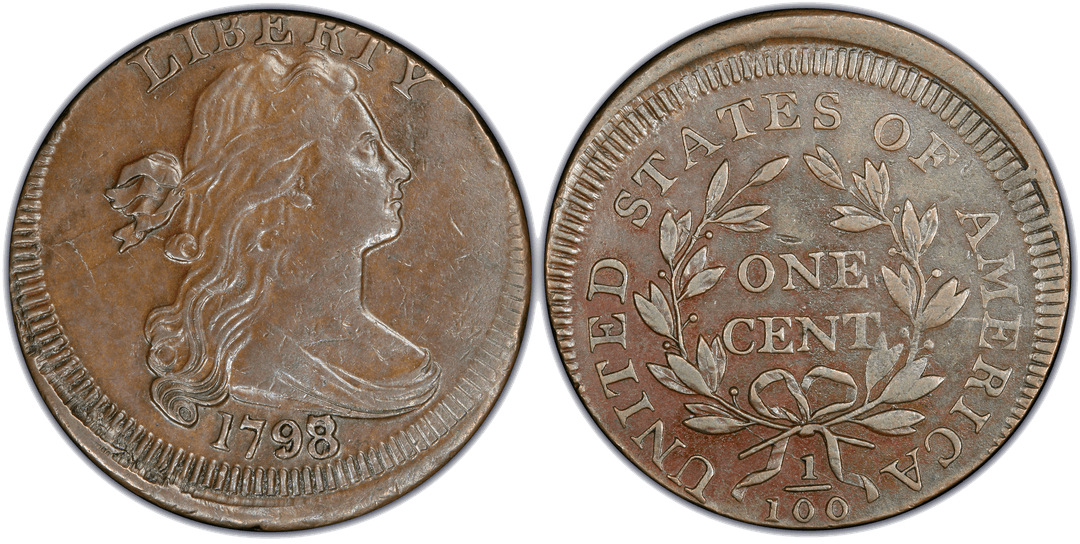
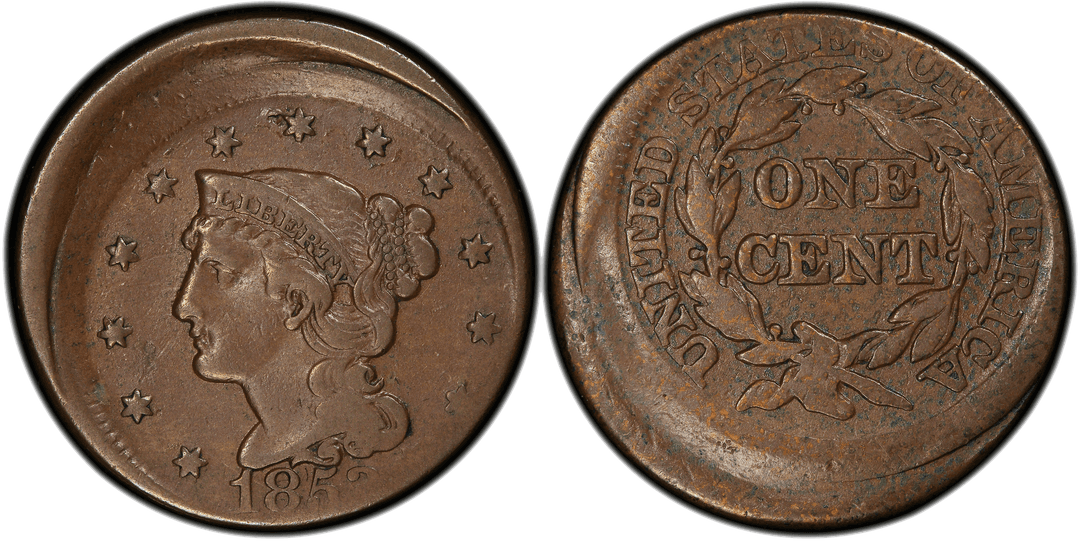
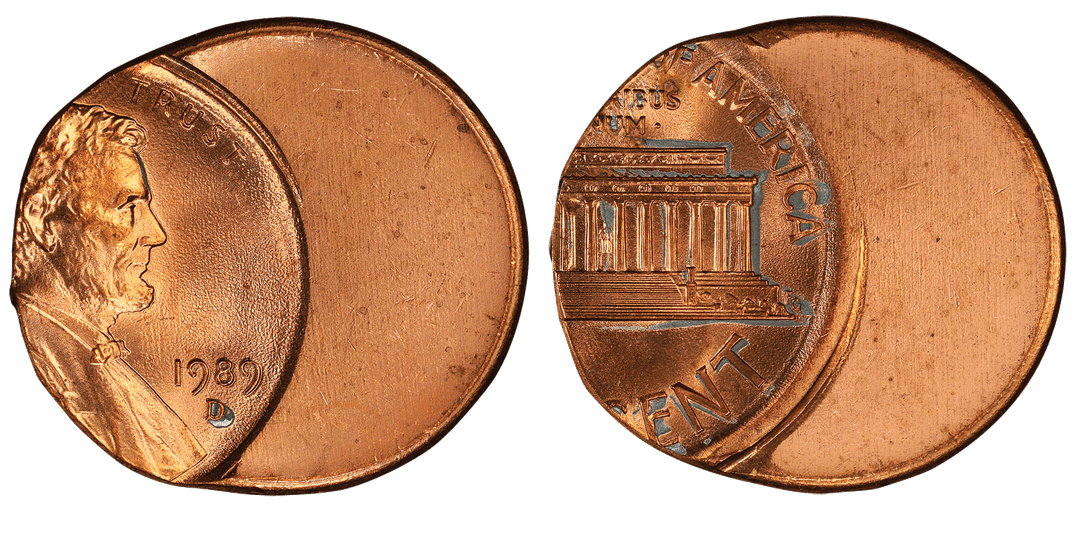
An off-center strike occurs when a coin's planchet is not properly seated between the obverse and reverse dies at the moment of striking. The result is a coin with the design impressed on only a portion of the planchet, leaving the remaining area blank and unstruck. The degree of off-center displacement can range from a barely noticeable 5% to a dramatic 95%, with the visual impact varying accordingly.
How Does It Happen?
In normal minting operations, an automated feed system delivers blank planchets into the collar (the ring that forms the coin's edge) between the obverse and reverse dies. The planchet must be precisely centered for the design to be properly impressed. Off-center strikes happen when this positioning goes wrong.
Several mechanical factors can cause misfeeds:
- Feed finger malfunction: The mechanical fingers that push planchets into position may misalign or move erratically
- Planchet bounce: A planchet can bounce or shift after being placed in the collar but before the dies close
- Double feeds: When two planchets enter the collar simultaneously, one or both may be displaced
- Worn equipment: Deteriorated feed mechanisms may consistently misplace planchets by small amounts
- Speed: High-speed production (modern presses strike 750+ coins per minute) increases the probability of occasional misfeeds
Once the planchet is off-center, the dies close and strike with full force. The portion of the planchet between the dies receives the full design impression, while the portion outside the die area remains blank.
How to Identify an Off-Center Strike
Off-center strikes are among the easiest errors to identify:
- Blank crescent: The most obvious feature is a crescent-shaped blank area on one side of the coin where the planchet extends beyond the die.
- Full design on the struck portion: Unlike a broadstrike, the portion that was struck shows a normally detailed design (though it may be slightly weakened at the edges of the struck area).
- Irregular shape: The coin is not perfectly round. The blank portion follows the original round planchet shape, but the struck portion may show slight expansion from the striking pressure.
- Percentage measurement: Off-center strikes are described by their approximate percentage — the proportion of the coin's surface that is blank. A "50% off-center" coin has roughly half its surface unstruck.
Measuring Off-Center Percentage
Dealers and grading services describe off-center strikes by the percentage of the design that is missing. Common conventions:
| Percentage | Description |
|---|---|
| 5-10% | Slight off-center — some rim missing, design mostly complete |
| 15-25% | Moderate — clearly off-center with a visible blank crescent |
| 30-50% | Major — significant portion of design missing |
| 50-80% | Dramatic — more than half the design is absent |
| 80-95% | Extreme — only a sliver of design remains |
Notable Examples
Off-Center with Full Date Visible
The most valuable off-center strikes are those dramatic enough to be visually striking while still showing the full date and mint mark. A 50% off-center Lincoln cent with a readable date can sell for substantially more than a 50% off-center example where the date is missing, because the visible date allows attribution to a specific year.
Large Denomination Off-Centers
Off-center strikes on higher denominations (quarters, half dollars, dollars) are scarcer than those on cents because the Mint's quality control is more rigorous for higher-value coins. A 50% off-center Washington quarter is worth considerably more than a comparable Lincoln cent.
Dual-Denomination Off-Centers
Occasionally an off-center strike occurs on a wrong planchet (a planchet intended for a different denomination). These dual-error coins — combining an off-center strike with a wrong planchet error — are particularly rare and command strong premiums.
Pre-1965 Silver Off-Centers
Off-center strikes on silver coins (pre-1965 dimes, quarters, and halves) carry premiums both for the error and the silver content. The combination of precious metal and minting error makes these doubly attractive to collectors.
Collecting Tips
- The "sweet spot" is 40-60% with full date: This range offers dramatic visual appeal while retaining the date for attribution. It represents the best balance of eye appeal and identifiability.
- Avoid cleaned examples: Off-center coins are sometimes found in circulated condition. Avoid coins that have been harshly cleaned, as this significantly reduces value.
- Check for additional errors: Off-center coins sometimes exhibit other errors too — broadstrikes, wrong planchets, or clipped planchets. Multi-error coins are more valuable.
- Modern coins are affordable: Off-center Lincoln cents from recent decades are plentiful and inexpensive, making them an excellent starting point for new error collectors.
- Grading service attribution: Major grading services (PCGS, NGC) will note the approximate off-center percentage on the holder label. This standardized attribution helps with accurate pricing.
- Beware of post-strike damage: A coin that was damaged after striking (hammered, bent, or filed) can superficially resemble an off-center strike. Genuine off-center coins show a smooth, original planchet edge on the blank portion.
Related Error Types
- Broadstrike (BRD) — Coin struck without the collar but centered between the dies
- Indent (IND) — Impression from another planchet that was sitting on top during striking
- Multi-Strike (MST) — Coin struck more than once, often with second strike off-center
- Misaligned Dies (MAD) — Dies themselves are misaligned rather than the planchet
- Capped Die (CPD) — A struck coin adheres to the die and caps subsequent strikes