Multi-Strike (MST)
A multi-strike error occurs when a coin is struck two or more times by the dies. After the initial strike, the coin fails to eject properly from the press and receives one or more additional impressions. Each subsequent strike typically lands at a different position and rotation than the first, creating overlapping, superimposed design impressions that give the coin a distinctive doubled or ghosted appearance. Multi-strikes range from subtle double strikes with minor displacement to dramatic triple or quadruple strikes with widely separated design impressions.
Multi-strikes are among the most visually spectacular error coins produced. A coin struck three or four times with significant offset between each strike displays a complex layering of overlapping designs that is immediately recognizable and impossible to replicate outside a Mint facility.
How Does It Happen?
Modern coin presses operate at speeds of 750 to 850 strikes per minute. After each strike, the feeder mechanism ejects the finished coin and introduces a new planchet. Multi-strikes occur when the ejection step fails:
- First strike: The planchet is struck normally, receiving the full obverse and reverse design.
- Ejection failure: The struck coin does not leave the press. It may bounce off the ejection chute, get caught on the collar, or simply fail to clear the striking area before the next cycle begins.
- Second strike: The dies close again with the already-struck coin still between them. The coin has shifted and/or rotated from its original position, so the second impression is offset from the first.
- Additional strikes: If the coin remains in the press, it receives third, fourth, or more strikes, each at a different position as the coin shifts between cycles.
Several factors determine the character of the multi-strike:
- Collar engagement: If the coin remains within the collar for subsequent strikes, the additional impressions are contained within the coin's normal diameter. If the collar is not engaged (or the coin has shifted partially out of the collar), subsequent strikes produce broadstruck or off-center additional impressions that expand beyond normal diameter.
- Displacement angle: The rotation between strikes determines how the overlapping designs interact. A 90-degree rotation produces impressions at right angles to each other. A 180-degree rotation creates a head-to-head or tail-to-tail overlap.
- Offset distance: The lateral shift between strikes determines how far apart the design impressions are. Minimal offset produces a close double image; large offset produces widely separated, barely overlapping impressions.
The press does not know a coin is still in the striking chamber. It operates on a fixed mechanical cycle, closing the dies at the same force and speed regardless of what is between them. Each successive strike flattens and distorts the previous design further.
How to Identify a Multi-Strike
Multi-strike errors display several diagnostic features:
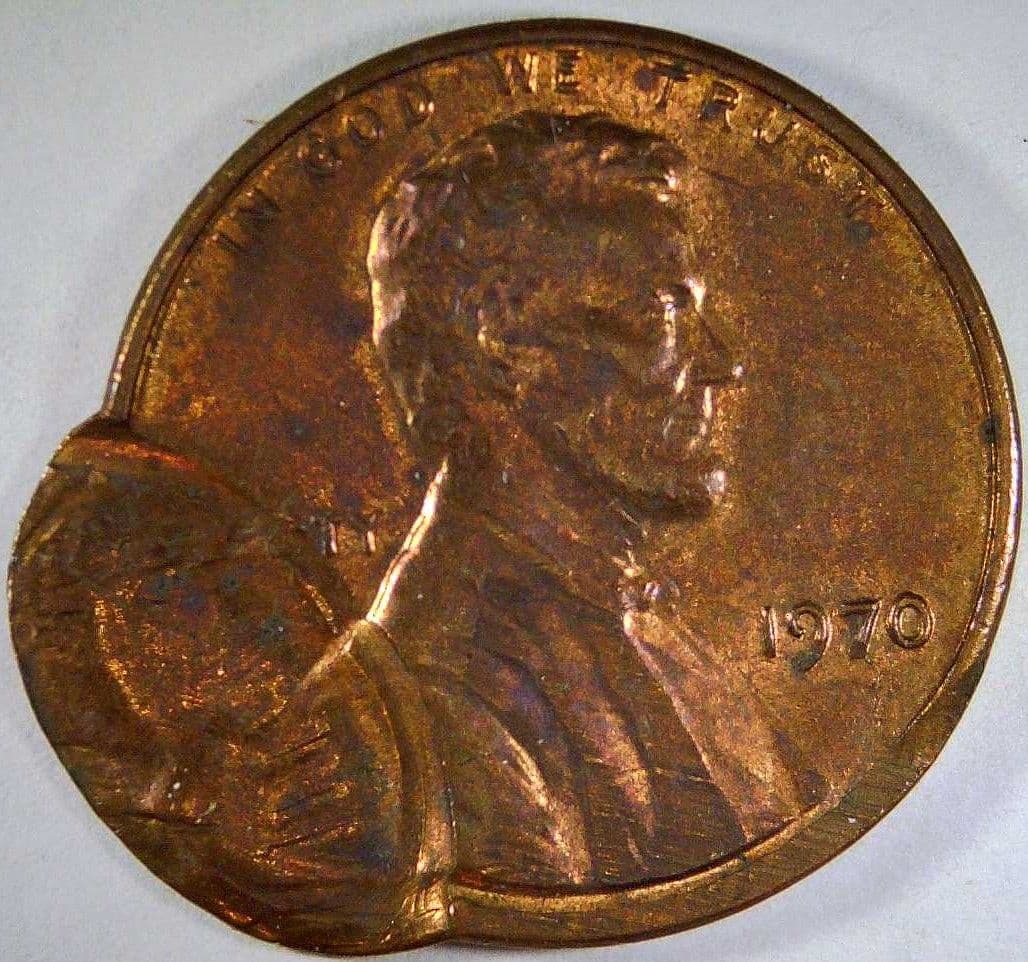
- Overlapping design elements: Two or more distinct impressions of the same design are visible, offset from each other. On a double-struck Lincoln cent, you see two Lincoln portraits overlapping at different positions.
- Flat or distorted first strike: The first impression is typically flatter and less distinct because subsequent strikes partially obliterate it. The final strike shows the sharpest detail because nothing has struck on top of it.
- Different orientations: The overlapping designs are rotated relative to each other. Measuring the rotation angle between strikes helps characterize the error.
- Irregular shape: If subsequent strikes occurred outside the collar, the coin shows an irregular, non-circular outline where metal from later strikes expanded beyond the original coin's perimeter.
- Rim disruptions: Multiple strikes produce irregular, stepped, or flattened rims where overlapping strike zones meet.
Double Strike vs. Machine Doubling
A common point of confusion is the difference between a genuine double strike and machine doubling (also called mechanical doubling or shelf doubling). They are fundamentally different:
| Feature | Double Strike (MST) | Machine Doubling |
|---|---|---|
| Cause | Two separate, complete press cycles | Die bounce or shift during a single strike |
| Offset | Significant displacement (often several mm) | Slight, typically less than 0.5 mm |
| Design completeness | Two full, overlapping design impressions | Flat, shelf-like displacement of design elements |
| Detail quality | Both impressions show full relief | Doubled areas show flat, mushy secondary image |
| Value | Significant premium | Minimal to no premium |
Machine doubling is a common, minor occurrence with negligible value. Genuine multi-strikes are scarce errors with strong collector demand.
Notable Examples
Double-Struck "Flipover" Coins
A flipover double strike occurs when the coin flips over between the first and second strike, so the second impression lands on the opposite side from where the first strike's design was placed. The result is a coin with both obverse and reverse impressions on the same side — one from the die and one transferred through the flip. These are among the most dramatic and valuable double strikes.
Triple and Quadruple Strikes
Coins struck three or more times are progressively rarer because each additional press cycle represents another failure to eject. Triple-struck coins show three overlapping design impressions, and the visual complexity increases with each additional strike. Quadruple strikes are rare enough to be considered major numismatic events when they appear at auction.
Double-Struck with Rotation
Double strikes where the second impression is rotated 90 or 180 degrees from the first produce particularly striking visual effects. A Lincoln cent double-struck with a 180-degree rotation shows two Lincoln portraits facing opposite directions, creating an unmistakable and dramatic error coin.
Off-Center Multi-Strikes
Some of the most visually dramatic multi-strikes combine off-center positioning with multiple impressions. A coin with a centered first strike and a 50% off-center second strike shows one complete design surrounded by a partial second impression extending off the edge of the coin.
Early U.S. Multi-Strikes
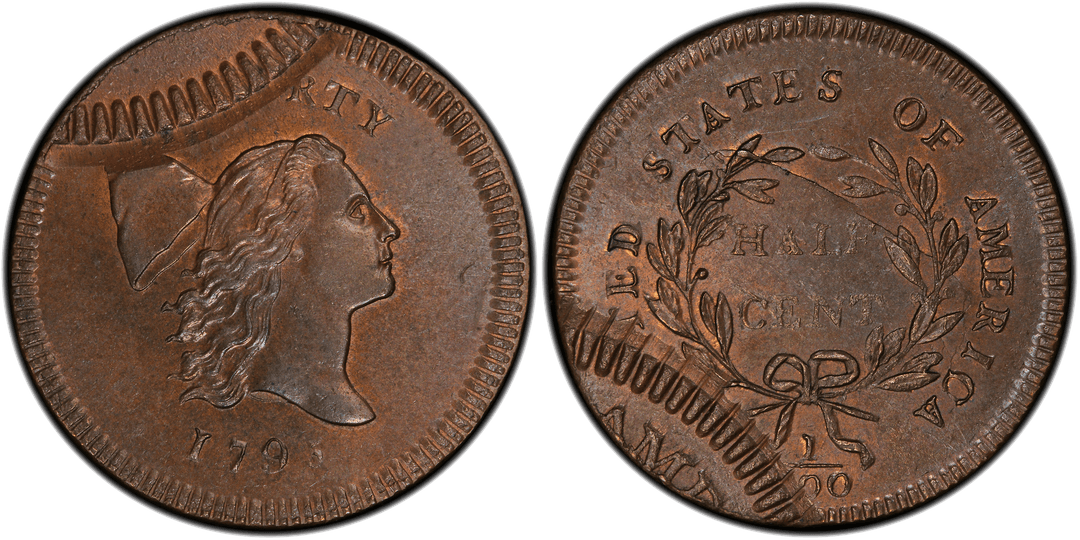
Double strikes exist on early American coinage, including large cents, half cents, and early silver denominations. The screw presses used in the early Mint's operation relied on human operators to position planchets and remove struck coins, so double strikes from failed manual ejection are documented from the Mint's earliest years.
Collecting Tips
- Number of strikes increases value: All else being equal, a triple strike is worth more than a double strike, and a quadruple strike is worth more than a triple. Each additional strike represents a compounding improbability.
- Offset and rotation matter: Double strikes with significant offset and clear rotation between impressions are more valuable than those with minimal displacement. The most desirable examples show two clearly distinct, easily readable design impressions.
- Both strikes in the collar vs. one out: A double strike where the second impression occurred outside the collar (producing an off-center or broadstruck second strike) is generally more valuable than one where both strikes were contained within the collar, because the irregular shape is more dramatic.
- Date visibility: As with all strike errors, examples where the date is legible carry a premium over those where the date is obliterated by overlapping impressions.
- Beware of vise jobs: Counterfeit multi-strikes are created by placing a coin between two other coins in a vise and squeezing. These "vise jobs" show incuse design transfer rather than direct die impressions. They lack the sharp, raised detail of genuine strikes and show telltale pressure marks. Third-party grading from PCGS or NGC is strongly recommended.
- Higher denominations are scarcer: Multi-strikes on dimes, quarters, and halves are significantly rarer than those on cents. Dollar multi-strikes are extreme rarities.
Related Error Types
- Off-Center Strike (OFC) -- Planchet mispositioned for a single strike, producing partial design
- Broadstrike (BRD) -- Single strike without the collar die in place
- Capped Die (CPD) -- Stuck coin on die produces distorted impressions on subsequent strikes
- Indent (IND) -- Second planchet overlaps and is pressed into a coin during striking
- Misaligned Dies (MAD) -- Dies offset from each other, producing shifted obverse/reverse alignment