
Die Clash Overlays for Indian Head Cents: Patterns and Notable Examples (1859–1909)
Die clashes occur when the obverse and reverse dies strike each other without a planchet between them, leaving impressions of the opposing die’s design elements on each die. When coins are subsequently struck from those clashed dies, faint mirror-image traces of the opposite side appear on the coin.
The Indian Head cent (1859–1909) is one of the most prolific series for die clashes in U.S. numismatics. Produced for over fifty years, the series spans two major reverse types — the laurel wreath (1859 only) and the oak wreath with shield (1860–1909) — and two compositions: copper-nickel (1859–1864) and bronze (1864–1909). Die clashes are documented in nearly every year of the series, ranging from subtle single-element transfers to dramatic full-portrait clashes that rank among the most visually striking in all of U.S. coinage.
How to Read These Overlays
The overlay images below show the obverse and reverse of the Indian Head cent stacked on top of each other. The areas where elements from both sides intersect are where clash marks would appear. Clash marks are most visible on the open-field areas of the coin — the flat spaces between design elements where an impression from the opposite die has room to show.
Overlay: Laurel Wreath Reverse (1859)
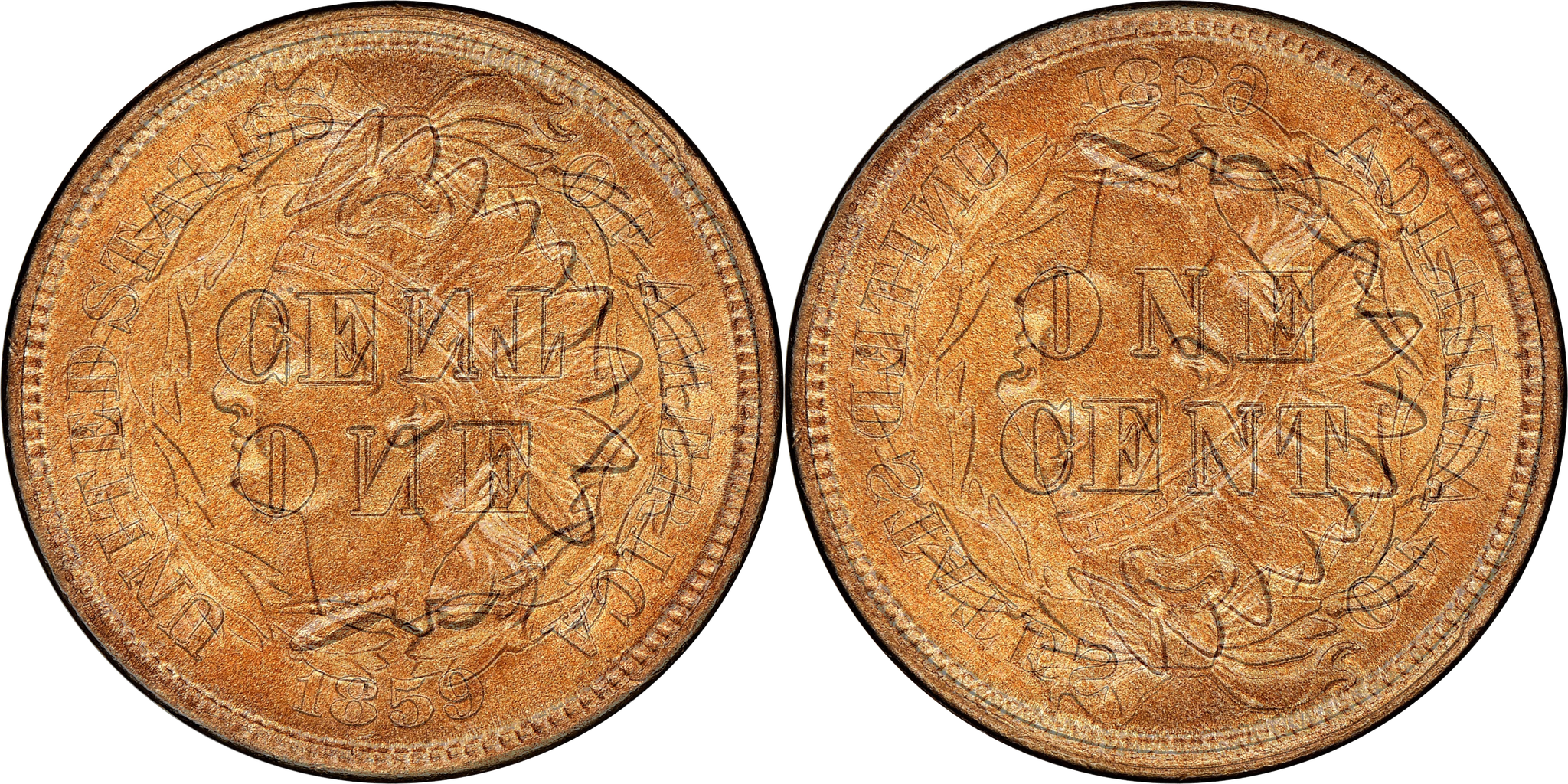
Overlay: 1859 Indian Head cent — obverse and reverse superimposed. The 1859 is the only year with the laurel wreath reverse.
The 1859 Indian Head cent is unique in the series: it features a laurel wreath reverse without a shield, making it visually distinct from all subsequent years. On die clashes with this reverse type, elements of the open laurel wreath would transfer onto the obverse around Liberty’s portrait, and elements of the portrait would transfer onto the reverse within the wreath. The absence of the shield means clash mark locations differ from the later oak wreath/shield design.
Overlay: Oak Wreath with Shield Reverse (1860–1909)
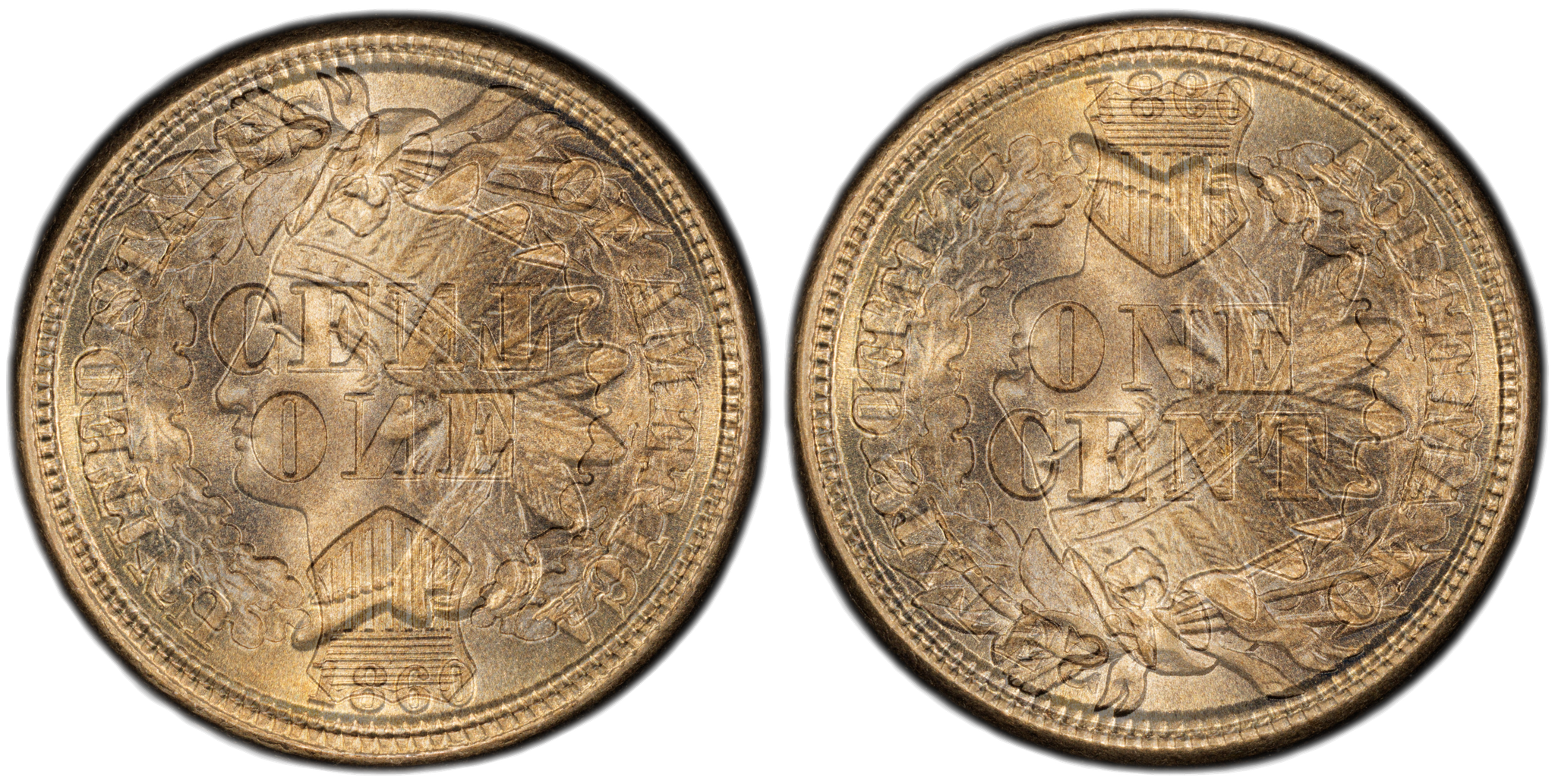
Overlay: 1860 Indian Head cent — obverse and reverse superimposed. This oak wreath with shield design was used from 1860 through 1909.
From 1860 onward, the reverse features an oak wreath enclosing a shield above “ONE CENT.” The shield creates additional clash mark locations not found on other denominations. Liberty’s chin and neck align with the area below the left side of the shield, and the headdress feathers extend into the right wreath bunch — both areas where clash impressions commonly appear on the reverse. On the obverse, the “C” from “CENT” and portions of the wreath frequently clash in front of Liberty’s face.
Where Clash Marks Appear
Based on documented examples across the full series, die clash marks on Indian Head cents appear in these consistent locations:
Obverse (elements from the reverse):
- The “C” from “CENT” clashed in front of Liberty’s eye or face — the single most common clash mark on Indian Head cents
- Portions of the wreath clashed in front of Liberty’s face and neck
- Wreath elements clashed between the bottom feathers of the headdress
Reverse (elements from the obverse):
- Liberty’s nose and forehead clashed under and through the “C” in “CENT”
- Liberty’s chin and neck clashed under the left side of the shield, often near or above the “O” in “ONE”
- Liberty’s ear clashed around the “N” and “E” in “ONE”
- Headdress feathers clashed inside the right wreath bunch
- On the most dramatic examples, the full front profile of Liberty’s portrait is visible on the reverse
Most Dramatic Examples
These six examples represent the most visually striking die clashes in the Indian Head cent series, featuring extensive design transfer on one or both sides of the coin.
1864 Bronze L on Ribbon — Best Obverse Clash
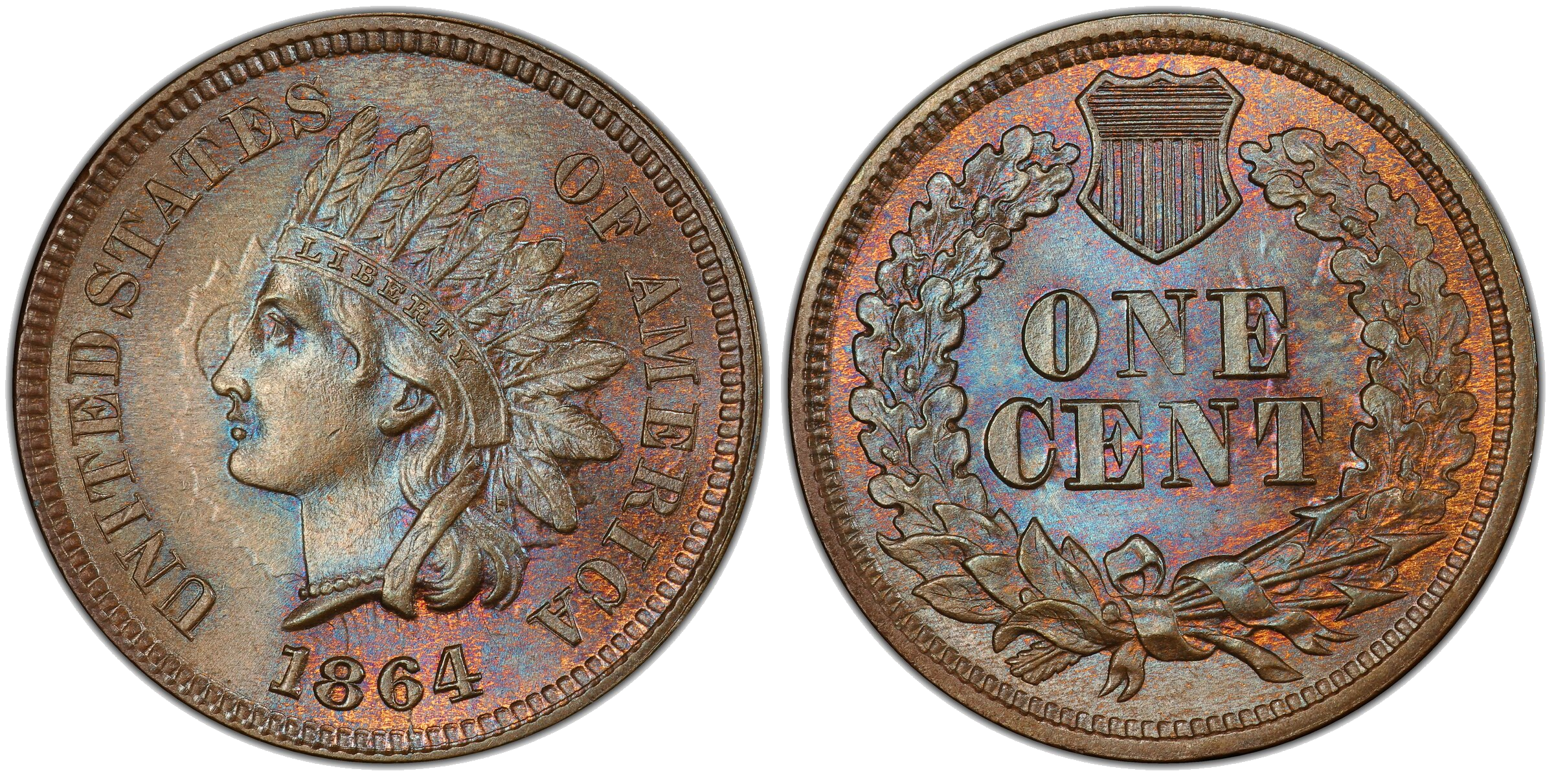
1864 Bronze L on Ribbon: The “C” from “CENT” and much of the right side of the left wreath are clashed in front of Liberty on the obverse, with feathers clashed on the reverse. This is one of the best obverse die clash examples in the series.
1864 Bronze No L — Nearly Full Portrait on Reverse
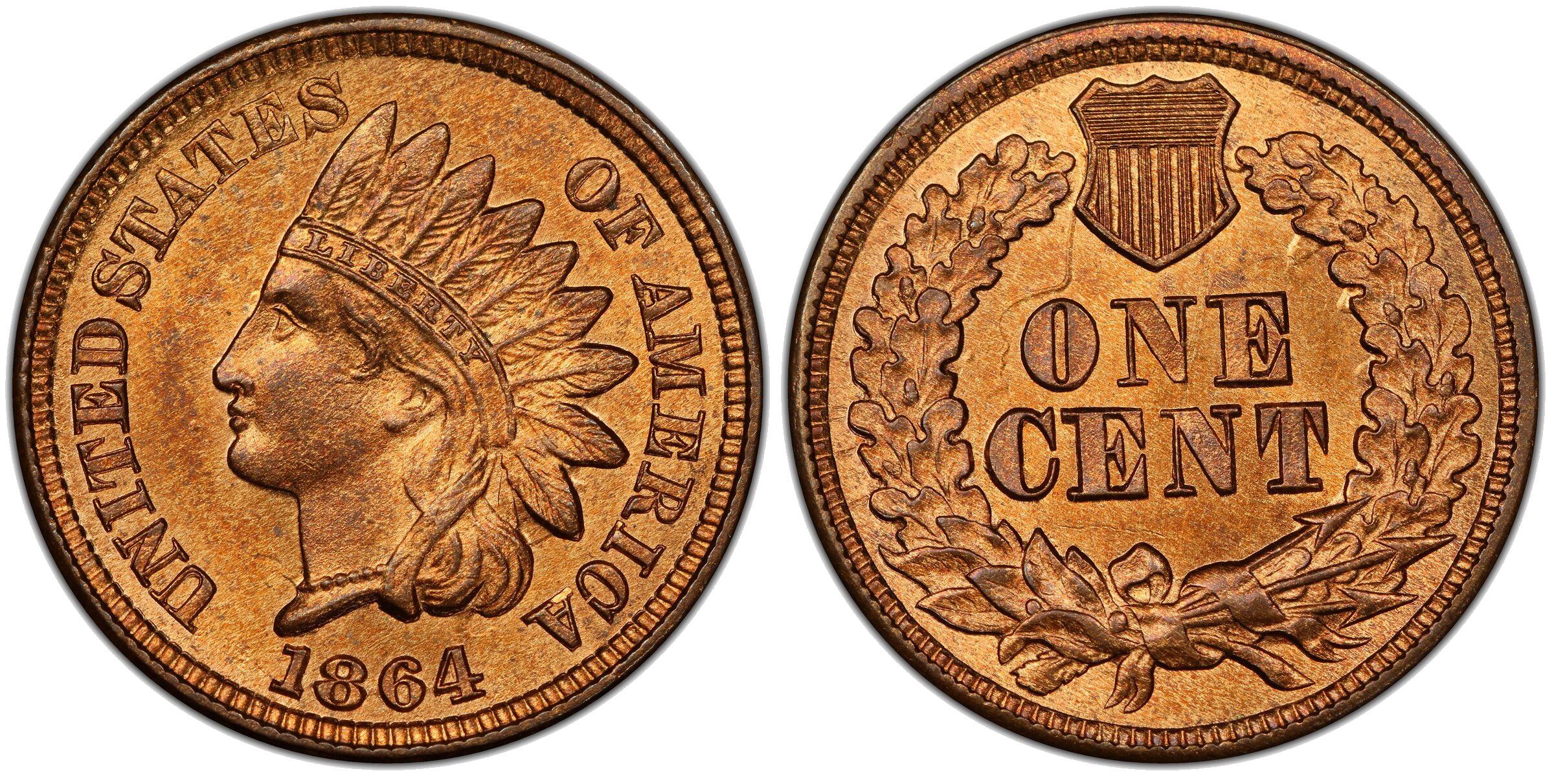
1864 Bronze No L: Nearly the full Indian portrait is clashed onto the reverse, with wreath elements clashed between the bottom feathers on the obverse. One of the most complete reverse clashes known.
1865 Fancy 5 — Triple Chin/Neck Clash
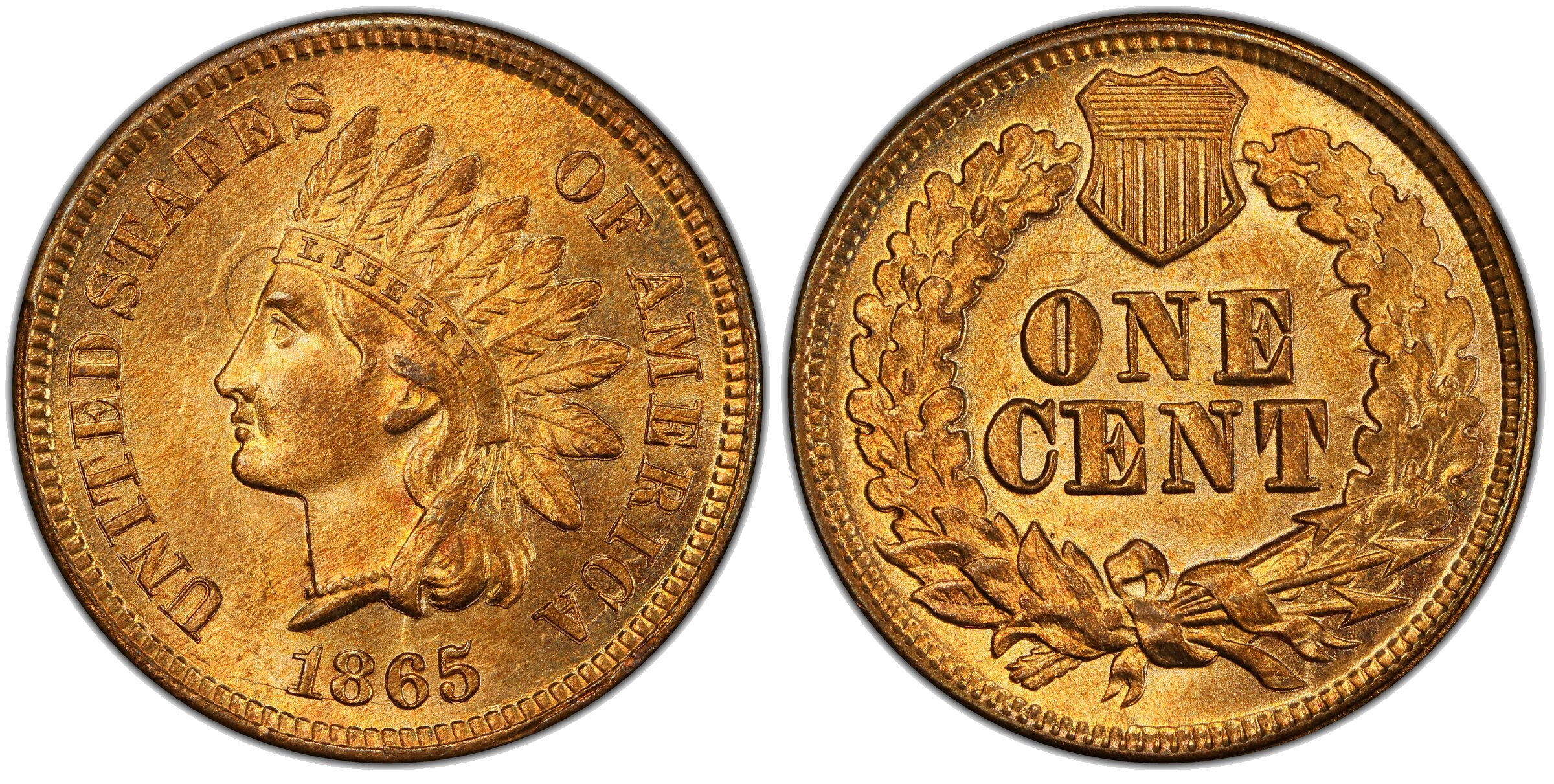
1865 Fancy 5: Nearly a full die clash on both obverse and reverse, with the neck and chin clashed three separate times under the left side of the shield on the reverse — indicating the dies struck each other at least three times without a planchet.
1869 — Entire Face on Reverse
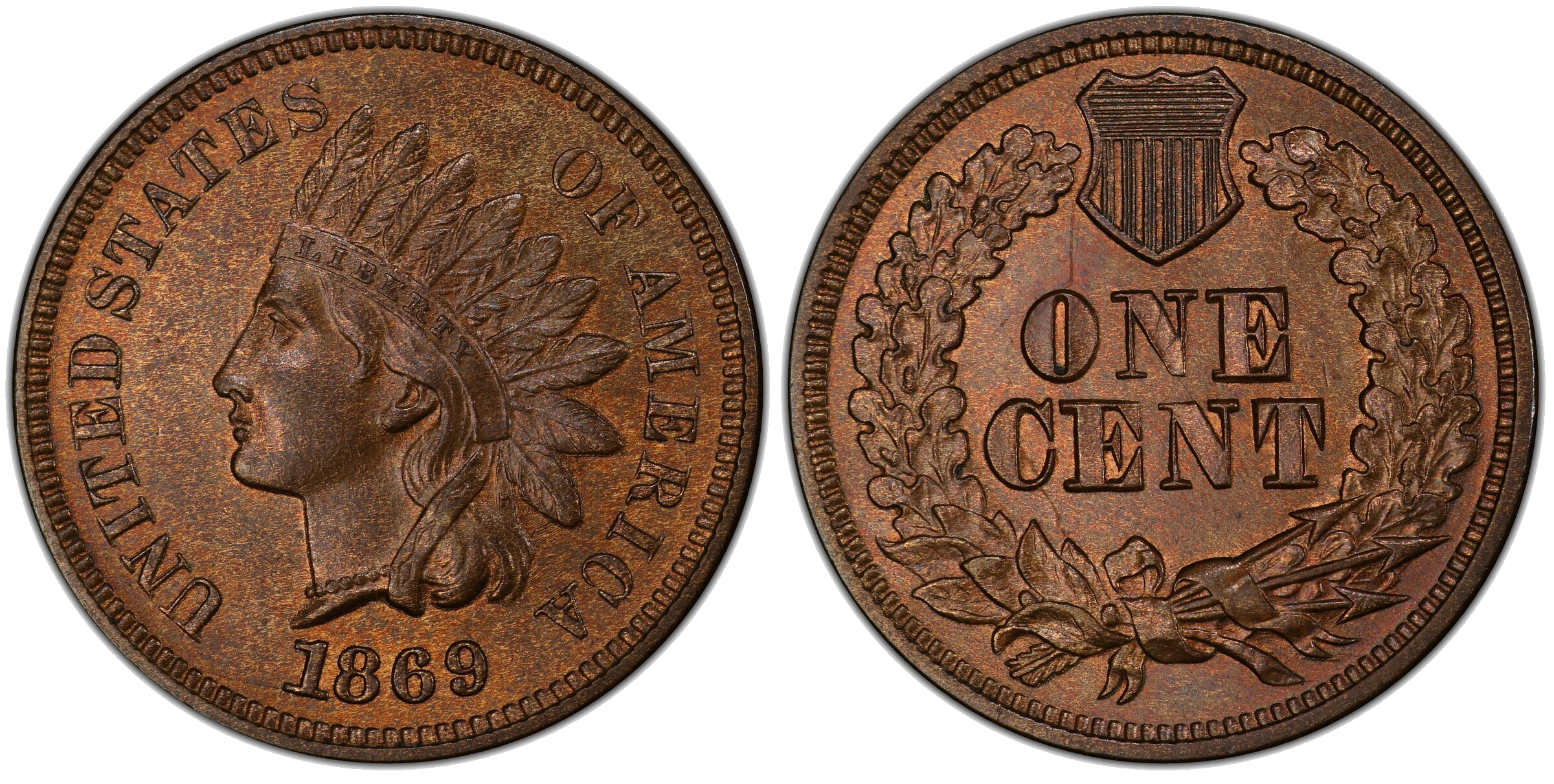
1869: The entire face of Liberty is clashed onto the reverse, creating an unmistakable portrait impression within the wreath.
1880 DDO FS-101 — MAD Die Clash with Denticles
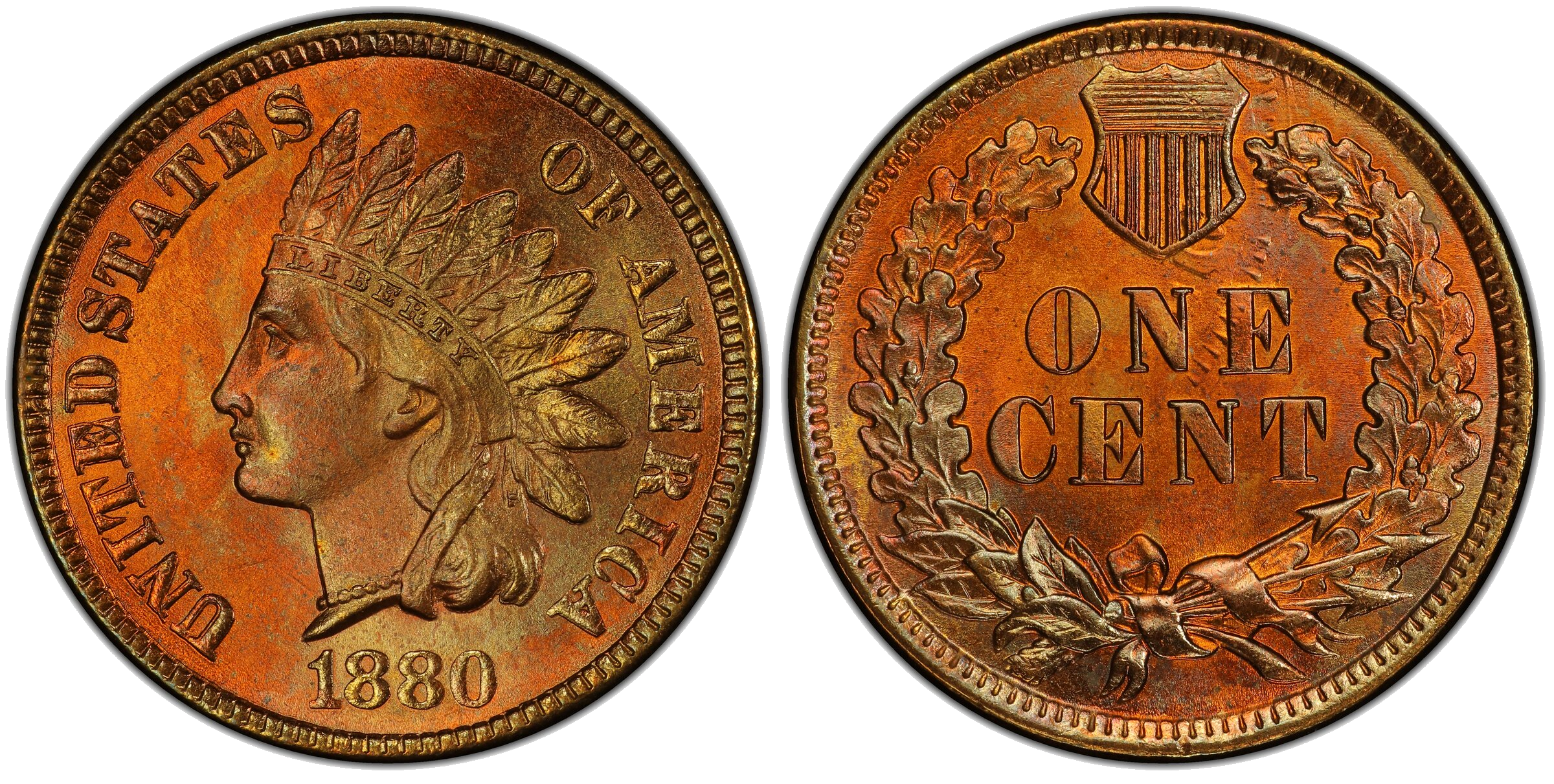
1880 DDO FS-101 (S-1): This coin combines a doubled die obverse of LIBERTY on the headdress with a radical misaligned die (MAD) clash on the reverse, where denticles are clashed around the shield and “ONE.” The MAD element makes this unlike any standard die clash.
1888 — Full Portrait Clashed Twice
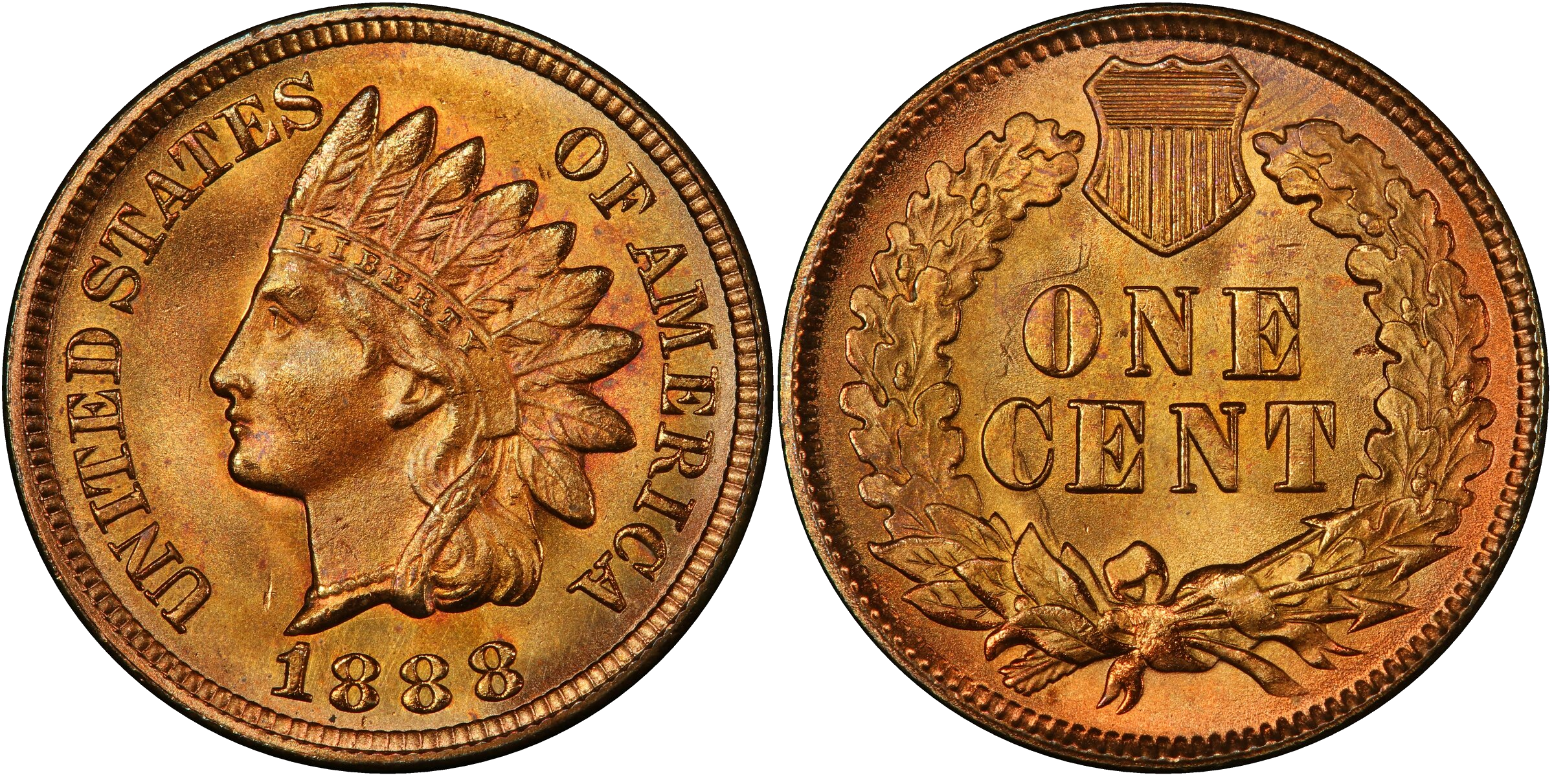
1888: The full front of Liberty’s portrait is clashed twice on the reverse, indicating at least two separate clash events. The doubled portrait outline is clearly visible.
Clash Pattern Variations
These eight examples illustrate the range of clash patterns found across the series, from single-element transfers to multi-zone clashes affecting several areas of the coin simultaneously.
1861 — “C” Clashed on Obverse
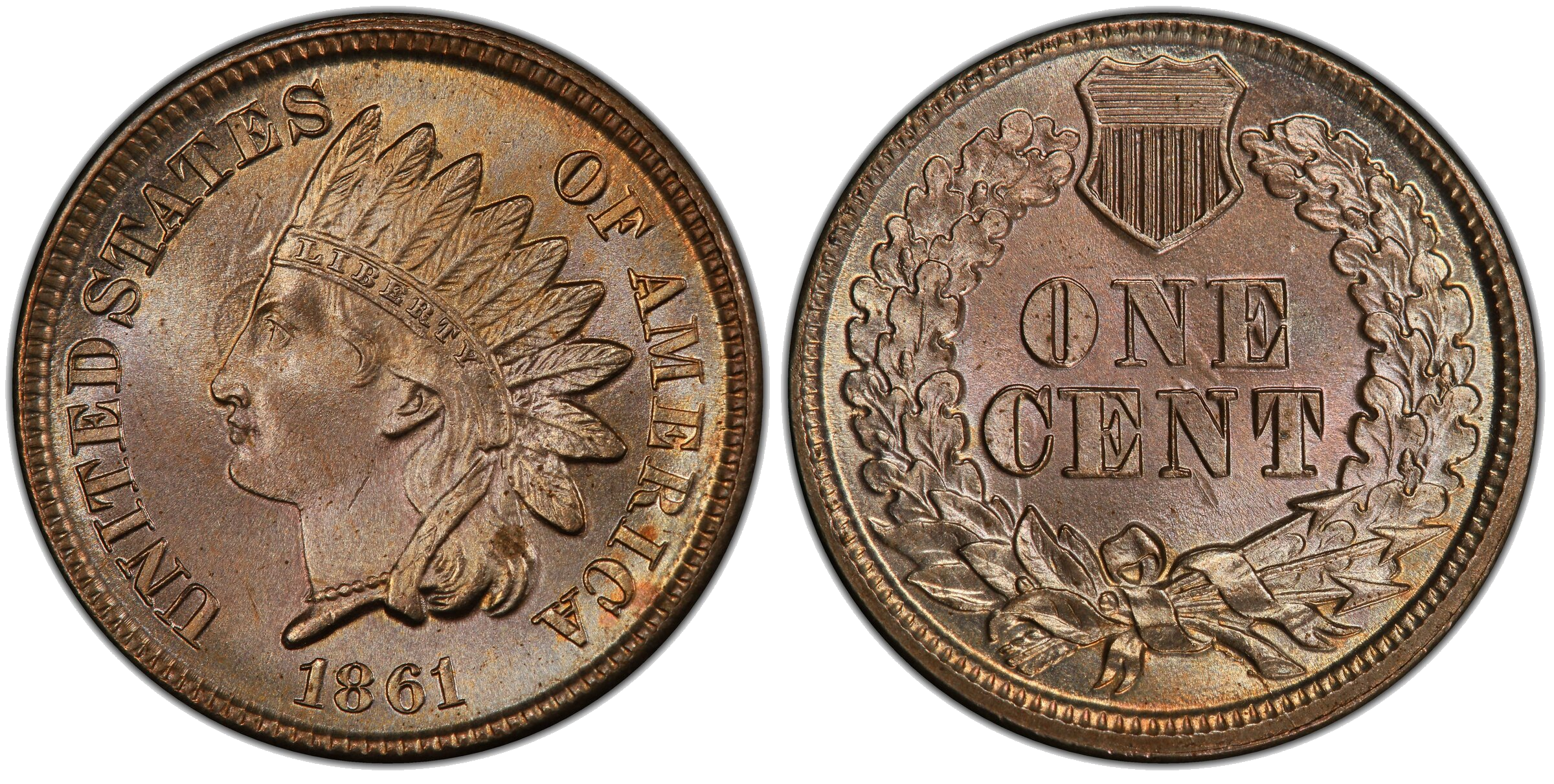
1861: The “C” from “CENT” on the reverse is clashed in front of Liberty’s eye on the obverse — the most common single-element clash mark on Indian Head cents.
1863 — Ear and Neck on Shield
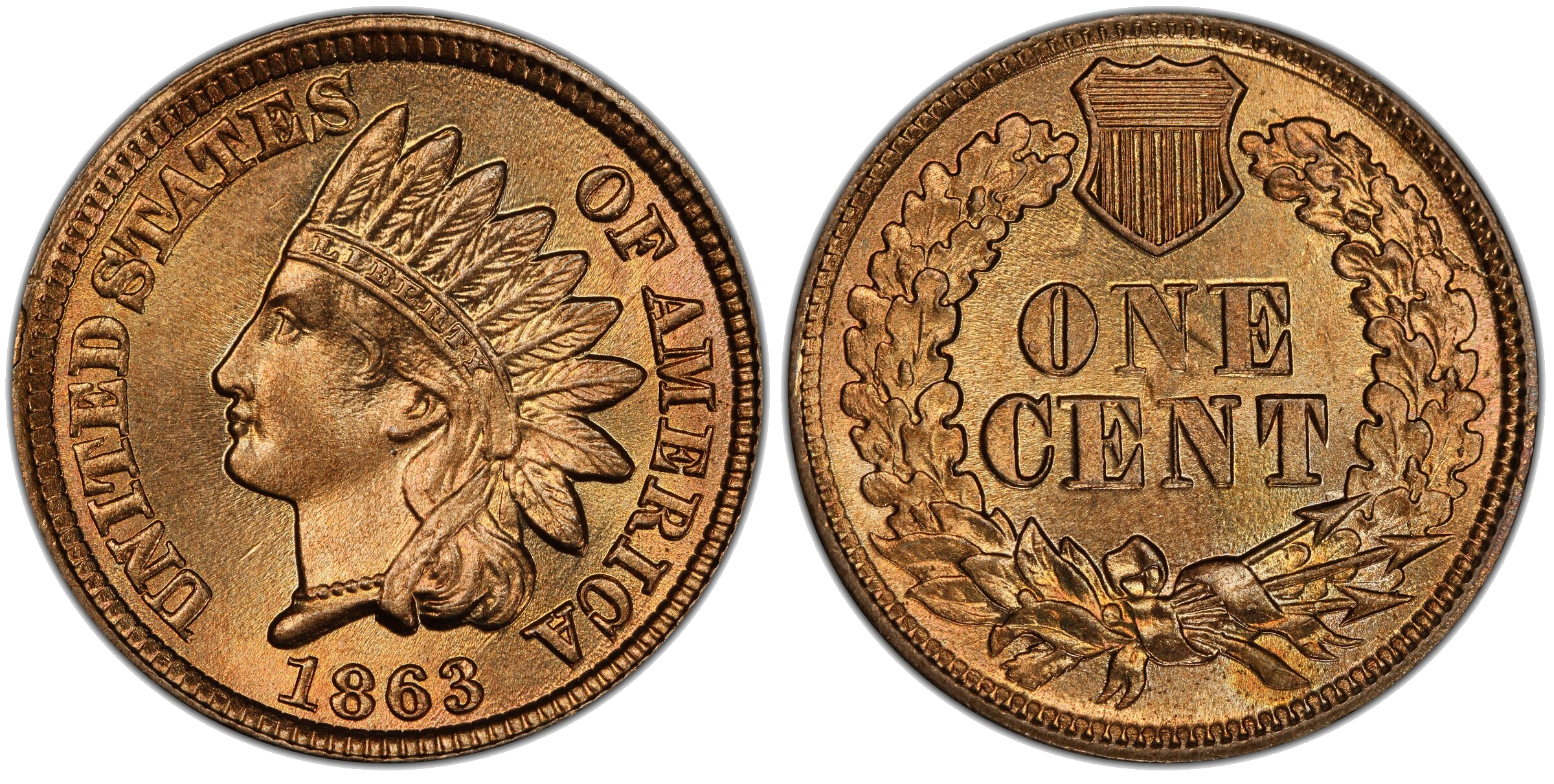
1863: Liberty’s ear is clashed between the “N” and “E” in “ONE,” with the neck clashed on the bottom left of the shield. This shows how the portrait maps onto the reverse shield area.
1864 Copper-Nickel — Nose Through “C”
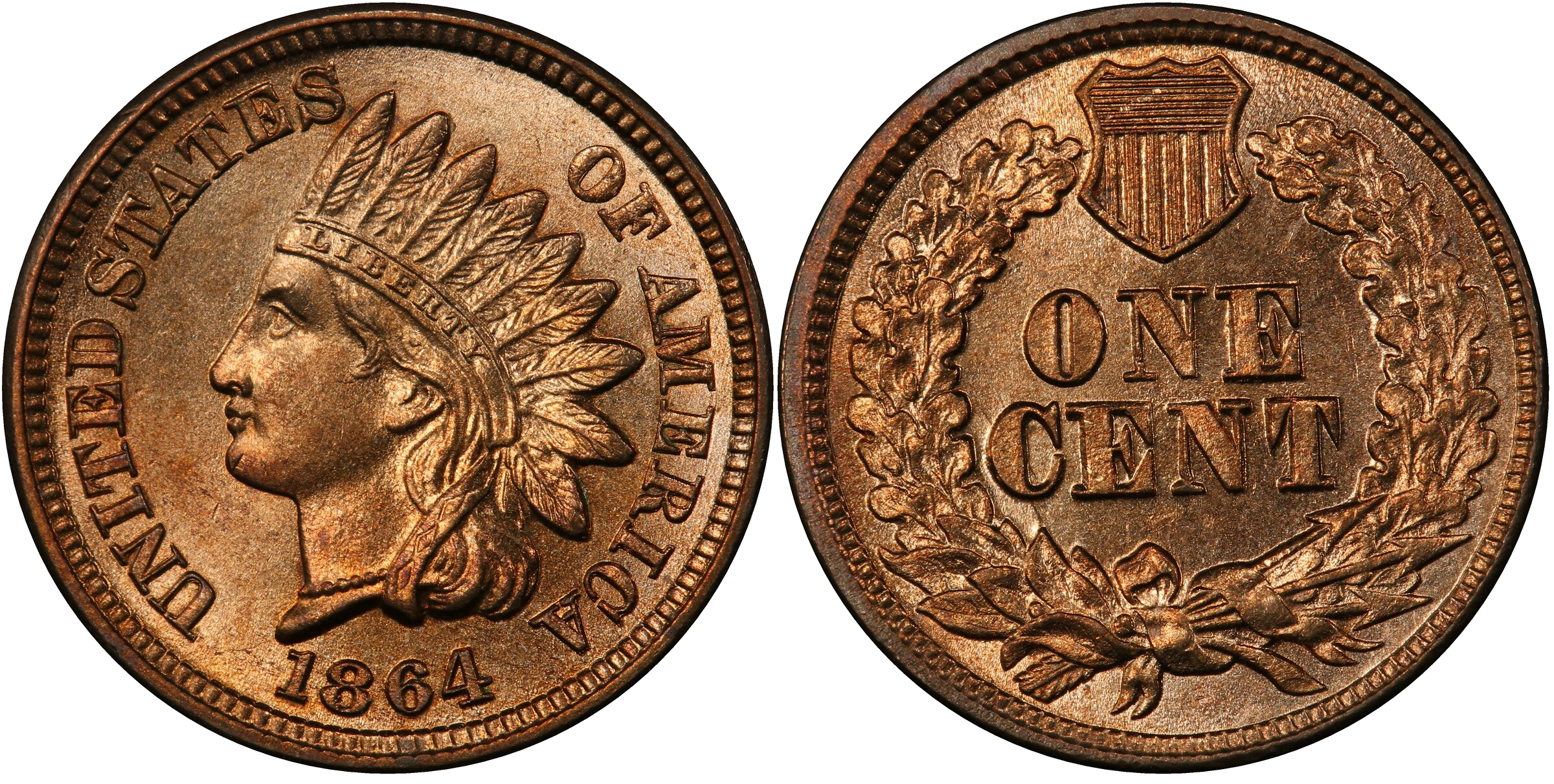
1864 Copper-Nickel: Liberty’s nose is clashed through the “C” in “CENT” on the reverse, touching the wreath below. This is from the final year of the copper-nickel composition.
1866 — Wreath Through Feathers
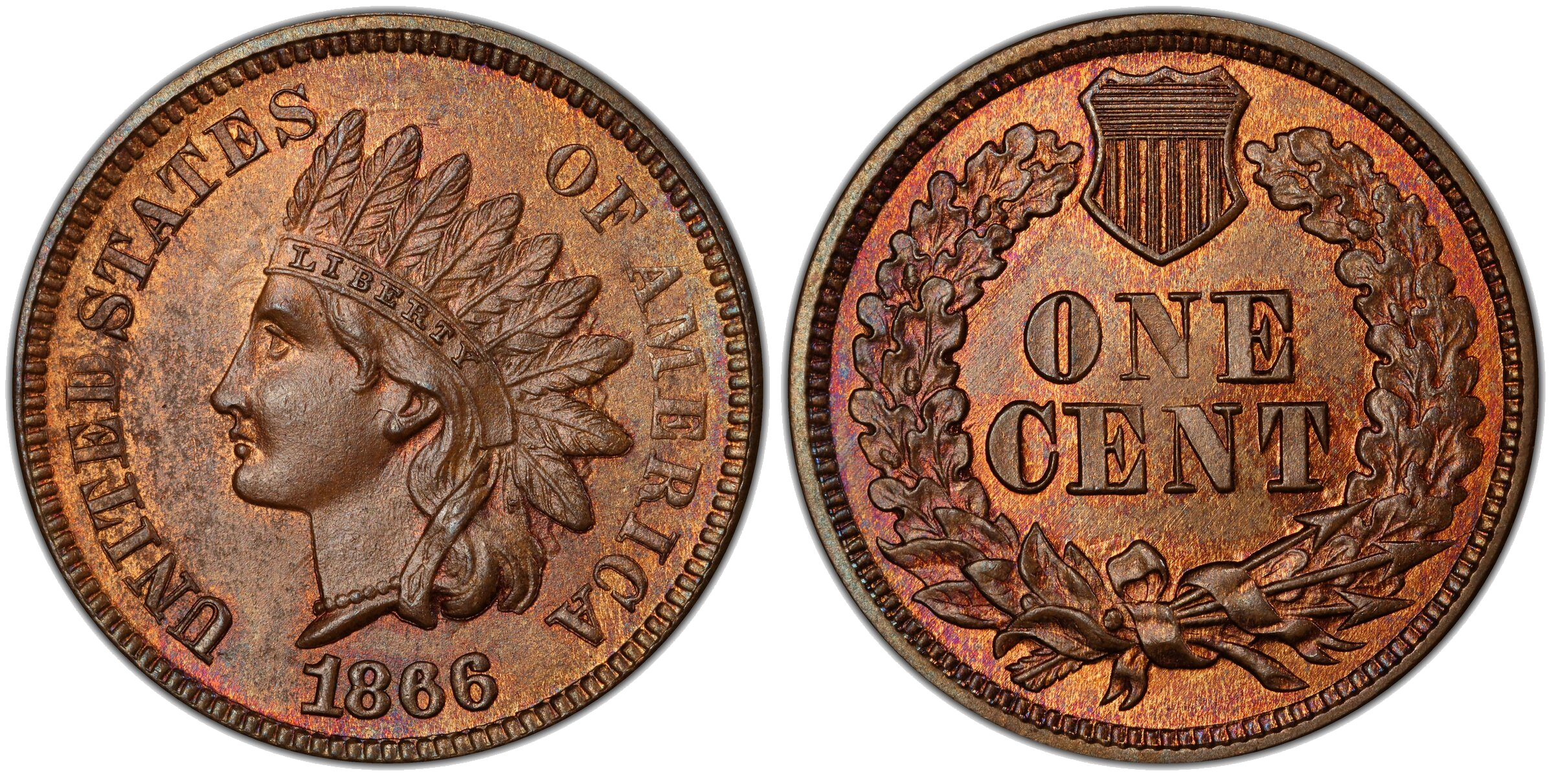
1866: Elements of the reverse wreath are clashed through the gaps in the headdress feathers on the obverse. This is a classic example of how the wreath’s shape maps into the feather gaps.
1870 — Multi-Zone Reverse Clash
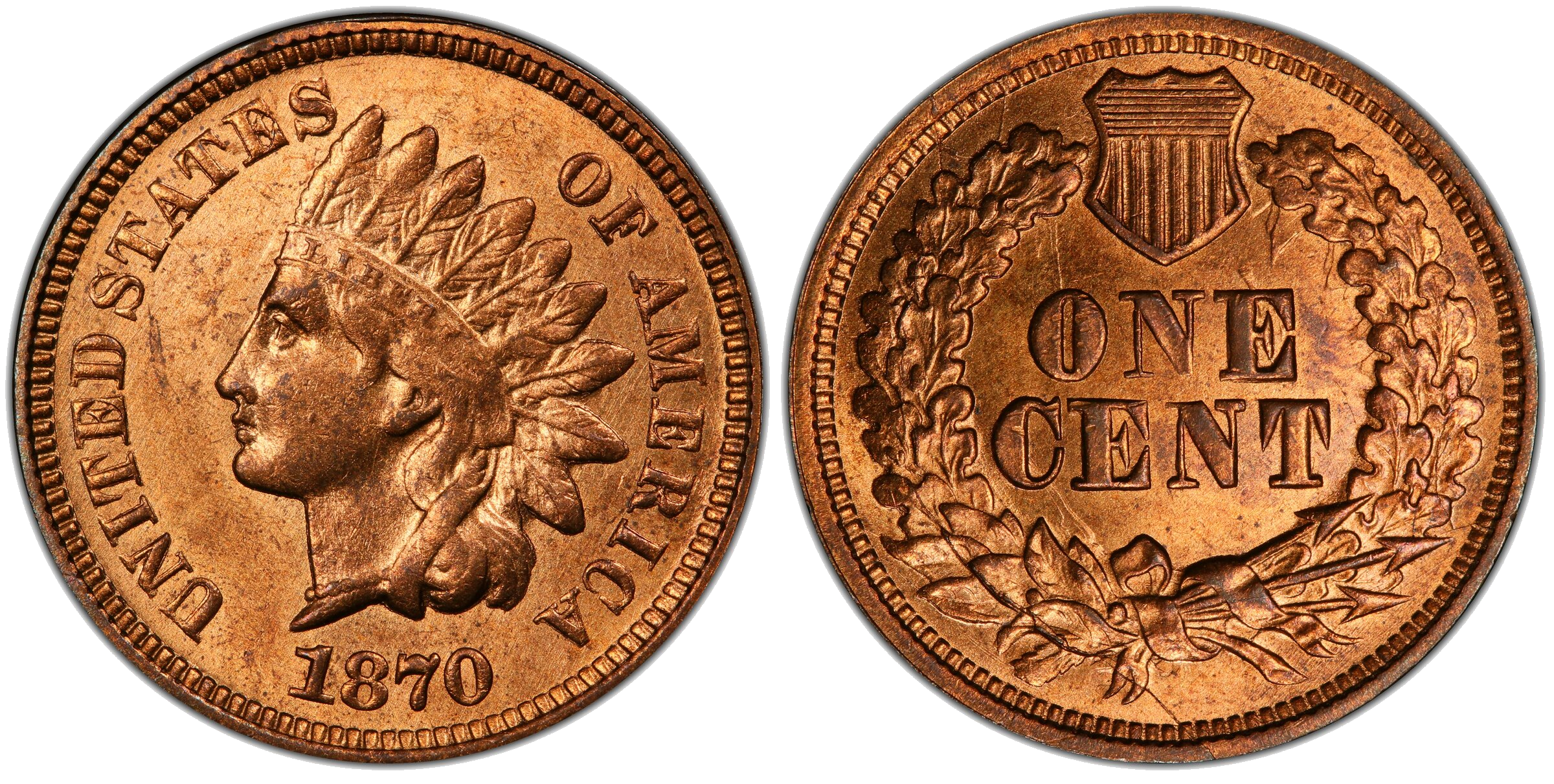
1870: Multiple clash impressions show the forehead and nose under the “C” in “CENT” and headdress feathers inside the right wreath on the reverse, demonstrating two distinct clash zones.
1878 — Three-Zone Clash
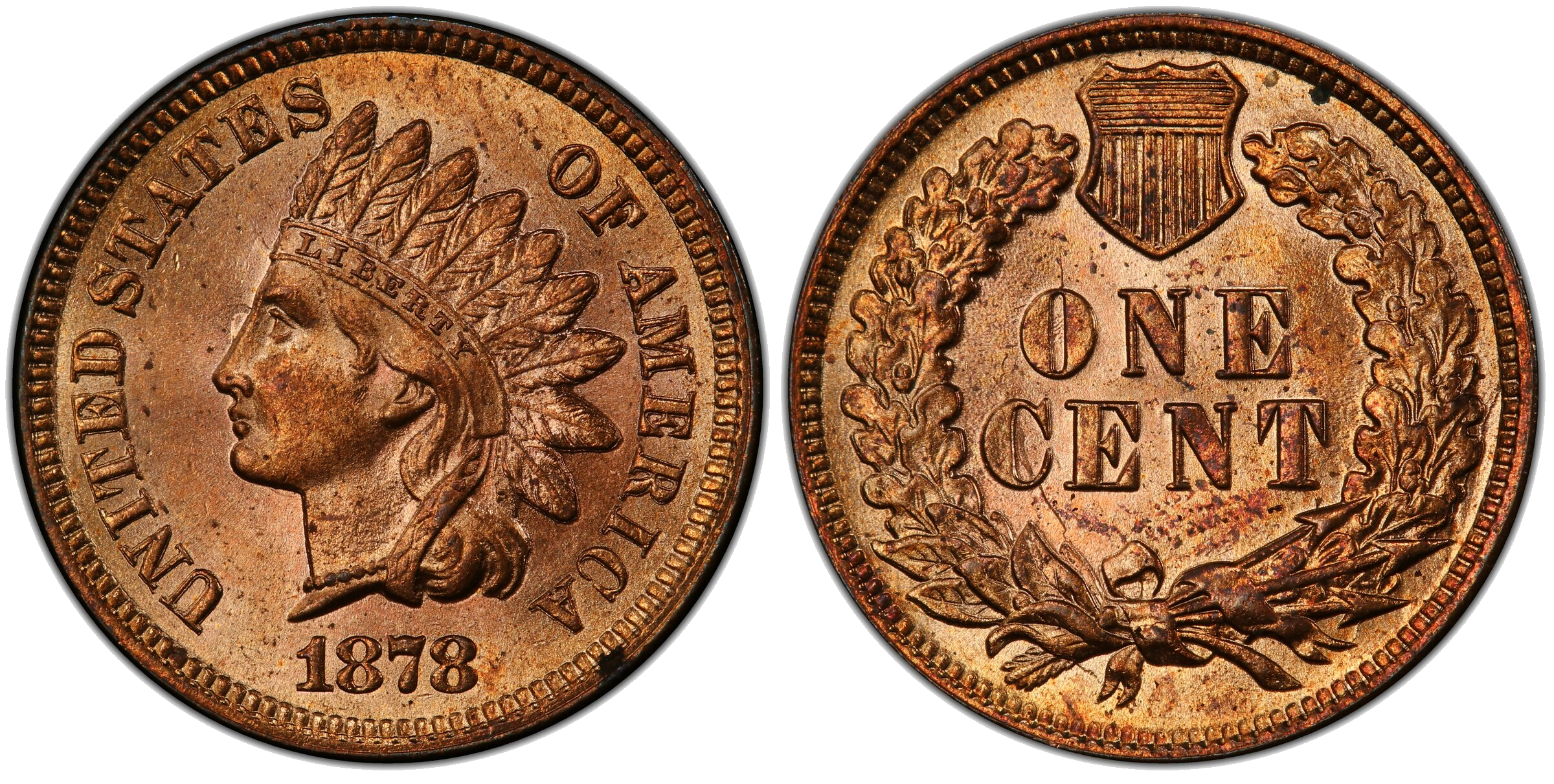
1878: A three-zone clash with the “C” clashed in front of Liberty’s eye on the obverse, the nose and forehead below “C” on the reverse, and the neck clashed above the “O” in “ONE” on the reverse.
1882 — Eye Through “CE”
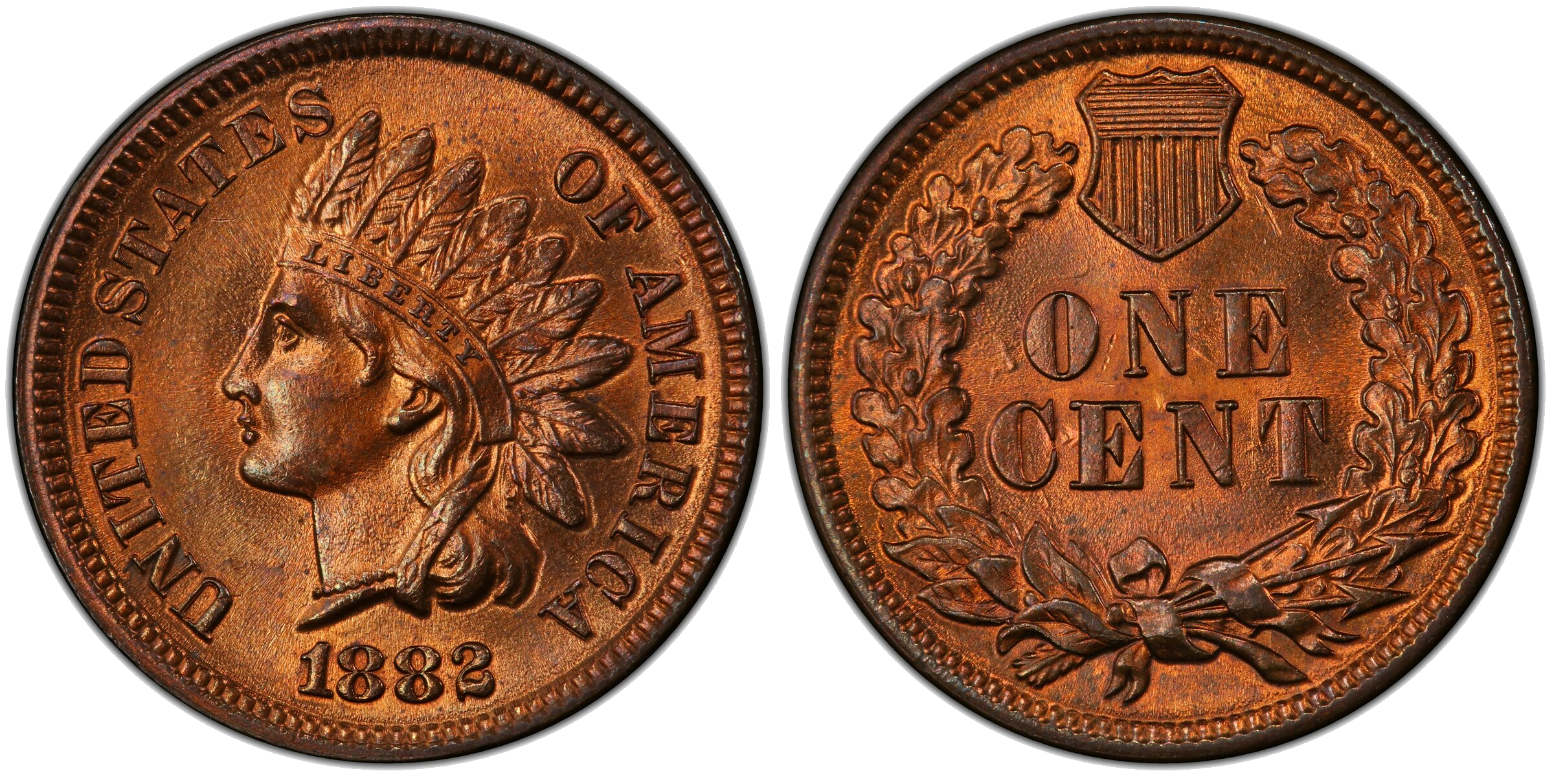
1882: Liberty’s eye is clashed through the “CE” of “CENT,” with parts of the chin, lips, and forehead also visible on the reverse. A strong example of multiple facial features transferring together.
1886 Type 2 — Three-Point Reverse Clash
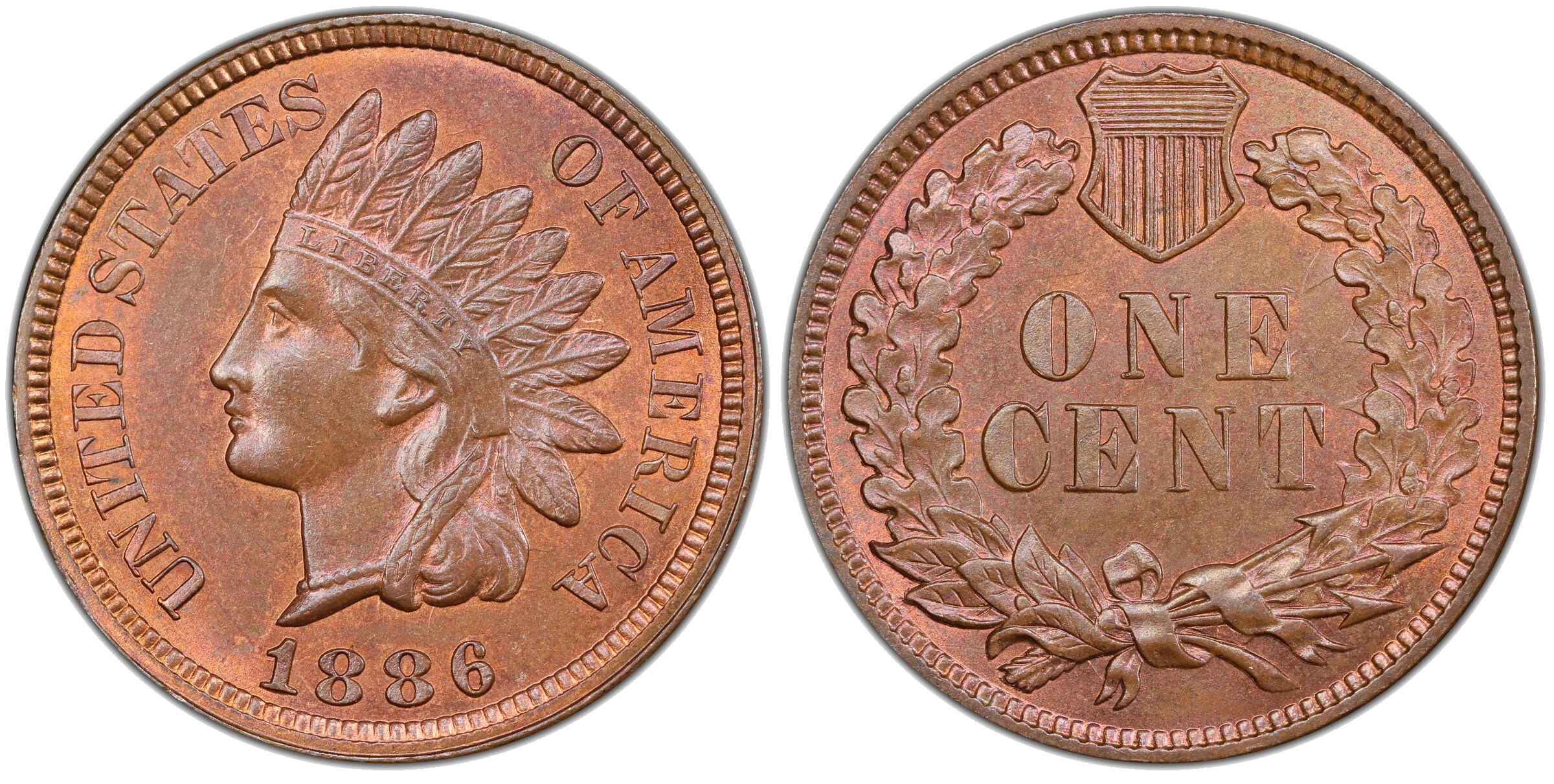
1886 Type 2: The nose and forehead are clashed below and through “C,” the chin above “O,” and a feather inside the right wreath — three distinct areas of the reverse affected by a single clash event.
Late Series and Special Varieties
These four examples from the later years of the series include both standard die clashes and coins with additional variety interest.
1887 — Spiked Head with Die Clash

1887: A die clash with the “C” in front of Liberty’s eye on the obverse and the nose and forehead under and through “C” on the reverse. This coin also exhibits a “spiked head” — a die crack running from the base of the bust east through the “7” in the date to the rim.
1893 — Strong Bilateral Clash
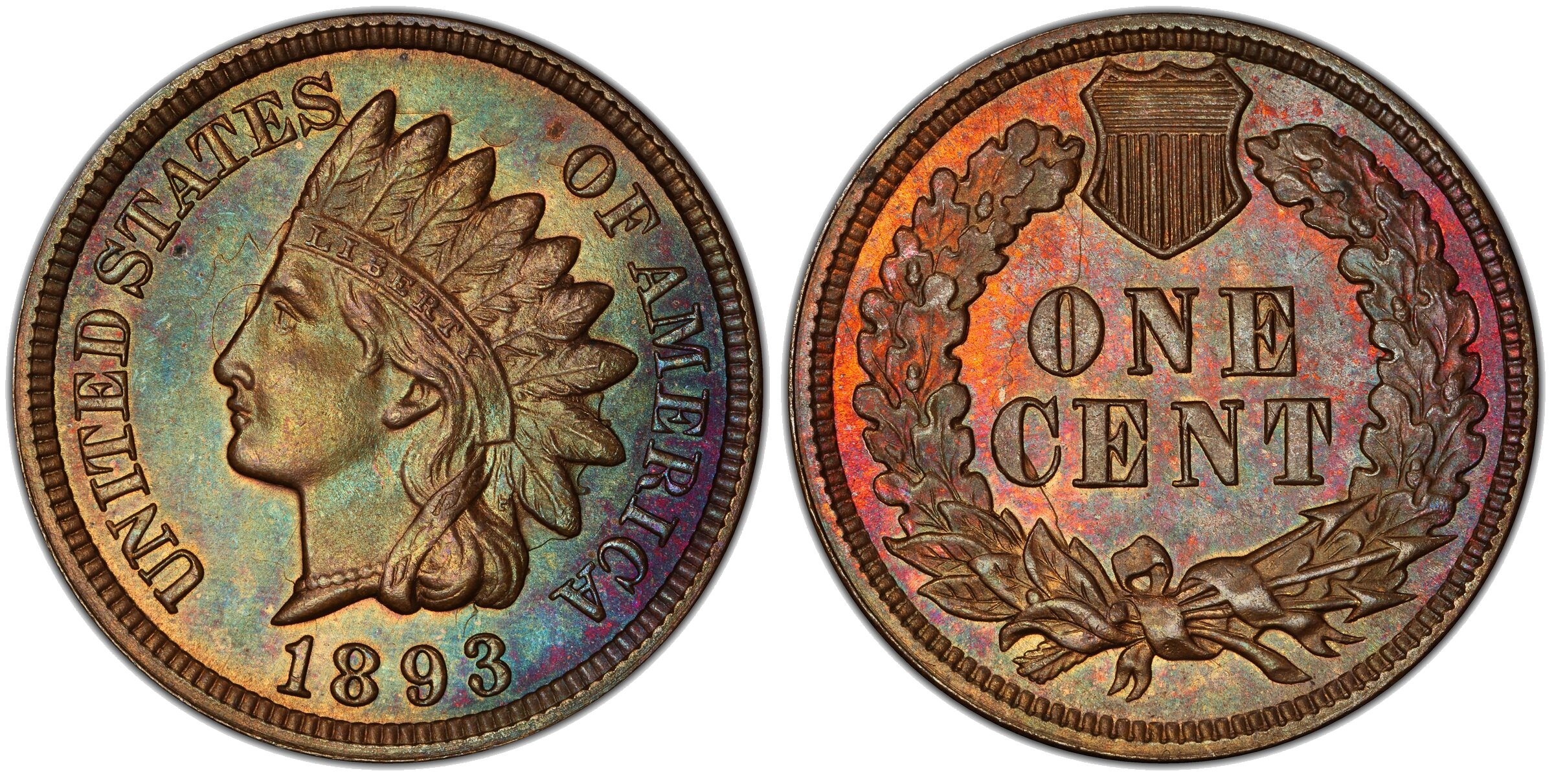
1893: A strong bilateral clash with the “C” and left wreath plus a good portion of the right wreath through the feathers and below Liberty on the obverse, and the full front of the portrait clashed on the reverse.
1905 — Double “C” on Obverse
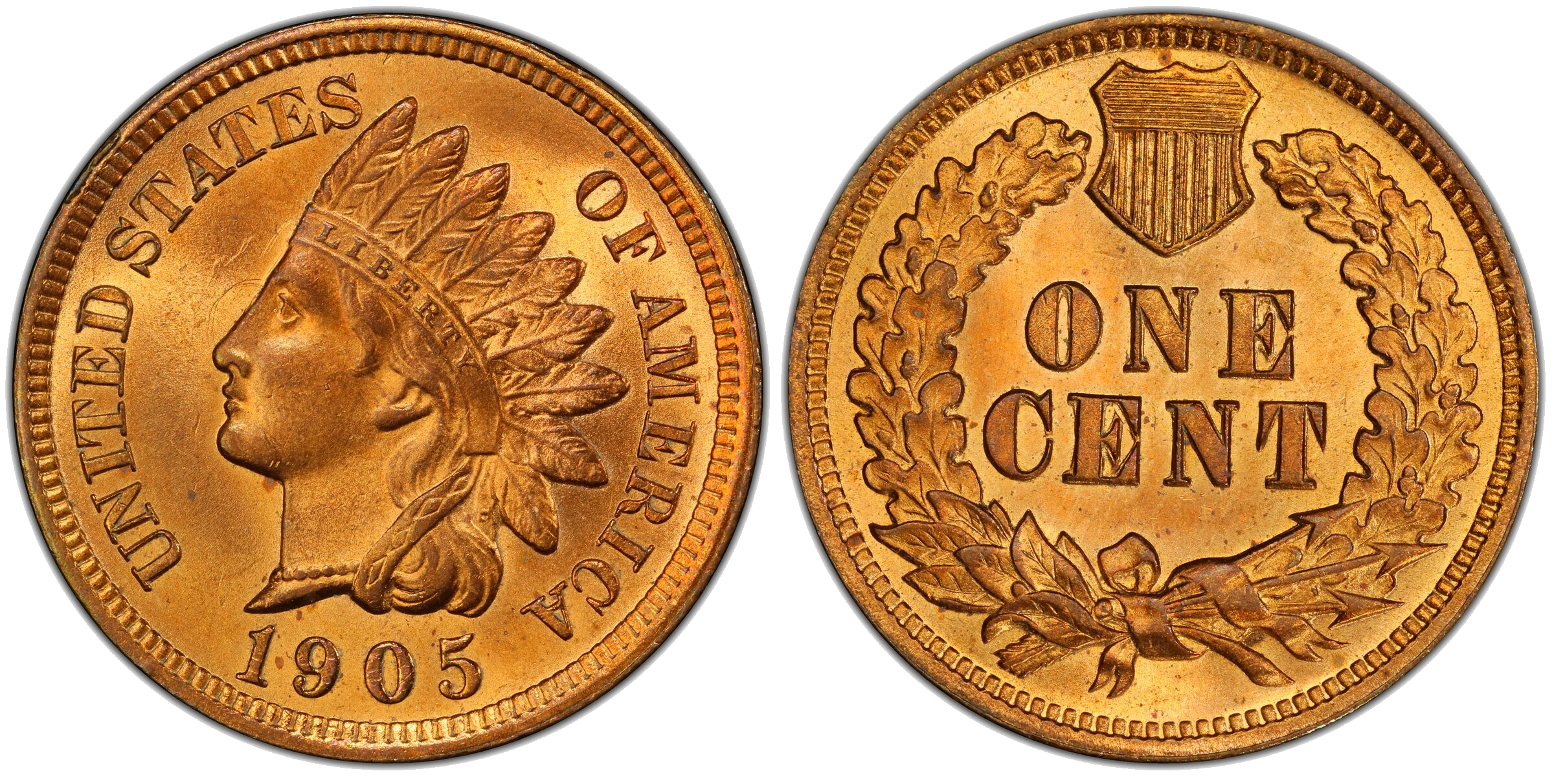
1905: The “C” from “CENT” is clashed in front of Liberty’s eye twice on the obverse, from two separate clash events. The doubled “C” impression is a clear indicator of multiple clash strikes.
1909 — Final Year
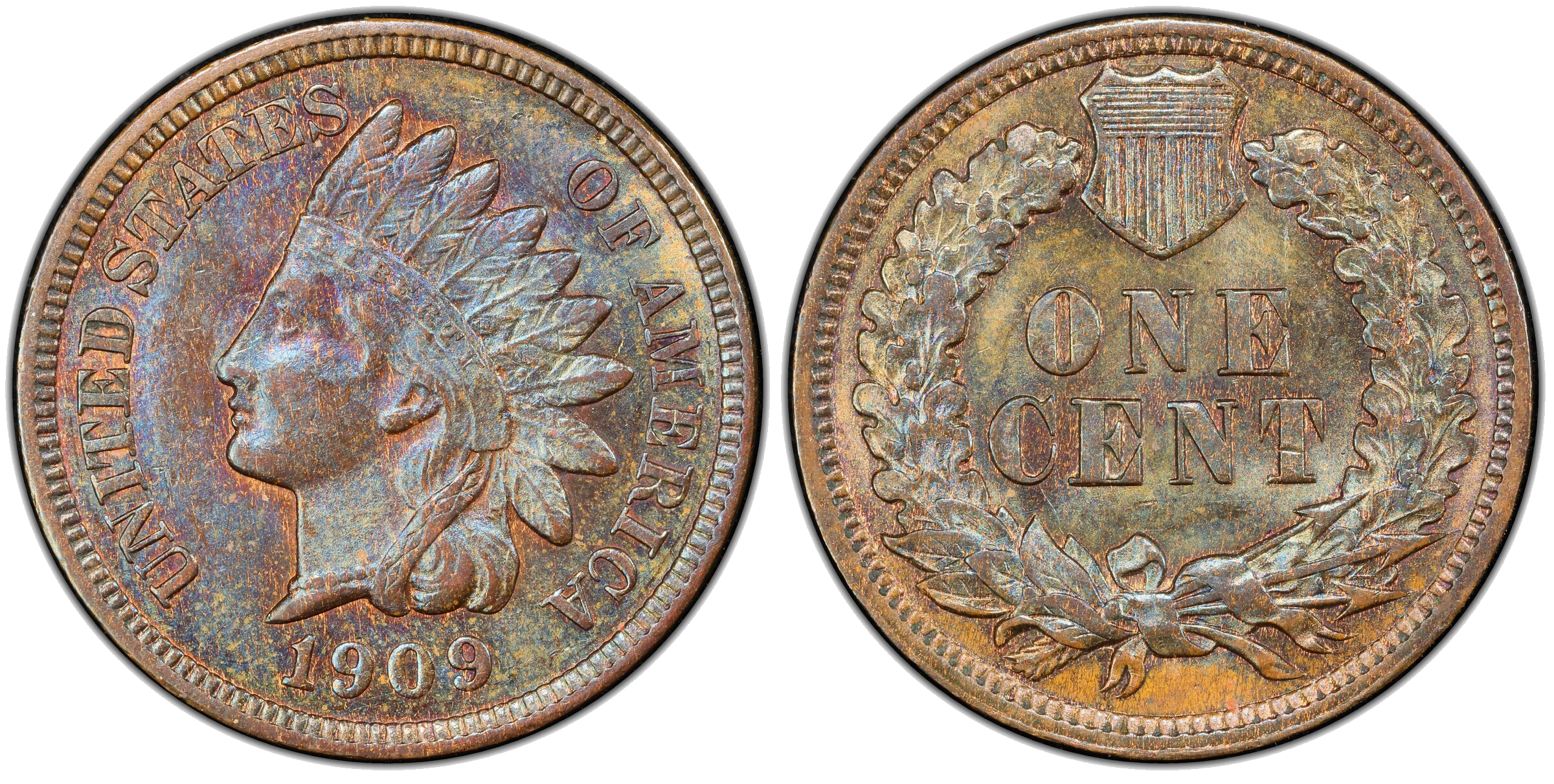
1909: The final year of the Indian Head cent, with the “C” clashed in front of Liberty’s eye on the obverse and the nose and forehead clashed below and through the “C” in “CENT” on the reverse. Die clashes persisted right through the last year of the series.
Related: Flying Eagle Mule Die Clashes
The Indian Head cent’s predecessor, the Flying Eagle cent (1856–1858), produced some of the most extraordinary die clash varieties in U.S. numismatics — including three documented mule die clashes on the 1857 date, where the cent die was struck against dies from a quarter, half dollar, and twenty-dollar gold piece. See our separate Die Clash Overlays for Flying Eagle Cents post for full details and images of these remarkable varieties.
Summary: What to Look for on Indian Head Cent Die Clashes
When examining Indian Head cents for die clashes:
- Check in front of Liberty’s eye first: The “C” from “CENT” clashed onto the obverse is the most common die clash mark on Indian Head cents. It appears in documented examples from 1861 through 1909.
- Look between the feathers: Wreath elements from the reverse frequently clash between the bottom feathers of the headdress on the obverse.
- Examine under the shield: Liberty’s chin and neck from the obverse commonly clash under the left side of the shield on the reverse.
- Check inside the right wreath: Headdress feathers from the obverse often clash inside the right wreath bunch on the reverse.
- Full-portrait clashes exist: The most dramatic examples show nearly the entire front profile of Liberty transferred onto the reverse. These are known from multiple dates including 1864, 1865, 1869, 1888, and 1893.
- Multiple clash events: Some coins show evidence of two or three separate clash events (e.g., doubled or tripled chin impressions), indicating the dies struck each other more than once.
- Both reverse types: Remember that the 1859 laurel wreath reverse produces different clash patterns than the 1860–1909 oak wreath with shield reverse.
Explore in the NumisDex Catalog
Related varieties and errors from the NumisDex database:
0 Replies
Related Threads
- Die Clash Overlays for Flying Eagle Cents: Mule Die Clashes (1856–1858)0 replies · 1mo ago
- Die Clash Overlays for Large Cents: All Design Types (1793–1857)0 replies · 2mo ago
- Die Clash Overlays for Half Cents: All Design Types (1793–1857)0 replies · 3mo ago
- Counter Clashes: What Happens When a Die Clash Clashes Back0 replies · 3mo ago
- Die Clashes: Ghost Images From Empty Strikes0 replies · 4mo ago