
Die Clashes: Ghost Images From Empty Strikes
When Dies Strike Each Other
A die clash happens when the obverse and reverse dies slam together without a planchet between them. At 750-850 coins per minute, the automated feed system occasionally fails to deliver a blank — but the press cycle doesn't stop. The dies close at full force (35-150 tons), and the raised design elements on each die are driven into the opposing die's face.
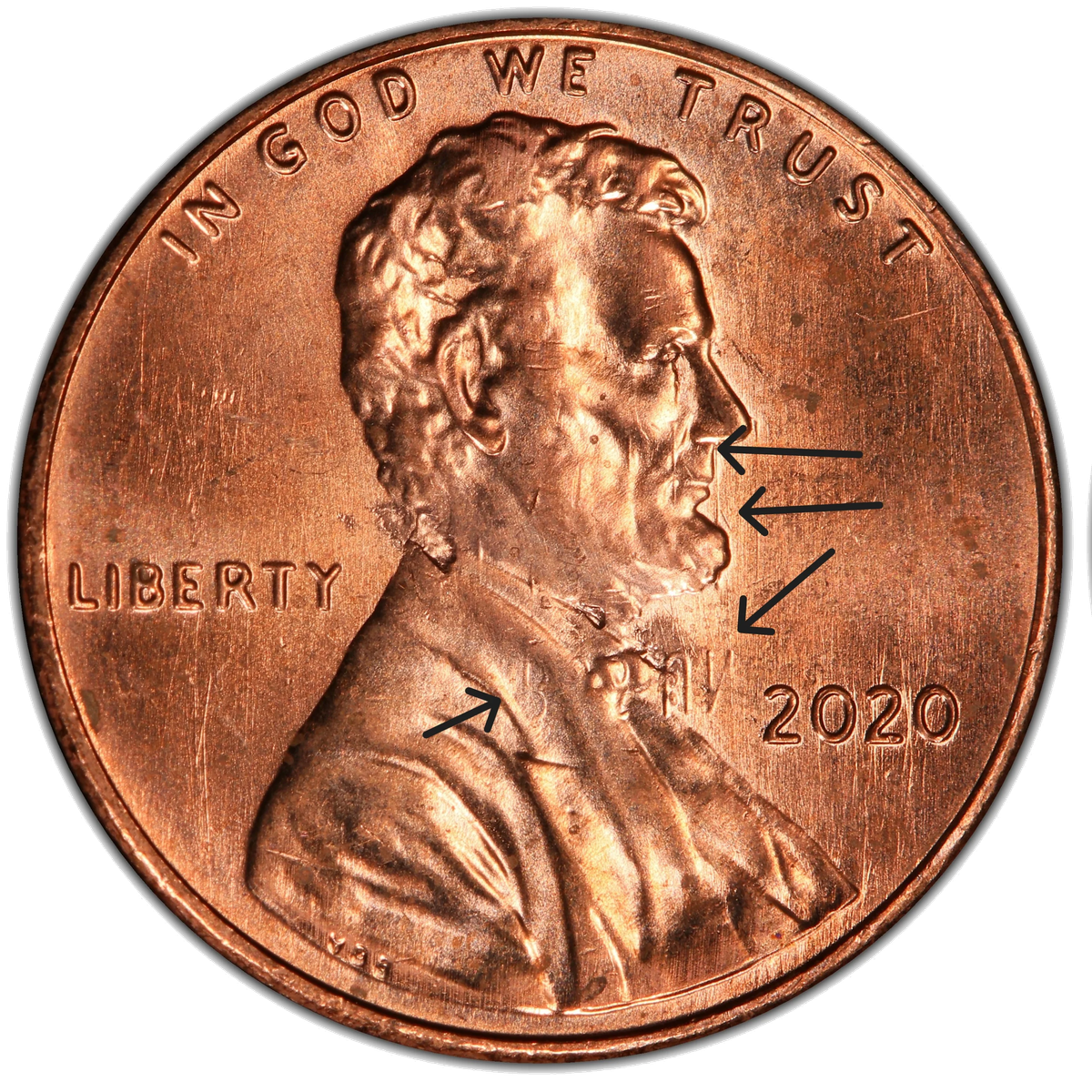
Ghost images from a die clash — reverse design elements appear as faint impressions on the obverse, the telltale sign of an empty strike
The result? Every coin struck afterward carries ghost-like impressions of the opposite side's design superimposed on its own surface. On a Lincoln cent, you might see faint Lincoln Memorial columns behind Lincoln's head, or traces of Lincoln's profile on the reverse.
Why Collectors Love Clashes
- They're common and affordable — Die clashes appear on virtually every denomination, making them an excellent entry point for error collecting
- Strength varies dramatically — From barely visible to bold and dramatic. Strong clashes with clear design transfer command real premiums.
- Photography is an art — Clash marks photograph best under strong directional lighting at a low angle. Getting the perfect image is part of the hobby.
Prime Clash Territory
- Morgan dollars — The large surface and deep relief produce bold, easily visible clash marks. Hundreds of clash die pairs are cataloged by VAM number.
- Lincoln cents — The most prolific source of clashes due to enormous production volumes.
- Kennedy half dollars — The large format makes clash marks particularly visible and photogenic.
- State and National Park quarters — 112 different reverse designs produced fresh clash material every few months.
Discussion
- What's the strongest die clash you've seen or own?
- Do you specialize in clashes within a particular series?
- What's your lighting setup for photographing clash marks?
- Have you found clash marks that helped you identify the die pair?
Explore in the NumisDex Catalog
Related varieties and errors from the NumisDex database:
0 Replies
Related Threads
- Die Clash Overlays for Indian Head Cents: Patterns and Notable Examples (1859–1909)0 replies · 1mo ago
- Die Clash Overlays for Flying Eagle Cents: Mule Die Clashes (1856–1858)0 replies · 1mo ago
- Die Clash Overlays for Large Cents: All Design Types (1793–1857)0 replies · 1mo ago
- Die Clash Overlays for Half Cents: All Design Types (1793–1857)0 replies · 2mo ago
- Counter Clashes: What Happens When a Die Clash Clashes Back0 replies · 3mo ago