
1926-S VAM-1J
Error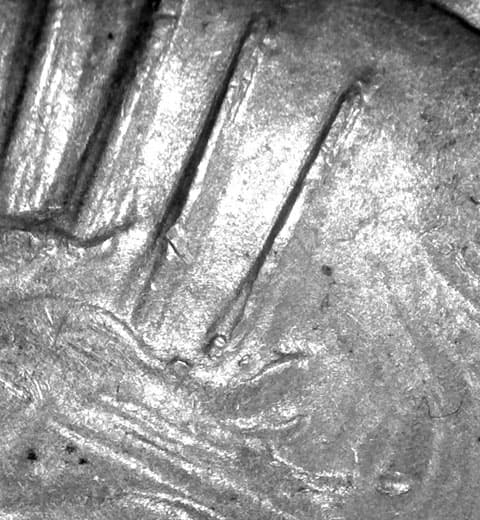
Description
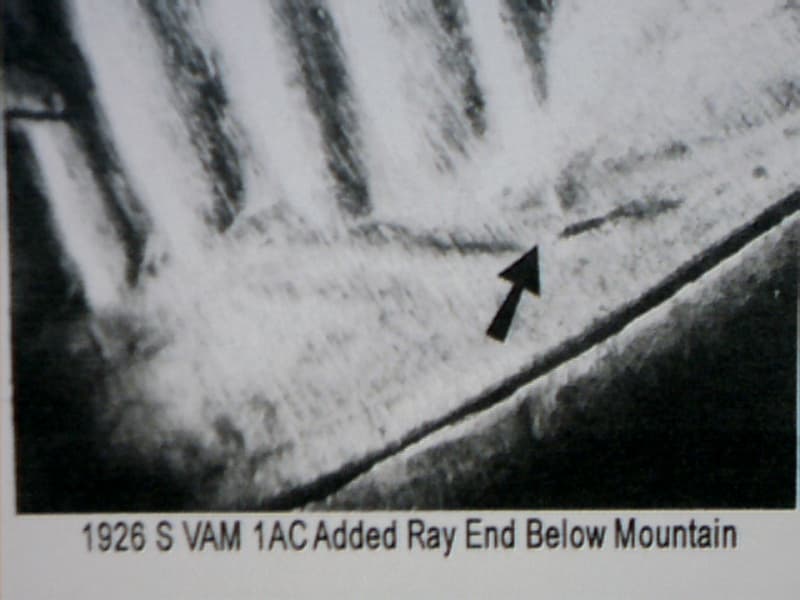
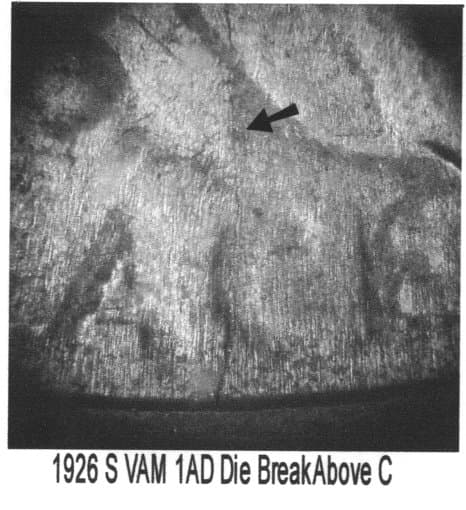
Four small die chips clustered at the base of the last ray of Liberty's tiara give VAM-1J of the 1926-S Peace Dollar its descriptive name — "Die Chips Tiara Ray." These die chips represent tiny fragments of die steel that broke away from the die surface during use, leaving small cavities that filled with metal during striking to produce raised irregular bumps on the finished coin. San Francisco struck 6.98 million Peace Dollars in 1926, a moderate mintage within Anthony de Francisci's design. Classified under obverse die state II1 with reverse B2a, VAM-1J carries an R-5 rarity rating that estimates between 30 and 75 specimens known — a genuinely scarce variety. The tiara rays on Liberty's crown are among the more delicate design elements on the Peace Dollar obverse, and the concentration of four die chips at the base of the last ray suggests a stress point in the die steel where the relief transition created vulnerability to chipping. Unlike die gouges or scratches, which are caused by external contact, die chips result from fatigue or structural weakness in the die material itself. The VAM-1J designation places this as the tenth alphabetical sub-variety under the VAM-1 die marriage for the 1926-S date. Locating specimens requires magnification focused on the outermost tiara ray, where the four small raised bumps distinguish this variety from the normal die surface.
External References
Community & Reference
Related Errors
More VAM Variety Errors


Collector Essentials
Tools for examining and preserving error coins and die varieties.
10x-20x Jeweler's Loupe
Essential for examining die varieties, doubled dies, and RPMs
Cherry Picker's Guide
The definitive reference for U.S. error coins and die varieties
2x2 Coin Flips & Holders
Protect and organize your finds with archival-quality holders
USB Digital Microscope
Capture detailed images for documentation and community submissions
As an Amazon Associate, NumisDex earns from qualifying purchases.