
1872 Double Eagle Patterns
Base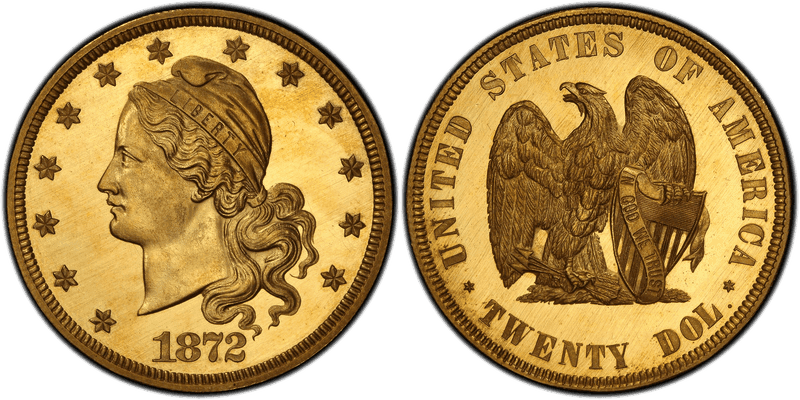
About This Coin
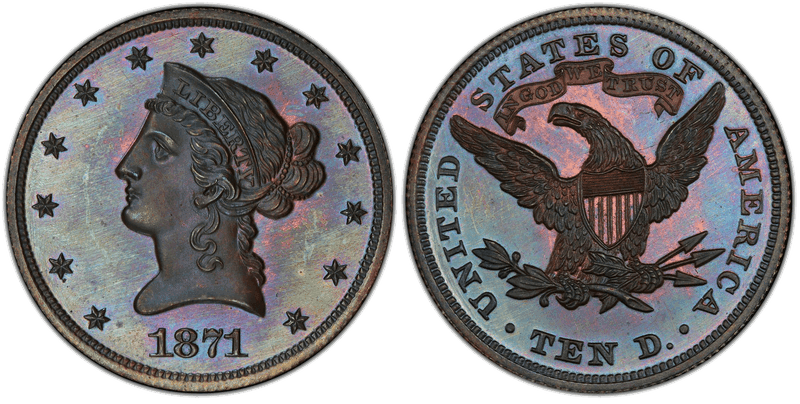
The 1872 Double Eagle Patterns is a United States Gold Double Eagle from the Trade Dollar Era Patterns (1871-1873) series — the final year of the series. In 1872, coins were struck at the Philadelphia Mint with a combined mintage of 1. This represents the lowest annual mintage in the entire series, at the series median of 1. The obverse features Liberty seated facing left, holding an olive branch extended to the viewer, with a sheaf of wheat behind and the reverse displays an eagle perched on a bale of goods, with an olive branch and three arrows. Minted during Reconstruction and the Gilded Age, as the nation healed from civil war and debated the role of silver and gold in the monetary system. Struck in other. A notable auction result reached $114K in PR63 grade at Heritage Auctions. Designed by William Barber.
Specifications
Strike Types & Varieties(7)
1872 Proof Double Eagle Pattern - J-1250
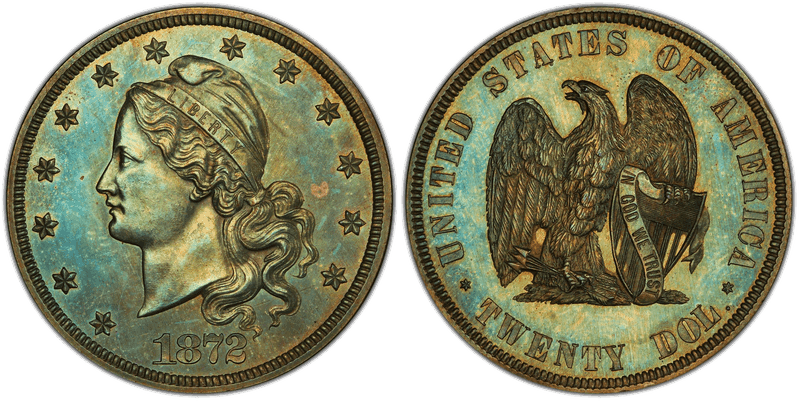
1872 Proof Double Eagle Pattern - J-1251
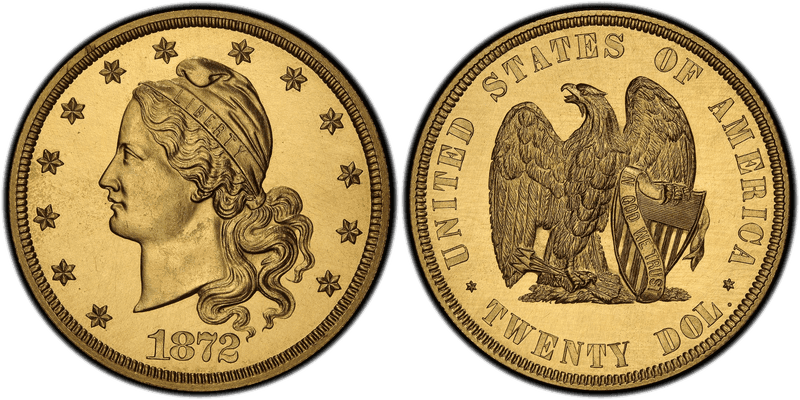
1872 Proof Double Eagle Pattern - J-1251, Gilt, Amazonian

1872 Proof Double Eagle Pattern - J-1252
1872 Proof Double Eagle Pattern - J-1253
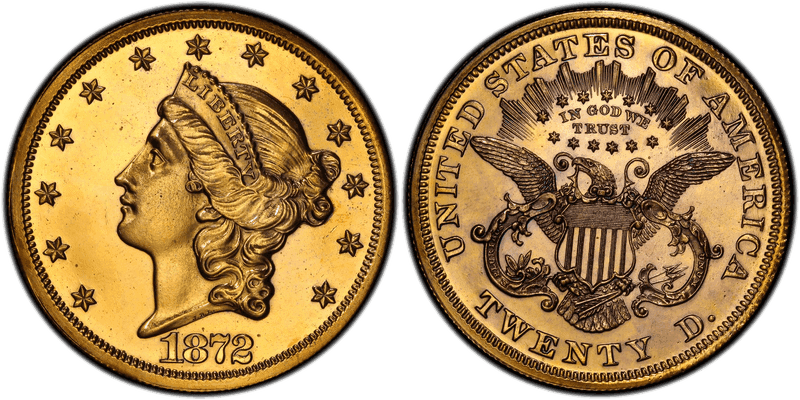
1872 Proof Double Eagle Pattern - J-1253, Gilt
1872 Proof Double Eagle Pattern - J-1254
Other Base Coins in This Series


Collector Essentials
Tools and references for building and protecting your coin collection.
10x-20x Jeweler's Loupe
A must-have for examining coin details, mint marks, and surface quality
Red Book — Guide to U.S. Coins
The essential annual reference for U.S. coin values, history, and mintages
Coin Albums & Storage
Archival-quality albums and holders to protect and display your collection
USB Digital Microscope
Capture detailed images for documentation and community submissions
As an Amazon Associate, NumisDex earns from qualifying purchases.