
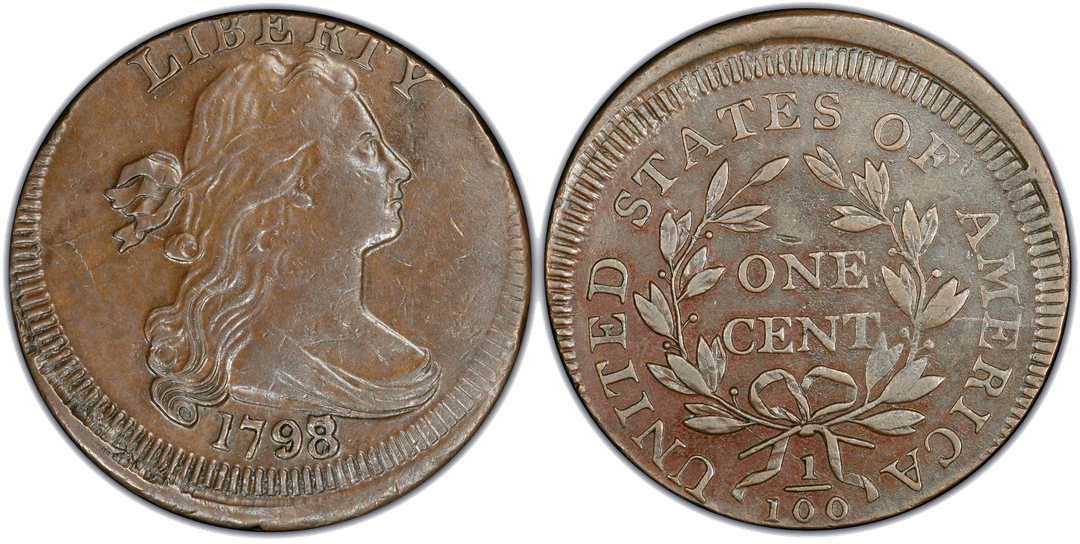
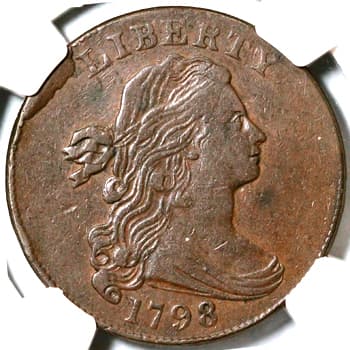
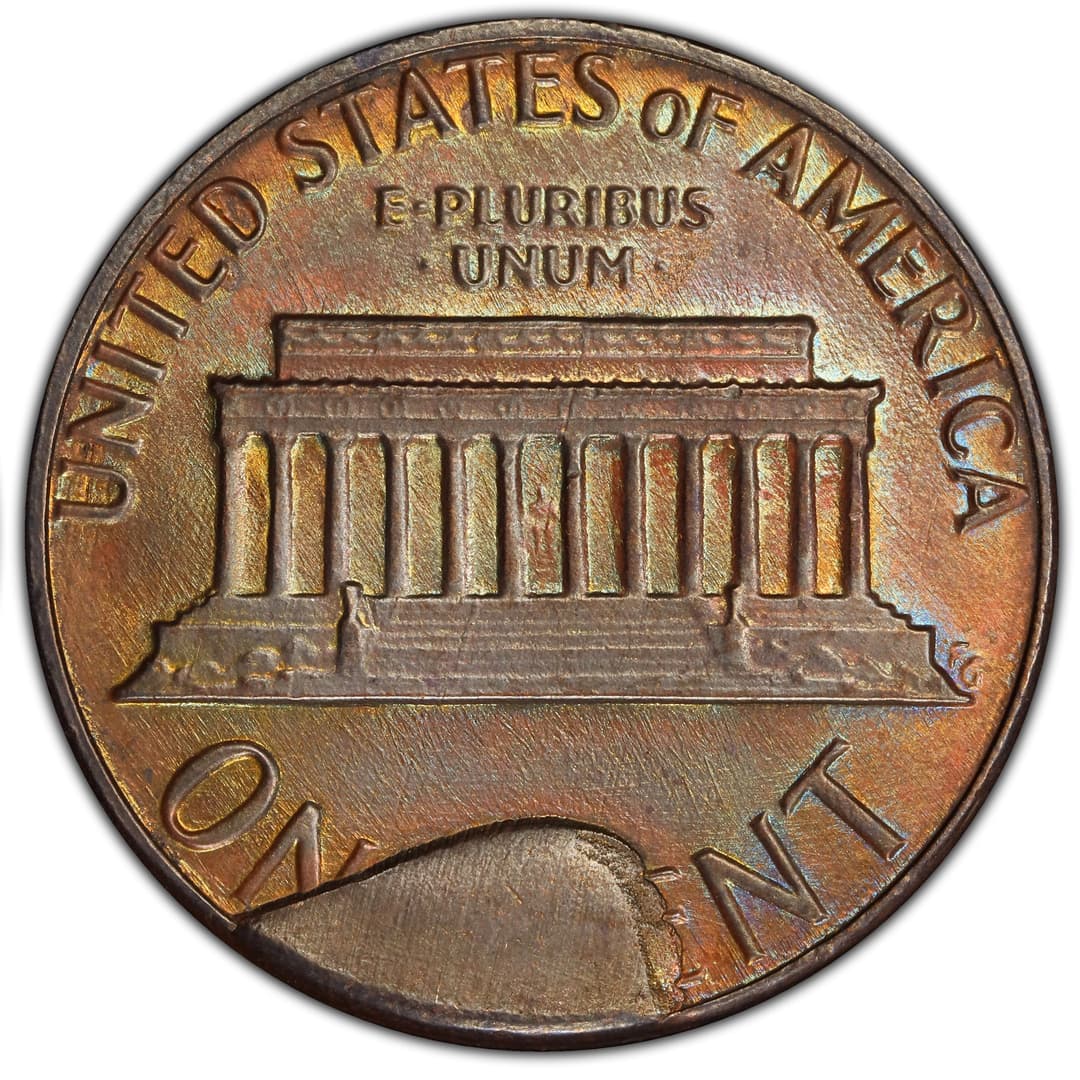
1798 Draped Bust Cent - 1798/7 Overdate - CU-1C-1798-06 Cud
Error
Attribution
Discovered by
pq_coins on eBay
Verified by
Cuds on Coins
Original Research
Description
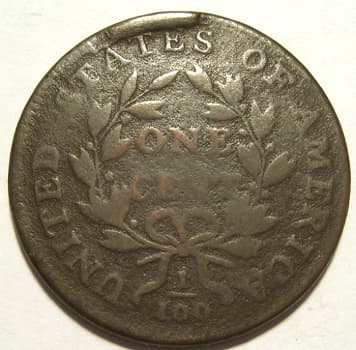
Hand-engraved from softened steel and then hardened for production use, early federal coin dies were more vulnerable to fracture than their modern machine-made counterparts, as this cud on a 1798 Draped Bust Cent shows. Each die at the Philadelphia Mint in the 1790s was individually cut by an engraver using hand tools, a process that introduced microscopic inconsistencies in the steel's grain structure. These imperfections became stress concentration points under the repeated impact of the screw press, and over thousands of impressions a crack could propagate outward until a rim section broke away entirely. The resulting cud — a raised featureless mass where the missing die fragment left a cavity — stands as physical evidence of that metallurgical failure. Die steel quality, hand engraving techniques, and the brute force of the screw press made rim fractures a recurring production hazard. Cataloged by Cuds on Coins.
Cross References
- CU-1C-1798-06
External References
Community & Reference
Related Errors
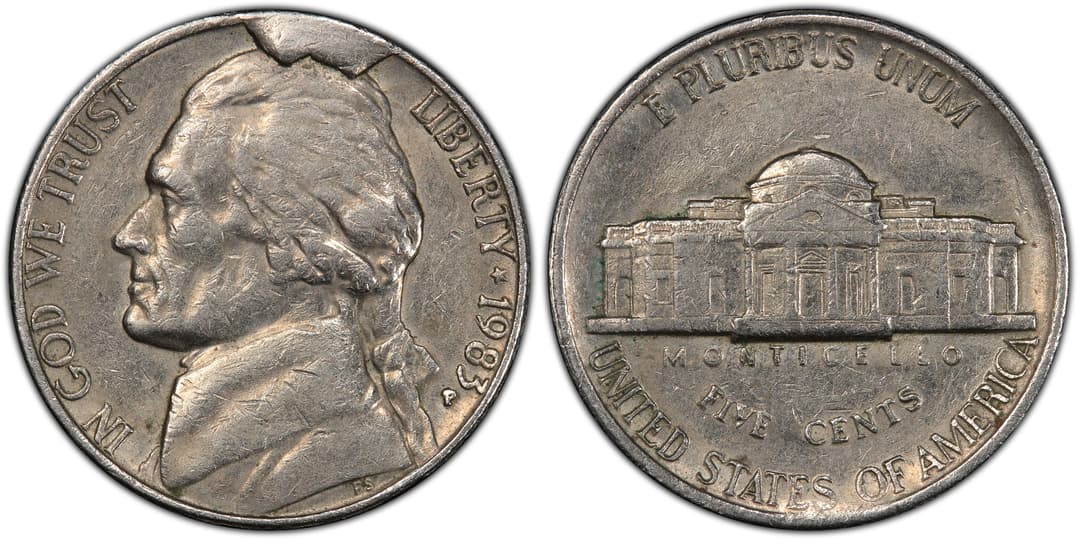
More Cud Errors
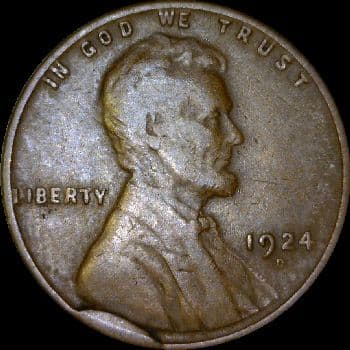
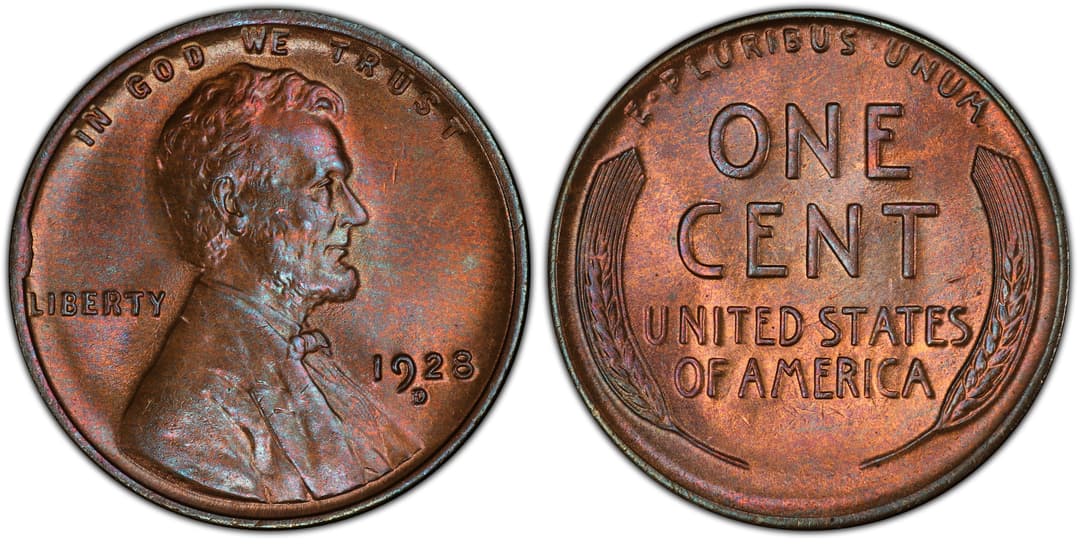

Collector Essentials
Tools for examining and preserving error coins and die varieties.
10x-20x Jeweler's Loupe
Essential for examining die varieties, doubled dies, and RPMs
Cherry Picker's Guide
The definitive reference for U.S. error coins and die varieties
2x2 Coin Flips & Holders
Protect and organize your finds with archival-quality holders
USB Digital Microscope
Capture detailed images for documentation and community submissions
As an Amazon Associate, NumisDex earns from qualifying purchases.