
In the catalog: 1863 Indian Head Cent, 1919 Lincoln Wheat Cent, Indian Head Cents 1859-1909 and Lincoln Wheat Cents 1909-1958
Rim Cud or Cud? Check Where It Stops
A raised bump on the edge of a coin usually gets called a cud. Sometimes it is one. Often it's a rim cud, which is a different break with a different cause, and one question tells them apart: where does the bump stop?
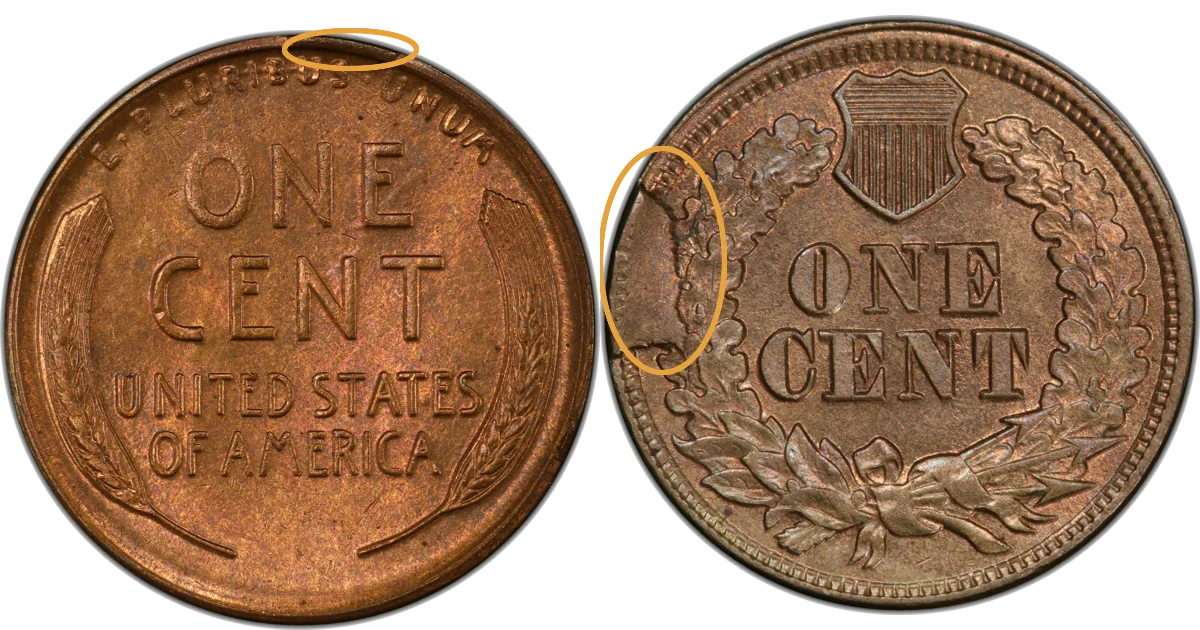
Start With the Rim
On a coin, the rim is raised. On the die that struck it, the rim is the opposite: a groove cut around the edge of the die face, called the rim gutter. During the strike, metal is pushed up into that groove and comes out as the coin's raised rim.
Rim Cud: The Groove Breaks
A rim cud happens when the die loses part of its rim gutter. Every coin the die strikes after that carries a raised interruption in the rim at the same spot, and it follows the rim's curve. It doesn't spread into the field, and it doesn't cover lettering, the date or the portrait. Error-Ref, whose definition we follow, is clear that a rim cud is not just a small cud.
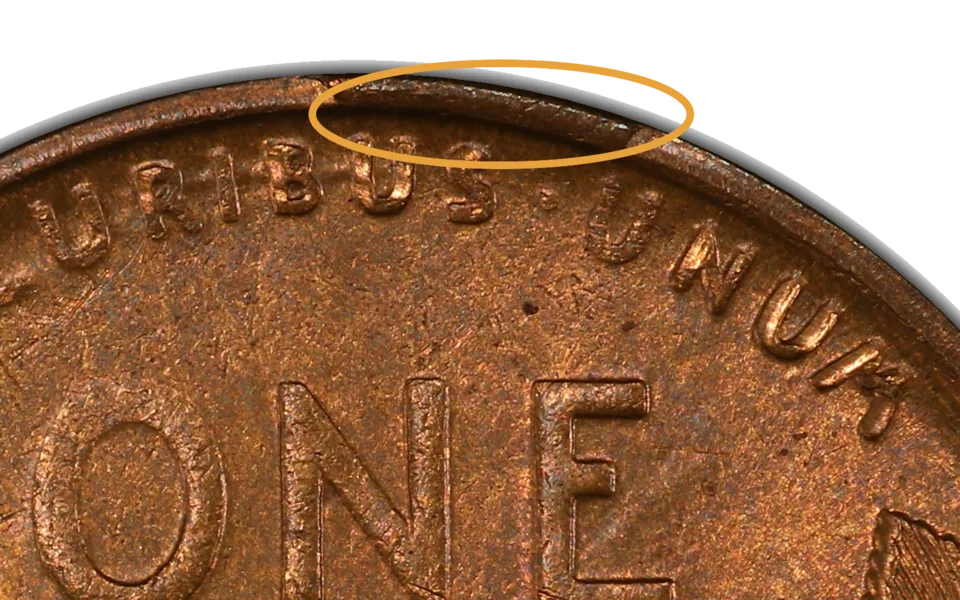
This 1919-S wheat cent shows one at the top of the reverse, running along the rim from the end of PLURIBUS to the first U of UNUM. Every letter underneath is still there. Cuds on Coins documents this die as CU-1c-1919S-17R, one of twenty numbered rim cuds it lists for the 1919-S.
Cud: A Piece of the Die Face Breaks Off
A cud is a bigger failure. A piece of the die face itself breaks away at the edge. With that steel gone, nothing presses design into that part of the coin, so struck coins show a blank, raised lump joined to the rim. Error-Ref's test is that a cud involves the rim and at least a little of the field or design beside it. Cuds on Coins calls it a marginal die break.
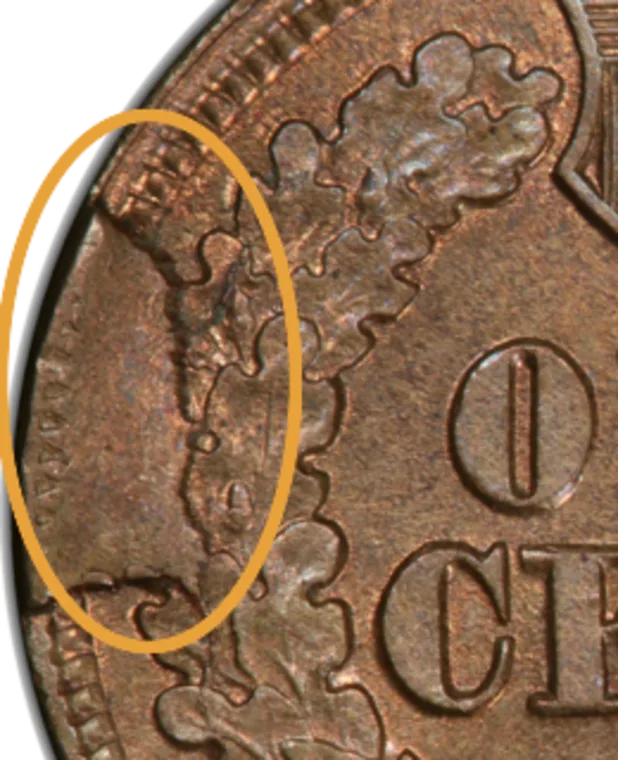
On this 1863 Indian Head cent, the lump starts at the rim between about 9 and 10 o'clock and runs right through the wreath.
The Test
- It stays in the rim and follows the curve: rim cud. The design next to it is untouched.
- It leaves the rim and takes some of the coin with it: cud. Field, lettering or design is covered.
One labeling note: Cuds on Coins files rim cuds and cuds under the same CU code, so read the label printed beside the number ("Rim Cud" or not) rather than going by the code alone.
Read more in Learn: Rim Cud and Cud. See both coins in the catalog: 1919-S CU-1c-1919S-17R and 1863 Indian Head reverse cud.
Sources: Error-Ref, "Rim Cuds" and "Cud" definitions; Cuds on Coins (cuds-on-coins.com), CU-1c-1919S-17R; NumisDex catalog.