Lamination (LAM)
A lamination error occurs when a layer of a coin's metal peels, flakes, or separates from the planchet surface. The root cause is a structural flaw within the metal itself -- trapped impurities, gas pockets, or contaminants that create a weak plane inside the strip. When the metal is subjected to the enormous pressure of the striking process (or sometimes simply from handling and circulation), the layers along this weak plane split apart. Lamination errors range from tiny surface flakes to dramatic separations that expose large areas of the coin's interior metal.
How Does It Happen?
Lamination errors originate during the production of metal strip, long before the blank is punched or the coin is struck. The defect is built into the raw material.
The metallurgical causes include:
-
Trapped gas: During the melting and casting process, gases (hydrogen, oxygen, nitrogen) can become dissolved in the molten metal. If the metal solidifies before these gases fully escape, microscopic gas pockets form within the ingot. When the ingot is rolled into thin strip, these pockets are flattened into planar voids -- thin gaps between layers of metal that become the fault line for future separation.
-
Slag inclusions: Oxides, sulfides, and other non-metallic impurities (collectively called slag) can become trapped in the melt. These inclusions do not bond well with the surrounding metal. When rolled into strip, they create weak spots where the metal above and below the inclusion is not metallurgically connected.
-
Rolling mill contamination: During the progressive rolling passes that thin the ingot into strip, foreign material (oil, grease, metal particles, or oxidation) can become trapped between the rollers and the strip surface. This contamination is rolled into the metal, creating an unbonded layer just below the surface.
-
Improper bonding in clad strip: For clad coins (post-1965 dimes, quarters, and half dollars), the copper-nickel cladding layers are bonded to the copper core through a combination of heat and pressure. If this bonding process is incomplete, the interface between cladding and core becomes a delamination plane.
The lamination can occur at any depth within the metal. Surface laminations involve a thin outer layer; deep laminations can split the planchet nearly in half. The separation can happen before striking (the coin is struck with the lamination already present), during striking (the enormous pressure of 35-150 tons triggers the separation), or after striking (the latent weakness fails during handling, rolling machine processing, or circulation).
How to Identify a Lamination
Lamination errors have distinctive visual characteristics:
-
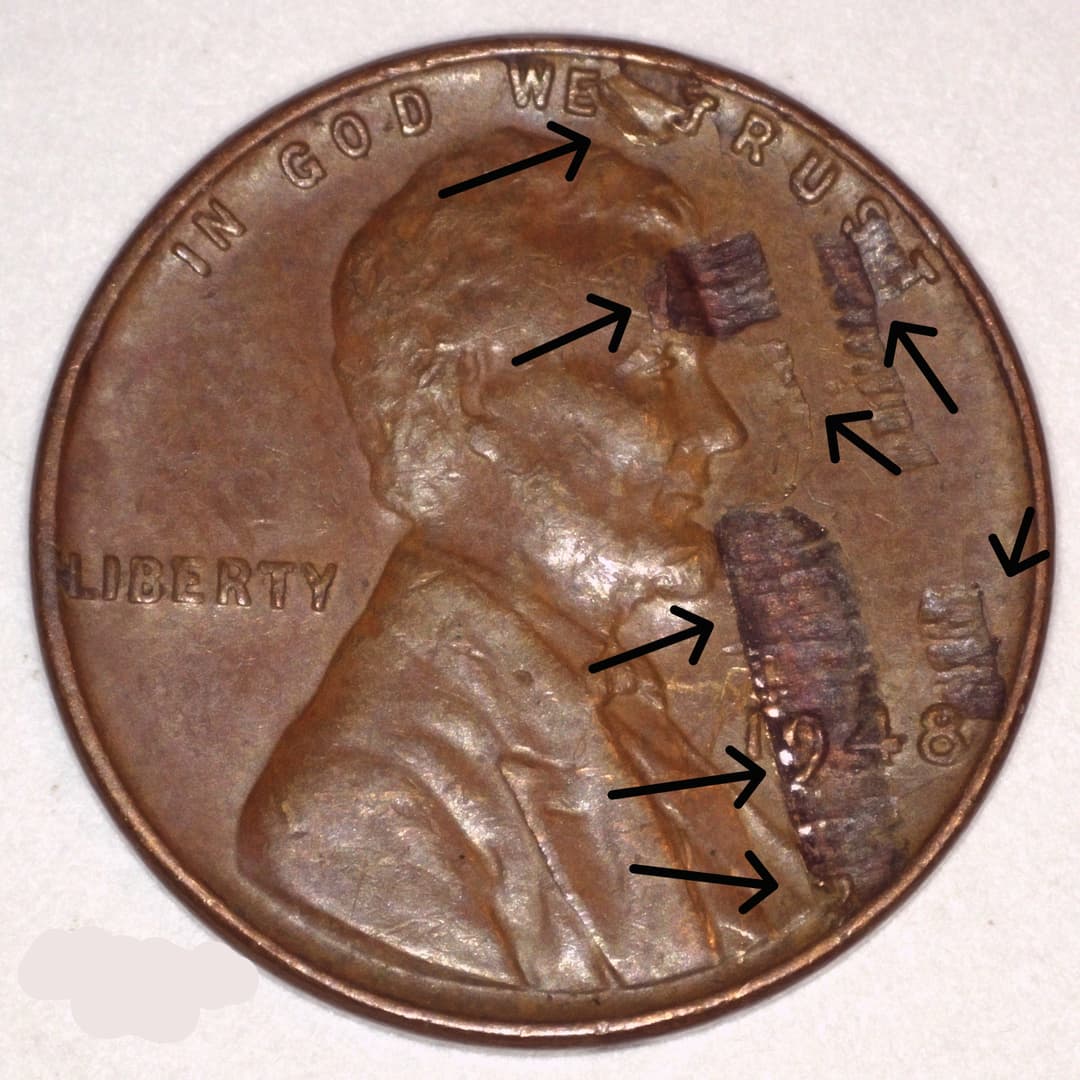
Retained flap: The most dramatic presentation. A layer of metal has partially peeled away from the surface but remains attached at one edge, creating a raised flap. The flap can be folded back to reveal the rough, exposed interior metal beneath it. These are the most valuable laminations because the full scope of the error is visible.
-
Missing layer: The peeled layer has fully separated and fallen away. The coin shows a recessed, rough, irregularly shaped area where the surface metal is absent. The exposed interior has a different texture from the normal struck surface -- typically porous, granular, or fibrous.
-
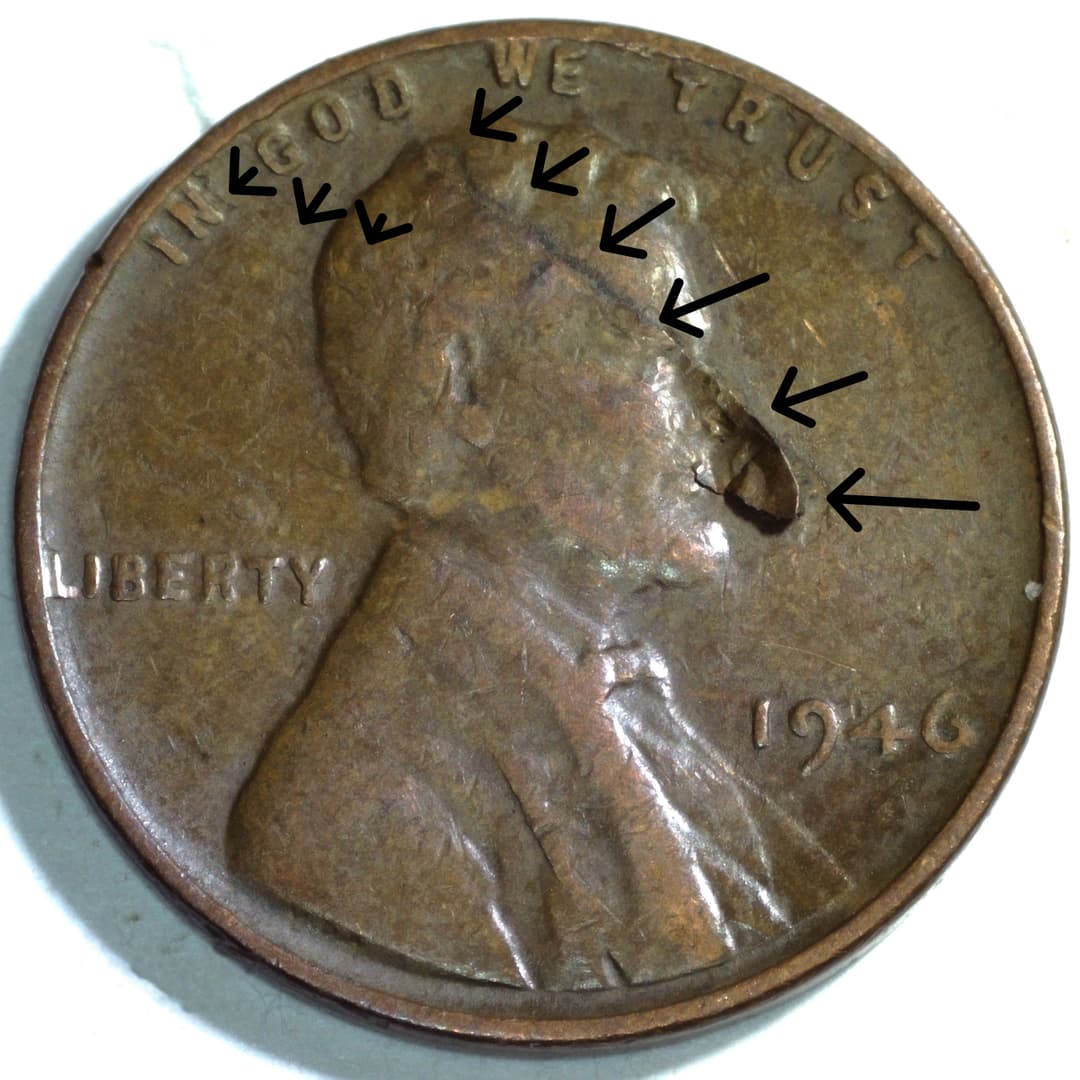
Surface crack or split: The lamination has begun but not fully separated. A crack or hairline split is visible on the surface, often with slightly raised or displaced edges. The metal on either side of the crack is at slightly different levels.
-
Blister or bubble: A trapped gas pocket creates a dome-shaped raised area on the coin's surface. The blister has not yet ruptured, but the metal above the gas pocket is clearly separated from the metal below it. Striking pressure sometimes flattens blisters partially, creating an irregular raised zone.
-
Edge lamination: The separation is visible on the coin's edge as a split or gap in the metal. Edge laminations can extend partway around the coin's circumference and are particularly visible on thicker denominations like half dollars and dollars.
Key Diagnostics
| Feature | What It Indicates |
|---|---|
| Exposed area is rough and granular | Internal metal never intended to be a surface -- confirms lamination |
| Separation follows the plane of the strip | Flaw originated during rolling -- parallel to coin faces |
| Flap shows design detail on its outer surface | Lamination was present before striking -- the die impressed the outer layer |
| Flap shows no design on its underside | Confirms the inner surface was never in contact with the die |
| Multiple laminations on one coin | Widespread contamination in the strip -- not uncommon |
Lamination vs. Post-Strike Damage
Genuine laminations are sometimes confused with post-strike scrapes, gouges, or corrosion. The key differences:
- Lamination plane is parallel to the coin's surface: The separation follows the direction the metal was rolled. Post-strike gouges cut at angles through the metal.
- Exposed interior texture: Lamination exposes raw internal metal with a distinctive granular or crystalline texture. Scrapes and gouges leave smooth, polished trenches.
- No tool marks: Laminations have organic, irregular boundaries. Mechanical damage shows directional scratches, sharp edges, or repetitive patterns from the damaging tool.
Notable Examples
Large Cent Laminations (1793-1857)
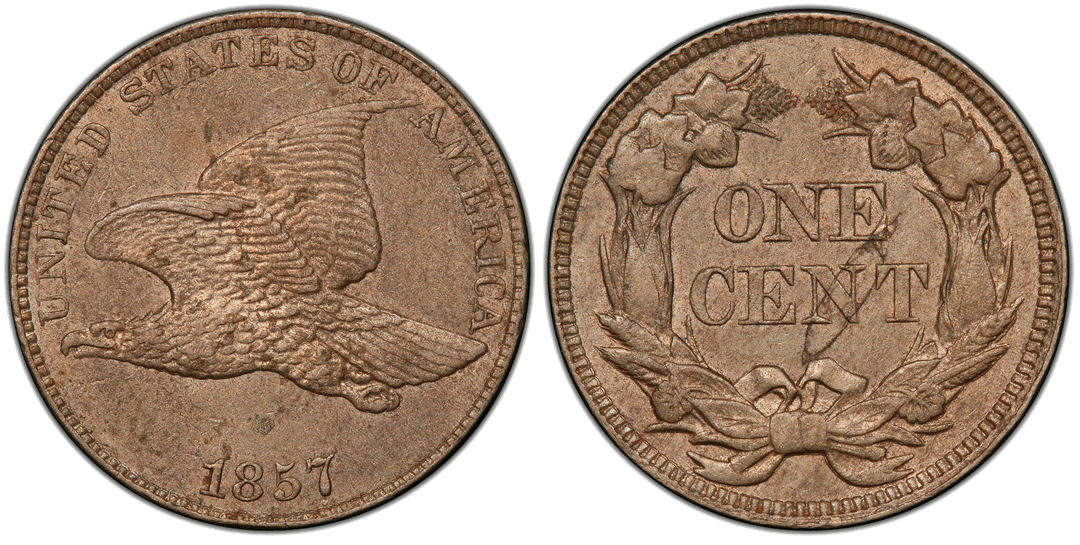
Early U.S. copper coinage is particularly prone to laminations. The copper refining and strip production technology of the 18th and early 19th centuries was less advanced than modern methods, and impurities were common. Large cents with dramatic retained flap laminations are significant numismatic artifacts that demonstrate the metallurgical challenges of early American minting.
Buffalo Nickel Laminations
The copper-nickel alloy of Buffalo nickels (1913-1938) produces distinctive laminations. The nickel content makes the metal more susceptible to gas porosity during casting, and laminations on Buffalo nickels are well documented. Examples with large retained flaps showing the full Indian Head portrait are especially prized.
Washington Quarter Laminations
Post-1965 clad Washington quarters are a common source of laminations because the three-layer clad structure (copper-nickel over copper) creates two bonding interfaces where separation can occur. Laminations that expose the copper core on one face while the opposite face shows normal cladding are straightforward to identify and authenticate.
Wartime Composition Errors
Coins produced during World War II using emergency alloy compositions -- steel cents (1943), silver war nickels (1942-1945) -- show elevated rates of lamination. The Mint was working with unfamiliar alloys under wartime production pressure, and the metallurgical quality control of these alternative compositions was not as refined as for the standard alloys.
Collecting Tips
- Retained flaps are king: Laminations with a retained flap -- the peeled layer still attached -- are dramatically more valuable and desirable than those where the flap has broken off. The retained flap tells the complete story of the error.
- Size matters: A lamination affecting 25% or more of the coin's surface is a major error. Small flakes (under 5% of the surface) are common and modestly priced. The largest laminations, where the coin is nearly split in half, are rare and command strong premiums.
- Both sides can be affected: Check both the obverse and reverse. A coin can have laminations on both sides if the strip had flaws at multiple depths.
- Protect the flap: If you acquire a lamination with a retained flap, handle the coin carefully. The flap is fragile and can break off with rough handling, significantly reducing the coin's value as an error specimen. Use appropriate holders and avoid sliding the coin across surfaces.
- Copper coins show laminations most dramatically: The reddish interior metal exposed by a lamination on a copper coin provides strong visual contrast. Nickel-alloy coins show less contrast between the surface and interior.
- Authentication is straightforward: Laminations are one of the easier errors for grading services to attribute because the metallurgical characteristics are distinctive and difficult to fake. PCGS and NGC regularly certify lamination errors.
Related Error Types
- Missing Cladding (MCL) -- A specific form of delamination where the cladding layer separates from the copper core
- Improper Alloy Mix (IAM) -- Alloy contamination that can contribute to lamination-prone metal
- Improper Annealing (IAN) -- Incorrect heat treatment that increases internal metal stress and lamination susceptibility
- Split Planchet (SPL) -- The extreme case of internal separation where the planchet cleaves completely into two halves rather than just peeling a surface layer
- Clipped Planchet (CLP) -- Another pre-strike planchet defect, but involving missing material from the edge rather than internal separation
- Die Break (DBK) -- Raised material on a coin from a broken die, which can superficially resemble a retained lamination flap