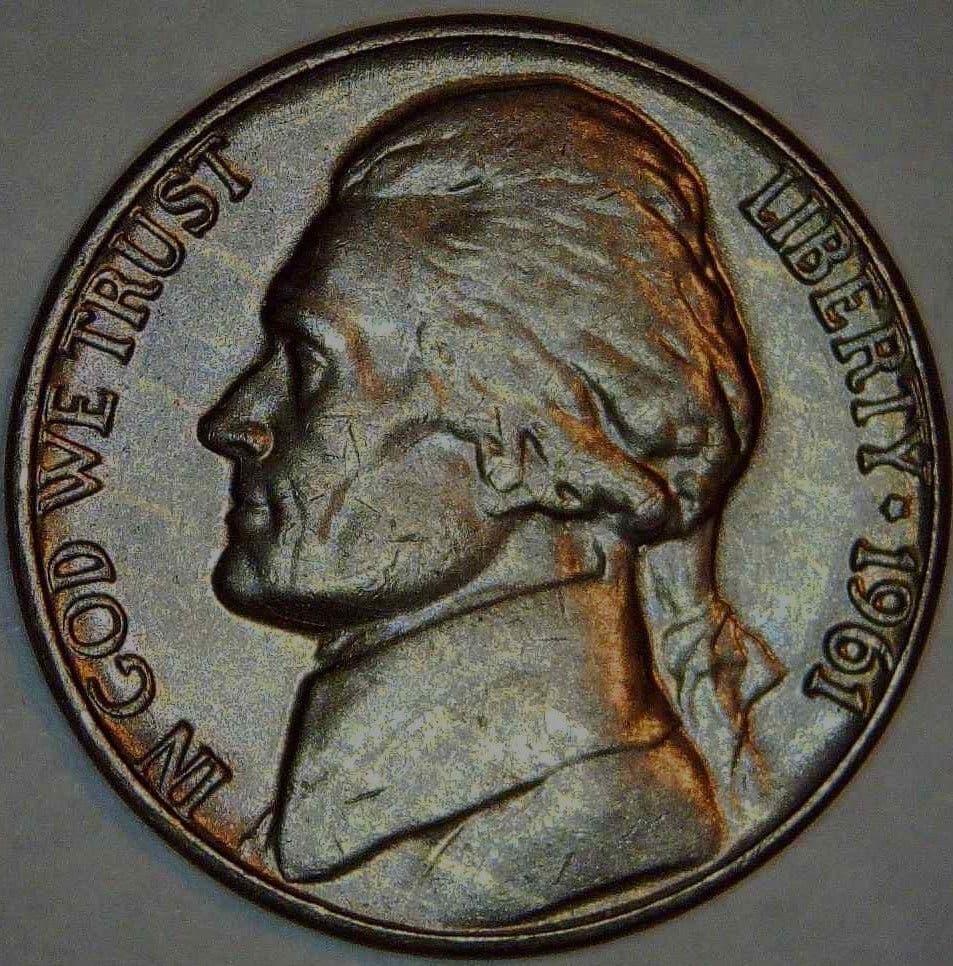
Improper Annealing (IAN)
Improper Annealing occurs when a coin's planchet is not heated and cooled correctly during the annealing process -- the critical heat treatment step that softens the metal to the proper hardness for striking. Annealing is essential: without it, the metal strip that blanks are punched from would be too hard and brittle from the rolling process to accept a design impression. When annealing goes wrong, the resulting coins show a range of symptoms from incomplete design detail to unusual surface color and texture.
How Does It Happen?
After metal strip is rolled to the correct thickness and blanks are punched from it, the blanks undergo annealing. At the U.S. Mint, this involves feeding the blanks through a continuous annealing furnace -- a long, heated tunnel where the temperature, speed, and atmosphere are precisely controlled.
The annealing process has three variables that must be correct:
-
Temperature: The blanks must reach a specific temperature range that varies by alloy. Copper alloys anneal at approximately 700-800 degrees Fahrenheit; copper-nickel clad blanks require higher temperatures. Too low and the metal remains too hard; too high and the metal becomes excessively soft or develops surface oxidation.
-
Duration: The blanks must spend the right amount of time at temperature. The conveyor speed through the furnace determines this. If the belt moves too fast, blanks are under-annealed. If it moves too slowly, they are over-annealed.
-
Atmosphere: The furnace atmosphere is controlled (typically with reducing gases) to prevent excessive surface oxidation. If the atmosphere control fails, blanks develop thick oxide layers that affect striking quality and coin color.
After the furnace, blanks pass through a quenching bath and are tumbled in a washer-dryer to remove surface oxides and achieve the bright, clean surface needed for striking.
Improper annealing produces two distinct categories of error:
Under-annealed planchets retain too much hardness from the rolling process. The metal resists the die's impression, resulting in:
- Weak or incomplete design detail, especially in high-relief areas
- Unusual surface sheen or luster different from properly annealed coins
- In extreme cases, the planchet cracks during striking because the metal cannot flow properly
Over-annealed planchets are too soft and have lost their optimal grain structure. Coins struck on over-annealed blanks show:
- Mushy or indistinct design details where the metal flowed too freely
- Unusual surface texture with a dull or matte appearance
- Greater susceptibility to contact marks because the softer metal dents more easily
How to Identify Improper Annealing
Improperly annealed coins display characteristic features depending on whether they are under-annealed or over-annealed:
- Surface color anomaly: Improperly annealed copper-nickel clad coins are the easiest to spot. Prolonged heat exposure or loss of the furnace's protective atmosphere causes copper and nickel atoms to migrate to the planchet's surface. Since the alloy contains three times more copper than nickel, copper diffuses more readily, creating a reddish or brownish surface layer. Colors range from copper-red to dark brown, black, or gray depending on severity and the degree of oxidation.
- Flaking or peeling surface: In severe cases, the migrated copper layer becomes thick and brittle, causing visible peeling or flaking on the coin's surface. This distinguishes improper annealing from environmental toning, which does not flake.
- Weak strike appearance on a full-weight coin: This is a critical diagnostic for under-annealed coins. The coin looks weakly struck -- design details are soft and incomplete -- but the coin weighs the correct amount and shows no signs of die wear, grease fill, or other strike-related issues. The planchet was simply too hard to accept the full design impression.
- Uneven design depth: Because the hardness varies across an improperly annealed planchet, different areas of the design may show different levels of detail. One side of the coin may be sharper than the other, or the center may differ from the periphery.
- Abnormal luster: Properly annealed and struck coins exhibit cartwheel luster -- the characteristic spinning reflection pattern caused by metal flow during striking. Improperly annealed coins often show subdued, matte, or uneven luster because the metal did not flow correctly during the strike.
Improper Annealing vs. Weak Strike vs. Wear
| Feature | Improper Annealing | Weak Strike | Circulation Wear |
|---|---|---|---|
| Weight | Normal | Normal | Normal (slightly less if heavily worn) |
| Color | Often abnormal (copper-red, brown, black, gray) | Normal | Normal for grade |
| Luster | Subdued or matte | Subdued in weak areas only | Progressively lost from high points |
| Surface | Flaking or peeling copper layer in severe cases | Normal surface texture | Smoothed from contact |
| Pattern | Both sides affected | Often one side weaker (die spacing) | High points wear first |
Notable Examples
"Black Beauty" Jefferson Nickels
The most famous improper annealing variety in American numismatics. "Black Beauty" nickels are Jefferson nickels -- most commonly dated 1958 (P) and 1959 (P) -- that display a dramatically dark surface ranging from deep charcoal gray to jet black. The coloration results from over-annealing: excessive heat exposure in the annealing furnace caused copper atoms within the 75% copper / 25% nickel alloy to migrate to the planchet surface, where they oxidized and produced the characteristic dark appearance.
While 1958 and 1959 Philadelphia issues are the classic dates, Black Beauties are documented across other late-1950s and early-1960s Jefferson nickel dates as well, indicating a period of recurring annealing inconsistencies at the Philadelphia Mint. The coins retain full design detail and normal weight -- the darkness is not wear, environmental damage, or artificial toning, but a genuine Mint-produced anomaly.
Black Beauties are among the most popular and accessible improper annealing errors for collectors. Their dramatic appearance makes them easy to identify, and they remain affordable enough that building a date set of Black Beauty nickels is achievable. They are frequently encountered by coin roll hunters searching through Jefferson nickel rolls.
2004 Westward Journey Jefferson Nickels
The 2004 Westward Journey nickel series -- particularly the Keel Boat and Peace Medal designs -- produced an unusually high number of improperly annealed specimens. These nickels display the same copper migration and dark surface coloration as the classic Black Beauties, and they are among the most frequently encountered improper annealing errors at major auction houses. Multiple examples have been certified by PCGS and NGC in grades up to MS-65.
Clad Coin Improper Annealing (Dimes, Quarters, Half Dollars)
Copper-nickel clad coins are the most visually dramatic examples of improper annealing. When the copper core's atoms migrate through the nickel-clad surface layer, the normally silver-toned coin takes on a distinctly reddish, brownish, or copper-toned appearance. Documented examples include Roosevelt dimes (1981-P, 2000-D, 2004-D, 2005-P), Statehood and territorial quarters (2003-P Illinois, 2004-P Iowa, 2009-D Guam), and Kennedy half dollars (1974-D, 2000-D). These are often described as "sintered planchets" on PCGS holders.
Dollar Coin Improper Annealing
Dollar coins across multiple series have produced certified improper annealing errors. Eisenhower dollars (notably 1977), Susan B. Anthony dollars (1979-S), Sacagawea dollars, and Presidential dollars all have documented examples. The 2001-P Sacagawea dollar is particularly notable -- improperly annealed examples display a deep copper-brown "chocolate" coloration instead of the normal golden finish, caused by copper atoms from the core migrating through the manganese brass cladding during excessive furnace exposure.
A Note on Attribution
Different grading services use different terminology for this error. NGC labels these as "Improperly Annealed Planchet," PCGS often uses "Sintered Planchet," and ANACS has used both "Improperly Annealed" and "Improper Alloy Mix" on different specimens. Collectors should be aware that these labels describe the same fundamental error -- a planchet that was not properly heat-treated during production.
Collecting Tips
- Clad coins are the showcase: Improper annealing is most visually dramatic on copper-nickel clad coins (dimes, quarters, halves) where the copper migration creates an obviously wrong color — a reddish or brownish coin that should be silver-toned. These are the easiest to spot and the most sought-after.
- Flaking is the authenticator: When evaluating a coin with unusual coloration, examine the surface under magnification for signs of a brittle, flaking copper layer. This peeling surface, combined with normal weight, confirms an annealing error rather than environmental damage or artificial coloring.
- Color must be original: Do not confuse environmental toning (which is a surface effect from storage conditions) with annealing-related color anomaly. Genuine annealing discoloration is caused by copper migration within the metal and is present from the moment of striking. A coin that was normal when new and later turned dark from exposure is toned, not improperly annealed.
- Dramatic examples have strong demand: While subtle annealing errors are common and modestly valued, specimens with bold copper coloration on clad coins or severe flaking on the surface sell for meaningful premiums.
- Combine with provenance when possible: Improperly annealed coins found in original mint sets or uncirculated rolls carry more credibility than loose coins, because the sealed packaging confirms the coin has not been artificially darkened or damaged.
- Grading service attribution: PCGS and NGC will note improper annealing on the holder label. This attribution is valuable because it distinguishes the error from environmental damage in the eyes of future buyers.
Related Error Types
- Improper Alloy Mix (IAM) -- Incorrect metal composition, which also affects color and surface characteristics but originates from the alloy blending stage rather than the heat treatment stage
- Lamination (LAM) -- Metal layer separation that can be exacerbated by improper annealing, as incorrect heat treatment increases internal stress in the metal
- Missing Cladding (MCL) -- Cladding bonding failure, which can be related to annealing issues during the cladding bonding process
- Clipped Planchet (CLP) -- Another pre-strike planchet error, though mechanical rather than thermal in origin
- Strike Through (STT) -- Foreign material between die and planchet can produce weak areas that superficially resemble annealing-related weakness