
Strike Through Errors: When the Mint’s Factory Floor Leaves Its Mark
STTWhen Something Gets Between the Die and the Coin
Every coin struck at the U.S. Mint follows the same basic process: a blank planchet is placed between two dies, and the dies close with 35 to 150 tons of force. The design transfers from the die face to the planchet in a fraction of a second. Repeat hundreds of times per minute.
But the dies and planchets aren’t operating in a clean room. They’re in an industrial factory. And sometimes, something gets in the way.
A strike-through error occurs when foreign material is trapped between the die and the planchet at the moment of striking. The dies close with full force, pressing the foreign object into the coin’s surface. The result is an impression — sometimes subtle, sometimes dramatic — of whatever was caught between them. The foreign material may stay embedded in the coin (a “retained” strike-through) or fall away after striking, leaving only its impression behind.
Types of Strike-Throughs
The variety of foreign objects that cause strike-throughs is a catalog of what you’d find on the floor of a high-speed manufacturing facility:
Grease/Oil Strike-Through
The most common type. Lubricant from the press mechanism accumulates on the die face. When the die strikes, the grease prevents full design transfer, leaving a smooth, featureless area on the coin. These range from a small mushy spot to a coin that’s almost entirely blank on one side (a “grease-filled die”).
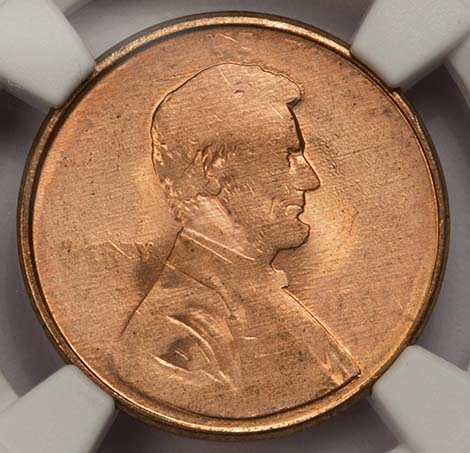
A dramatic grease-filled die on a Lincoln cent. The grease prevented the die from transferring virtually any design detail, leaving only the faintest outline of Lincoln’s portrait.
Wire/String Strike-Through
A thin strand of metal from die-polishing wire brushes, or string from packaging materials, gets trapped between the die and planchet. The wire leaves a thin, raised line on the coin’s surface, sometimes straight, sometimes curved. These are distinctive and immediately recognizable.
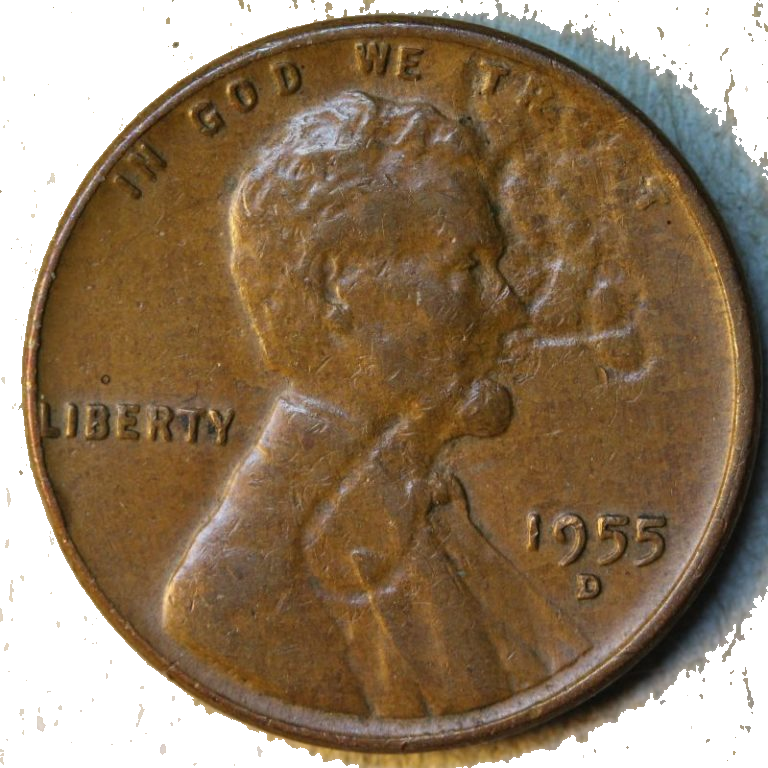
A 1955-D Lincoln cent struck through a string. The curved impression runs diagonally across the obverse, clearly pressed into the surface during striking.
Foreign Object Strike-Through
Larger debris — metal shavings, staples, planchet fragments — can land on the die face and get pressed into the next coin struck. These leave irregular impressions that are clearly not part of the original design.
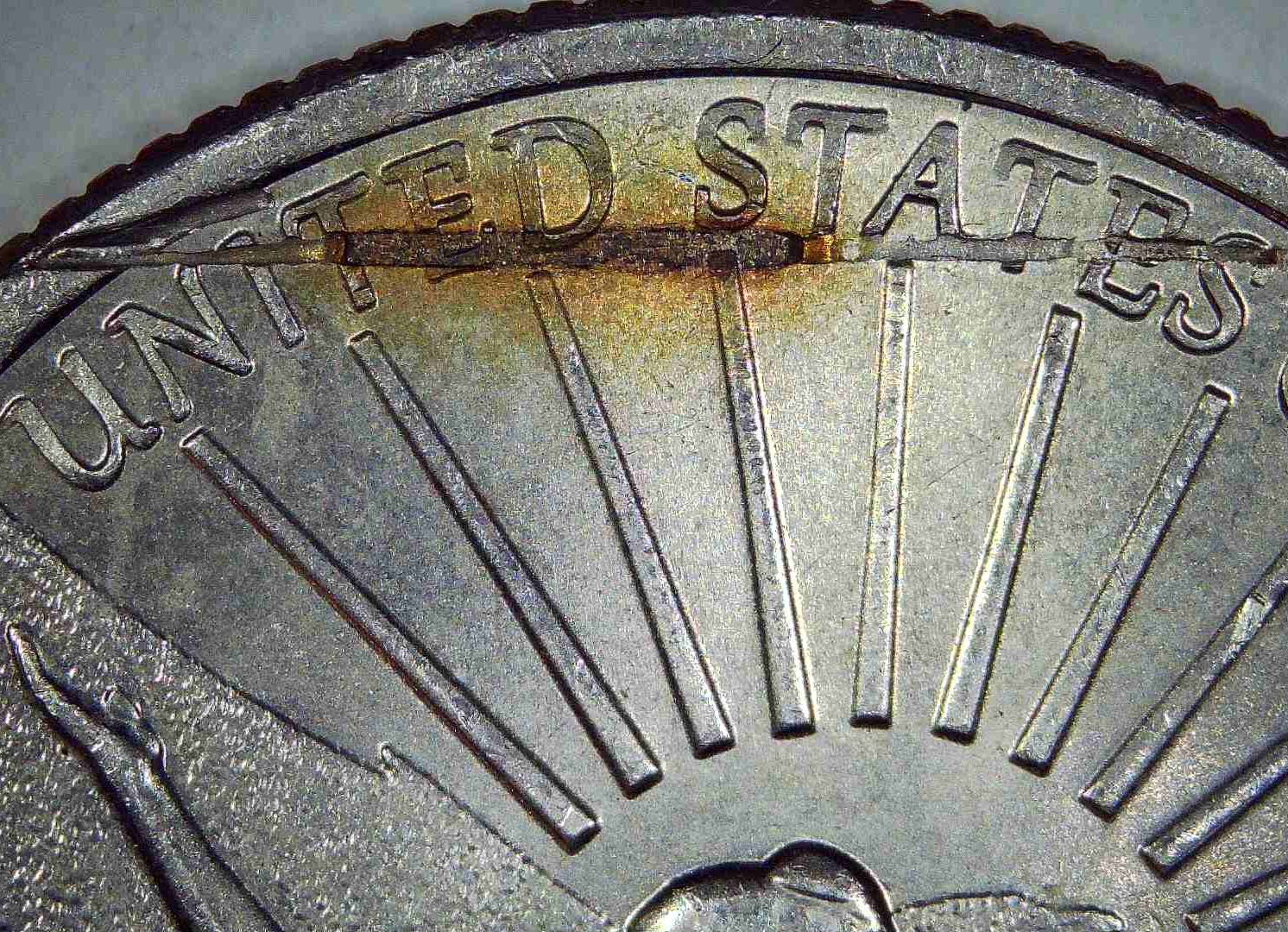
A close-up showing a foreign object (likely a wire or metal shaving) struck through across the lettering. The impression has the same sharp character as the coin’s design because it was created under the same striking pressure.
Cloth/Fiber Strike-Through
Thread or fabric fibers from cleaning rags, gloves, or mint bags leave fine linear impressions. In dramatic cases, the entire weave pattern of the cloth is visible — the cross-hatched texture of a fabric pressed into the coin’s surface under full striking force.
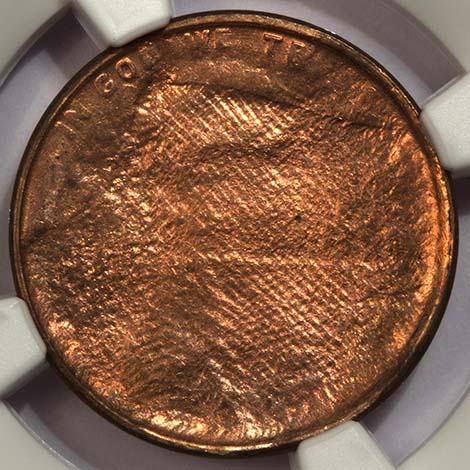
A Lincoln cent struck through cloth. The weave pattern is dramatically visible across the entire obverse, completely obscuring Lincoln’s portrait.
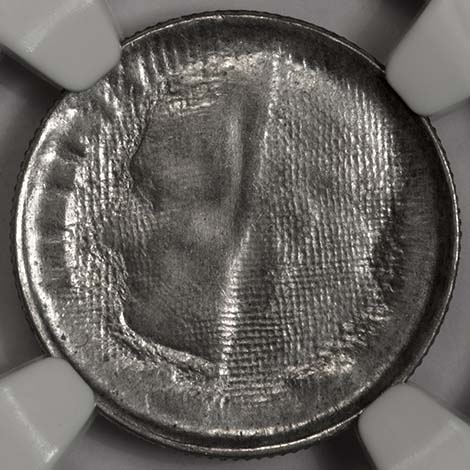
A Roosevelt dime showing the same cloth strike-through effect. The cross-hatched weave pattern is unmistakable.
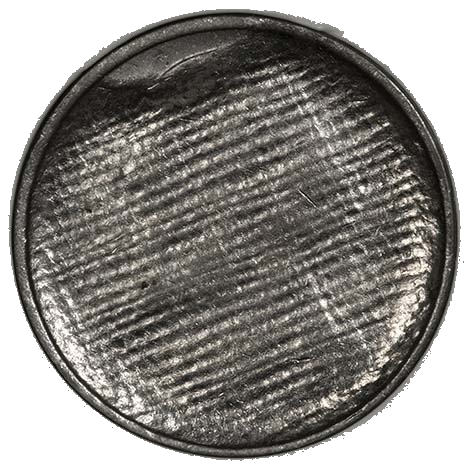
A Jefferson nickel struck through cloth. The ribbed pattern of the fabric is deeply impressed into the coin’s surface. In extreme cases like this, the coin is nearly unrecognizable as its denomination.
Field-Restricted vs. Design-Element Strike-Throughs
Where the strike-through appears on the coin affects both its visual appeal and its value:
- Field-restricted strike-throughs occur in the flat field area of the coin, away from major design elements. These are clearly identifiable as errors because the field should be smooth and featureless.
- Design-element strike-throughs cross over lettering, portraits, or other design features, creating a more dramatic visual where the foreign object’s impression interrupts the coin’s intended design.
Both are collectible, but strike-throughs that interact with major design elements — especially in ways that create unintended visual effects — tend to generate the most collector interest.
The “Blind Bat” — A Modern Strike-Through Celebrity
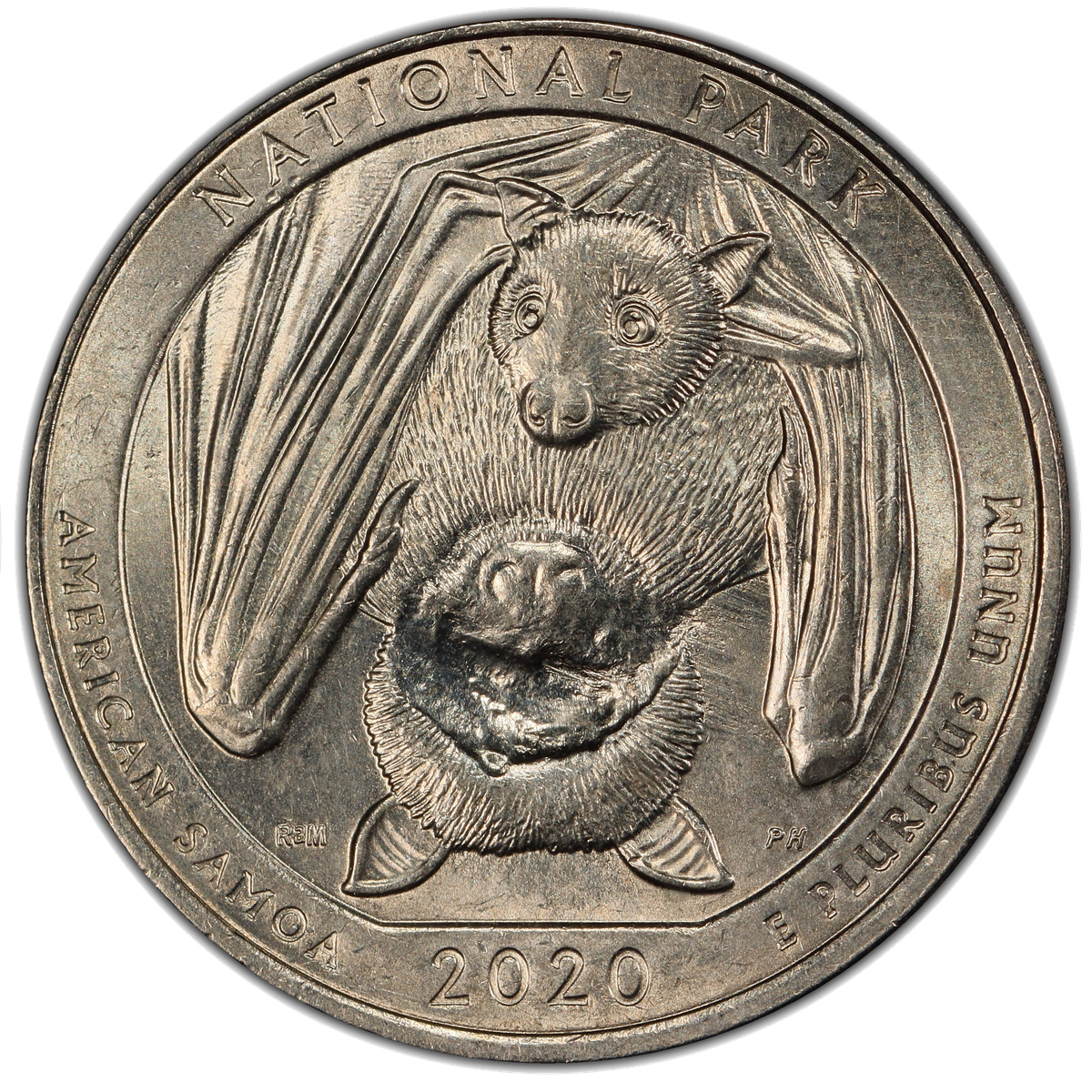
One of the most famous modern strike-throughs involves the 2020 American Samoa quarter. The reverse design features a Samoan fruit bat mother hanging upside down with her pup. On some examples, a die scratch or wire strike-through runs directly across the bat’s eyes, creating the appearance of a blindfolded bat.
Here is the normal 2020 (P) American Samoa National Park quarter for comparison:
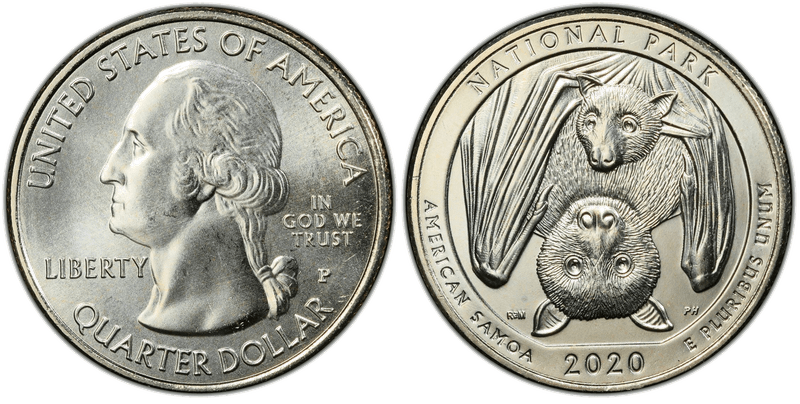
The normal 2020 (P) American Samoa quarter. Note the bat’s clearly visible eyes and facial features.
And here is the “Blind Bat” strike-through variety:
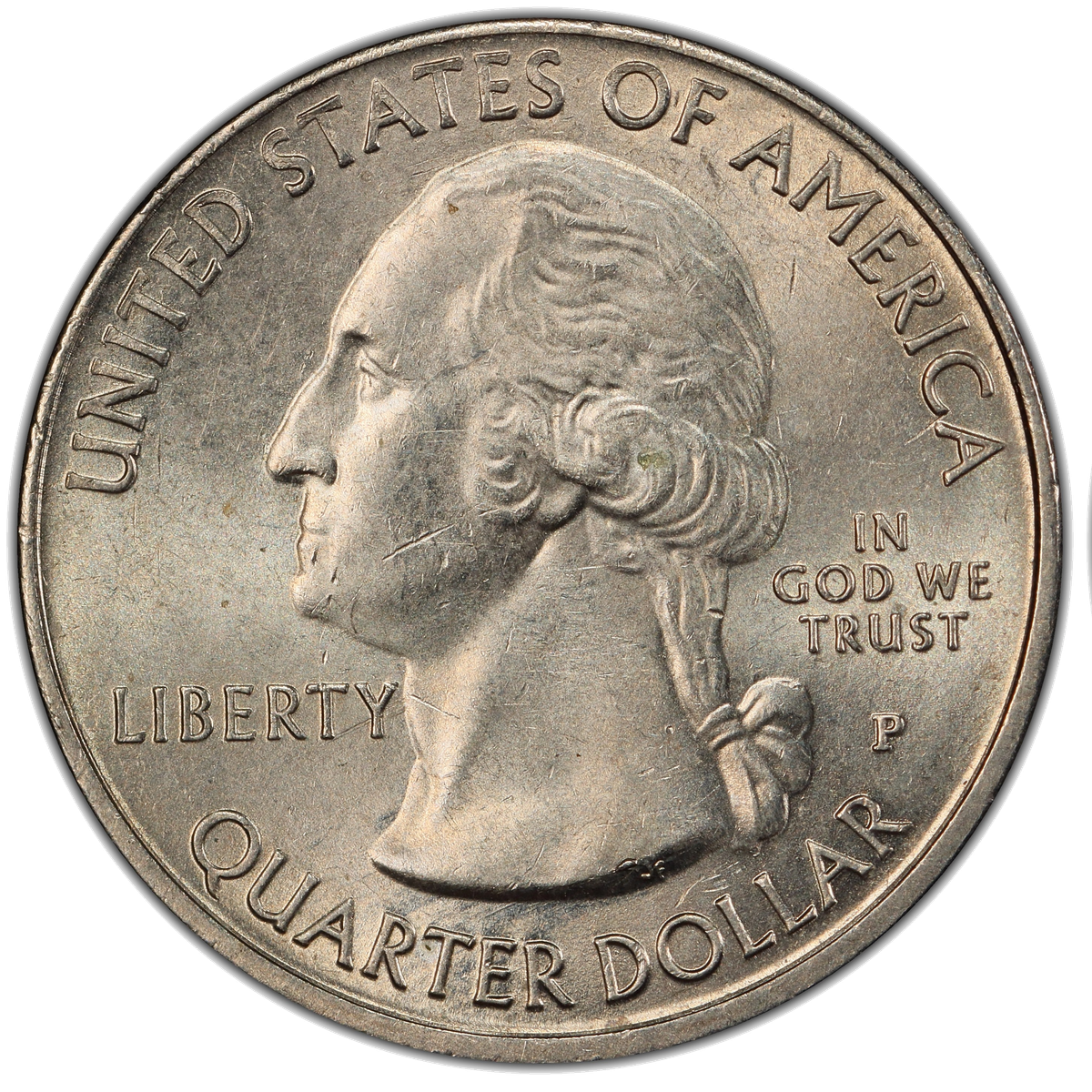
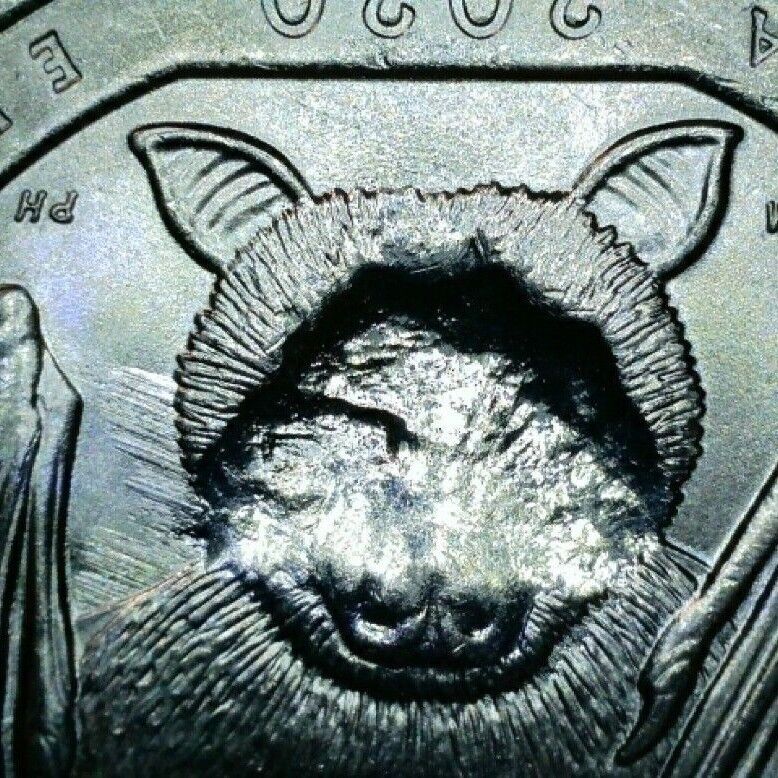
Close-up of the Blind Bat variety. The strike-through runs directly across the bat’s eyes, creating the appearance of a blindfold. This interaction between the error and the design is what made this variety a modern collecting sensation.
The “Blind Bat” variety generated significant collector interest because the strike-through looked almost deliberate — as if someone had drawn a line across the bat’s face. It became one of the most searched-for modern error coins and demonstrated how a relatively minor manufacturing defect can capture the public’s imagination when it interacts with the design in a memorable way.
The “Burning Building” — Another Strike-Through with a Story
The 2021 Tuskegee Airmen quarter features a building (the Moton Field hangar) on its reverse. On some examples, a strike-through in the area of the building creates the visual impression of smoke or flames rising from the structure — earning it the collector nickname “Burning Building.”
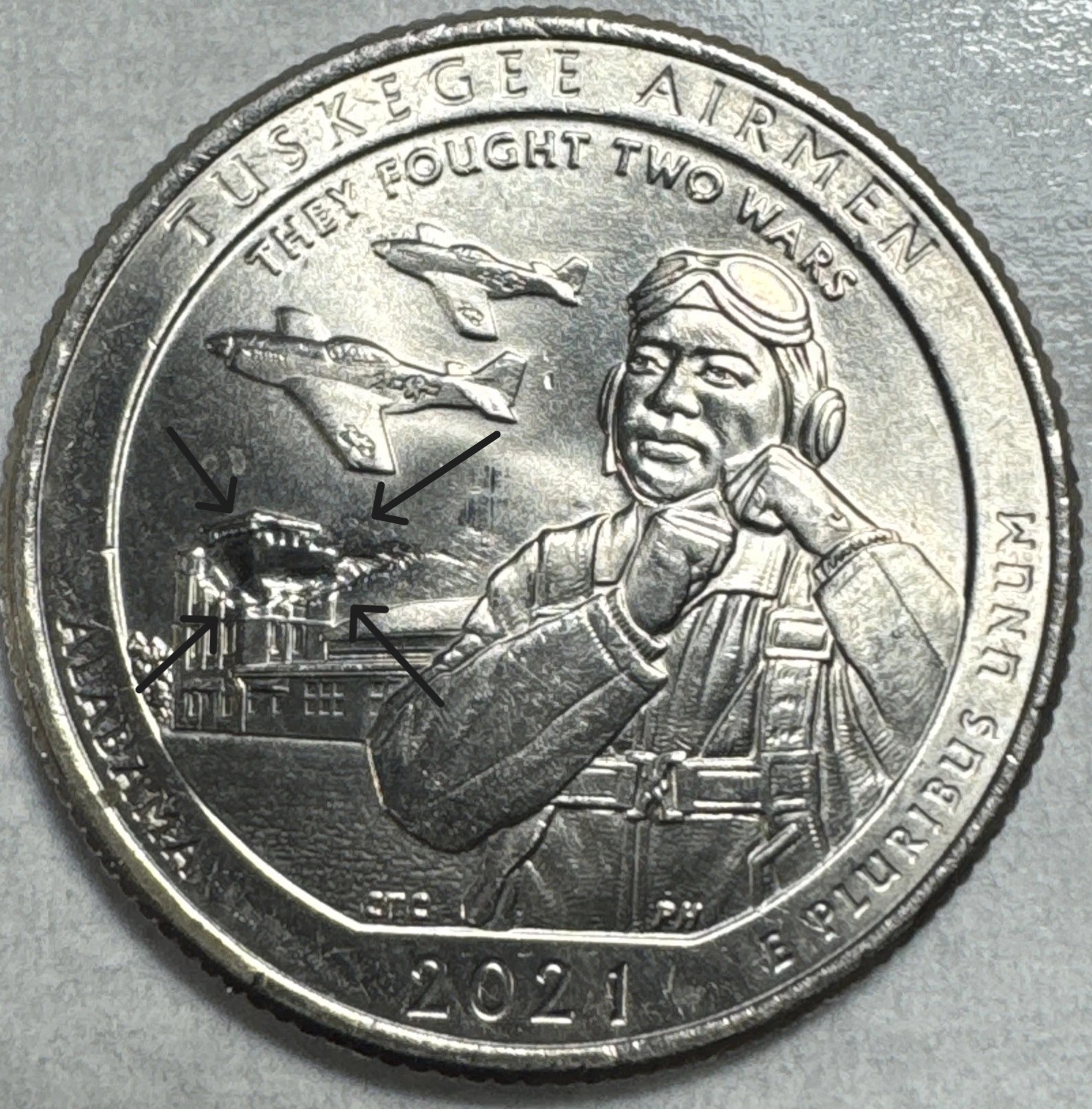
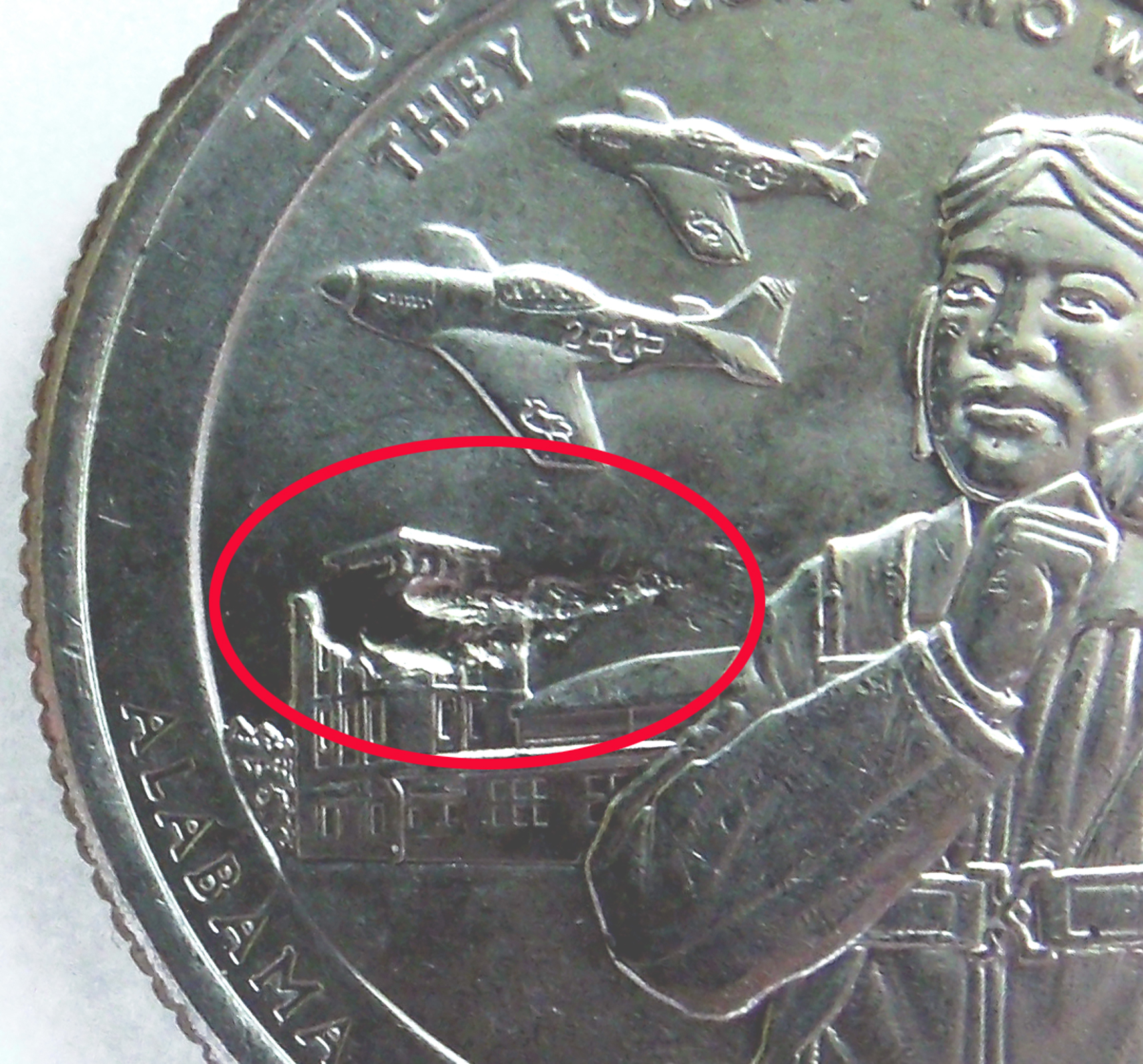
Close-up of the “Burning Building” variety. The strike-through in the area above and around the Moton Field hangar creates the appearance of smoke rising from the building.
Like the Blind Bat, this variety demonstrates how the location of a strike-through can create an unintended narrative — turning a random manufacturing defect into a coin with a story.
How to Identify Strike-Throughs
Strike-throughs can be confused with other types of surface disruption. Key diagnostics:
- Incuse impression: Strike-throughs press INTO the coin’s surface. The foreign material was between the die and planchet, so it prevented the die from fully impressing the design in that area.
- Consistent with striking force: The impression has the same sharp character as the rest of the coin’s design, because it was created under the same striking pressure.
- Both sides possible: Strike-throughs can occur on the obverse, reverse, or both (if material spans the planchet).
- Not post-mint damage: The key distinction is that strike-throughs occur during the minting process. Post-mint scratches, contact marks, and environmental damage happen after the coin leaves the Mint. Strike-throughs show the coin’s design flowing around or being interrupted by the foreign impression — the metal moved during striking.
What Is NOT a Strike-Through
- Scratches from counting machines or coin-wrapping equipment (post-mint)
- Contact marks from other coins in bags or rolls (post-mint)
- Cleaning scratches or polishing lines (post-mint)
- Die polish lines (these are ON the die and appear as raised lines, not incuse impressions)
Value Factors
- Retained material (the foreign object is still embedded) commands a premium over impressions where the material fell away
- Dramatic visual impact — large, clearly visible strike-throughs are worth more than subtle ones requiring magnification
- Interaction with design elements creates interest (the “Blind Bat” effect)
- Denomination — strike-throughs on higher denominations are scarcer
- Grade — uncirculated examples with strike-throughs command the strongest premiums
Learn more about strike-through errors on our Strike Through learn page.
Browse strike-through listings in the NumisDex catalog.
0 Replies
Related Threads
- Capped Die Errors: When a Coin Refuses to Leave the Press0 replies · 1mo ago
- Broadstrike Errors: When the Collar Fails0 replies · 1mo ago
- Off-Center Strikes — When Coins Miss Their Mark0 replies · 2mo ago
- Broadstrike vs. Off-Center Strike: What Is the Difference?0 replies · 3mo ago
- Broadstrikes: Full Design, No Collar0 replies · 4mo ago