
Broadstrikes: Full Design, No Collar
Bigger Than Normal
A broadstrike happens when a coin is struck without the restraining collar die — the steel ring that normally gives a coin its precise diameter and edge detail. Without that collar, the planchet metal flows outward under 35-150 tons of force, producing a coin that's noticeably larger than standard with no edge reeding.
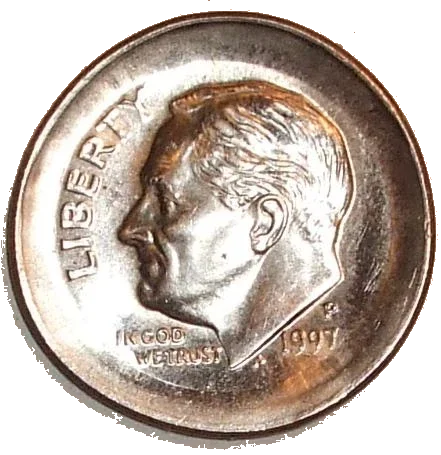
A broadstrike error — the coin was struck without the retaining collar, allowing the metal to spread beyond normal diameter while retaining the full design
The key distinction from an off-center strike: the planchet is properly centered. You get a complete, centered design — just on an oversized coin with a smooth, rounded edge instead of the normal rim.
Broadstrike vs. Dryer Coin
This is one of the most common misidentifications. A normal coin tumbled in a clothes dryer can look superficially similar — flattened rim, worn edges. But here's the test:
- Genuine broadstrike: Expanded diameter beyond standard spec, smooth original surfaces, no post-strike scratches
- Dryer coin: Normal diameter, scratches and dings from tumbling, surface damage
Grab a caliper — if the coin isn't measurably wider than standard, it's not a broadstrike.
Reeded-Edge Broadstrikes Are the Prize
Broadstrikes on dimes, quarters, halves, and dollars are more dramatic and more valuable than on cents and nickels, because the missing reeding is immediately obvious. A broadstruck Sacagawea dollar also lacks the edge-incused lettering entirely.
Discussion
- Do you own a broadstrike? What denomination?
- Have you ever encountered a "broadstrike" that turned out to be a dryer coin?
- What's the most oversized broadstrike you've measured — how far beyond standard diameter?
- Do you look for partial broadstrikes where the collar was partially engaged?
Explore in the NumisDex Catalog
Related varieties and errors from the NumisDex database:
0 Replies
Related Threads
- Capped Die Errors: When a Coin Refuses to Leave the Press0 replies · 1mo ago
- Broadstrike Errors: When the Collar Fails0 replies · 1mo ago
- Strike Through Errors: When the Mint’s Factory Floor Leaves Its Mark0 replies · 1mo ago
- Off-Center Strikes — When Coins Miss Their Mark0 replies · 2mo ago
- Broadstrike vs. Off-Center Strike: What Is the Difference?0 replies · 3mo ago