
Vending Machine, Counting Machine, and Crimper Damage on Coins
Machine Damage That Looks Too Clean to Be Random
Not all post-mint damage looks like random scratches and dings. Some damage is surprisingly clean, uniform, and repeatable — which makes collectors wonder if it might be a mint error rather than damage. Vending machines, coin counting machines, and roll crimping machines all leave distinctive marks that can fool even experienced eyes at first glance.
Vending Machine and Counting Machine Damage
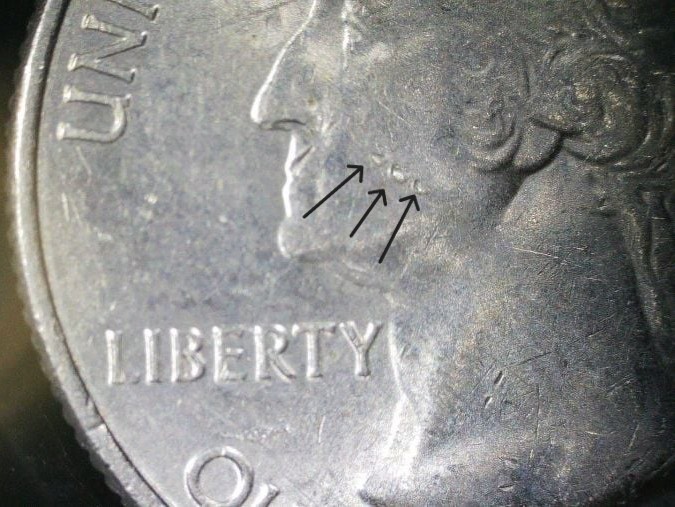
Vending machines and commercial coin counters process millions of coins using mechanical systems that grip, sort, and transport them. These machines can leave characteristic marks:
- Roller marks — Parallel, evenly-spaced lines from the machine's sorting rollers. These can look deliberate because of their uniformity, but they're damage from metal-on-metal contact.
- Flattened high points — Coins fed through tight-tolerance sorting mechanisms can have their high points flattened or burnished. The result is shiny, smooth spots on design elements that still have detail elsewhere.
- Edge gouges — Coins that jam in machines often develop distinctive edge damage — gouges or scrapes that are deeper and more linear than typical bag marks.
The key tell: machine damage is mechanical and repeatable but affects only a single coin. A genuine mint error would show on every coin struck from the same die.
Ring of Death (Crimper Damage)
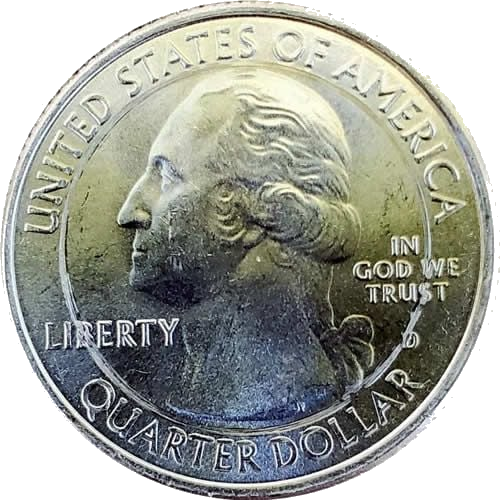
The "ring of death" is a distinctive circular damage pattern found on coins that were at the end of a machine-wrapped roll. When automated crimping machines close the end of a coin wrapper, the crimping mechanism can contact the outermost coin, leaving a circular impression or ring of damage around the coin's rim area.
This damage is sometimes called "end-of-roll damage" and has a few distinctive features:
- A circular mark or depression that follows the rim but sits slightly inward from the edge
- Uniform depth and width around the affected portion
- Only appears on one side of the coin (the side that was facing the crimping mechanism)
- The damage may affect only a partial arc rather than a full circle, depending on how the coin was positioned
Why This Isn't a Mint Error
Machine damage can be convincing because of its uniformity — it doesn't look like someone accidentally dropped the coin or scraped it. But the diagnostic is the same as any PMD vs. error question: did this happen during the striking process, or after?
- Machine damage disrupts the original struck surface and luster
- Mint errors are part of the struck surface — the luster flows around and over them
- Machine damage affects a single coin; die errors affect every coin from that die
If you're seeing uniform, clean-looking damage on a coin and wondering whether it's an error, check whether the marks disrupt the original luster. If they do, it's post-mint machine damage.
2 Replies
 DaveKStLNOVICE26 days ago
Thanks for posting these. I'm new to error hunting.I came across both of these in my first week of serious hunting. when I saw the above post, P thought, "Bingo!" This is one thing I like most a bout Numisdex.
 NumisdexDealerVALIDATOR25 days ago
Thank you for the feedback Dave. I will continue to add new forum content weekly.
Related Threads
- 50c-1976-D-reverse RIDB?0 replies · 1w ago
- PMD Vocabulary: Scratches, Gouges, and Damage Every Collector Should Recognize0 replies · 3mo ago
- My Coin Looks Melted or Blobby — Die Error or Acid Damage?0 replies · 3mo ago
- Tall Rim or Thick Edge on Your Coin: Mint Error or Post-Mint Damage?0 replies · 3mo ago
- Mint Error vs. Post-Mint Damage: 5 Questions to Ask Before You Get Excited0 replies · 3mo ago