
Tall Rim or Thick Edge on Your Coin: Mint Error or Post-Mint Damage?
Understanding Rim Anomalies
"My coin has a thicker rim than normal — is it an error?" This is a common question, and the answer depends on what's actually going on. Some rim anomalies are genuine mint errors worth a premium. Others are just post-mint damage. Telling them apart requires understanding how a coin's rim is formed.
How a Normal Rim Is Formed
A coin's rim is created in two stages:
- Upsetting mill — Before striking, blank planchets pass through an upsetting mill that raises a slight rim around the edge. This prepares the blank to fit into the collar die.
- Striking — During striking, the collar die (a ring around the coin) constrains the expanding metal and forms the final rim. The collar also creates the reeded or plain edge, depending on the denomination.
When either of these stages goes wrong, the result is a coin with an abnormal rim.
Genuine Rim Errors
Partial collar (railroad rim)
If a coin isn't seated properly in the collar, part of the coin expands beyond the collar while the rest is constrained normally. The result is a coin that's partly broadstruck: one portion has a normal rim and the other has an expanded, flattened, or stepped rim. This is a genuine and collectible error.
Broadstrike
If the collar fails entirely, the coin expands freely in all directions during striking. A broadstrike has no raised rim at all — the coin is larger than normal with a flat, featureless edge. This is covered in detail in our broadstrike vs. off-center post.
Tilted collar
If the collar is tilted during striking, the rim will be thicker on one side and thinner on the opposite side, with a smooth transition between. The coin may also appear slightly oval.
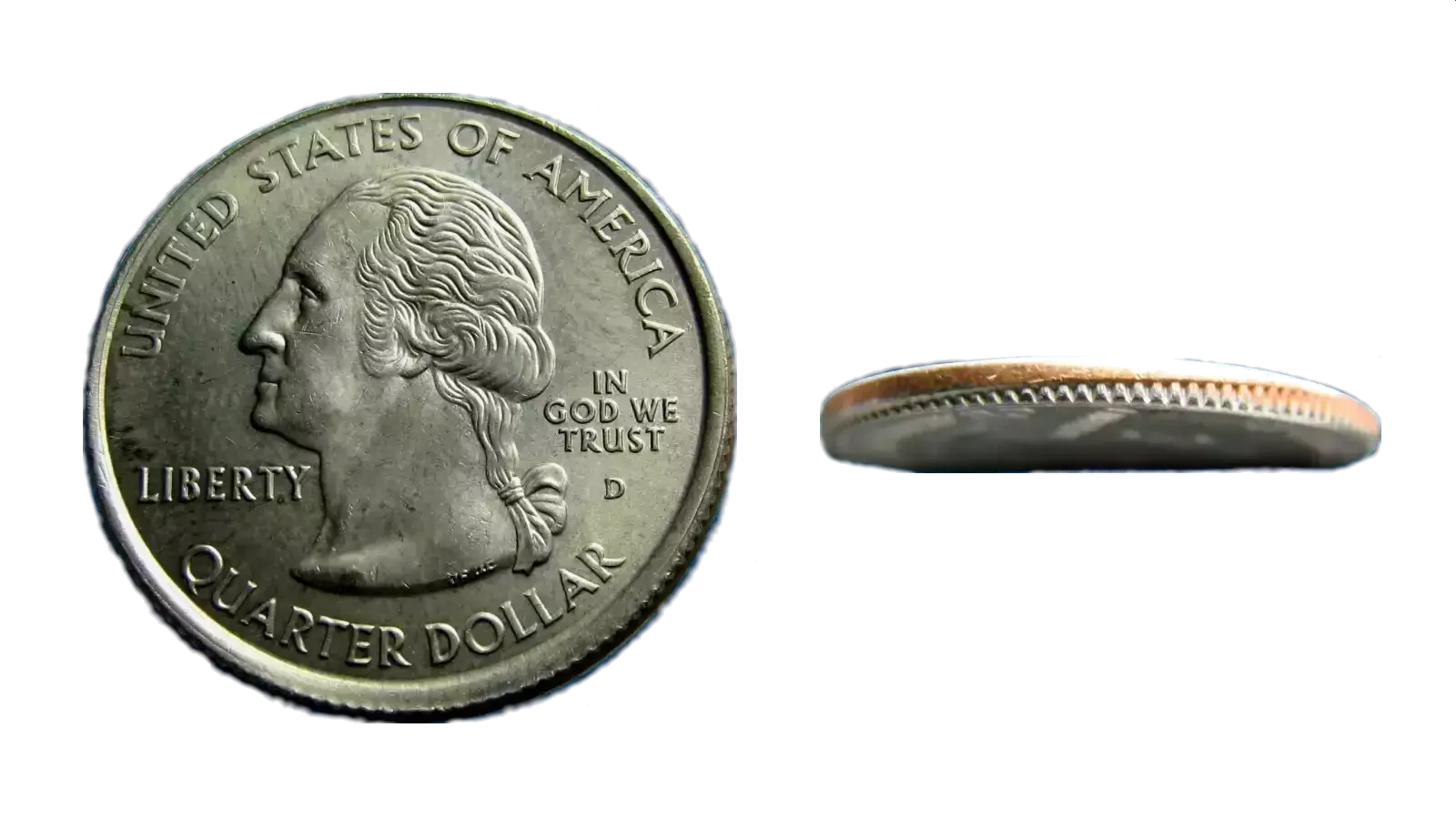
What a Normal Rim Looks Like

Post-Mint Damage That Mimics Rim Errors
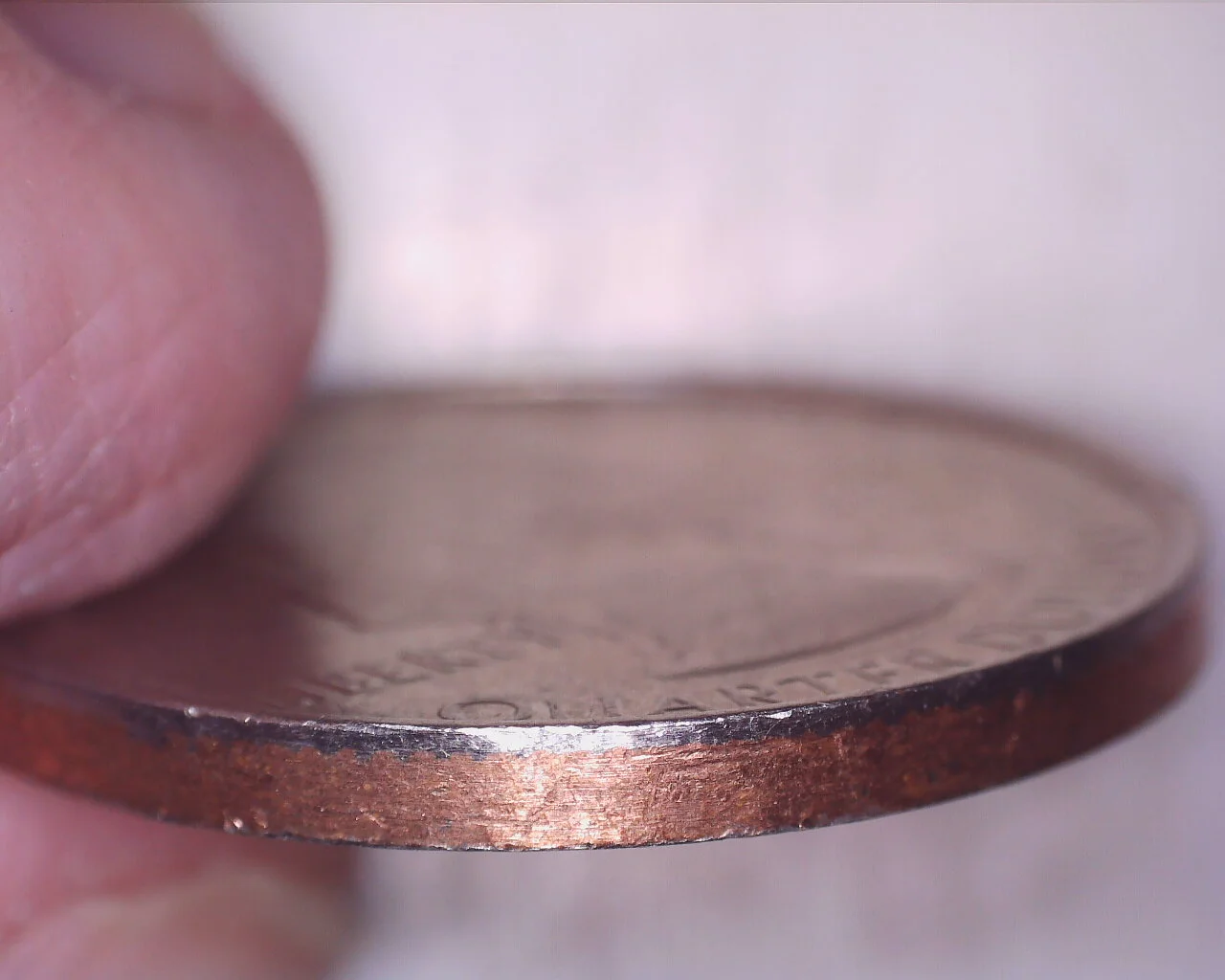
- Edge hits and dings — Coins dropped on hard surfaces or banged together in bags develop localized rim damage. The key difference: edge hits are localized (one spot) while genuine collar errors are uniform (all the way around or in a smooth transition).
- Dryer coins — Coins that have gone through a clothes dryer get characteristic rim damage from tumbling against the drum. The damage appears as multiple small dings distributed randomly around the rim.
- Vise damage — Coins squeezed in a vise show compressed rims with displaced metal. The damage is on opposite sides (where the vise jaws contacted).
How to Evaluate Your Coin
- Is the rim anomaly uniform and symmetrical? → More likely a genuine error
- Is it localized to one spot? → More likely PMD
- Does the coin's overall diameter change? A broadstrike or partial collar will be larger than normal
- Is the edge reeding (if applicable) disrupted only in one spot, or does it transition smoothly? Smooth transitions suggest a genuine collar error
0 Replies
Related Threads
- 50c-1976-D-reverse RIDB?0 replies · 1w ago
- Vending Machine, Counting Machine, and Crimper Damage on Coins2 replies · 3w ago
- PMD Vocabulary: Scratches, Gouges, and Damage Every Collector Should Recognize0 replies · 3mo ago
- My Coin Looks Melted or Blobby — Die Error or Acid Damage?0 replies · 3mo ago
- Mint Error vs. Post-Mint Damage: 5 Questions to Ask Before You Get Excited0 replies · 3mo ago