
Off-Center Strike vs. Clipped Planchet: How to Tell the Difference
Two Common Errors That Look Similar at First Glance
Off-center strikes and clipped planchets are two of the most frequently encountered mint errors, and new collectors sometimes confuse the two. Both result in coins with incomplete designs, but they have fundamentally different causes — and knowing which you have matters for both attribution and value.
Off-Center Strikes
An off-center strike occurs when the planchet (blank coin) isn't properly centered between the dies during striking. Part of the design is struck normally, but the misaligned portion shows a blank, unstruck area.
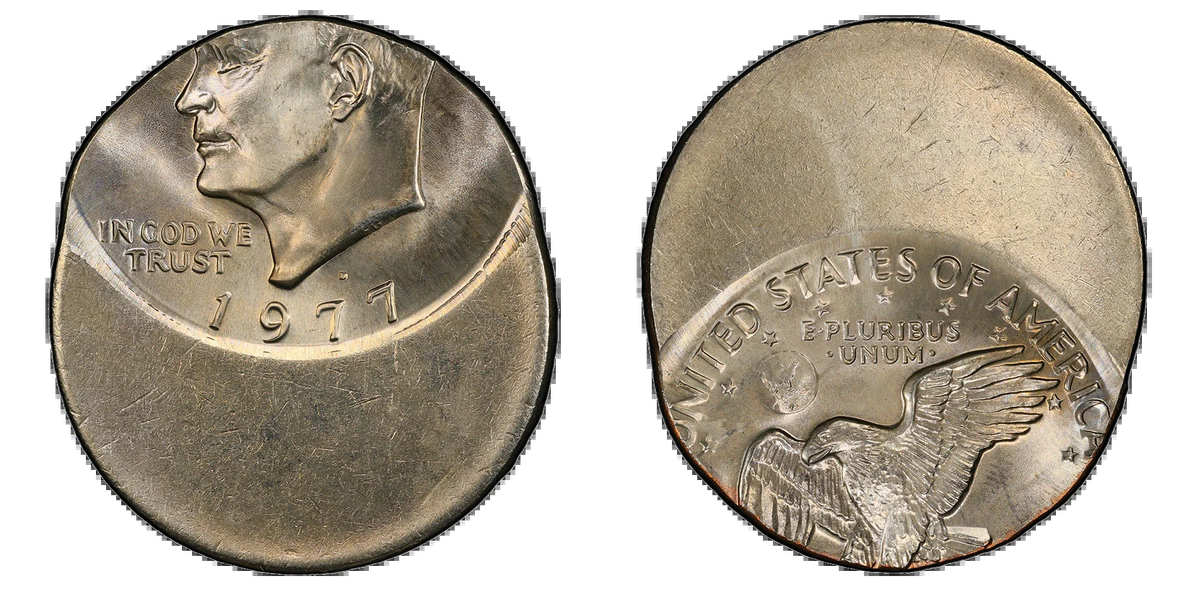
Key characteristics:
- The planchet is full-sized and round — no metal is missing
- Part of the design is fully struck; the rest is blank, smooth planchet surface
- The struck portion shows full detail with normal relief
- The boundary between struck and unstruck areas is a clean, curved line
- Value increases with the percentage off-center — 5% is minor, 50%+ is dramatic
- Coins that show the date despite being significantly off-center are especially prized
Clipped Planchets
A clipped planchet error occurs during the blanking process, when the planchet punch overlaps with a previously punched area or the edge of the metal strip. The result is a planchet — and therefore a coin — with a piece missing.
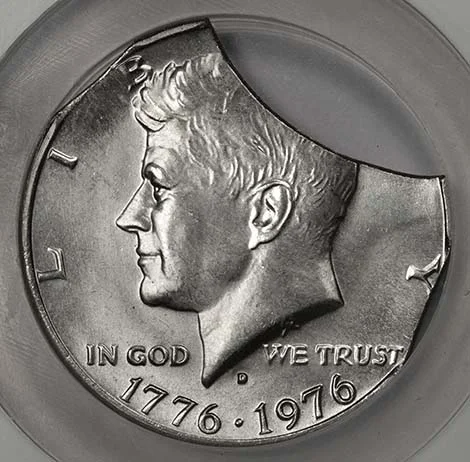
Key characteristics:
- The coin is missing a piece — metal is physically absent
- The clip is usually curved (matching the punch diameter) but can be straight (edge of strip)
- The design IS struck across the entire remaining surface, including near the clip
- The area near the clip often shows weakness (the Blakesley effect)
The Blakesley Effect: Your Authentication Tool
The Blakesley effect is the single most important diagnostic for genuine clipped planchets. On a genuine clip, the area of the rim directly opposite the clip will show weakness or be completely missing. This happens because the clip reduces the metal available for the planchet to fill the die cavity on the opposite side.
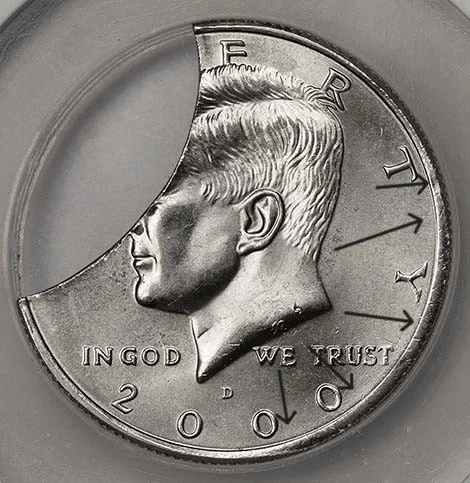
If someone filed or cut a coin to simulate a clip, there will be no Blakesley effect. The opposite rim will be fully struck and normal. This is the fastest way to distinguish a genuine clipped planchet from post-mint damage.
Quick Comparison
- Off-center: Full-sized planchet, partial design, blank area has no detail
- Clipped: Smaller planchet (piece missing), design struck across remaining surface, Blakesley effect present
Browse off-center strikes and clipped planchets in the NumisDex off-center and clipped planchet listings.
0 Replies
Related Threads
- 50c-1976-D-reverse RIDB?0 replies · 1w ago
- Vending Machine, Counting Machine, and Crimper Damage on Coins2 replies · 3w ago
- PMD Vocabulary: Scratches, Gouges, and Damage Every Collector Should Recognize0 replies · 3mo ago
- My Coin Looks Melted or Blobby — Die Error or Acid Damage?0 replies · 3mo ago
- Tall Rim or Thick Edge on Your Coin: Mint Error or Post-Mint Damage?0 replies · 3mo ago