
RCD-1c-1934D-06 Retained Cud
Error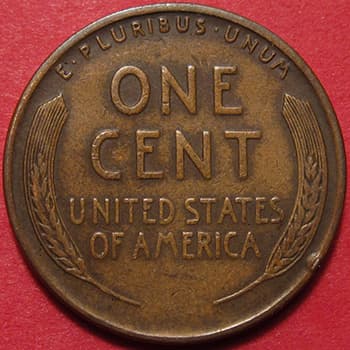
Description
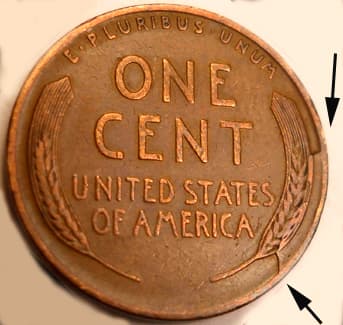
Sixth retained cud documented for the 1934-D Lincoln wheat cent by the Cuds on Coins attribution service, RCD-1c-1934D-06 captures another instance of advanced die failure during Depression-era production at the Denver Mint. Denver struck approximately 28.45 million wheat cents in 1934, a production level that was recovering from the extremely low mintages of 1931-1933 but still well below the multi-hundred-million outputs that would characterize later decades. A retained cud forms through a progressive sequence of die failure: first, cracks develop from the rim inward; then, when cracks converge to outline a section of die steel, that bounded fragment begins to separate from the die body while remaining physically attached. On struck coins, the retained cud appears as a raised, irregular mass of metal near the rim, with the original design within the affected area partially or fully displaced or obscured. Victor David Brenner's Lincoln portrait on the obverse and the paired wheat stalks on the reverse both show vulnerabilities to cud formation at various rim locations, and six documented retained cuds for the 1934-D production run indicate substantial die stress during this period. The catalog code RCD-1c-1934D-06 identifies this as a retained cud (RCD) on the one-cent denomination (1c) from the 1934 Denver issue (1934D), with 06 as the sequential number. Each of the six documented retained cuds represents a different die with its own unique cud position, size, and design impact, providing collectors with multiple attribution targets when sorting through 1934-D wheat cents. Examination under 5-10x magnification should focus on the rim area of both obverse and reverse, looking for raised, blob-like areas where a partially separated die fragment has created a distorted mass of metal above the normal coin surface.
Attribution History
- Discovered by Keith Christenson
- Expert attribution by Cuds on Coins
External References
Community & Reference
Related Errors



More Retained Cud Errors
Collector Essentials
Tools for examining and preserving error coins and die varieties.
10x-20x Jeweler's Loupe
Essential for examining die varieties, doubled dies, and RPMs
Cherry Picker's Guide
The definitive reference for U.S. error coins and die varieties
2x2 Coin Flips & Holders
Protect and organize your finds with archival-quality holders
USB Digital Microscope
Capture detailed images for documentation and community submissions
As an Amazon Associate, NumisDex earns from qualifying purchases.