
RCD-2c-1864-05 Retained Cud
Error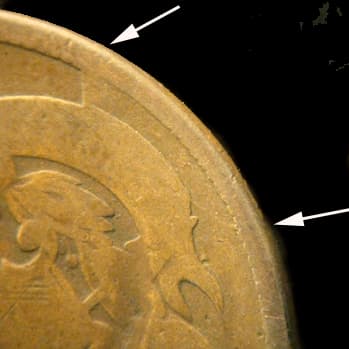
Description
Fifth retained cud documented for the 1864 Two Cent Piece with Large Motto by the Cuds on Coins attribution service, RCD-2c-1864-05 records a die rim failure on the first year of this short-lived denomination. The two cent piece was authorized by the Act of April 22, 1864, and holds the distinction of being the first United States coin to bear the motto IN GOD WE TRUST — initially rendered in larger lettering (the "Large Motto" variety) on the obverse banner above the heraldic shield designed by James B. Longacre. Philadelphia was the sole mint facility striking two cent pieces, and the 1864 Large Motto variety saw substantial production as the denomination met strong initial public acceptance during the Civil War-era coin shortage that had driven many fractional currency and private token substitutes into circulation. The 95% copper, 5% tin and zinc alloy matched the cent composition, and the relatively large planchet size (23mm diameter) combined with the deeply sculpted shield obverse and wreath reverse demanded considerable striking pressure to produce fully detailed impressions. Five documented retained cuds for the first year of production suggests the new denomination's dies experienced meaningful rim stress, with fractures developing where the raised rim transitions into the peripheral design elements. A retained cud forms when the cracked die section sinks below the surrounding surface but remains attached, creating a raised but incompletely impressed area on every coin struck thereafter. The two cent denomination survived only through 1873, making the 1864 Large Motto one of the more available dates in the series but no less historically significant as the vehicle that introduced America's most recognizable numismatic motto. Collectors should examine the rim under magnification, identifying the retained cud as a raised shelf with softened detail compared to the crisp, well-defined impression on adjacent undamaged rim areas.
Attribution History
- Discovered by Chuck Newman
- Expert attribution by Cuds on Coins
External References
Community & Reference
Related Errors

More Retained Cud Errors
Collector Essentials
Tools for examining and preserving error coins and die varieties.
10x-20x Jeweler's Loupe
Essential for examining die varieties, doubled dies, and RPMs
Cherry Picker's Guide
The definitive reference for U.S. error coins and die varieties
2x2 Coin Flips & Holders
Protect and organize your finds with archival-quality holders
USB Digital Microscope
Capture detailed images for documentation and community submissions
As an Amazon Associate, NumisDex earns from qualifying purchases.