
In the catalog: 1847 Hawaiian Cents, 1883 Hawaiian Regular Issues and Hawaiian Coinage (1847-2018)
Hawaii Had Its Own Silver Dollar
Before it was a state, before it was even a U.S. territory, Hawaii was a kingdom with coins of its own. The best known of them, King Kalākaua's 1883 silver, were designed by the U.S. Mint's chief engraver and struck in San Francisco.
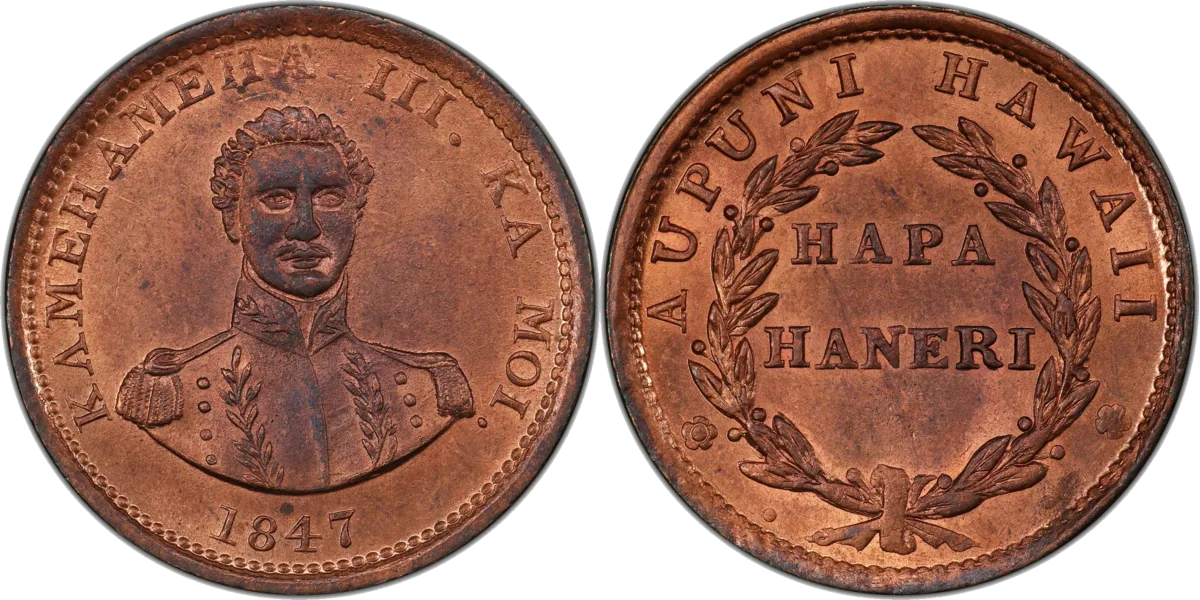
1847: The First Try
The Kingdom's first official coin was a copper cent issued in 1847, with a portrait of King Kamehameha III. Its reverse reads HAPA HANERI, "one hundredth." The coin was unpopular: reports at the time called the king's portrait unrecognizable, and merchants didn't want to deal in such small change. It never caught on.
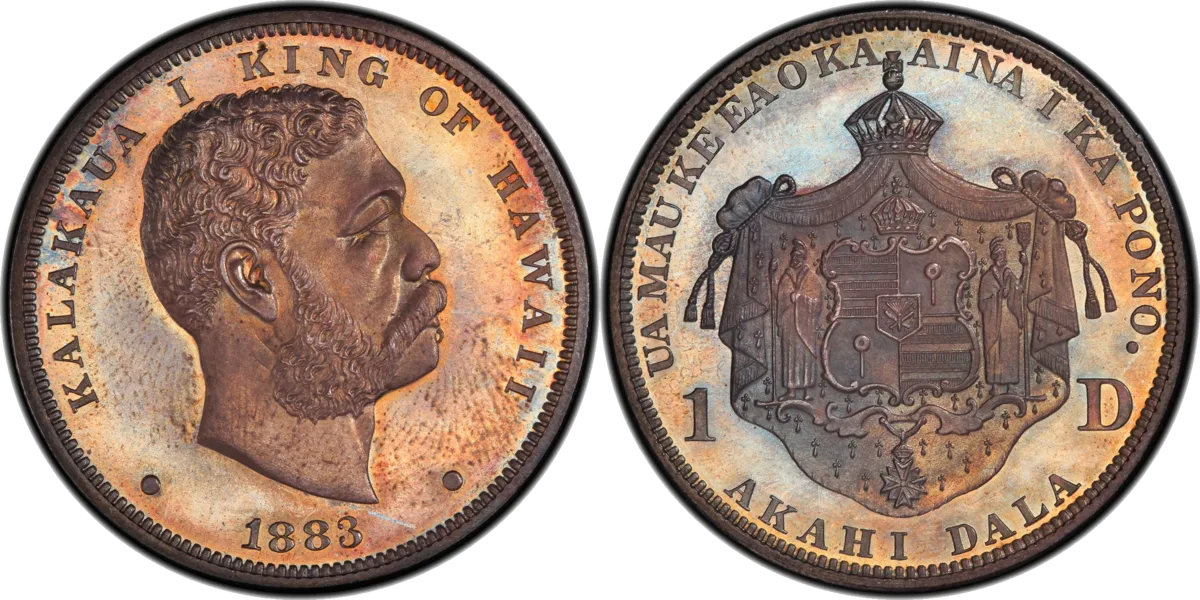
1883: Silver With a King's Portrait
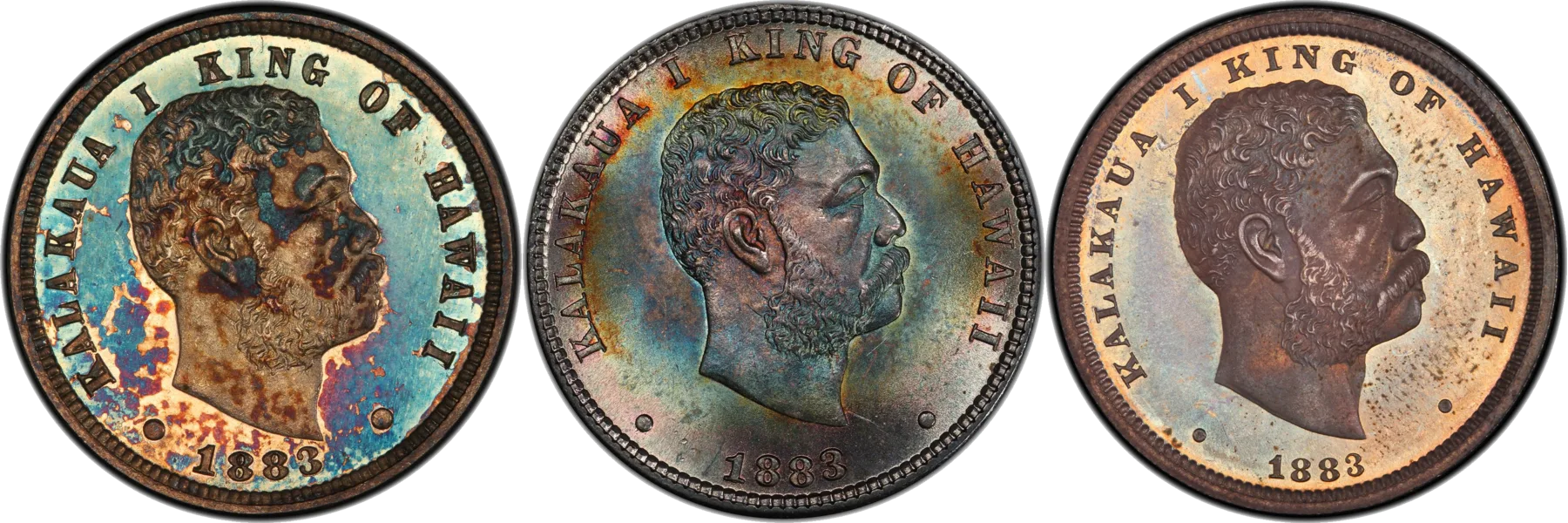
An 1880 law let the kingdom buy bullion for a new coinage. Under it, King Kalākaua issued four silver coins dated 1883: a dime (ʻumi keneta), a quarter (hapaha), a half dollar (hapalua) and a dollar (ʻakahi dala). Charles E. Barber, chief engraver of the U.S. Mint, designed both sides, and the coins were struck at the San Francisco Mint in 1883 and 1884, all with the 1883 date. Claus Spreckels, a sugar magnate and friend of the king, arranged the contract with the Mint.
The Motto
The reverse carries the motto Ua Mau ke Ea o ka ʻĀina i ka Pono, usually translated "The life of the land is perpetuated in righteousness." The words are attributed to Kamehameha III in 1843, when the kingdom's sovereignty was restored, and ea can mean sovereignty as well as life. In 1959 the phrase became Hawaii's state motto.
The Lawsuit
Not everyone welcomed the coins. With the islands in a recession, the business community feared the new silver would cause inflation, and Sanford B. Dole and others went to court to stop it. They lost: the full court reversed an early ruling in their favor on procedural grounds.
Melted
After Hawaii was annexed by the United States in 1898, the coins kept circulating for a few years. In 1903 Congress demonetized them, effective January 1, 1904. Most were exchanged for U.S. silver and melted at the San Francisco Mint. Of the 500,000 dollars struck, 453,652 were melted, leaving about 46,000, and many coins that escaped the melt were made into jewelry.
See every Hawaiian coin in the catalog: Hawaiian Coinage (1847-2018), including the 1847 cents, the 1883 regular issues and the plantation tokens issued by Hawaiian plantations.
Sources: Wikipedia, "Kalākaua coinage" (citing Jacob Adler, Ernest Andrade and R.S. Yeoman), "Hawaiian dollar," "Coins of the Hawaiian dollar," "Ua Mau ke Ea o ka ʻĀina i ka Pono" and "Seal of Hawaii"; CoinSite; APMEX.