
1922 "No D" Lincoln Cent: Genuine Die Error vs. Tooled Fake
The 1922 "No D" — A Real Error That Attracts Fakes
In 1922, Lincoln cents were struck only at the Denver Mint — Philadelphia and San Francisco did not produce cents that year. All 1922 cents should carry a D mint mark. However, several heavily worn die pairs produced coins where the D mint mark is weak or completely absent. These "No D" and "Weak D" varieties are among the most valuable Lincoln cent errors.
Understanding the Varieties
Four different die pairs produced 1922 cents with a weak or absent D mint mark. They fall into two categories based on how the mint mark disappeared:
The "Strong No D" (Die Pair 2, FS-401) — The most valuable variety. After a severe die clash, a mint employee replaced the damaged reverse die with a fresh one and polished the obverse die to remove clash marks. This polishing physically removed the D mint mark from the die itself. Every coin from this die pair has no D at all. The key identifier: a strong, sharply detailed reverse (from the fresh replacement die) paired with a soft, worn obverse.
"Weak D" and "No D, Weak Reverse" (Die Pairs 1, 3, and 4) — On these die pairs, grease and debris progressively filled the mint mark area. Early strikes show a weak but visible D; later strikes show no D at all. All three use heavily worn reverse dies, so coins from these pairs show a characteristically weak, soft reverse. These are less valuable than the Strong No D but still collectible.
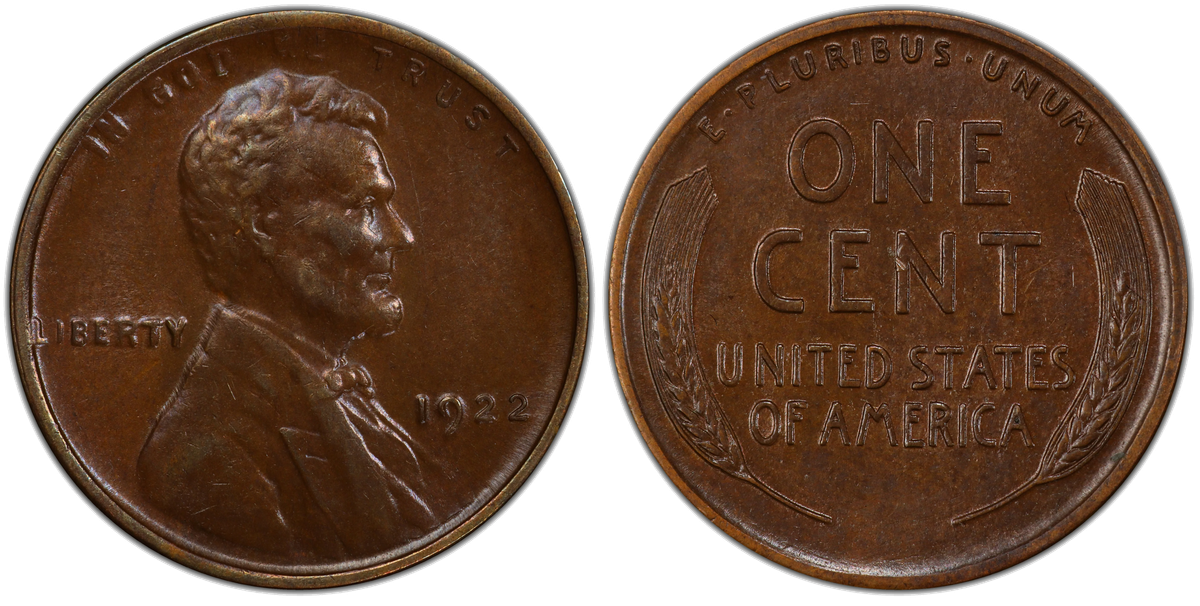
Genuine 1922 "No D" — mint mark completely absent from the die
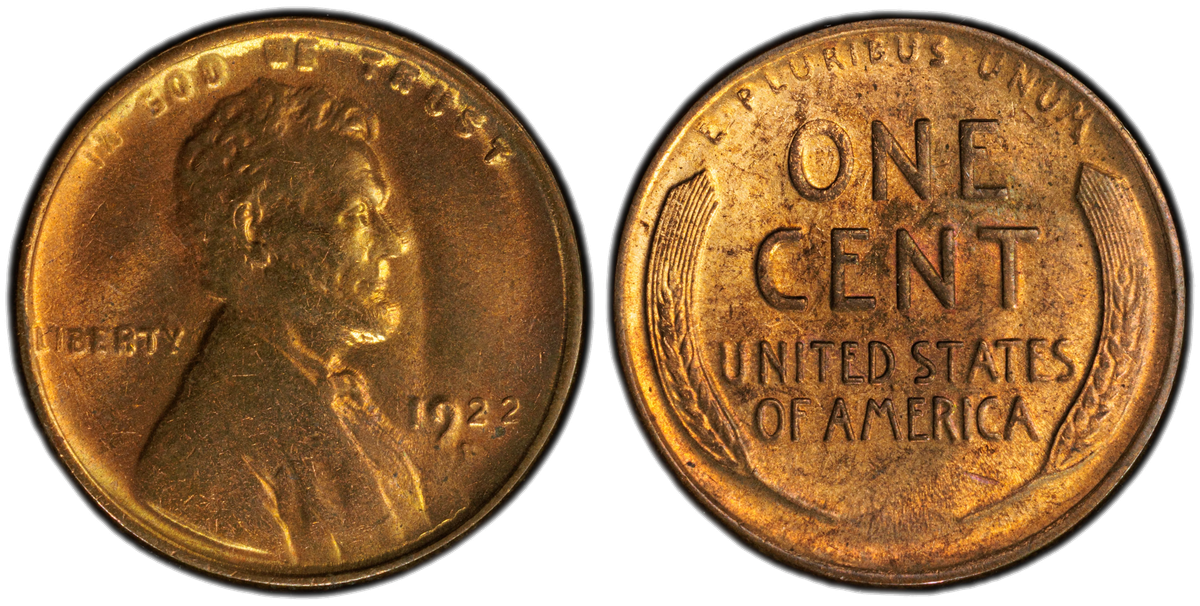
1922 "Weak D" — faint trace of the D mint mark still visible
How the Fakes Are Made
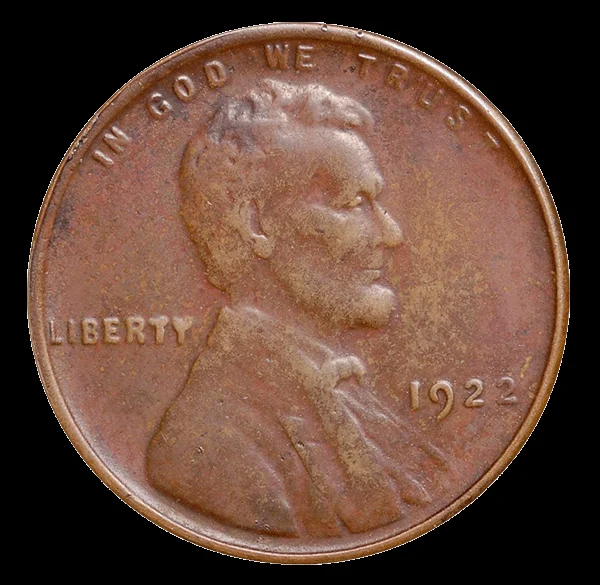
Counterfeiters take a common 1922-D cent (worth a few dollars) and remove the D mint mark by filing, polishing, or acid treatment. The result is a coin that superficially looks like a 1922 No D.
How to Tell the Difference
1. The Reverse Is the Key
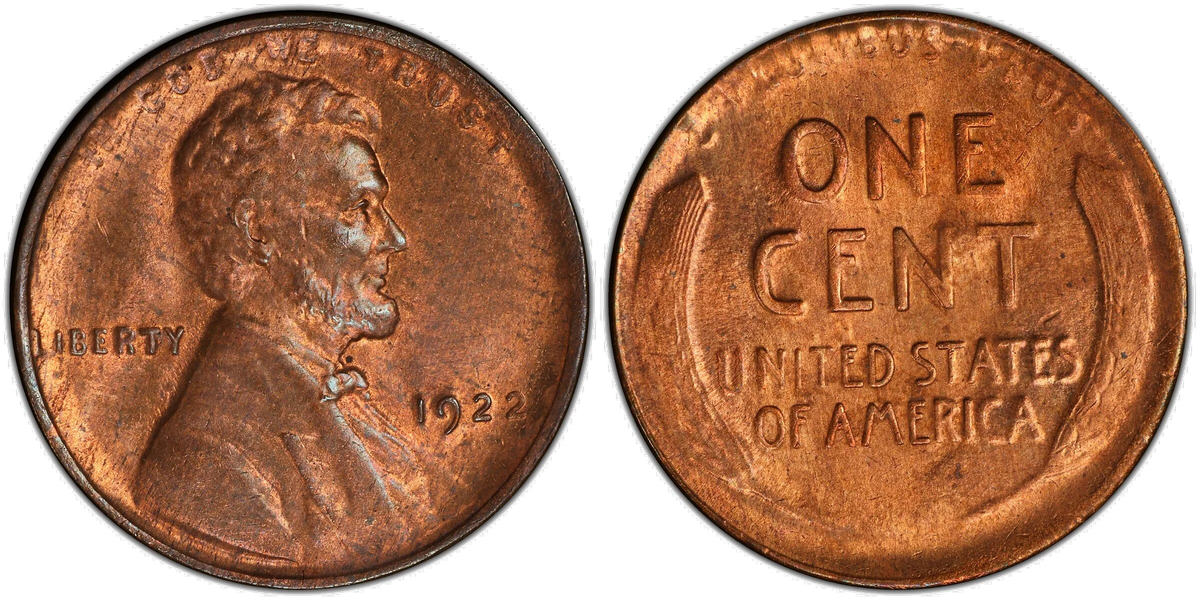
This is the single most important diagnostic. A genuine 1922 No D will have a reverse that matches its die pair — either strong and sharply struck (Die Pair 2, the most valuable) or notably weak and soft (the grease-filled die pairs). A tooled fake made from an ordinary 1922-D will have a normal-looking reverse — neither exceptionally strong nor exceptionally weak — because it started as a standard coin. If the D is missing but the reverse looks average, be suspicious.
2. Check the Mint Mark Area
- Genuine No D — The area where the D should be shows normal, undisturbed field surface. The mint mark is absent because it was never transferred to the coin (or was removed from the die, not the coin).
- Tooled fake — The area where the D was removed may show unusual smoothness, polishing marks, a slight depression, or different luster than the surrounding field. Under magnification, look for any sign that metal was displaced or removed.
3. Overall Consistency
Genuine examples show characteristics consistent with their die pair. The Strong No D (Die Pair 2) has a distinctive combination: soft obverse with a crisp reverse. The Weak Reverse varieties show heavy wear on both sides. If the obverse looks sharp and well-struck but the D is simply gone, the D was almost certainly removed from the coin.
Professional authentication is essential for this variety. Browse authenticated examples in the NumisDex catalog.
0 Replies
Related Threads
- Mirror-Clone Grading Websites: The Newest Counterfeit Scam Targeting Coin Collectors0 replies · 3mo ago
- The Rise of Chinese Counterfeit Coins: What Collectors Need to Know About the Scale of the Problem0 replies · 3mo ago
- Counterfeit Coin Slabs Are Getting Dangerously Good — How to Spot Fake PCGS and NGC Holders in 20260 replies · 3mo ago
- How to Read PCGS and NGC Holders — and Spot a Counterfeit Slab0 replies · 3mo ago
- 1804 Dollar and Other "Too Good to Be True" Coins: How to Recognize Replicas0 replies · 3mo ago