
How to Read PCGS and NGC Holders — and Spot a Counterfeit Slab
Understanding Certified Coin Holders
Third-party grading (TPG) by PCGS or NGC is the industry standard for authenticating and grading U.S. coins. A coin encapsulated in a PCGS or NGC holder (often called a "slab") carries a professional grade and authentication that protects buyers and sellers. But counterfeiters don't just fake coins — they also fake the holders themselves.
Anatomy of a Genuine PCGS Holder
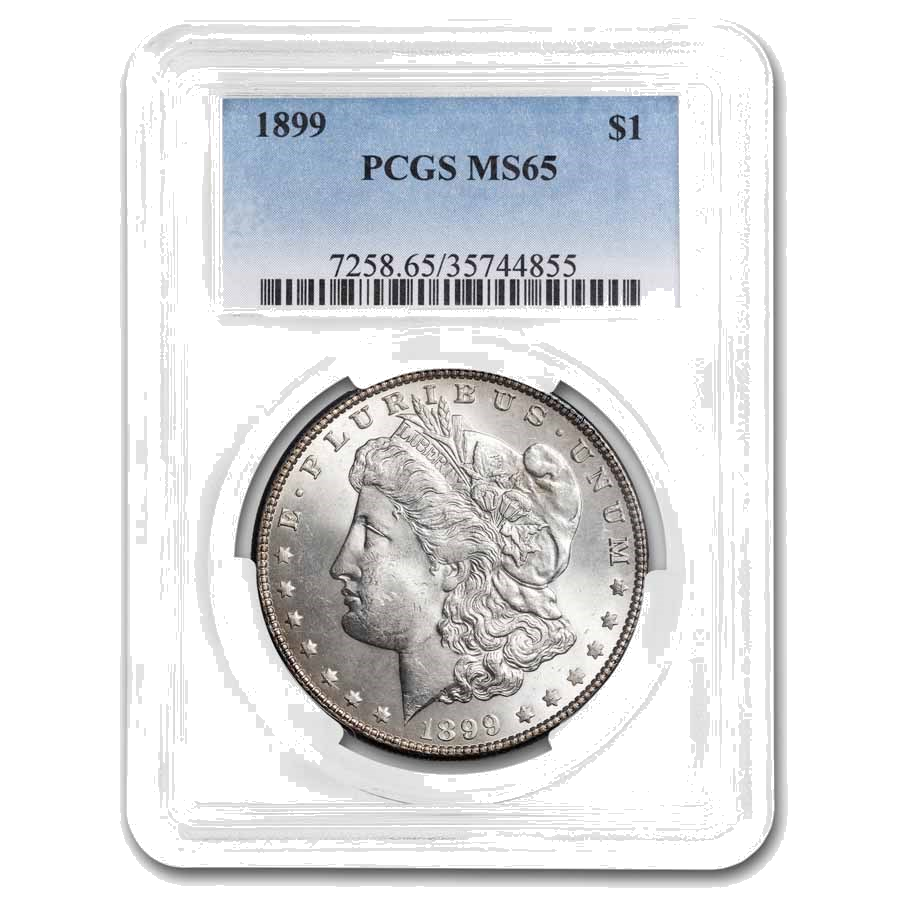
A genuine PCGS holder includes:
- Label — Shows the coin's date, denomination, variety, grade, and a unique certification number
- Certification number — Every PCGS coin is assigned a unique number that can be verified at pcgs.com/cert
- Barcode — Machine-readable code corresponding to the certification number
- Hologram — A security hologram integrated into the holder that is difficult to replicate accurately
- Holder construction — Specific plastic composition, welding seams, and internal construction details
Anatomy of a Genuine NGC Holder
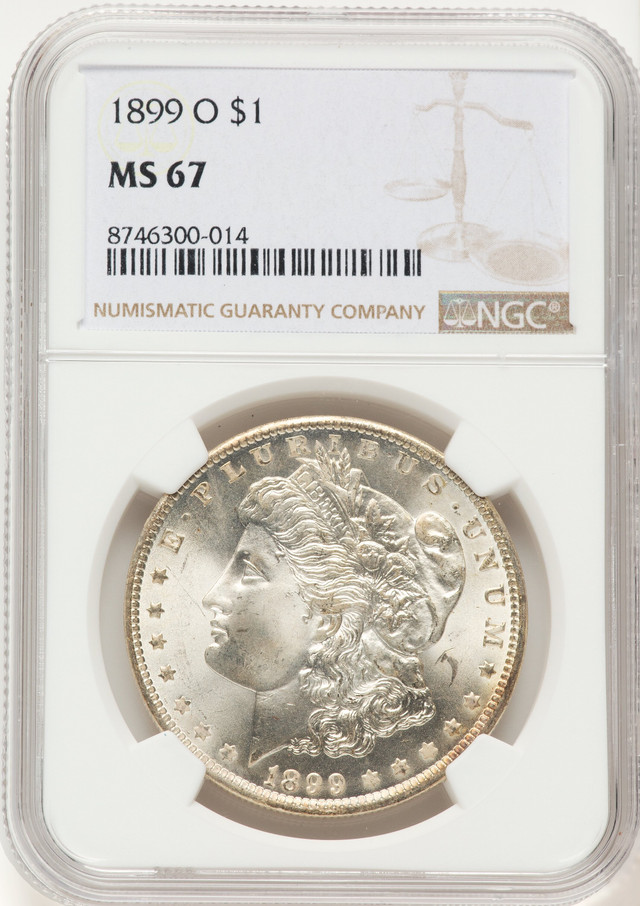
A genuine NGC holder includes:
- Label — Coin identification, grade, and unique certification number
- Certification number — Verifiable at ngccoin.com/certlookup
- Hologram — NGC's security hologram on the label
- Edge view window — NGC holders typically allow viewing of the coin's edge
How to Spot a Counterfeit Slab
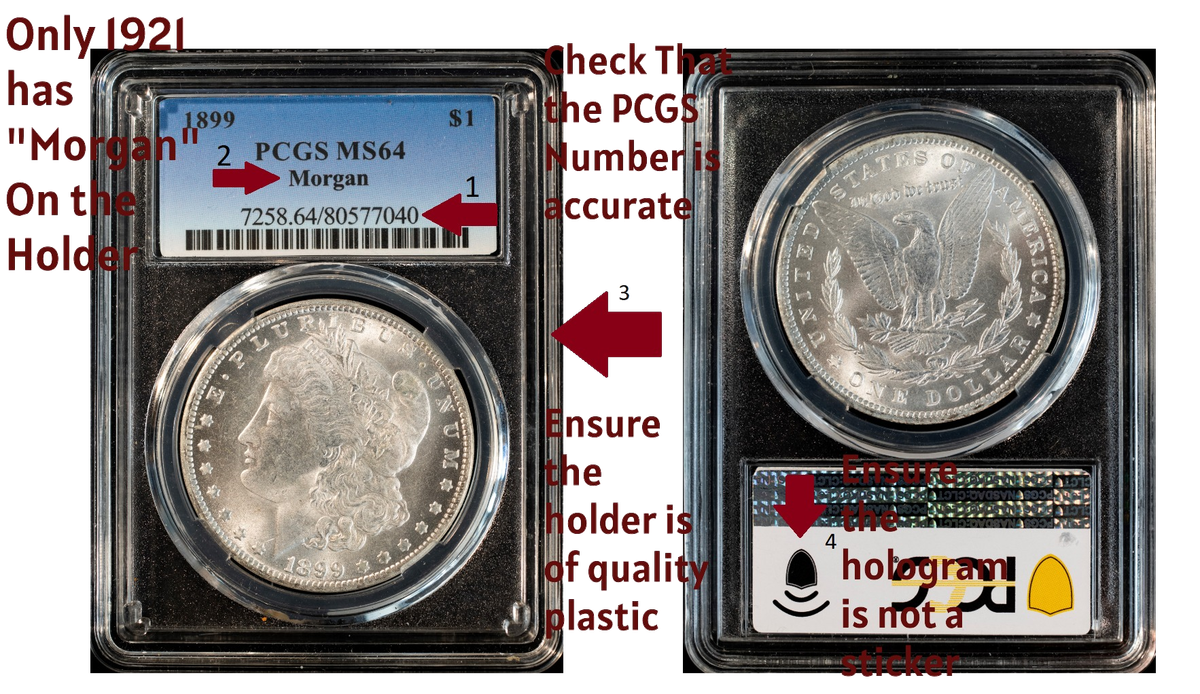
1. Verify the Certification Number Online
This is the single most important step. Enter the certification number on the grading service's website. Check that:
- The number exists in their database
- The coin description matches what's in the holder
- The grade matches
- The coin image (if available) matches the physical coin
If the number doesn't exist, returns a different coin, or shows a different grade, the holder is counterfeit.
2. Examine the Holder's Physical Characteristics
- Plastic quality — Genuine holders use a specific grade of optically clear plastic. Counterfeits may use lower-quality plastic that appears cloudy, yellowed, or has different light refraction.
- Seam quality — Genuine holders are sonically welded with precise, clean seams. Counterfeit holders may show irregular seams, gaps, or evidence of glue.
- Label printing — Genuine labels have specific fonts, print quality, and color consistency. Counterfeit labels may show slightly wrong fonts, blurry printing, or color variations.
3. Check the Hologram
Security holograms on genuine holders change color and appearance as you tilt the holder. Counterfeit holograms are often static (no color shift), printed rather than embossed, or show less detail than genuine versions. Comparing a suspect holder side-by-side with a known-genuine holder is often the most effective method.
4. Weight
Genuine PCGS and NGC holders have consistent weights for each holder generation. Significant deviation from the expected weight suggests a counterfeit holder.
Where Fake Slabs Come From
Counterfeit holders are most commonly encountered when:
- Buying from overseas sellers (especially through general marketplace platforms)
- Purchasing at flea markets or non-specialist venues
- Buying from sellers who refuse to allow certification verification before purchase
When buying certified coins, always verify the certification number before completing the transaction. Reputable dealers welcome this practice.
0 Replies
Related Threads
- Mirror-Clone Grading Websites: The Newest Counterfeit Scam Targeting Coin Collectors0 replies · 3mo ago
- The Rise of Chinese Counterfeit Coins: What Collectors Need to Know About the Scale of the Problem0 replies · 3mo ago
- Counterfeit Coin Slabs Are Getting Dangerously Good — How to Spot Fake PCGS and NGC Holders in 20260 replies · 3mo ago
- 1804 Dollar and Other "Too Good to Be True" Coins: How to Recognize Replicas0 replies · 3mo ago
- 1877 Indian Head Cent: How to Spot a Fake0 replies · 3mo ago