
1914-D Lincoln Cent vs. Altered 1944-D: How to Tell the Difference
The 1914-D: A Prime Target for Alteration
The 1914-D Lincoln cent (mintage: 1.19 million) is one of the most valuable regular-issue Lincoln cents, with values starting around $200 in Good condition and reaching $50,000+ in gem Mint State. Its most common counterfeit isn't a struck fake — it's an altered 1944-D.
Why the 1944-D?
The 1944-D Lincoln cent is extremely common (mintage: over 430 million) and nearly worthless in circulated grades. The numeral "4" in 1944 can be modified to resemble a "1" by removing material, turning "1944" into "1914." This makes the 1944-D the most common donor coin for creating fake 1914-D cents.
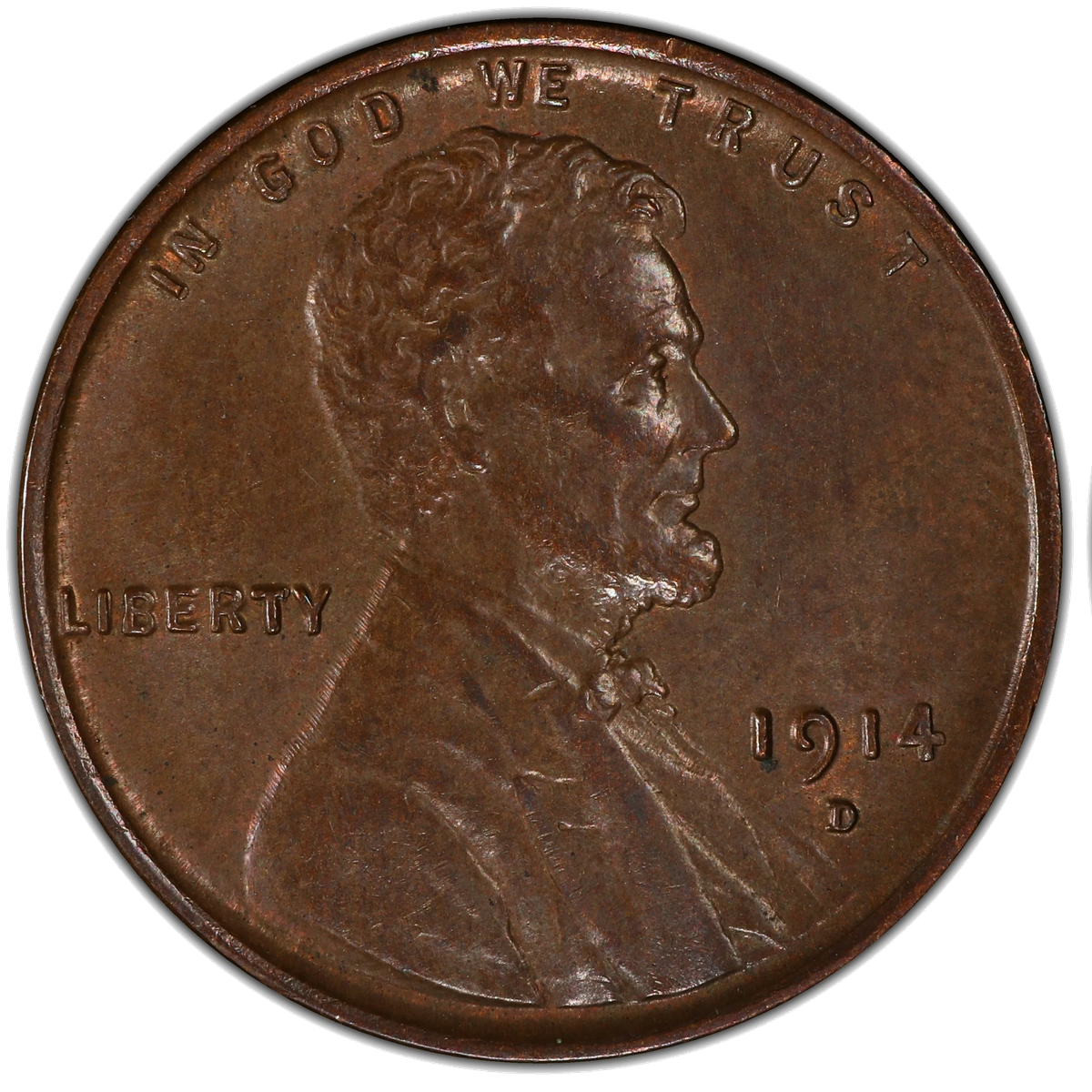
Genuine 1914-D Lincoln cent — original date, no tooling marks
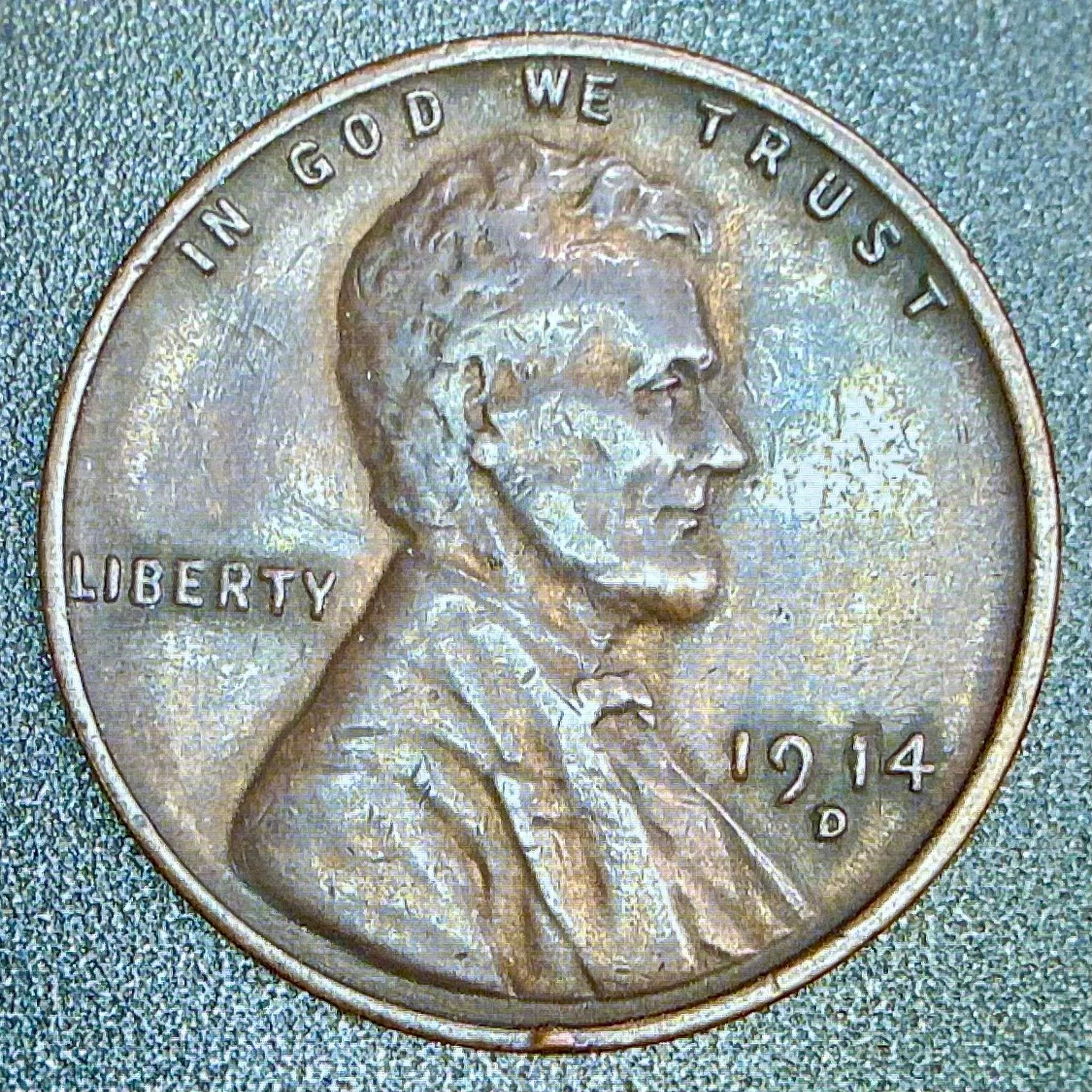
Altered 1944-D — third digit modified from "4" to "1" to mimic a 1914-D
How to Spot the Alteration
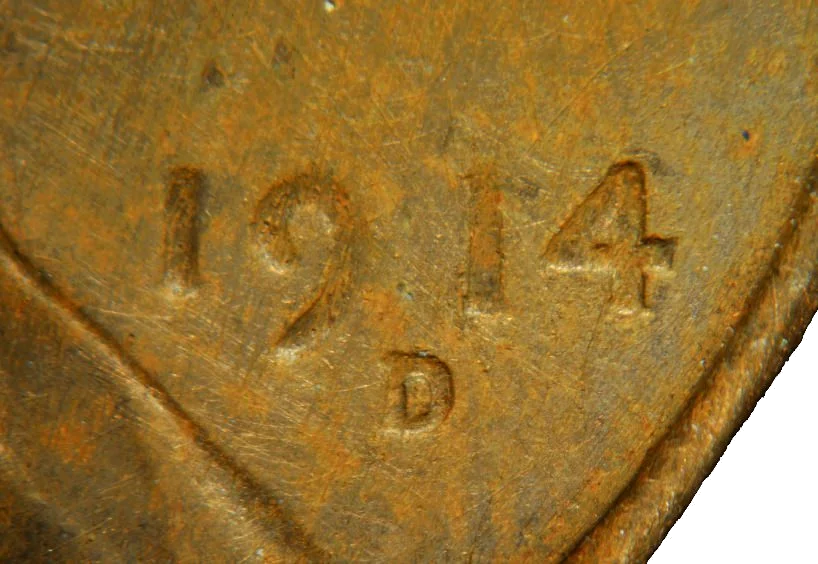
1. Examine the "1" (originally a "4")
On an altered coin, the third digit has been modified from 4 to 1. Under magnification, look for:
- Irregular edges on the numeral — the removed portions of the 4 may leave subtle traces
- The field around the digit may show tooling marks, smoothing, or a different surface texture than the surrounding area
- The "1" may appear slightly thicker or differently shaped than the first "1" in the date
2. Check the Designer's Initials
Victor David Brenner's initials (V.D.B.) were restored to the Lincoln cent in 1918, appearing in tiny letters on the truncation of Lincoln's shoulder. A genuine 1914-D does not have V.D.B. on the obverse. A 1944-D does. If you see V.D.B. on the shoulder, the coin is a 1944-D, not a 1914-D.
3. Weight and Composition
In 1914, cents were struck in 95% copper, 5% tin/zinc, weighing 3.1 grams. In 1944, cents were struck in a slightly different alloy (shell case brass — 95% copper, 5% zinc, no tin) with the same nominal weight. While the weight won't help, advanced testing of the alloy composition can distinguish them.
4. Die Characteristics
Professional authenticators compare the coin's die characteristics against known 1914-D die pairings. A genuine 1914-D was struck from specific dies that produced specific surface features, die polish lines, and minor die imperfections that no altered 1944-D can replicate.
The Bottom Line
Any raw 1914-D offered at a suspiciously good price should be treated with extreme skepticism. Always buy certified examples from reputable dealers. If you find a possible 1914-D in circulation or a collection, check for V.D.B. on the shoulder first — it's the quickest way to rule out a 1944-D alteration.
0 Replies
Related Threads
- Mirror-Clone Grading Websites: The Newest Counterfeit Scam Targeting Coin Collectors0 replies · 3mo ago
- The Rise of Chinese Counterfeit Coins: What Collectors Need to Know About the Scale of the Problem0 replies · 3mo ago
- Counterfeit Coin Slabs Are Getting Dangerously Good — How to Spot Fake PCGS and NGC Holders in 20260 replies · 3mo ago
- How to Read PCGS and NGC Holders — and Spot a Counterfeit Slab0 replies · 3mo ago
- 1804 Dollar and Other "Too Good to Be True" Coins: How to Recognize Replicas0 replies · 3mo ago