
What Makes a Coin Valuable? A Collector's Guide
What Makes a Coin Valuable?
Whether you've inherited a coin collection, found an old coin in pocket change, or are just starting to collect, understanding what makes a coin valuable is the fundamental question. The answer involves several factors that interact in complex ways.
1. Rarity
Rarity is the most intuitive factor: the fewer coins that exist, the more valuable each one tends to be. But rarity alone doesn't create value — demand must exist alongside scarcity.
Mintage — How many were originally produced. Low-mintage dates are generally scarcer, but mintage alone doesn't tell the full story. A coin minted in large numbers but poorly saved (like many early copper coins) can be rarer in high grades than a coin with a lower mintage that was widely collected.
Survival rate — How many have survived to the present. Silver coins were often melted for their metal content. Gold coins were recalled and melted by the government in 1933. Circulation wear destroyed countless coins.
Condition rarity — A coin might be common in low grades but extremely rare in uncirculated condition. The 1916-D Mercury Dime has a mintage of 264,000 — scarce but not extremely rare. However, finding one in MS-65 or better is extraordinarily difficult, making high-grade examples worth tens of thousands of dollars. Learn to evaluate condition yourself with our home grading guide.
2. Condition (Grade)
A coin's grade — its state of preservation — has an enormous impact on value. The difference between grades can mean the difference between hundreds and hundreds of thousands of dollars.
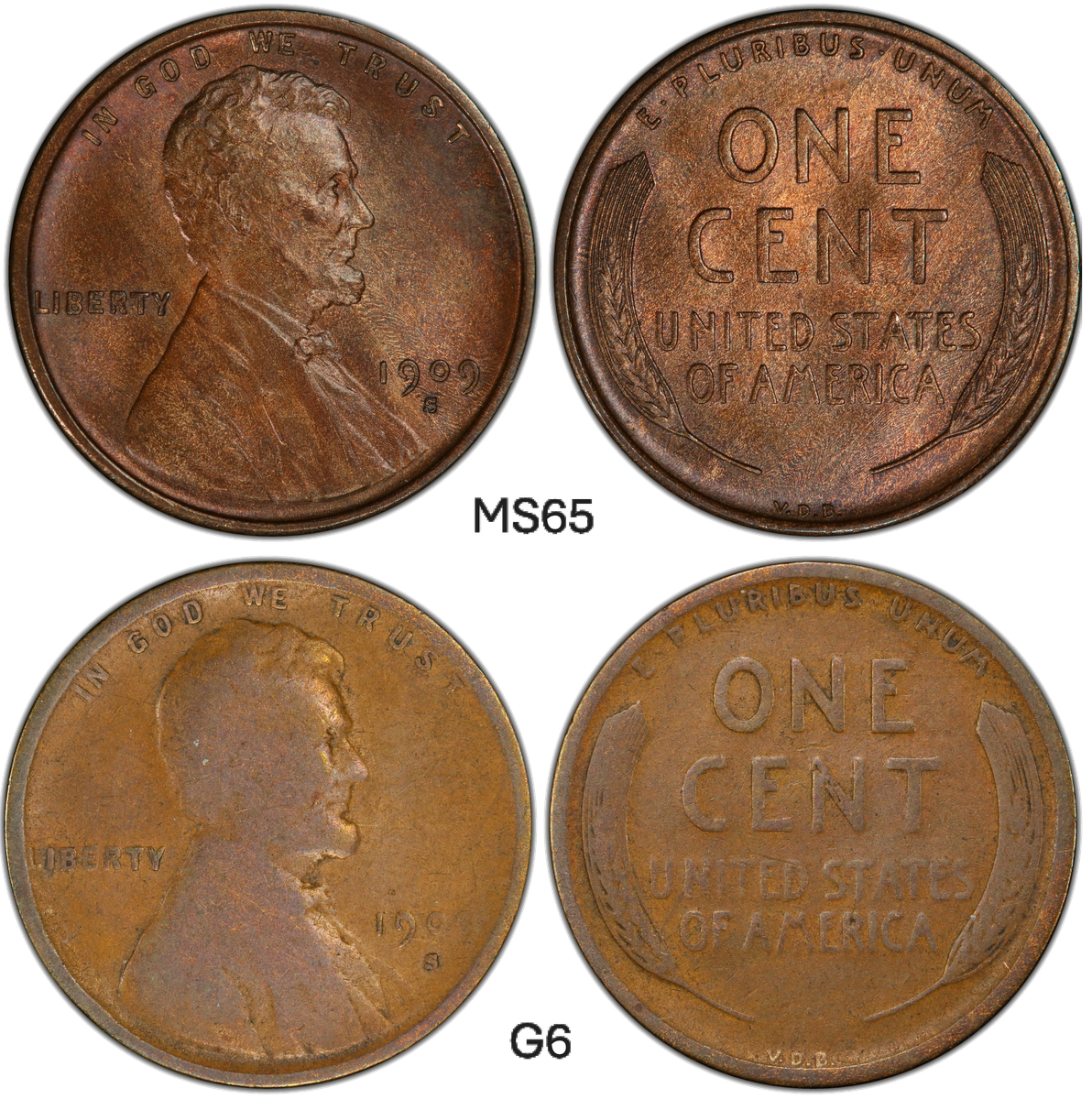
The same coin type at different grade levels — condition alone can account for orders-of-magnitude differences in value
The Sheldon scale (1-70) is the standard grading system used in U.S. numismatics:
- AG-3 to G-6 — Heavy wear, major design elements visible
- VG-8 to F-15 — Moderate wear, most details visible
- VF-20 to EF-45 — Light wear on high points
- AU-50 to AU-58 — Trace wear only
- MS-60 to MS-70 — Uncirculated (Mint State), no wear
- PF/PR-60 to PF/PR-70 — Proof coins, specially struck for collectors
3. Errors and Varieties
Manufacturing errors and die varieties can add significant premium to a coin's value. NumisDex catalogs over 72,000 listings across 43 error types. Not sure of the difference? See our guide on die varieties vs. die errors. Some of the most valuable categories include:
- Doubled dies — Die varieties where design elements appear doubled due to hubbing errors. Browse our doubled die listings.
- Off-center strikes — Coins struck with the planchet misaligned. Greater off-center percentage generally means greater value.
- Wrong planchet errors — A coin struck on a planchet intended for a different denomination.
- Repunched mint marks and dates — Multiple impressions of the mint mark or date visible under magnification.
4. Demand and Popularity
The numismatic market is driven by collector demand. Some series are perennially popular:
- Morgan Dollars — The most widely collected U.S. coin series, with strong demand across all grades and dates.
- Lincoln Cents — Accessible to beginners yet deep enough for advanced specialists, with countless varieties to discover.
- Gold coins — Intrinsic metal value plus numismatic premium creates strong demand.
- Key dates — Dates with low mintages in popular series command premiums regardless of market conditions.
5. Eye Appeal
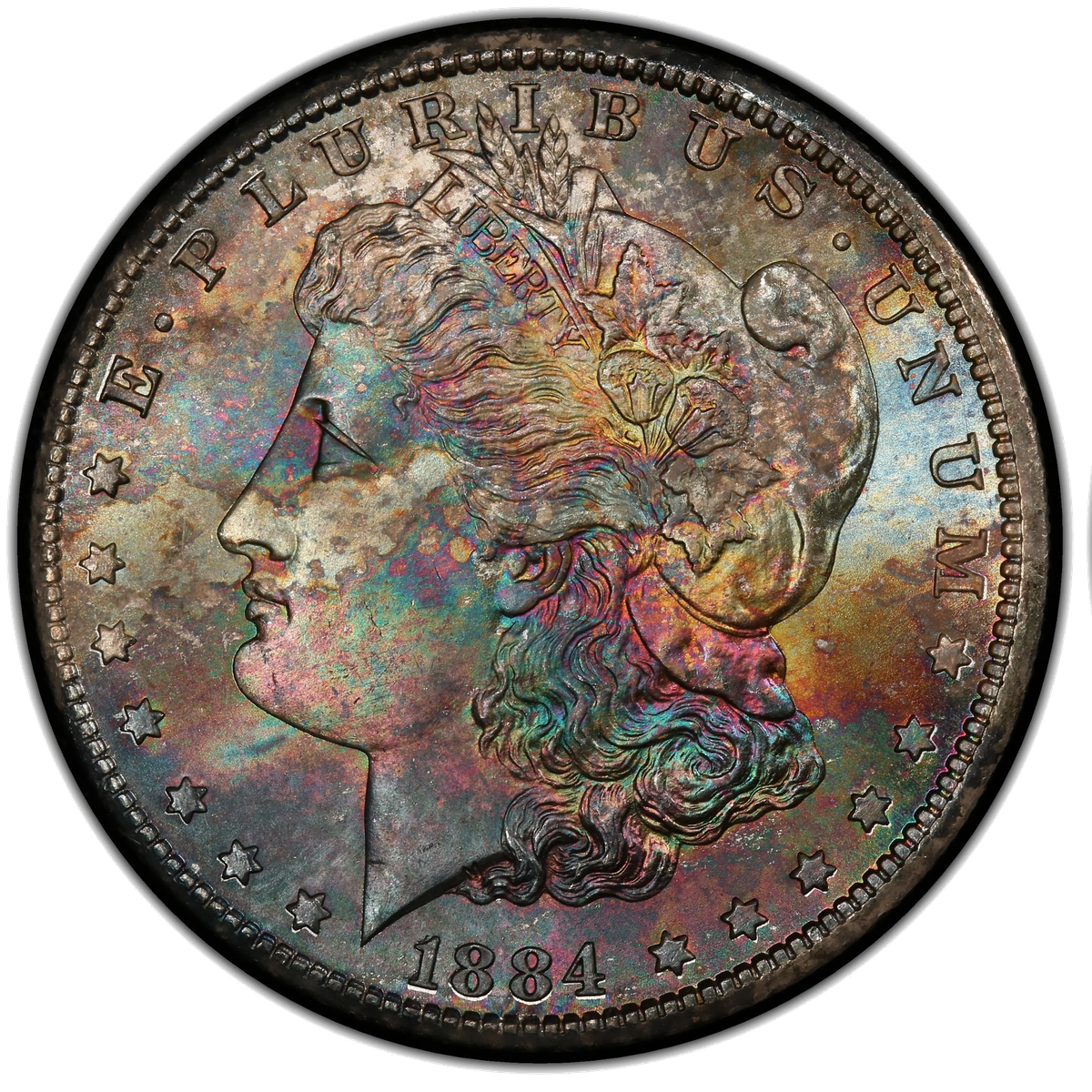
A beautifully toned Morgan dollar — attractive natural toning like this adds significant premium to a coin's value
Two coins in the same grade can have very different values based on eye appeal — the subjective visual attractiveness of a coin. Factors include:
- Toning — Natural color development from oxidation. Attractive toning (rainbow, deep blues) adds premium; unattractive toning (dark, blotchy) detracts.
- Luster — The reflective quality of the coin's surface. Original mint luster is prized.
- Strike quality — How well the design elements are defined. A well-struck coin is generally more desirable than a weakly-struck one.
- Surface quality — Absence of marks, scratches, and other post-mint damage.
6. Authentication and Certification
For valuable coins, third-party certification from PCGS or NGC provides authentication and grading verification. A certified coin in a sealed holder ("slab") generally commands a premium over a raw (uncertified) coin of the same quality, because the buyer has assurance of authenticity and grade.
Start exploring what makes specific varieties valuable by browsing the NumisDex catalog and learning to identify the characteristics that separate common coins from rare treasures.
0 Replies
Related Threads
- Rosa Parks Commemorative Coins: HR 916 Would Honor a Civil Rights Icon0 replies · 2mo ago
- Olympic Coins for LA 2028 and Salt Lake City 2034: S. 2265 Explained0 replies · 2mo ago
- The End of the Penny: What HR 4459 (MINT Act) Means for Collectors0 replies · 2mo ago
- The $2.50 Coin Is Coming Back: What Collectors Need to Know About HR 56160 replies · 2mo ago
- U.S. Mint Releasing 250,000 Special "July 4th" Privy Mark Declaration of Independence Quarters0 replies · 2mo ago