
How to Spot a Counterfeit Coin
How to Spot a Counterfeit Coin
Counterfeit coins are an ever-present concern in numismatics. As coin values have risen, so has the sophistication of counterfeits. Learning to identify fakes protects your collection and your investment. This guide covers the most common types of counterfeits and the techniques for detecting them.
Types of Counterfeits
Cast Counterfeits
Made by pouring molten metal into a mold created from a genuine coin. Cast counterfeits are the most common and generally the easiest to detect:
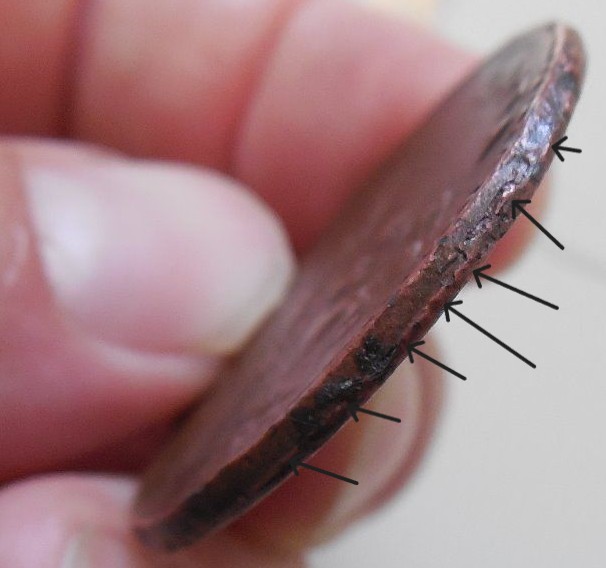
Cast counterfeit seam line — the telltale ridge where the two mold halves met is the #1 diagnostic for identifying cast fakes
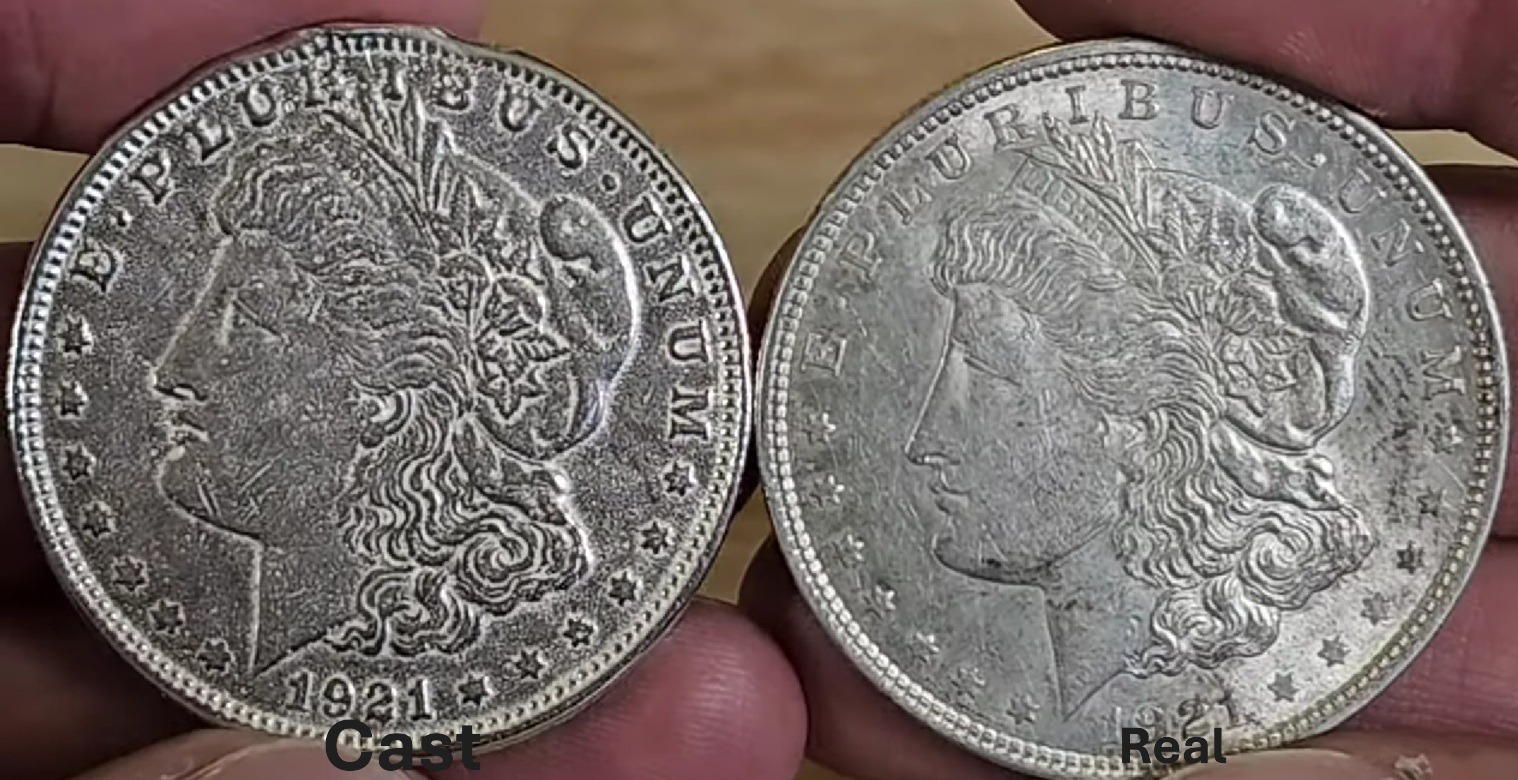
Surface texture comparison — a cast counterfeit (left) shows porous, grainy surface detail while a genuine struck coin (right) has smooth, flow-lined surfaces
- Seam line — Look for a faint line around the edge where the two mold halves met
- Surface texture — Cast coins often have a slightly porous, grainy surface compared to the smooth, flow-lined surface of a struck coin
- Soft details — The casting process loses fine detail, making letters and design elements appear slightly mushy or rounded
- Weight and diameter — Cast coins often have slight dimensional differences from genuine coins
- Sound — Struck coins ring when dropped on a hard surface; cast coins produce a dull thud
Struck Counterfeits
Made using custom-made dies to strike planchets, simulating the genuine minting process. These are more difficult to detect but still have tells:
- Die characteristics — The counterfeit dies won't match any known genuine die. Study the diagnostics of known genuine coins.
- Transfer die marks — Counterfeits made from dies created by pressing a genuine coin into die steel often show an "orange peel" texture
- Wrong edge — The edge device (reeding, lettering) is often wrong on struck counterfeits
- Metal composition — XRF analysis can reveal wrong alloy composition
Altered Coins
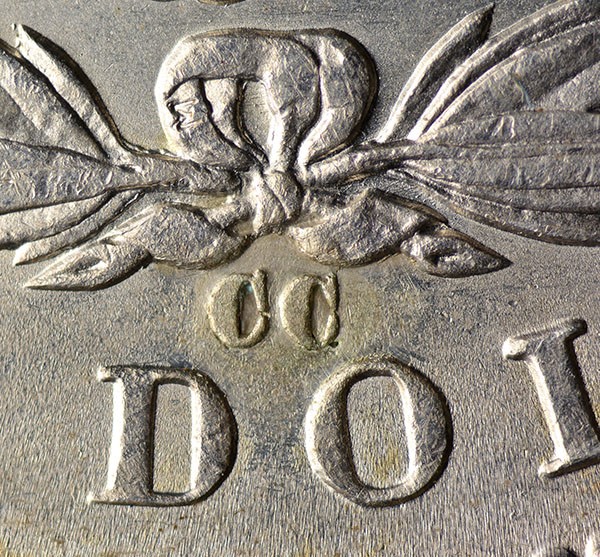
Added mint mark example — under magnification, signs of an added mint mark become visible: wrong font style, glue residue, or disturbed metal around the letter
Genuine coins modified to appear more valuable:
- Added mint marks — A mint mark soldered, glued, or engraved onto a coin to simulate a rarer issue (e.g., adding a "D" to a 1916 Mercury Dime)
- Altered dates — Digits modified to simulate scarce dates (e.g., 1948 altered to 1943 to sell as a "bronze cent")
- Artificial toning — Chemical or heat-applied color to make a coin appear attractively toned
- Tooled surfaces — Re-engraving worn areas to simulate a higher grade
Detection Techniques
Visual Inspection
- Use proper magnification — A 10x-20x loupe reveals details invisible to the naked eye.
- Check the diagnostics — Every genuine die has unique characteristics (die cracks, die polish lines, tiny imperfections). Compare your coin to known genuine examples.
- Examine the edge — The edge is often the weak point of counterfeits. Check for proper reeding count, consistent depth, and correct edge device.
- Look at the luster — Genuine mint luster has a specific cartwheel effect. Counterfeits often have a different reflective quality.
Physical Testing
- Weight — Use a precision scale (0.01g accuracy). Genuine coins have strict weight tolerances. A coin that's significantly off-weight is suspect.
- Diameter — Measure with calipers. Even a fraction of a millimeter off can indicate a counterfeit.
- Specific gravity — A simple water displacement test can determine if the metal density is correct for the coin's stated composition.
- Magnetism — Most genuine U.S. coins are non-magnetic. A coin that sticks to a magnet is likely counterfeit (except 1943 steel cents, which should be magnetic).
Protecting Yourself
- Buy certified coins — PCGS and NGC authentication provides strong protection. Verify holder authenticity using their online tools.
- Know your series — The more familiar you are with a series, the easier it is to spot something wrong. NumisDex's catalog provides reference images for thousands of varieties.
- Buy from reputable dealers — Established dealers stake their reputation on authenticity. Ask about return policies.
- When in doubt, don't buy — If something feels wrong about a coin, trust your instincts. A deal that seems too good to be true usually is.
Coin-Specific Authentication Guides
For detailed authentication guides on the most commonly counterfeited U.S. coins, see our deep dives:
- 1909-S VDB Lincoln Cent: How to Spot a Fake
- 1914-D Lincoln Cent vs. Altered 1944-D
- 1922 "No D" Lincoln Cent: Genuine vs. Tooled
- 1943 Copper Cent: How to Test Yours
- 1944 Steel Cent: Real or Plated?
- 1916-D Mercury Dime: Authenticate the Mint Mark
- 1893-S Morgan Dollar: Spot the Counterfeits
- 1877 Indian Head Cent: How to Spot a Fake
- How to Read PCGS/NGC Holders and Spot a Counterfeit Slab
Discuss specific counterfeit detection questions in our Counterfeits forum category, where experienced collectors can help you evaluate suspicious coins.
0 Replies
Related Threads
- Rosa Parks Commemorative Coins: HR 916 Would Honor a Civil Rights Icon0 replies · 2mo ago
- Olympic Coins for LA 2028 and Salt Lake City 2034: S. 2265 Explained0 replies · 2mo ago
- The End of the Penny: What HR 4459 (MINT Act) Means for Collectors0 replies · 2mo ago
- The $2.50 Coin Is Coming Back: What Collectors Need to Know About HR 56160 replies · 2mo ago
- U.S. Mint Releasing 250,000 Special "July 4th" Privy Mark Declaration of Independence Quarters0 replies · 2mo ago