
Understanding Mint Marks on U.S. Coins
Understanding Mint Marks on U.S. Coins
Mint marks are small letters stamped on U.S. coins to identify which mint facility produced them. Understanding mint marks is fundamental to collecting, as the mint of origin often has a significant impact on a coin's rarity and value.
U.S. Mint Facilities and Their Marks
The United States has operated multiple mint facilities throughout its history. Here are the mint marks you'll encounter:
- P — Philadelphia (1793-present) — The first and primary U.S. Mint. Philadelphia coins carried no mint mark until 1979, when the "P" mint mark was added to most denominations. Notable exception: the cent has never carried a "P" mint mark (except the 2017 Lincoln Cent celebrating the 225th anniversary of the Mint).
- D — Denver (1906-present) — The Denver Mint has operated continuously since 1906. Beware: "D" also stood for Dahlonega, Georgia for gold coins minted 1838-1861.
- S — San Francisco (1854-present) — Originally a branch mint for Western gold, now primarily produces proof coins and special issues.
- W — West Point (1984-present) — Initially used only for gold and silver bullion, now produces commemoratives and special strikes.
- O — New Orleans (1838-1909) — Operated intermittently; closed permanently in 1909. New Orleans coins are often collected as a specialty.
- CC — Carson City (1870-1893) — A short-lived but highly collectible mint. Carson City coins carry strong premiums across all denominations.
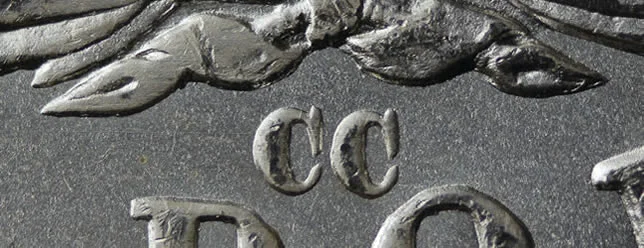
The coveted Carson City "CC" mint mark — coins from this short-lived Nevada mint (1870-1893) carry strong premiums across all denominations
- C — Charlotte (1838-1861) — Gold coins only. Closed at the start of the Civil War.
Where to Find Mint Marks
The location of the mint mark varies by denomination and era:
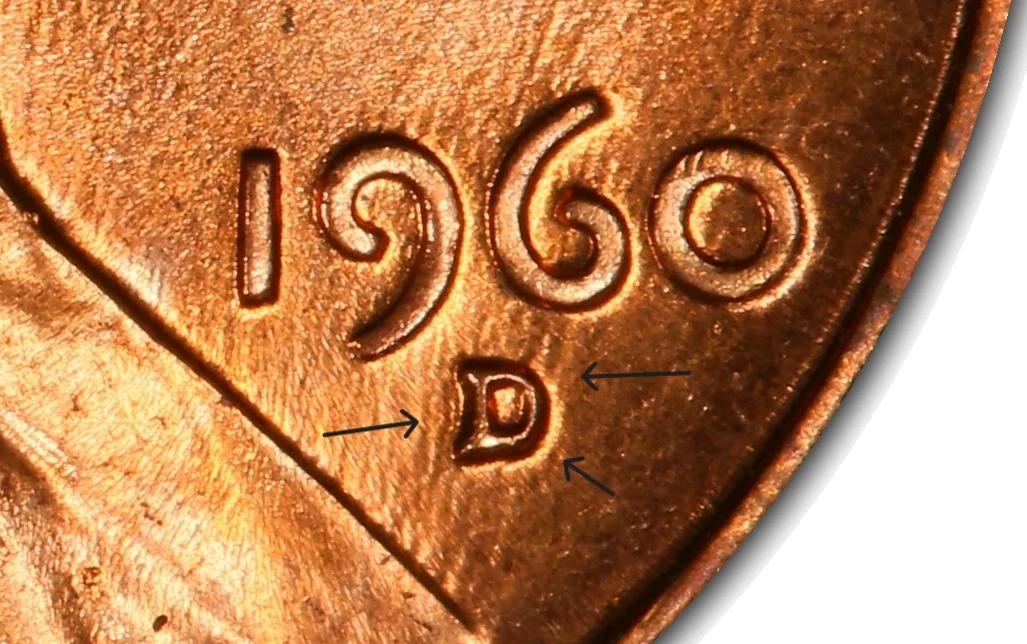
Lincoln Cent mint mark location — look below the date on the obverse
- Lincoln Cents — Below the date (1909-present, obverse); on newer cents, below the date on the obverse
- Jefferson Nickels — On the reverse near Monticello (1938-1964), above Monticello on wartime nickels (1942-45), on the obverse near the date (1968-present)
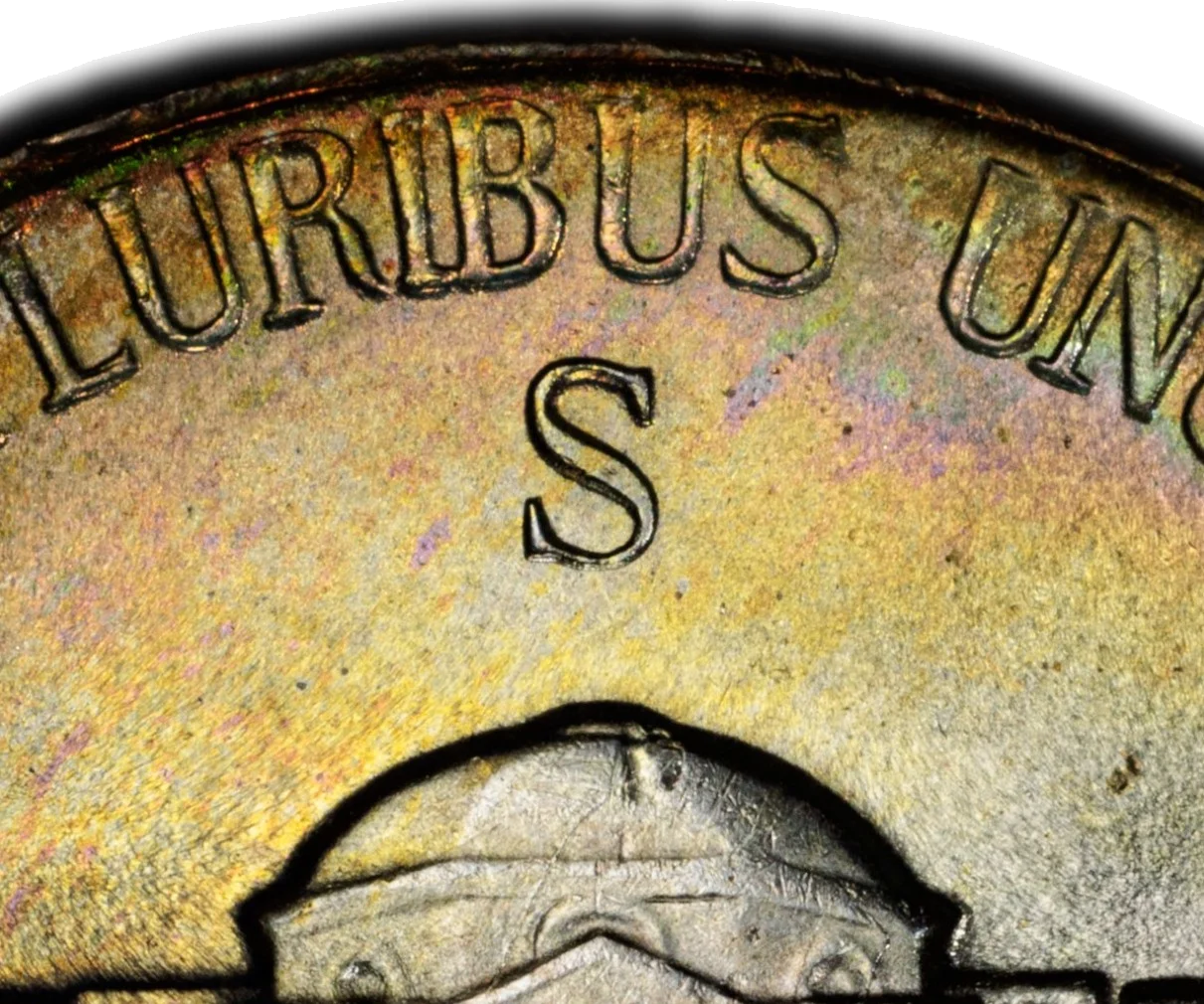
Wartime Jefferson Nickel (1942-45) — the mint mark moved to an unusual position above Monticello on the reverse, marking the 35% silver alloy composition
- Roosevelt Dimes — On the reverse at left base of torch (1946-1964), on the obverse above the date (1968-present)
- Washington Quarters — On the reverse below the eagle (1932-1964), on the obverse to the right of the ribbon (1968-present)
- Kennedy Half Dollars — On the reverse near the eagle's left talon (1964), on the obverse below Kennedy's neck (1968-present)
- Morgan Dollars — On the reverse above the "DO" in DOLLAR
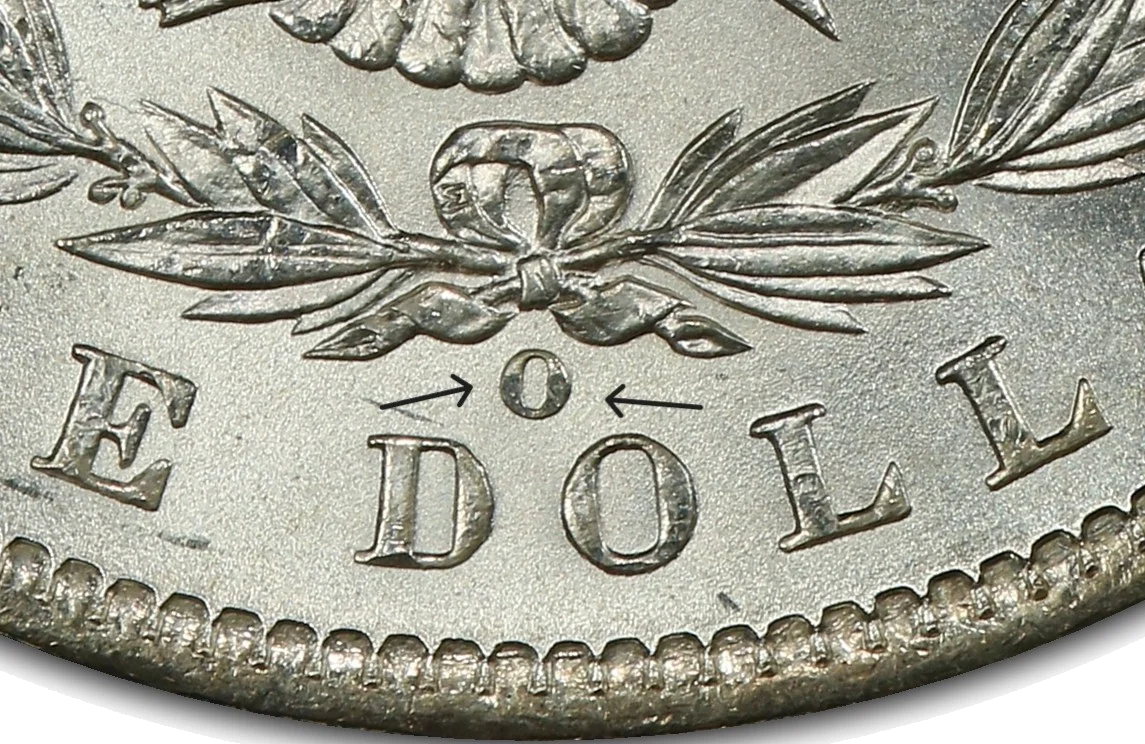
Morgan Dollar mint mark location — find it on the reverse, just above the "DO" in DOLLAR
Mint Mark Varieties
Before 1990, mint marks were punched into working dies by hand, creating opportunities for varieties:
- RPM (Repunched Mint Mark) — The mint mark was punched more than once, with slight offset between impressions. Browse our RPM listings or read our RPM deep dive.
- OMM (Over Mint Mark) — A different mint mark was punched over the original. Example: a "D" punched over an "S". Browse our OMM listings.
- IMM (Inverted Mint Mark) — The mint mark punch was inserted upside down or rotated.
- MPM (Misplaced Mint Mark) — The mint mark appears in the wrong location on the die.
Since 1990, mint marks have been included on the master die (hubbed rather than hand-punched), eliminating these types of varieties on modern coins.
Why Mint Marks Matter for Value
The same coin can vary dramatically in value based on its mint mark. Consider the 1916 Mercury Dime:
- 1916 (Philadelphia) — Mintage: 22,180,080 — Common
- 1916-D (Denver) — Mintage: 264,000 — One of the most valuable U.S. dimes, worth $1,000+ even in low grades
- 1916-S (San Francisco) — Mintage: 10,450,000 — Scarce but affordable
Understanding which mint marks are scarce for your series of interest is key to smart collecting. Explore the NumisDex catalog to see how mint marks affect variety attribution across all denominations.
0 Replies
Related Threads
- Rosa Parks Commemorative Coins: HR 916 Would Honor a Civil Rights Icon0 replies · 2mo ago
- Olympic Coins for LA 2028 and Salt Lake City 2034: S. 2265 Explained0 replies · 2mo ago
- The End of the Penny: What HR 4459 (MINT Act) Means for Collectors0 replies · 2mo ago
- The $2.50 Coin Is Coming Back: What Collectors Need to Know About HR 56160 replies · 2mo ago
- U.S. Mint Releasing 250,000 Special "July 4th" Privy Mark Declaration of Independence Quarters0 replies · 2mo ago