
How to Identify a Doubled Die
DDOHow to Identify a Doubled Die Penny
Doubled die coins are among the most sought-after error varieties in U.S. numismatics. From the famous 1955 Doubled Die Lincoln Cent to modern discoveries worth hundreds of dollars, learning to identify doubled dies is an essential skill for any variety collector.
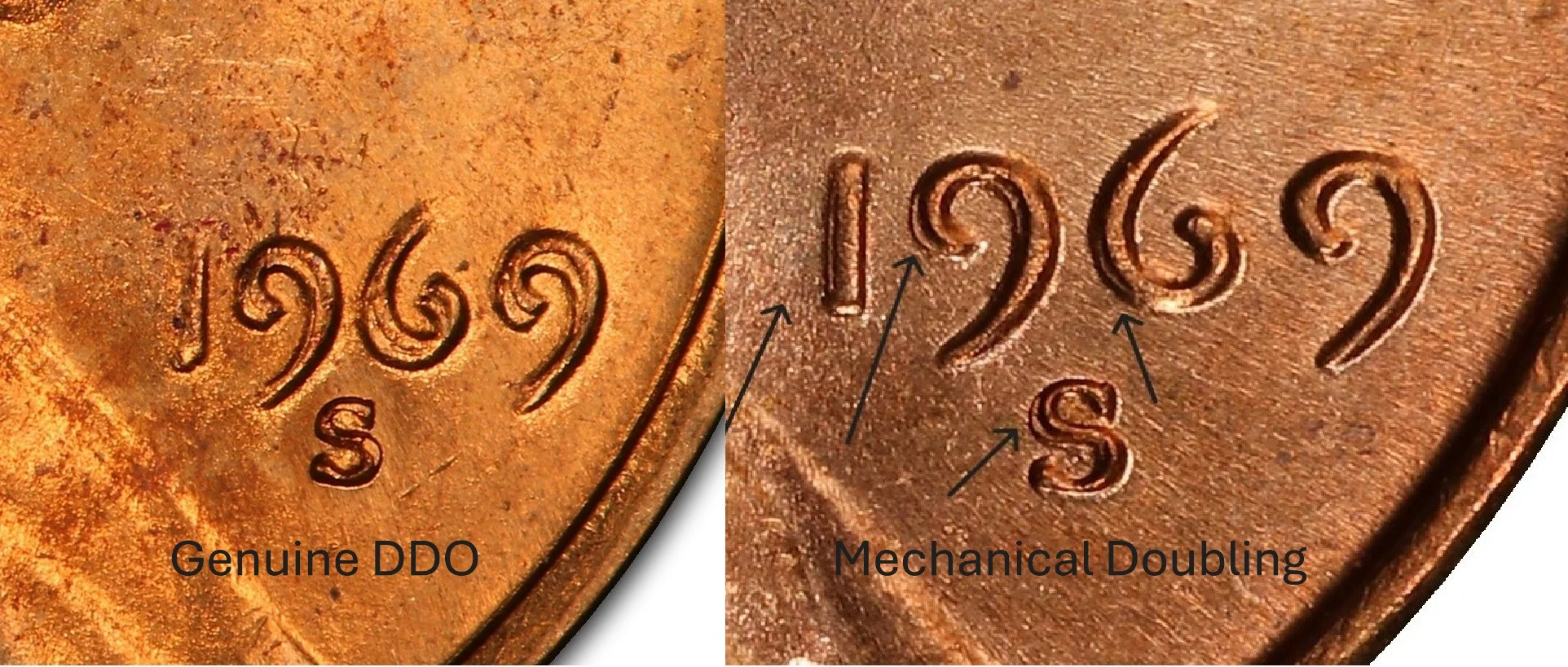
True doubled die (left) vs. machine doubling (right) — note the raised, well-defined secondary image on the genuine DDO compared to the flat, shelf-like appearance of machine doubling
What Is a Doubled Die?
A doubled die occurs during the hubbing process at the U.S. Mint. When a hub impresses its design into a working die, the die sometimes shifts or rotates between impressions. This creates a die with doubled elements — letters, numbers, or design features that appear twice, slightly offset from each other. Every coin struck from that die will show the same doubling in the same location.
This is fundamentally different from machine doubling (also called mechanical doubling or strike doubling), which occurs during the striking process and produces flat, shelf-like doubling. Machine doubling is common, has no premium value, and affects individual coins rather than entire die runs.
Types of Doubled Dies
The attribution community classifies doubled dies by their mechanism and location:
DDO (Doubled Die Obverse) — Doubling visible on the front of the coin. Often seen in the date, LIBERTY, IN GOD WE TRUST, or portrait details.
DDR (Doubled Die Reverse) — Doubling visible on the back. Look for it in E PLURIBUS UNUM, ONE CENT, the Lincoln Memorial columns, or wheat ears.
Hub Doubling Classes — Wexler and other attributers classify doubled dies into classes based on the direction and type of shift:
Class I: Rotated hub doubling (pivot point shift)
Class II: Distorted hub doubling (design spread/squeeze)
Class III: Design hub doubling (offset shift)
Class IV: Offset hub doubling (parallel shift)
Class V: Pivoted hub doubling (tilted hub)
Class VI: Distended hub doubling (extra metal displacement)
Class VII: Modified hub doubling (design change between impressions)
Class VIII: Tilted hub doubling
How to Spot a Doubled Die
Follow these steps when examining a coin:
Use magnification — A 5x-10x loupe is essential. Many doubled dies are subtle and invisible to the naked eye.
Check the high-value areas first — On Lincoln Cents, look at IN GOD WE TRUST, LIBERTY, and the date. These are the most common locations for visible doubling.
Look for raised, rounded doubling — True hub doubling produces doubled elements that are raised and rounded, not flat. Each element looks like a complete, separate impression.
Compare both sides — True hub doubling typically appears on only one side of the coin (the side whose die was affected). If you see doubling on both sides, it's more likely machine doubling or a struck-through error.
Check reference photos — NumisDex catalogs thousands of doubled die varieties with detailed images. Compare your coin to known examples in our DDO listings and DDR listings.
Machine Doubling vs. Hub Doubling
The most common mistake new collectors make is confusing machine doubling with true hub doubling. Machine doubling (also called strike doubling or mechanical doubling) occurs during the striking process — not during die making — and carries no premium value.
True Hub Doubling (Valuable):
Doubled elements are raised and fully formed
Separation between primary and secondary image is clean
Doubling is consistent across all coins from that die
Often strongest on one design element and weaker on others
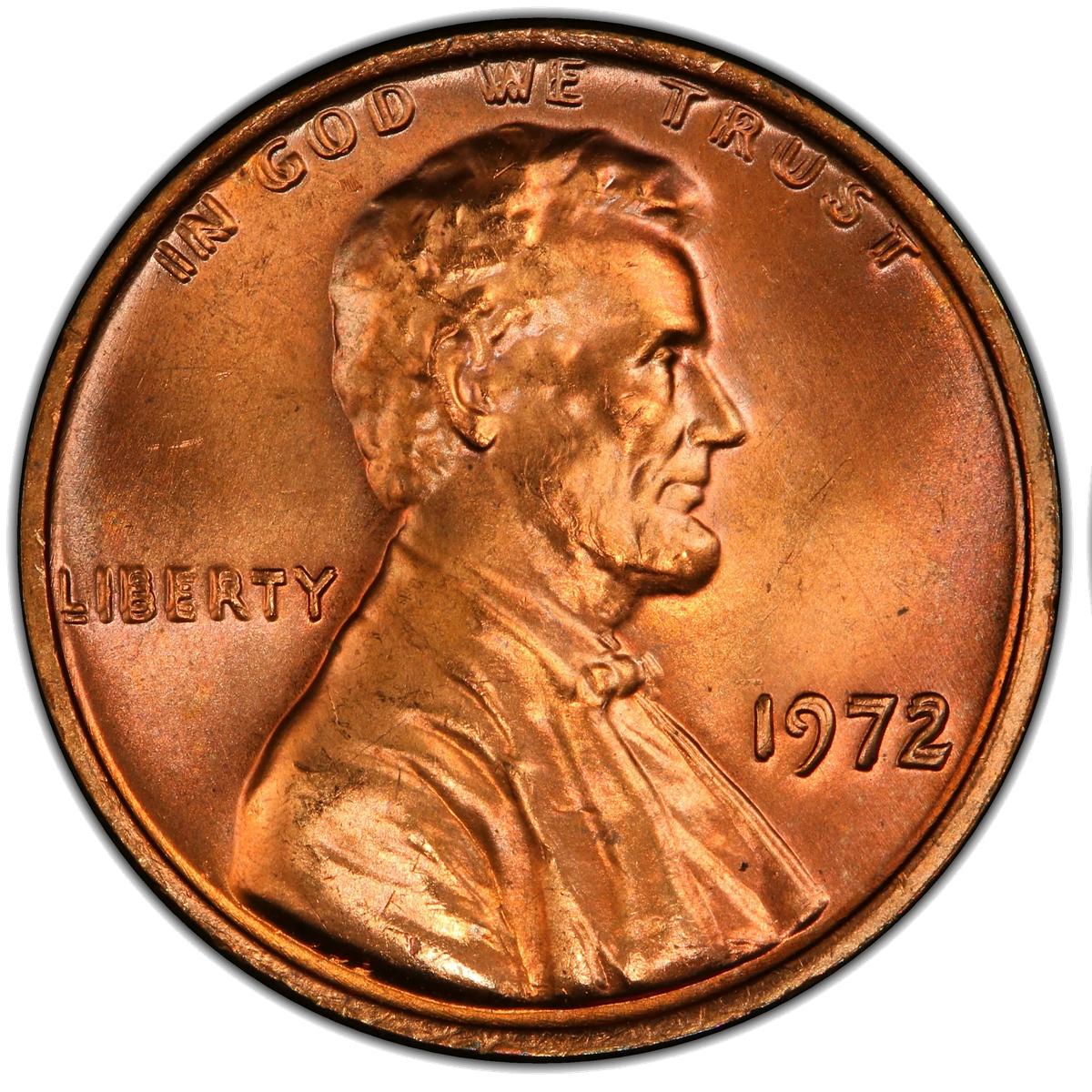
For comparison, here is what true hub doubling looks like — note the clean, raised secondary image:
Three Types of Machine Doubling
Machine doubling is not just one phenomenon — there are three distinct types, each with different visual characteristics:
1. Push Doubling (Most Common)
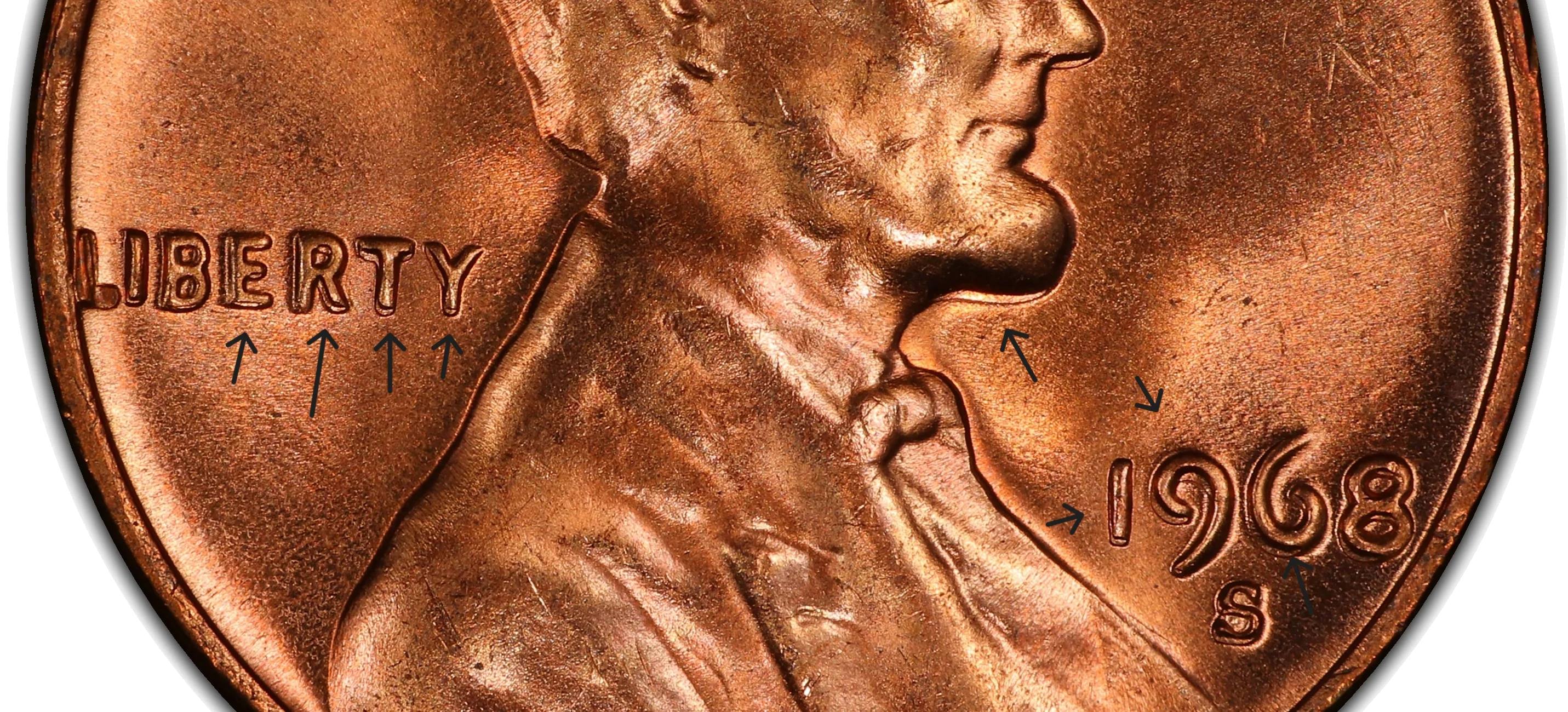
Push doubling occurs when a die bounces after initial contact, shifts slightly, and makes a second, lighter impression. The hallmark is marginal shelving — a flat, shelf-like secondary image at the edges of design elements. Push doubling can appear on both sides of the coin simultaneously, sometimes in different directions.
2. Slide Doubling
Slide doubling occurs when a die drags across the coin's surface after striking, smearing the design elements. Unlike push doubling, slide doubling produces smeared or elongated features rather than distinct secondary images. Strong slide doubling is typically restricted to the face struck by the hammer die (usually the obverse).
3. Rim-Restricted Design Duplication (Rare)
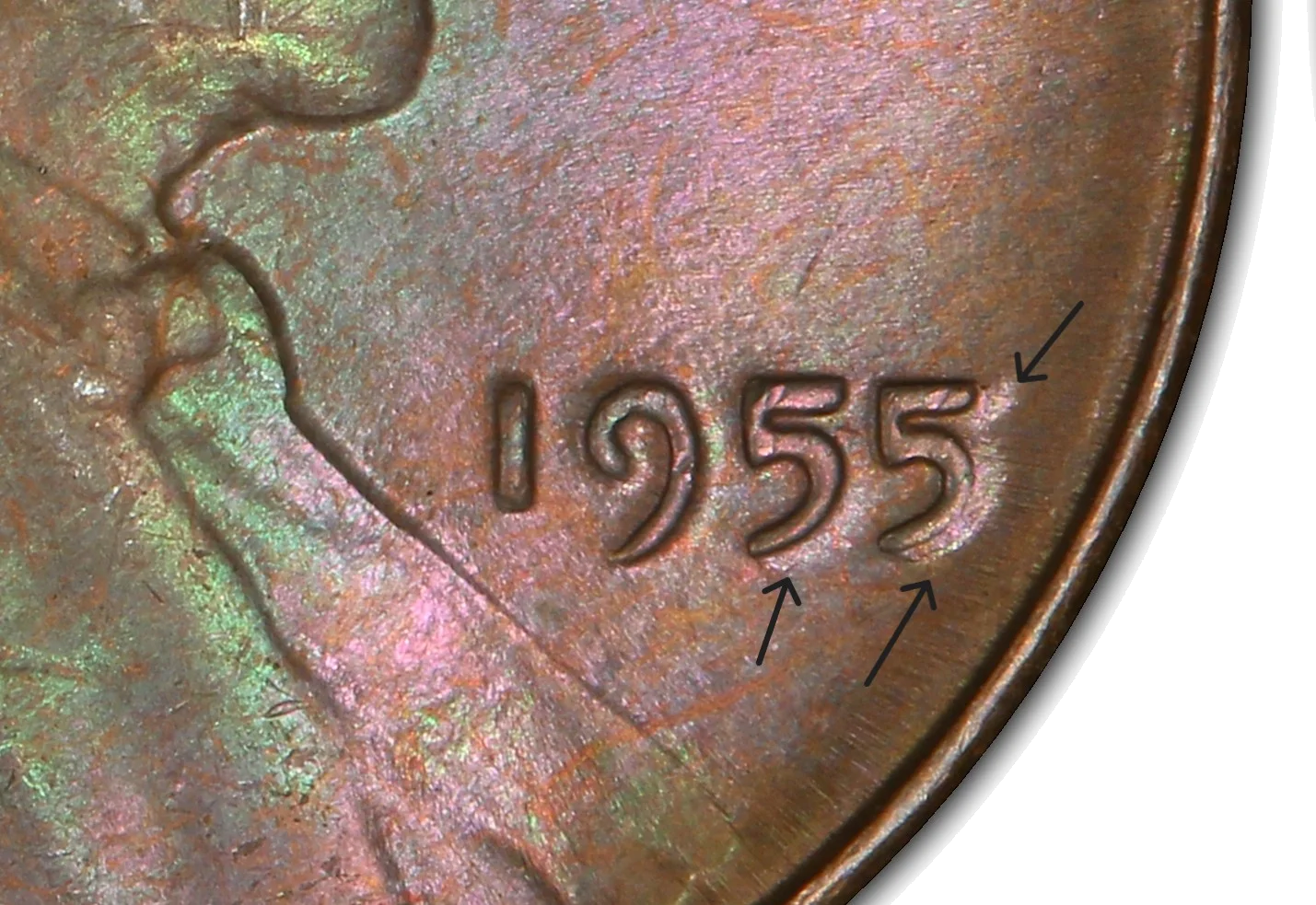
This rare form of machine doubling occurs when the hammer die bounces up, shifts slightly, and lands on the design near the rim. The result is a set of raised design elements confined to the rim area. This type has been found on certain Lincoln cents, Presidential dollars, quarters, and dimes.
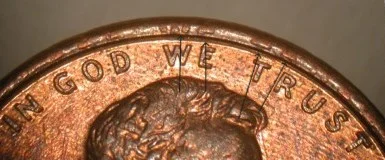
All three types of machine doubling are worthless from a premium standpoint — they affect individual coins, not entire die runs, and are considered damage rather than a true variety. Learning to recognize these types will save you from misidentifying common machine damage as a valuable doubled die.
Famous Doubled Die Pennies
Some of the most valuable U.S. coins are doubled die Lincoln Cents:
1955 DDO — The most famous doubled die in numismatics. Strong Class I doubling visible to the naked eye. Values range from $1,000 to over $100,000 depending on grade.
1972 DDO — Strong doubling on LIBERTY, IN GOD WE TRUST, and the date. A popular and affordable doubled die.
1969-S DDO — Dramatic doubling similar to 1955. Extremely rare with values over $50,000.
1983 DDR — Strong reverse doubling on ONE CENT and E PLURIBUS UNUM.
1995 DDO — A modern classic found in circulation. Strong doubling on LIBERTY and IN GOD WE TRUST.
Spotting a Fake 1955 Doubled Die
Because the 1955 DDO is so valuable, counterfeits are common. Most fakes are crude enough to identify at a glance, but a small number are sophisticated enough to require die-marker authentication by a professional grading service.
What the genuine 1955 DDO looks like:
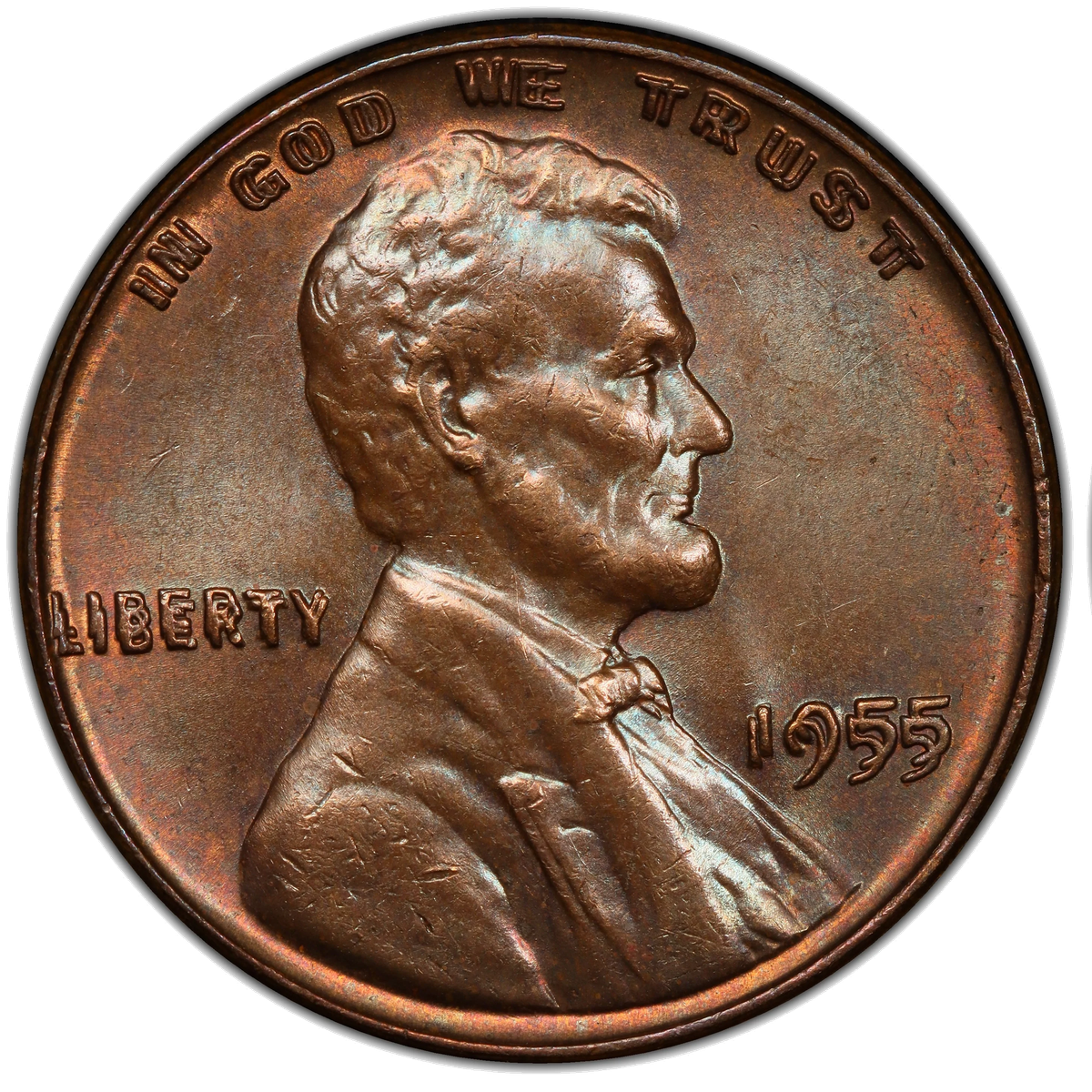
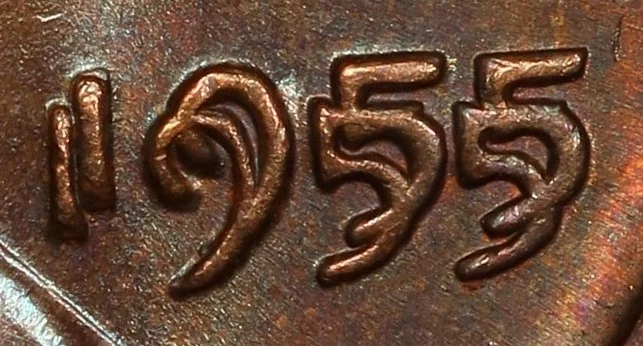
The genuine 1955 DDO shows strong, uniform Class I doubling on IN GOD WE TRUST, LIBERTY, and the date. The doubling is raised, fully formed, and consistent across the entire obverse. A close-up of the date area shows clear separation between the primary and secondary impressions:
Common fakes:
Most counterfeits show obvious problems that real 1955 DDOs never exhibit:
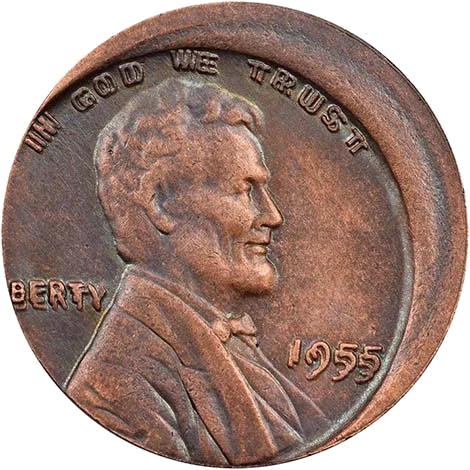
Fake #1 — Clearly comically incorrect face, off center counterfeit.
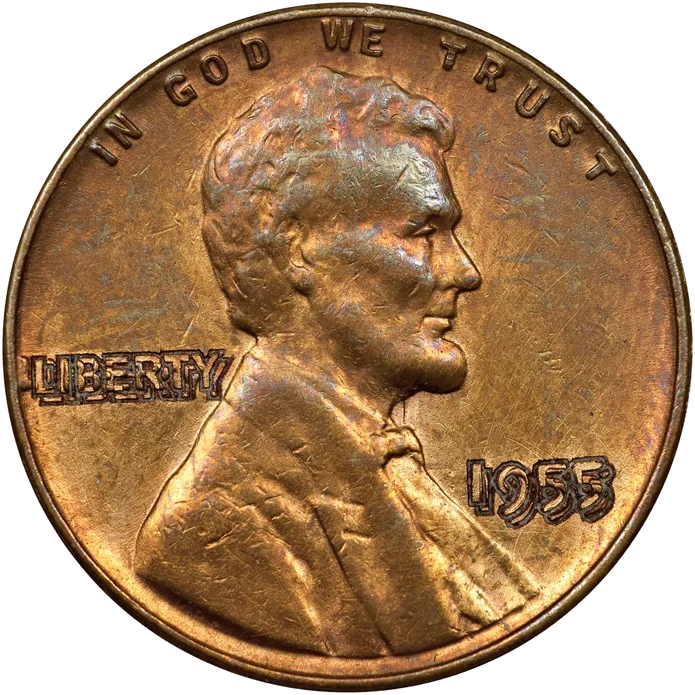
Fake #2 — tooled surfaces with disturbed metal around the "doubled" elements. Clear fake.
Wrong style of doubling — Fakes often use machine doubling (flat, shelf-like) or artificial tooling that doesn't match the clean, raised separation of genuine hub doubling
Inconsistent doubling — On a genuine 1955 DDO, the doubling is consistent across all legends. Fakes may show doubling in some areas but not others
Surface texture — Altered or tooled coins may show disturbed metal, unusual flow lines, or evidence of added material around the "doubled" elements
Die markers — The genuine 1955 DDO has well-documented die markers (specific scratches, polishing lines, and small die features). High-quality counterfeits can only be definitively ruled out by checking these markers
If you think you have a genuine 1955 DDO, professional authentication through PCGS or NGC is essential before buying or selling. The coin's high value makes certification costs negligible by comparison.
Start exploring doubled die varieties in the NumisDex catalog — we have thousands of attributed doubled dies across all denominations, complete with diagnostic images and reference numbers.
0 Replies
Related Threads
- Rosa Parks Commemorative Coins: HR 916 Would Honor a Civil Rights Icon0 replies · 2mo ago
- Olympic Coins for LA 2028 and Salt Lake City 2034: S. 2265 Explained0 replies · 2mo ago
- The End of the Penny: What HR 4459 (MINT Act) Means for Collectors0 replies · 2mo ago
- The $2.50 Coin Is Coming Back: What Collectors Need to Know About HR 56160 replies · 2mo ago
- U.S. Mint Releasing 250,000 Special "July 4th" Privy Mark Declaration of Independence Quarters0 replies · 2mo ago