
PC-2c-1865-08R Pre-Cud
Error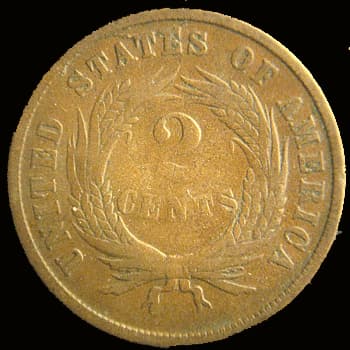
Description
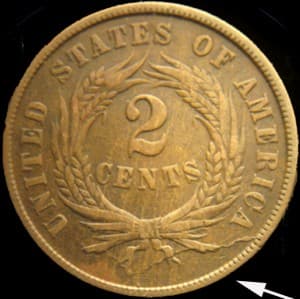
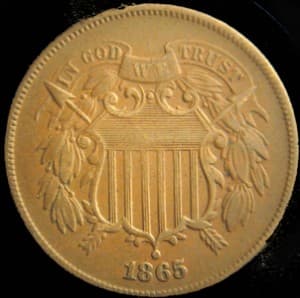
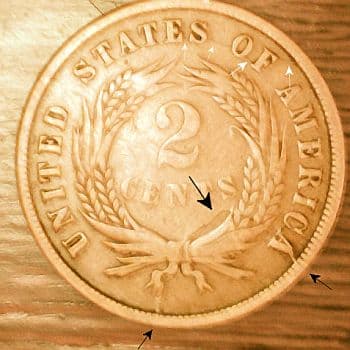
Documented by the Cuds on Coins attribution service, PC-2c-1865-08R records the eighth identified reverse pre-cud on the 1865 Two Cent Piece with Plain 5 — a notable depth of pre-cud documentation for a single date in this short-lived denomination. The catalog designation follows the standardized naming system: PC for pre-cud, 2c for the two-cent denomination, 1865 for the date, and 08R indicating the eighth cataloged reverse pre-cud for this issue. The Two Cent Piece, designed by James B. Longacre and produced from 1864 to 1873, holds the distinction of being the first United States coin to bear the motto IN GOD WE TRUST on its obverse, featuring a shield design that would later influence Longacre's Shield nickel of 1866. Philadelphia struck approximately 13.64 million two-cent pieces in 1865, the second year of production and the final year of high mintage before public interest in the denomination waned sharply. The Plain 5 designation distinguishes this date variety from the Fancy 5 variant, where the numeral 5 in the date carries decorative serifs. Pre-cuds develop when die steel begins to fracture near the rim — the zone of maximum stress where the outward force of metal flow during striking pushes against the die edge and collar — but has not yet progressed to full separation. Eight documented reverse pre-cuds for a single date suggests either that reverse dies for the 1865 two-cent piece were particularly susceptible to rim cracking or that the denomination's specialist collectors have applied intensive scrutiny to this year. The raised, slightly irregular area on struck coins marks the incipient fracture where the die surface has begun to deform but still retains structural continuity, distinguishing pre-cuds from retained cuds where the die fragment has separated enough to create a flat, featureless area on the coin's rim.
Attribution History
- Discovered by Chuck Newman
- Expert attribution by Cuds on Coins
External References
Community & Reference
Related Errors
More Pre-Cud Errors
Collector Essentials
Tools for examining and preserving error coins and die varieties.
10x-20x Jeweler's Loupe
Essential for examining die varieties, doubled dies, and RPMs
Cherry Picker's Guide
The definitive reference for U.S. error coins and die varieties
2x2 Coin Flips & Holders
Protect and organize your finds with archival-quality holders
USB Digital Microscope
Capture detailed images for documentation and community submissions
As an Amazon Associate, NumisDex earns from qualifying purchases.