
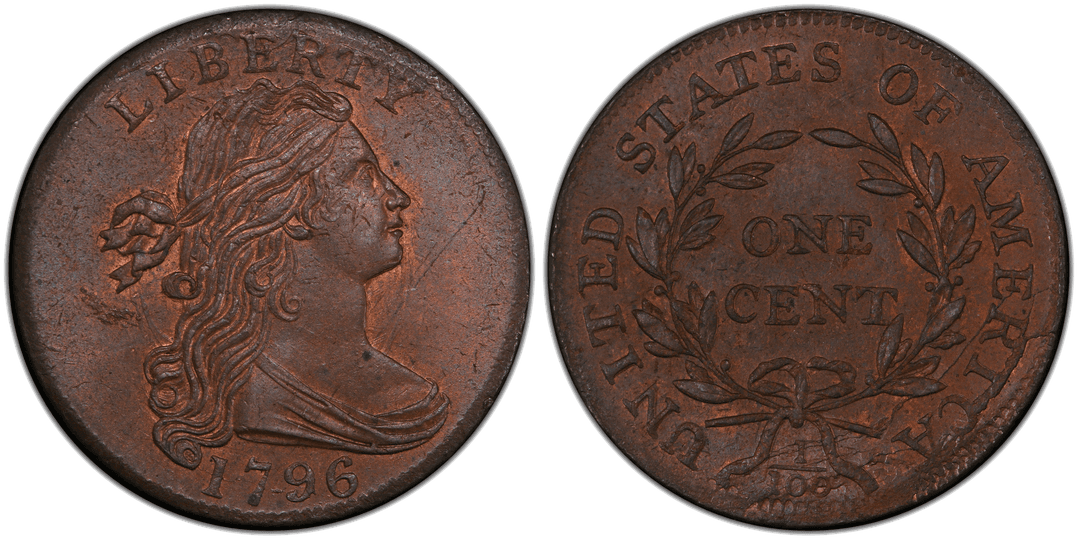
1802 Draped Bust Cent - Draped Bust Large Cent NC-1 Obverse Split Die
Error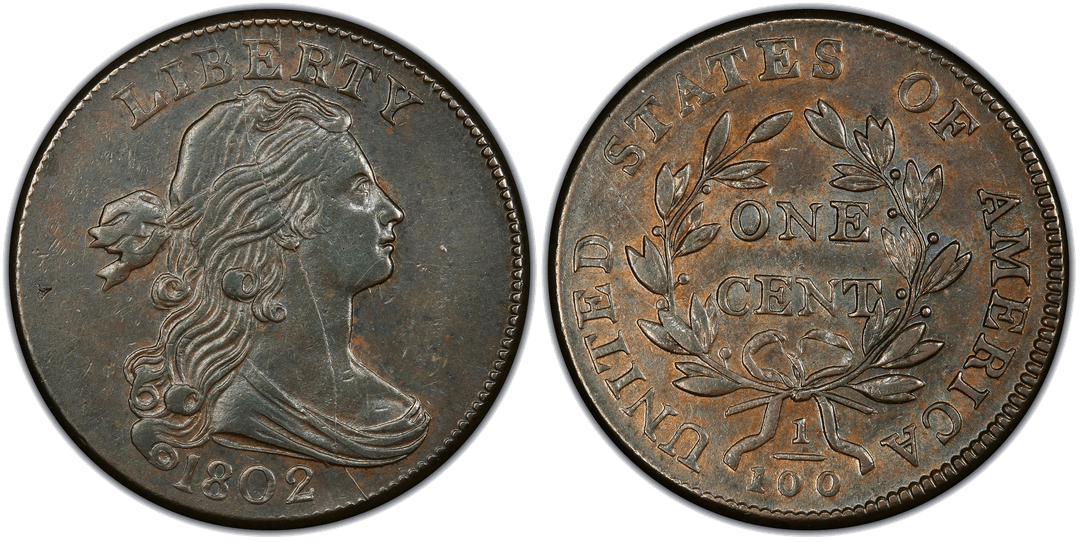
Attribution
Discovered by
NumisDex
Description
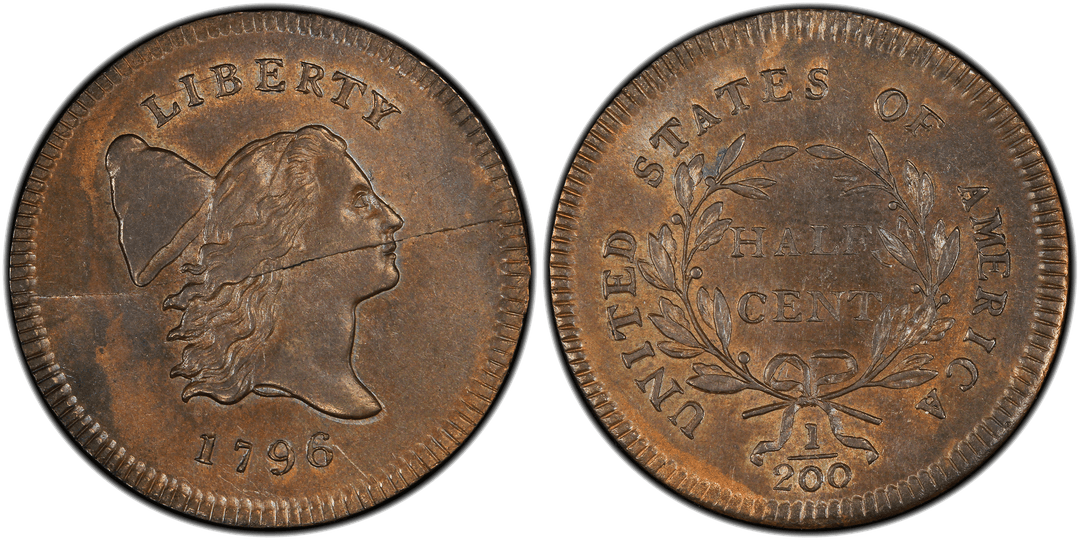
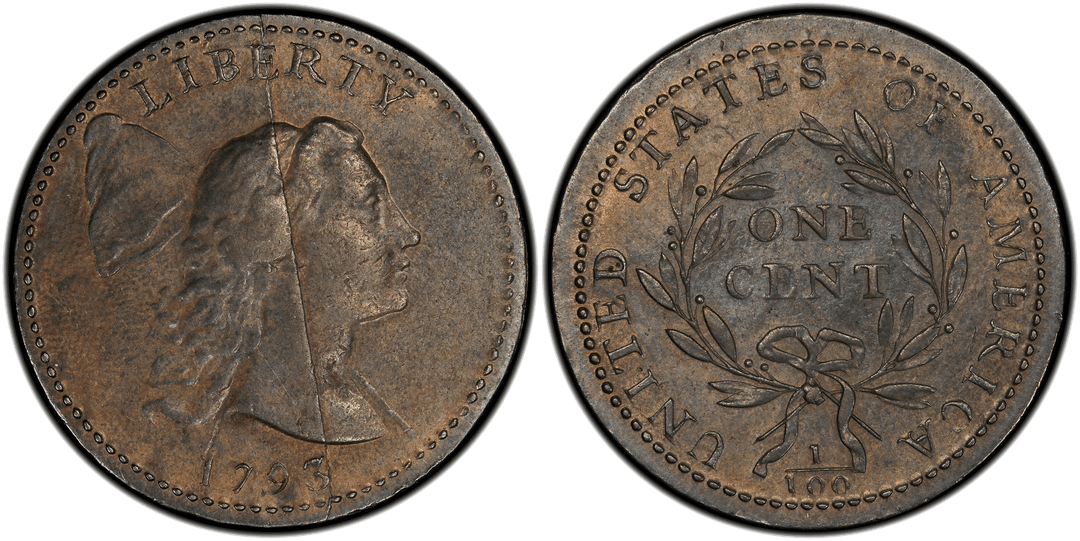
The NC-1 die marriage of the 1802 Draped Bust large cent exhibits a split die on the obverse — a die crack extending completely from rim to rim, effectively bisecting the obverse die into two halves. A full rim-to-rim crack represents a terminal die state, indicating the die had reached the threshold of catastrophic failure and was likely retired shortly after examples of this state were struck. The NC designation comes from William H. Sheldon's system for early U.S. large cents, where NC ("non-collectible") numbers mark varieties he judged non-collectible because so few were known; the numbers are still used to identify them. Early large cent die states are a cornerstone of collecting for students of early American copper coinage: the progression from perfect die through crack initiation, crack extension, and eventual rim-to-rim split documents the mechanical life of each individual working die in a period when dies were expensive, hand-made, and used until failure. Split dies are a severe form of die deterioration, occurring when the die has been used well beyond its intended lifespan.
Cross References
- NC-1
Community & Reference
Related Errors
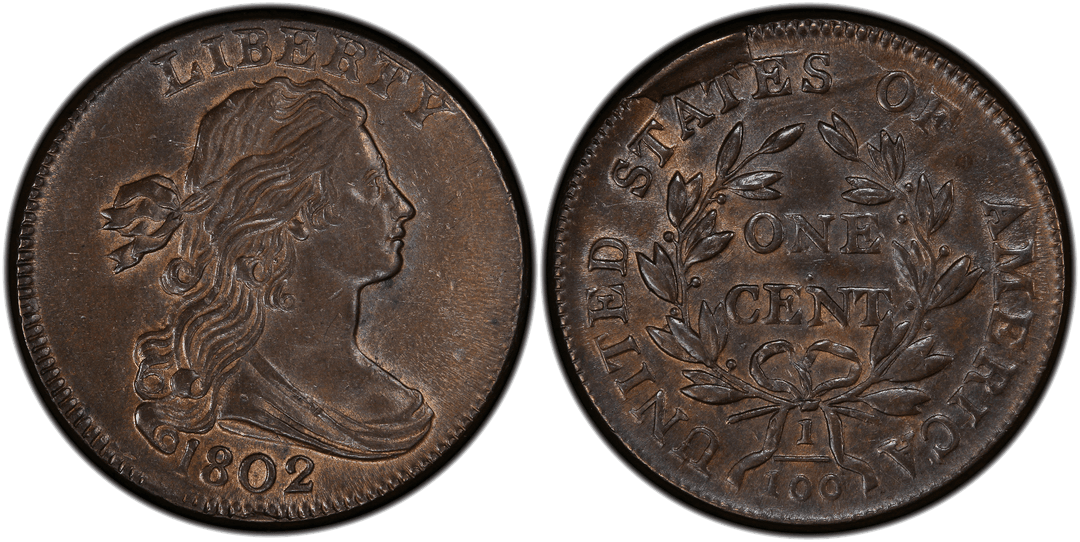
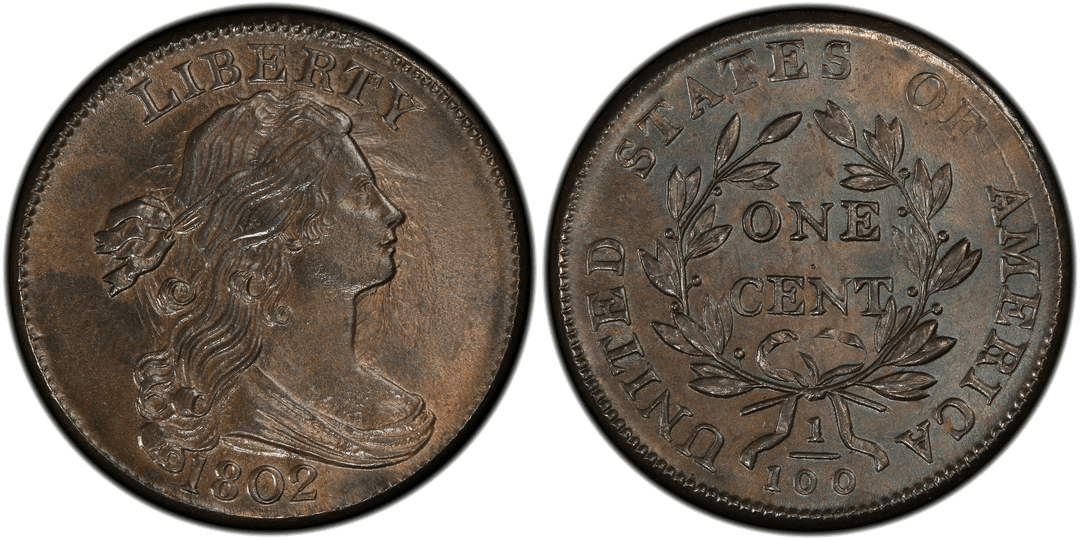
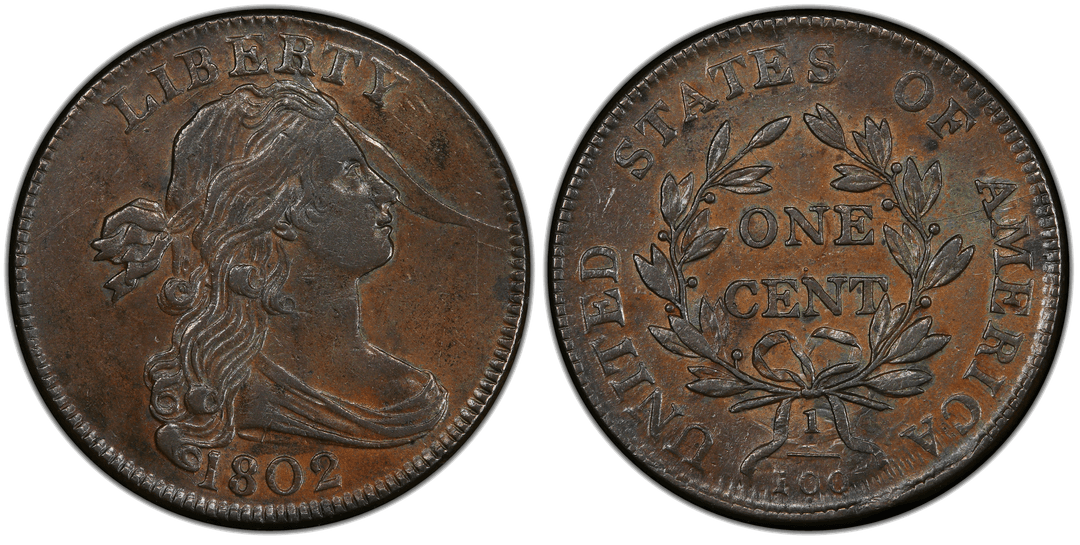


More Split Die Errors
Collector Essentials
Tools for examining and preserving error coins and die varieties.
10x-20x Jeweler's Loupe
Essential for examining die varieties, doubled dies, and RPMs
Cherry Picker's Guide
The definitive reference for U.S. error coins and die varieties
2x2 Coin Flips & Holders
Protect and organize your finds with archival-quality holders
USB Digital Microscope
Capture detailed images for documentation and community submissions
As an Amazon Associate, NumisDex earns from qualifying purchases.