
By Brandon Norris
When Melt Value Exceeds Numismatic Premium: What Happens to Common-Date Silver Coins
The Vanishing Premium
Published June 12, 2026. Metal prices and dealer premiums are as reported at the time by the sources named below; melt values are our own arithmetic.
For most of numismatic history, a common-date Morgan dollar was worth significantly more than its silver content. Collectors paid for the design, the history, and the collecting experience — the "numismatic premium" above melt. But silver reached $121.60 an ounce on January 29, 2026 (as reported by Reuters) and was still near $68 in early June, according to a June 8 market report from Skillings Mining Intelligence. At those prices, metal makes up most of what many common-date silver coins sell for.
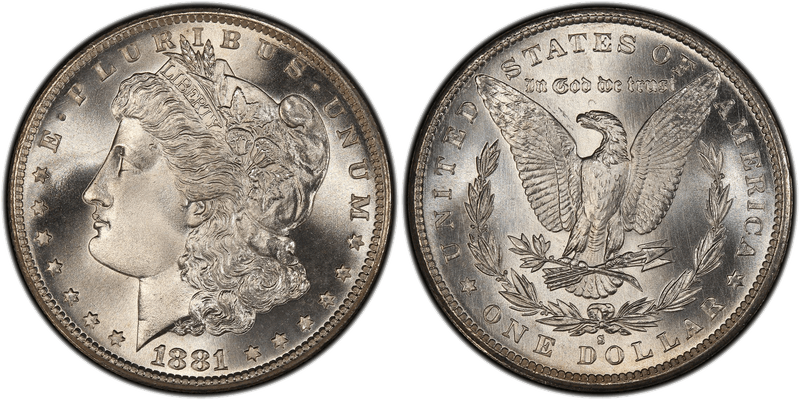
The 1881-S Morgan Dollar — a common date in the series. View in the NumisDex catalog.
The Math
A pre-1965 U.S. silver coin contains 90% silver. Using the silver content from the Mint's specifications, here's what that means at various price levels:
| Coin | Silver (troy oz) | Melt @ $30/oz | Melt @ $67/oz | Melt @ $121/oz |
|---|---|---|---|---|
| Morgan/Peace Dollar | 0.7734 | $23.20 | $51.82 | $93.58 |
| Walking Liberty Half | 0.3617 | $10.85 | $24.23 | $43.77 |
| Washington Quarter (pre-1965) | 0.1808 | $5.42 | $12.11 | $21.88 |
| Mercury/Roosevelt Dime | 0.0723 | $2.17 | $4.84 | $8.75 |
At $30 silver, a common Morgan dollar carries about $23 of metal; at $67, about $52. Whatever a collector pays above that is the numismatic premium, and as the metal value climbs, a premium that stays the same size becomes a smaller share of the price. The premium hasn't disappeared, but its share of the price has shrunk.
What This Means for Collectors
For buyers:
- Common-date silver coins are currently poor values as collectibles. You're paying mostly for metal, not numismatic content.
- If silver corrects, the coin's value drops proportionally — unlike a key date, which has a floor based on rarity.
- Premiums on "junk silver" (circulated pre-1965 coins bought for their metal) have disappeared at the low end. FindBullionPrices.com, which tracks dealer asking prices, found that the cheapest offers for $100-face bags of 90% silver quarters averaged about 6% below melt in May 2026.
For sellers:
- If you have common-date silver coins you don't value as collectibles, today's silver price gives them far more metal value than they carried before 2025.
- Dealer buy prices follow spot. The same site reports that heavy selling of 90% silver after the 2025 run pushed some dealers' quotes below melt, so compare several offers.
For variety and error collectors:
- This is actually a favorable environment. Error and variety premiums are independent of metal prices. A doubled die or RPM on a common-date silver coin may be relatively cheaper compared to the base coin than during low-silver periods.
Historical Perspective
This isn't the first time melt has dominated. During the 1979-80 silver spike (when the Hunt Brothers' buying helped drive silver to about $50), large amounts of circulated silver coin went to the smelters; dealer David Lawrence, in a CoinWeek recollection, describes circulated Washington quarters, later Walking Liberty and Franklin halves, and low-grade Barber and Seated coins being melted. If today's elevated prices persist, the same attrition could happen again, eventually making survivors of common-date silver coins less common than they are today.
Browse Morgan Dollars and Walking Liberty Half Dollars in the NumisDex catalog.
0 Replies
Related Threads
- The Missing Years: When America Almost Stopped Making Money0 replies · 1mo ago
- Rock Legend Rick Springfield's Gold Coin Collection Sold at Stack's Bowers 20250 replies · 5mo ago
- How to Photograph a Coin So Others Can Actually Help You Identify It0 replies · 5mo ago
- Understanding PCGS and NGC Coin Grading0 replies · 6mo ago